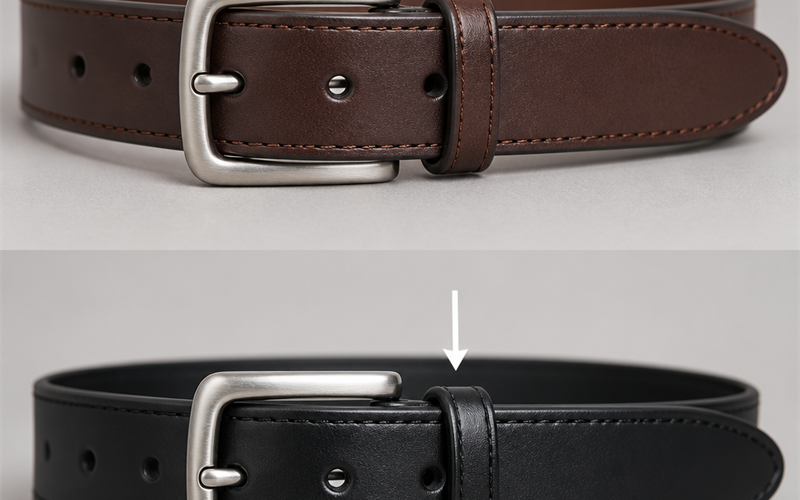
The Belt Keeper Loop Broke — Can You Repair It at Home?
Quick answer: Yes — a broken belt keeper loop can usually be repaired at home in 15-30 minutes using one of three methods: 1) re-stitch with waxed thread and a saddle stitch (the durable fix), 2) re-attach with a small leather rivet ($3-$5 hardware), or 3) replace with a slip-on leather keeper ($4-$8). Avoid leather glue alone — it never holds long-term. Cost: $0-$15 DIY, or $10-$20 at a cobbler. The keeper is one of the easiest belt repairs to do well.
Last updated: May 2026 • By BELTLEY Editorial
Why trust this guide: BELTLEY handles keeper-loop replacement under our 10-year construction warranty, and our artisan team has performed the repair hundreds of times. We know exactly which DIY methods hold up and which ones fail within weeks. This guide is based on production-level repair experience, not theoretical advice.
TL;DR:
- Keeper loop repair is one of the most beginner-friendly belt fixes.
- Saddle stitching is the most durable; rivets are fast and durable; glue alone always fails.
- Slip-on replacement keepers work perfectly and require zero tools.
- A quality belt with a broken keeper is almost always worth saving.
At a glance:
- Repair time: 15-30 min
- DIY cost: $0-$15 (waxed thread + needle, or rivet, or slip-on keeper)
- Cobbler cost: $10-$20
- Skill level: beginner
- Success rate: ~90% (DIY done correctly)
- Updated — May 2026 · By BELTLEY Editorial
The keeper loop — that small leather band that holds the strap tail flat against your hip — is the single most repair-friendly piece of a belt. When it breaks (and it does, sooner or later, on most belts), the fix is genuinely easy. Below: what a keeper actually does, why it breaks, and the three home repair methods that work — plus the one shortcut every YouTube tutorial recommends that quietly fails within weeks.
What is a belt keeper loop and why does it break?
A belt keeper loop is the small leather band sewn or attached just behind the buckle that holds the loose end (the "tail") of the strap flat after buckling. Some belts have a fixed keeper (sewn into the strap) and some have a sliding keeper (moves freely along the strap). Keepers break for two main reasons: 1) the stitching wears through (most common on machine-stitched keepers after 3-7 years), or 2) the leather tears at the attachment point (more common on bonded leather or worn-out full-grain).

Sliding keepers can also simply fall off if the strap end is removed for any reason. This isn't a break — just a separation that's easily re-threaded or replaced.
How do you repair a broken keeper loop at home?
Three methods that actually work:
Method 1 — Re-stitch (most durable). If the original keeper is intact but the stitching has worn through, re-sew it using waxed linen thread and a saddle stitch — two needles passing through each hole from opposite sides. Pre-existing holes are usually still usable. Takes 15-20 minutes. Total cost: ~$5 for waxed thread and two saddler's needles. Result: lasts 20+ years.
Method 2 — Rivet repair (fast). Punch two small holes through both layers of leather and install one or two small leather rivets ($3-$5 for a pack at any craft store). Takes 5-10 minutes. Result: lasts 10-15 years. Slightly less elegant than stitching but mechanically very durable.
Method 3 — Slip-on replacement keeper. Buy a sized slip-on leather keeper ($4-$8 on Amazon or at any cobbler) and thread it onto the strap. Takes 30 seconds. No tools required. Result: indefinite — sliding keepers don't fail until the leather itself fails.
Why does leather glue alone fail on keeper loops?
Leather glue (contact cement, super glue, fabric glue) alone fails on keeper loops because the glue joint can't handle the lateral and rotational stress the keeper experiences during every buckle action. The leather flexes; glue doesn't. Within 1-4 weeks of normal wear, the glue cracks and the keeper detaches again — sometimes with a thin glue layer permanently visible on the strap.

Glue can work as a supplement to stitching or riveting (helps align the layers during repair), but never as the sole attachment method. This is the most common DIY mistake we see in customer service photos — a keeper fixed with super glue is almost guaranteed to need re-fixing within a month.
Key stat: A saddle-stitched keeper-loop repair using waxed linen thread typically holds for 20-30+ years under normal wear — often longer than the original factory stitching on the same belt.
Keeper loop repair methods compared
| Method | Time | Cost | Durability | Skill Required |
|---|---|---|---|---|
| Re-stitch (saddle stitch) | 15-30 min | $5 (thread + needles) | 20-30+ years | Beginner |
| Rivet repair | 5-10 min | $3-$5 (rivets) | 10-15 years | Beginner |
| Slip-on replacement keeper | 30 seconds | $4-$8 | 20-30+ years | None |
| Cobbler stitching | While-you-wait | $10-$20 | Same as DIY stitch | None |
| Leather glue only | 5 min | $3 | 2-6 weeks (fails) | None |
| Sewing machine stitch | 5 min | Sewing machine needed | 5-10 years | Intermediate |
What tools do you need to re-stitch a keeper loop?
For DIY saddle stitching: 1) waxed linen or polyester thread ($3-$5 for a spool, Amazon or any leather supply), 2) two saddler's needles ($2-$4 — these are blunt-tipped harness needles, not sharp sewing needles), 3) an awl or small leather punch to clean the existing holes if needed, and 4) a thimble if your fingers are sensitive. Total kit: under $15 and lasts for dozens of future repairs.

The technique itself is simple — both needles pass through the same holes from opposite sides on each pass, locking each stitch. YouTube has excellent free tutorials; the basic method takes about 5 minutes to learn.
Should you DIY or take it to a cobbler?
DIY for: 1) inexpensive belts ($30-$100 originally), 2) repairs where the existing holes are clearly visible (just re-threading), and 3) anyone interested in basic leather work. Cobbler for: 1) high-value belts ($200+), 2) exotic-leather pieces (crocodile, alligator, ostrich), 3) belts where the underlying leather around the attachment point is damaged, or 4) anyone who prefers not to handle needles.

Cobblers charge $10-$20 for a keeper repair and return the belt the same day in most cases. For BELTLEY pieces still under our 10-year warranty, keeper repair is included if the failure is a construction defect rather than wear.
Can you replace a missing sliding keeper?
Yes — sliding keepers are widely sold as replacements on Amazon, eBay, and dedicated leather supply sites. Match the keeper width to your belt width (1.25", 1.5", etc.) and the leather color. Thread it onto the strap before the strap goes through the buckle, and the repair is complete. No tools, no skill, no stitching needed.
For our men's belt collection and women's belts, we ship replacement keepers free for any belt under warranty if the original is lost or damaged.
What if the leather around the keeper has torn?
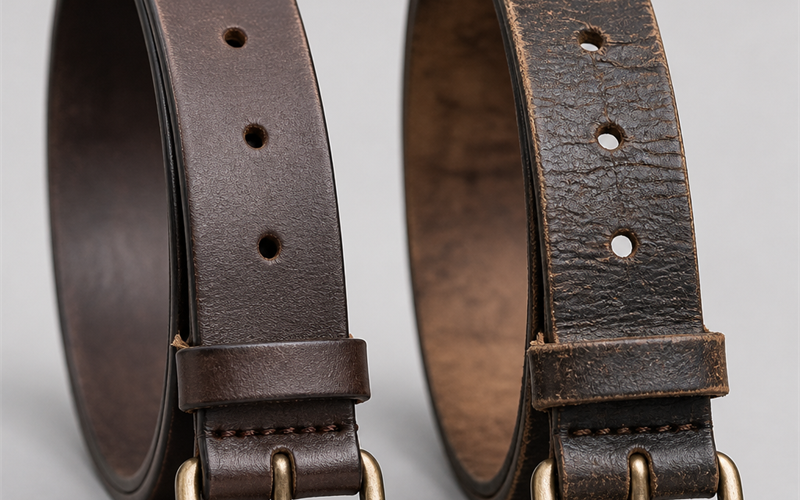
If the leather strap itself is torn around the keeper attachment point — not just the keeper itself — the repair becomes harder. Options: 1) move the keeper attachment 0.5-1" forward or backward to undamaged leather, 2) reinforce the torn area with a small leather patch on the back, or 3) take to a cobbler for assessment. Severe tears on bonded leather usually mean the belt is past saving; tears on full-grain leather are almost always repairable.

This is one place where buying the cheapest belt available costs more long-term — bonded leather often tears around the keeper attachment within 1-2 years, while full-grain rarely does, even after decades.
Related BELTLEY guides
- Why Some Belts Fail Within 18 Months: Staples vs Rivets vs Stitched Loops — broader construction failure
- The Belt Hole That Stretched: Should You Replace or Repair? — companion DIY repair
- How to Add an Extra Hole to a Leather Belt (Without Ruining It) — basic leather DIY
- Replacing a Belt Buckle: Which Belts Can and Cannot — buckle-side repairs
- The Worst Care Mistakes That Quietly Kill Leather Belts — preventing damage in the first place
The Bottom Line
A broken belt keeper loop is one of the easiest leather repairs you can do at home — 15-30 minutes with waxed thread or a small rivet, and the belt is back to full function for another decade or more. Slip-on replacement keepers work even faster with no tools. Skip the glue-only "fix" entirely; it never holds. At BELTLEY, keeper failure is covered under our 10-year warranty for construction defects — but on quality full-grain leather, the keeper rarely needs repair in the first place. Browse the men's belt collection for belts built to keep their keepers.
Frequently Asked Questions
Q: How much does a cobbler charge to fix a belt keeper?
Most cobblers charge $10-$20 to re-stitch or replace a broken keeper loop, completed same-day. Belt-specific specialists in major cities charge $20-$30 with matched thread and original-quality finish work.
Q: Can I use super glue on a belt keeper?
Not as the sole attachment method — super glue alone fails within weeks because it can't handle the flex. It can supplement stitching or riveting (helps hold layers in place during repair) but should never be the only thing holding the keeper.
Q: How do I match the thread color when re-stitching?
Most quality belts use natural waxed linen thread that ages to a tan/cream color. Match by buying a small spool of natural waxed linen ($3-$5 on Amazon). For dyed thread to match black or specific colors, leather supply stores carry waxed polyester in dozens of shades.
Q: Will replacement keeper loops match my belt's exact color?
Slip-on replacement keepers come in standard leather colors (black, brown, tan, oxblood) that match most belts visually. Exact dye-lot matching is rare for replacements, but the slight variation is barely visible since the keeper sits behind the buckle.
Q: Are some belts more likely to lose their keeper?
Yes — belts with machine-stitched keepers using single-thread construction lose them more often than saddle-stitched keepers. Bonded leather belts also lose keepers more frequently because the leather around the attachment point tears. Quality full-grain belts with saddle-stitched keepers rarely fail.
%20re-stitch%20with%20waxed%20thread%20and%20a%20saddle%20stitch%20(the%20durable%20fix),%202)%20...)