
Belt for Your First Suit (College Senior to First Job)
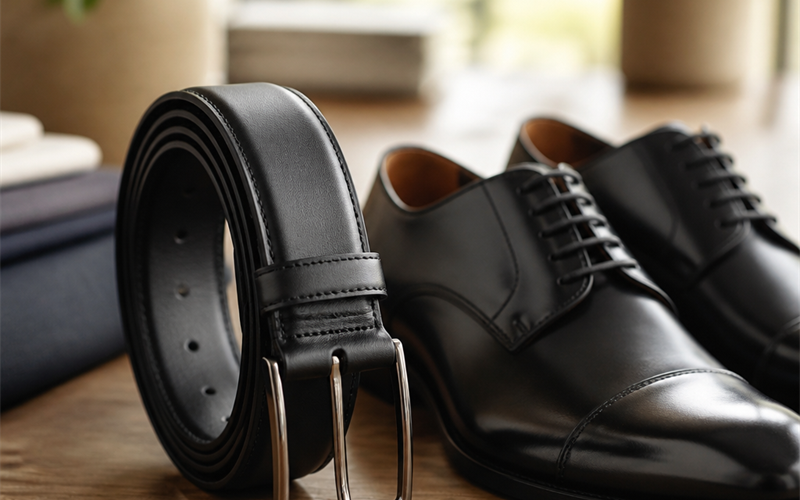
Quick answer: For your first suit, get one slim black dress belt (1.25–1.5") in smooth full-grain leather with a simple silver buckle. It matches the black dress shoes most first jobs require and works for interviews, offices, and formal events. Add a brown dress belt once you own brown shoes. Match the belt to your shoes, every time.
Last updated: May 2026 • By BELTLEY Editorial
TL;DR:
- Buy one black dress belt first — it covers interviews, the office, and most formal events.
- Slim and smooth (1.25–1.5"), simple buckle. Skip wide casual belts and big logos.
- Match belt color to shoe color — black belt, black shoes. Non-negotiable in professional settings.
- Add a brown dress belt second, once you have brown shoes. Two belts cover your first few years.
The jump from campus to a first job rewires your wardrobe, and the belt is the small detail that quietly signals you get it. A suit with the wrong belt — too wide, too casual, a giant logo, or simply not matching your shoes — undercuts an otherwise sharp first impression. The good news: you only need one belt to start, and the rules are simple. Below is exactly what to buy, how to wear it, and what to skip. If you've got an interview before day one, pair this with our quick guide on what belt to wear to a job interview.
First Suit Checklist: The Belt Line-Item
Graduate-to-employee belt decisions:
| Your situation | Go with |
|---|---|
| One belt, interviews incoming | Slim black full-grain, 1.25"–1.38", simple silver buckle — matches the black shoes first jobs demand. |
| Budget anxiety | $58 buys real full-grain at DTC pricing — the cheap-belt trap costs more by year two. |
| Second purchase timing | Add brown only when you own brown shoes — the belt follows the shoe, always. |
| Sizing a first dress belt | Pants size + 2", middle hole — write it down before ordering. |
First-suit ready: BELTLEY's men's collection with the size guide.
What belt should you buy for your first suit?
One slim black dress belt in smooth full-grain leather, 1.25 to 1.5 inches wide, with a simple polished silver buckle. Black is the priority because most entry-level professional wardrobes start with black dress shoes, and your belt must match them. It's the single most versatile belt you can own.

Start with one and start with black. A classic black dress belt carries you through interviews, daily office wear, and formal events without a second thought. Keep it smooth and understated — this is the opposite of a statement piece. The suit is the statement; the belt just makes it cohesive. A dress belt differs from a casual belt in exactly these ways: thinner, smoother, and quieter.
Why does the belt have to match the shoes?
Because matching leather is the foundation of a put-together professional look. Your belt and dress shoes should be the same color — black belt with black shoes, brown belt with brown shoes. Mismatched leather is the first thing an interviewer or new boss notices, and it reads as careless.

It's the oldest rule in menswear, and it's strict in professional settings. Career guidance is blunt about it: match your belt to your shoes and avoid oversized belts. The match creates a clean visual line that signals attention to detail. Our full guide on whether your belt should match your shoes covers the nuances, but for a first job, keep it literal: same color, same finish.
Key stat: A starter professional wardrobe is built on one navy and one grey suit, white/blue shirts, black shoes, and a black belt — which is why a single black dress belt is the highest-leverage accessory you can buy first.
How much should you spend on a first-suit belt?
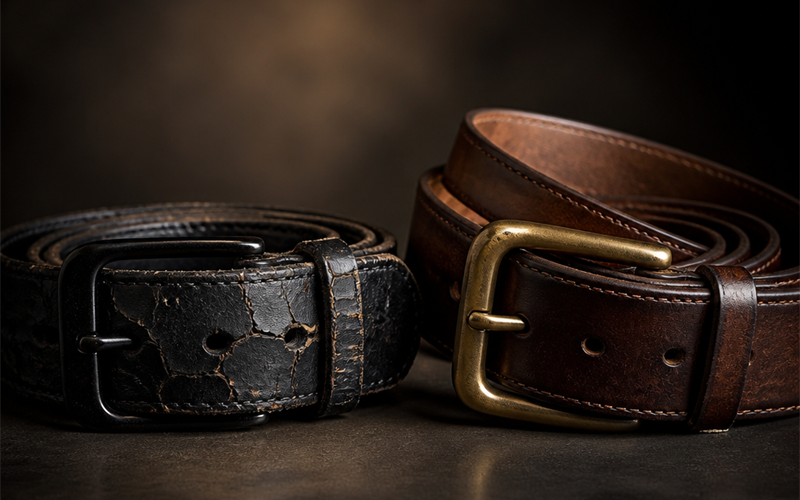
Enough for full-grain leather — roughly $50–90 — not designer prices. A quality full-grain belt at this range lasts years, looks sharp, and survives daily wear. Spending $500 on a logo belt is a rookie money mistake; spending $15 on a bonded-leather belt is a different one, because it cracks within months.

Aim for the value sweet spot. A full-grain leather belt is made from the strongest part of the hide, so it ages well instead of peeling — and at fair DTC pricing it costs far less than a brand-tax designer belt. As for logos: a discreet professional belt beats a flashy one early in your career, which is why even whether designer belts are professional for men usually lands on "keep it subtle." Buy once, buy well.
Your first two belts
| Belt | When to buy | Pairs with |
|---|---|---|
| Black slim dress belt | First — buy now | Black shoes, all suits, interviews |
| Brown slim dress belt | Second — once you own brown shoes | Brown shoes, navy/grey suits |
| (Later) casual leather belt | As wardrobe grows | Jeans, chinos, weekends |
What belt mistakes do new grads make?
Four big ones: wearing a casual belt with a suit, mismatching belt and shoe color, choosing a belt that's too wide, and going for a loud logo buckle. Each undercuts a professional look. The fixes are simple — slim, smooth, matched, and understated.

These are the tells of someone new to dressing professionally. A thick, distressed, or studded belt clashes with a tailored suit; a suit's belt-looped trousers call for a refined dress belt, not your weekend strap. Width matters too — 1.25 to 1.5 inches reads dressy, while anything wider looks casual. And a giant logo buckle distracts in a setting where the goal is to indicate respect and not draw attention. Quiet wins. For office-specific pairing, see how to match a belt with your work outfit.
How do you get the right size?
Measure a belt you already wear, or order one size up from your pant waist. Belt size usually runs about 1–2 inches larger than your trouser waist. The buckle prong should sit in the middle hole when fastened, leaving room on both sides — that's the sign of a correct fit.

Sizing is the one thing worth getting right before you buy. The cleanest method: measure an existing belt from the buckle fold to the hole you use, and match that number. Our size guide and our walkthrough on how to choose a belt size for a man make it foolproof. A belt that lands on the middle hole looks intentional and gives you room as your size shifts over the years.
The Bottom Line
Your first-suit belt isn't where you express yourself — it's where you show you understand the room. One slim black full-grain dress belt, matched to black shoes, with a simple buckle, handles your interviews and your first years on the job. Add a brown one when you get brown shoes, and you're set. Spend for real leather, skip the logos, and match your shoes every time. At BELTLEY, we build full-grain dress belts at fair prices precisely for this moment — the start of a career, when looking sharp shouldn't cost a month's rent. Ready to start right? Browse our dress belt collection.
Frequently Asked Questions
Q: What color belt should I get for my first suit?
Black. Most entry-level professional wardrobes start with black dress shoes, and your belt must match your shoes. A black dress belt covers interviews, daily office wear, and formal events. Add a brown belt once you own brown shoes.
Q: How wide should a dress belt be for a suit?
Between 1.25 and 1.5 inches. That width reads as dressy and refined. Anything wider looks casual and clashes with a tailored suit. Keep the leather smooth and the buckle simple.
Q: Can I wear the same belt for interviews and the office?
Yes. A slim black dress belt is appropriate for both. It's the most versatile professional belt you can own, which is why it's the smartest first purchase for a new grad.
Q: How much should a first-suit belt cost?
Around $50–90 for a quality full-grain leather belt that lasts years. Avoid cheap bonded-leather belts that crack quickly, and skip expensive logo belts — a discreet, well-made belt is more professional early in your career.
%20in%20smooth%20full-grain%20leather%20with%20a%20simple%20silver%20buckle.%20It%20matches%20the%20black%20dress%20shoes%20most%20first%20jobs%20require%20and%20...)