What Belt to Wear to a Job Interview? -Quick Tips
TL;DR:
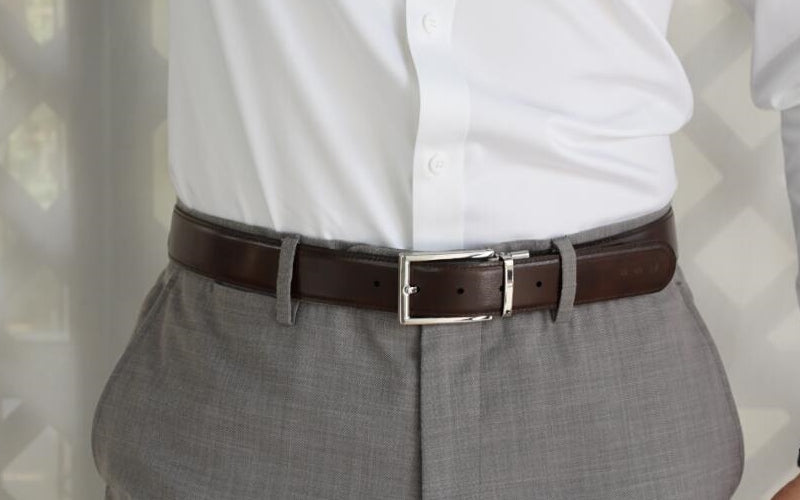
- Men: wear a slim full-grain leather dress belt (1.25"–1.38") that matches your shoes exactly, with a plain matte metal buckle
- Women: a belt is optional in most interview contexts — when worn, keep it slim, leather, and color-coordinated with shoes and bag
- The belt-to-shoe color match is non-negotiable for both genders, in every industry, at every level
Your resume gets you the interview. Your qualifications get you the offer. But everything in between — including the two seconds the interviewer's gaze drops to your waist — is about whether you understand how to present yourself professionally. A belt is a small detail. But small details, collectively, are what separate candidates who look polished from those who look almost polished.
This guide covers exactly what to wear: specific colors, widths, buckle styles, material rules, and how to calibrate all of it by industry and dress code. Men's dress belts and women's options are addressed separately, because the rules differ in meaningful ways.
Should You Wear a Belt to a Job Interview?
Men wearing trousers with belt loops should always wear a belt to a job interview — its absence is conspicuous and reads as an oversight. Women do not have an obligation to wear a belt, but choosing to wear one signals intentionality and attention to detail. In either case, if you wear a belt, it must be correct: the wrong belt is worse than no belt.

This point deserves emphasis. Interviewers are trained to assess judgment and attention to detail. According to Indeed's guide on how to dress for a job interview, accessories that don't coordinate — including a belt that doesn't match the shoes — communicate that you missed something. That's not the first impression you want.
For men in particular, wearing trousers without a belt when loops are present looks incomplete. The belt is structural to the silhouette. Skipping it reads as either oversight or casualness — neither of which serves you in an interview setting.
The Non-Negotiable Rules for Every Interview Belt
Regardless of gender, industry, or job level, the following rules apply without exception.
Rule 1: The belt must match the shoes. This is the single most important rule in professional belt dressing. Black shoes require a black belt. Brown or tan shoes require a brown belt. Burgundy or oxblood shoes work with a dark brown or burgundy belt. Matching in shade matters — a light tan belt with dark chocolate shoes looks uncoordinated even if both are technically "brown." For a detailed breakdown of how this matching works in practice, see how to match belts and shoes.
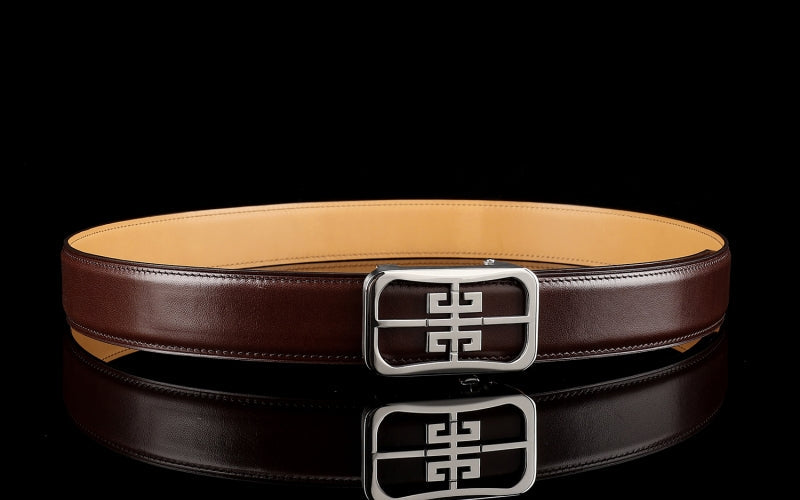
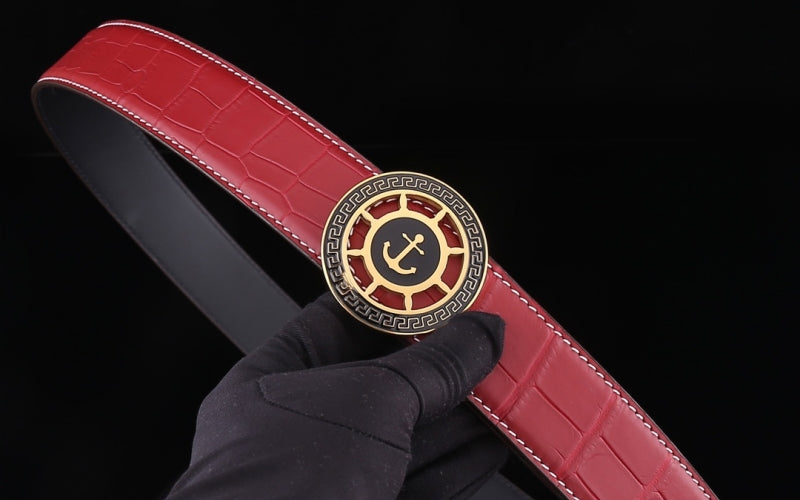
Rule 2: The buckle must be plain. No logos. No novelty shapes. No ornate engravings or decorative detailing. A plain rectangular or simple frame buckle in a matte or brushed metal is the correct choice for any professional setting. Logo buckles — even from recognized luxury brands — introduce branding where there should be none. An interview is not the occasion for your Gucci belt.
Rule 3: The leather must be in excellent condition. Cracked, peeling, or faded leather signals neglect. For an interview, your belt should look new or near-new. Quality full-grain leather actually improves with age when properly maintained, developing a rich patina — but worn-through or dried-out leather communicates that you don't attend to your belongings. This extends to the stitching (no loose threads) and the buckle (no significant tarnishing or scratching).
Rule 4: The width must match the outfit. A 1.5" belt through the loops of slim dress trousers looks out of proportion. A very narrow belt on wide-leg tailored trousers reads as an afterthought. Width calibration is covered in detail in the gender-specific sections below.
What Belt to Wear to a Job Interview: The Men's Guide
For men, the belt is a visible, functional component of almost every interview outfit. Getting it right is not optional.

What Color Belt Should Men Wear to a Job Interview?
Black is the safest and most appropriate color for a formal job interview. For business formal settings — finance, law, consulting, government — a black leather belt with black shoes is the standard. Brown belts are appropriate for business casual dress codes when worn with brown, tan, or cognac shoes, and work well for smart casual industries like tech and creative sectors.
The brown vs. black belt decision is largely driven by shoe color. Do not wear a brown belt with black shoes, and do not wear a black belt with brown shoes — these mismatches are among the most commonly noticed interview outfit errors.
A practical rule: if you own one interview belt, make it black. Black is versatile, pairs with the majority of professional footwear, and is universally appropriate across all formal dress codes.
Color quick-reference for men:
| Shoe Color | Correct Belt Color |
|---|---|
| Black | Black |
| Dark brown / Chocolate | Dark brown |
| Medium brown / Tan | Medium or tan brown |
| Burgundy / Oxblood | Dark brown or burgundy |
| Navy suede | Dark navy or black |
What Width Belt Should Men Wear to a Job Interview?
For business formal and business professional interviews, wear a belt between 1.25 inches (32mm) and 1.38 inches (35mm). This width sits correctly in the loops of dress trousers and suit pants without appearing bulky or casual. For smart casual dress codes — tech, startups, creative fields — a 1.5-inch (38mm) belt is acceptable when wearing chinos or relaxed-fit trousers.
The complete guide to belt width in mm breaks down width-to-trouser pairing in full detail. The core principle: narrower trousers and dressier fabrics call for slimmer belts. Wider or more relaxed cuts can accommodate slightly more width without looking out of proportion.
Avoid 1.5" or wider belts with dress trousers or suits. Avoid belts narrower than 1.25" in formal contexts — they tend to look flimsy rather than refined.
What Buckle Style Is Appropriate for a Men's Interview Belt?
A plain frame buckle or simple box buckle in brushed silver or antique brass is the correct choice. The metal finish should coordinate with other metals you're wearing — if your watch has a silver case, choose a silver-toned buckle. If your cufflinks or tie bar are gold-toned, a warmer antique brass or gold buckle creates better cohesion.
Avoid: plaque-style buckles (the flat, branded plate style associated with fashion labels), oversized buckles, anything with visible logos or text, and decorative elements like rope patterns, animals, or engravings.
The buckle's job in an interview is to close the belt and stay invisible. It succeeds when nobody notices it.
Material: Only Full-Grain Leather
For a job interview, only full-grain leather is appropriate. It is the highest grade of leather — taken from the outermost layer of the hide, with the natural grain intact. It holds its shape, accepts polish, and communicates quality through texture and finish.
Avoid genuine leather (a low-grade commercial product that cracks within months), bonded leather (compressed scraps that degrade quickly), and synthetic or vegan leather for formal interviews. These materials look fine on first glance but read as lower quality up close — and interviewers are close. The difference between a quality full-grain leather belt and its cheaper alternatives is immediately apparent in person.
What Belt to Wear to a Job Interview: The Women's Guide
Do Women Need to Wear a Belt to a Job Interview?
No — a belt is not a required element of women's interview attire. Many professional women's outfits are structured around pieces that don't use a belt: tailored blazers, sheath dresses, and wide-leg trousers that sit naturally at the waist. However, when a belt is worn, it should be deliberate and correctly coordinated — a finishing detail rather than an afterthought.
The cases where a belt adds value in a women's interview outfit: when wearing a shirt tucked into tailored trousers (a belt completes the silhouette), when layering a blazer over a high-waisted skirt with a natural waistband gap, or when a simple dress benefits from waist definition. In these contexts, a well-chosen belt elevates the outfit from polished to precisely assembled.
According to interview attire guidance from the UMass Dartmouth Career Center, women's accessories — including belts — should be minimalistic, complementary, and never a focal point. The outfit leads; accessories support.
Belt Recommendations for Women's Interview Outfits
When selecting a belt for a job interview as a woman, the following specifications apply:
Width: 1 inch (25mm) to 1.25 inches (32mm) for business formal or professional contexts. Slightly wider — up to 1.5 inches — is acceptable for smart casual settings or when the belt is functioning as a waist-defining element over a dress.
Color: Match the belt to the shoe color or the bag — consistency across these three elements (shoes, belt, bag) creates a coordinated professional look. Black, dark brown, and deep burgundy are the safest choices for formal interviews. Neutral tones like tan or nude work for lighter outfits in smart casual environments.
Buckle: Small, flat, and plain. Avoid statement buckles, oversized hardware, rhinestones, or anything decorative. The buckle should be inconspicuous.
Finish: Matte leather is preferable over high-gloss patent for formal and business professional contexts. A patent leather belt is too much visual contrast for most interview settings.
For a curated selection of women's belts that fit these specifications, BELTLEY's slim leather range offers the right proportions and finishes for professional wear.
Belt by Interview Dress Code
Understanding the dress code you're interviewing under is essential to selecting the right belt. Use this table as a calibration framework:

| Dress Code | Men's Belt | Women's Belt |
|---|---|---|
| Business Formal (finance, law, consulting) | Black full-grain leather, 1.25"–1.38", plain silver or brass buckle | Optional; if worn: black or dark brown, ≤1.25", minimal buckle |
| Business Professional (corporate, government, healthcare admin) | Black or dark brown, 1.25"–1.38", simple buckle | Optional; coordinated with shoes and bag |
| Business Casual (mid-size corporate, management roles) | Dark brown or black, 1.25"–1.5", clean buckle in matte metal | Optional; slim leather, neutral color |
| Smart Casual (tech, startups, creative fields) | Brown or black, 1.25"–1.5", understated buckle | Optional; slim leather or minimal woven belt |
Source: interview dress code guidance from A Hand Tailored Suit and Coursera's 2026 interview attire guide.
Belt by Industry: Specific Guidance
The general rules establish a baseline. Industry context sharpens them.

Finance, Law, and Consulting: These are the strictest environments. A black leather dress belt with a plain silver or antique brass buckle is standard. Brown belts are appropriate only with brown shoes on Friday or in less formal internal meetings — not for initial interviews. The entire outfit, including the belt, should be conservative and immaculate.
Government and Public Administration: Similar standards to finance — formal, conservative, and coordinated. No visible branding anywhere on your person.
Healthcare and Pharmaceuticals: Business professional for clinical and administrative roles. A slim leather belt in black or dark brown, coordinated with footwear. Lab coat roles are a different context entirely.
Technology and Startups: Smart casual and business casual are the norms. A 1.5" leather belt in black or brown is entirely appropriate. Well-maintained canvas or woven belts may work in startup environments with very casual cultures, but full-grain leather remains the safer default when meeting hiring managers for the first time.
Creative Industries (advertising, design, media): Smart casual with more room for personal expression. Slim leather in non-standard colors — cognac, burgundy, navy — can work here without reading as unprofessional. Keep the buckle clean regardless.
For a full look at what types of belts read as professional versus casual across different contexts, the guide on dress belt vs. casual belt provides the complete breakdown. And if you're uncertain what the current professional standard looks like, what type of belt is in style now covers the contemporary professional landscape.
Belt Mistakes That Signal Inattention
Even candidates who have done everything else right sometimes show up with a belt that undermines the overall presentation. The most common errors:
Mismatched belt and shoe colors. This is the most frequently cited issue by stylists, recruiters, and career coaches alike. Black shoes with a brown belt, or vice versa, signals that you assembled your outfit without checking the mirror — or without knowing the rule.
A logo or branded buckle. Wearing a belt with a visible designer logo in an interview draws attention to the accessory rather than to you. It can also signal that you're prioritizing brand status over professional judgment. Save branded buckles for social settings.
Worn, cracked, or faded leather. A belt in poor condition communicates that you don't maintain your belongings. This translates, whether consciously or not, into a question about how you maintain your work.
A belt too wide for dress trousers. A 1.5" or wider belt through slim dress trouser loops looks disproportionate. The silhouette breaks down, and the outfit looks cobbled together rather than intentional.
A casual belt in a formal setting. Woven, canvas, elastic, or braided belts are not appropriate for business formal or business professional interview dress codes. They belong to smart casual and below — not in a first interview with a law firm or financial institution.
A belt that technically fits but is on the wrong hole. If your belt's buckle is positioned far left or far right of center, the tail length looks awkward. The buckle should rest approximately at the center front. If the fit is off, size the belt correctly rather than adjusting with the wrong hole. The size guide makes this straightforward.
The Bottom Line
A belt for a job interview is not a statement piece. It is a precision component. It tells the interviewer — before you have said a word — that you understand the environment you're entering, that you pay attention to detail, and that you can be trusted to represent the organization professionally.
For men, the formula is consistent across most industries: a full-grain leather dress belt in black or dark brown, 1.25"–1.38" wide, with a plain matte buckle that matches your watch metal. For women, a belt is optional but when present should be slim, leather, and perfectly coordinated.
The quality of the leather matters significantly. A handcrafted full-grain belt holds its shape, takes a clean finish, and projects exactly the level of care that interview attire demands. At BELTLEY, every belt is built from full-grain hides, fitted with stainless steel or solid brass buckles, and backed by a 10-year warranty — because a belt that does its job in an interview should last far longer than the job search itself. Browse the full men's belt collection to find the right piece before your next interview.
Frequently Asked Questions
Q: Does the belt really matter in a job interview?
Yes. The belt is part of the complete professional silhouette, and its absence or miscoordination is noticed — particularly by detail-oriented interviewers in formal industries. A correctly chosen belt communicates attention to detail and professional awareness. An incorrect one can raise unconscious doubts about your judgment.

Q: Should the belt match the shoes exactly or just approximately?
The color family must match — black with black, brown with brown. Within the same color family, some variation in shade is acceptable, but significant mismatch (e.g., a light tan belt with dark chocolate shoes) reads as uncoordinated. When in doubt, match as closely as possible, or choose the same belt and shoe brand to ensure consistency.
Q: What is the best belt color for a job interview if I only own one belt?
Black. A black full-grain leather belt with a plain silver or brass buckle pairs with black, charcoal, and navy footwear — the most common colors in formal interview footwear. It is the most versatile and universally appropriate single belt to own for professional contexts.
Q: Can women wear a statement belt to a job interview?
No. A statement belt — wide, decorated, high-contrast, or heavily branded — draws attention to itself rather than supporting the overall outfit. In an interview, no single accessory should dominate the visual impression. Stick to slim, neutral, and minimal.
Q: Is a ratchet or micro-adjustable belt appropriate for an interview?
Yes, provided the overall look is clean and the mechanism is not visually prominent. Many ratchet-style dress belts have minimal, flat-face buckles that look identical to a traditional frame buckle from the front. The adjustment mechanism is internal and invisible. The key is that the belt must look formal — the mechanism is secondary to the appearance.
%20that%20matches%20your%20shoes%20exactly,%20with%20a%20plain%20matte%20metal%20buckle%0AWomen:%20a%20belt%20is%20optional%20in%20most%20interview%20contexts%20%E2%80%94%20when%20wor...)