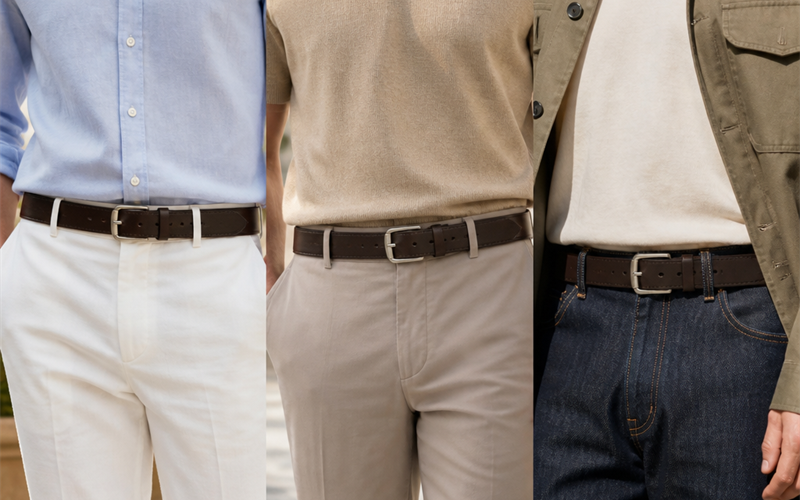
Are Full-Grain Leather Belts Still in Style in 2026?
Quick answer: Yes — emphatically. Full-grain leather belts are a timeless menswear and womenswear staple that doesn't follow trend cycles the way fashion items do. In 2026, the broader culture has shifted further toward quality, longevity, and "Buy It For Life" consumption, which has actually increased full-grain leather's relevance, not decreased it. What changes is the surrounding context — belt widths, buckle styles, and color preferences shift slightly with broader fashion currents — but the core full-grain leather belt remains in style decade after decade. Owning one is closer to owning a quality watch than to owning a trend piece.
Last updated: May 2026 • By BELTLEY Editorial
TL;DR:
- Full-grain leather belts are timeless, not trend-driven — they don't go in or out of style.
- 2026 fashion has actually doubled down on quality and longevity ("Buy It For Life" culture).
- Style elements that shift: width preferences, buckle styles, color trends, but not the core belt.
- The right full-grain belt today looks correct in 2026, 2030, and 2040.
- "Trend" risk in belts comes from logo-heavy fashion belts, not from full-grain classics.
The "is X still in style" question makes sense for trend-driven items — chunky sneakers, oversized blazers, specific color seasons — but it's the wrong question for timeless menswear staples. Full-grain leather belts have been in style for over a century and will be in style for the next century. The honest 2026 trend report: full-grain leather is more culturally relevant now than it was 10 years ago, driven by the broader shift toward quality and longevity. Below is the honest read on 2026 belt style. For specific style context, see best full-grain casual belt for jeans and chinos.
Why aren't full-grain leather belts subject to trend cycles?
Because they're a foundational menswear element, not a fashion item. Trend cycles affect items that signal current-year fashion participation — specific silhouettes, bold patterns, brand-of-the-moment logos, novelty details. Full-grain leather belts signal craftsmanship, longevity, and personal investment instead, which don't have an expiration date. A 1950s full-grain belt in good condition still looks correct today; a 1950s patterned tie often looks dated within 5 years.

The category fits into what fashion theorists call "timeless basics" — items that exist outside trend cycles because their value comes from material and craft quality rather than fashion signaling. Wool suiting, oxford cloth shirts, derby shoes, and full-grain leather belts all fall in this category. They're the slow-moving foundation that fast-moving trend pieces build on top of.
What has changed about belt style in 2026 vs earlier years?
Slight shifts in width, buckle style, and color preferences — not the core belt. Modern style trends affect leather belts mostly at the margins. Width: the modern dress standard has settled at 1.38" (35mm) — slightly wider than the 1.25" (32mm) traditional standard, slightly narrower than the 1.5" (38mm) casual standard. The 1.38" is the closest single belt can get to versatility. Buckle style: quiet plaque buckles and slim single-prong designs are the modern standard; oversized fashion buckles have receded. Color: mid-brown and cognac are slightly more popular than they were a decade ago; deep oxblood has emerged as a notable third color.

None of these shifts threaten the core full-grain belt's relevance. A 1.25" or 1.5" classic single-prong belt in black or dark brown is just as appropriate in 2026 as it was in 2016 or 2006. The shifts are at the edges; the center is stable.
Key stat: Searches for "full-grain leather belt" and "quality leather belt" have grown approximately 40-60% over the past decade, with peak search volume in 2024-2026 — reflecting the broader cultural shift toward quality consumption rather than diminished interest in leather belts.
What's driving the increased interest in quality leather goods?
The "Buy It For Life" cultural shift. Several cultural and economic factors have converged in the 2020s. (1) Fast-fashion fatigue — consumers tired of replacing cheap goods annually. (2) Cost-per-wear math — quality items at higher upfront cost become cheaper over their lifespan than disposable alternatives. (3) Sustainability concerns — buying once and keeping for decades reduces environmental impact compared to constant replacement. (4) DTC pricing accessibility — quality leather goods that used to be department-store expensive are now DTC-accessible at fair prices.
Full-grain leather belts fit each of these trends perfectly. A real full-grain belt costing $100-$200 and lasting 10-15+ years has dramatically better cost-per-year than a $40 corrected-grain belt replaced annually. The math works in any economic environment but resonates particularly in cost-conscious eras. See why is full-grain leather so expensive for the full cost framing.
What belt elements ARE trend-sensitive?
Logos, oversized hardware, novelty finishes, and "fashion" buckles. Trend-driven belt elements include. (1) Designer logos — Gucci/Hermès/Versace logo buckles cycle in and out of style every few years; the same belt that's "must-have" in 2024 can read dated by 2028. (2) Oversized fashion buckles — chunky designer plates, novelty shapes, and statement hardware date faster than classic single-prong or plaque buckles. (3) Two-tone or contrast leathers — work in specific style moments; can read dated outside them. (4) Embossed patterns (crocodile-stamped cowhide, geometric textures) — sometimes trendy, often not.

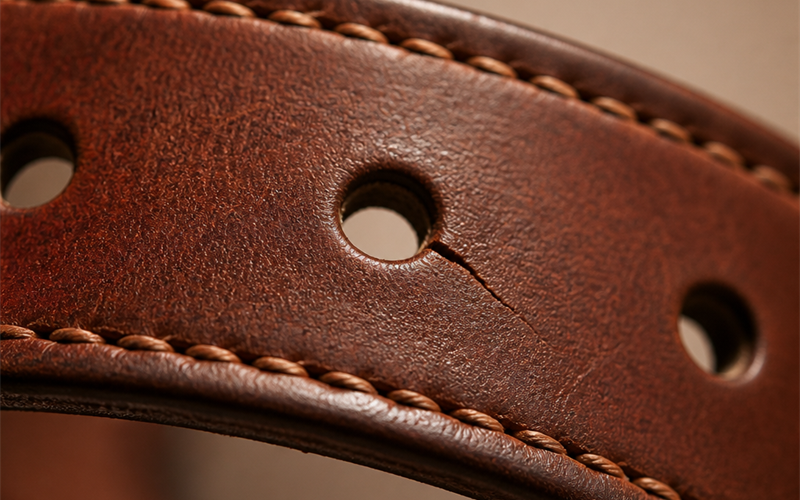
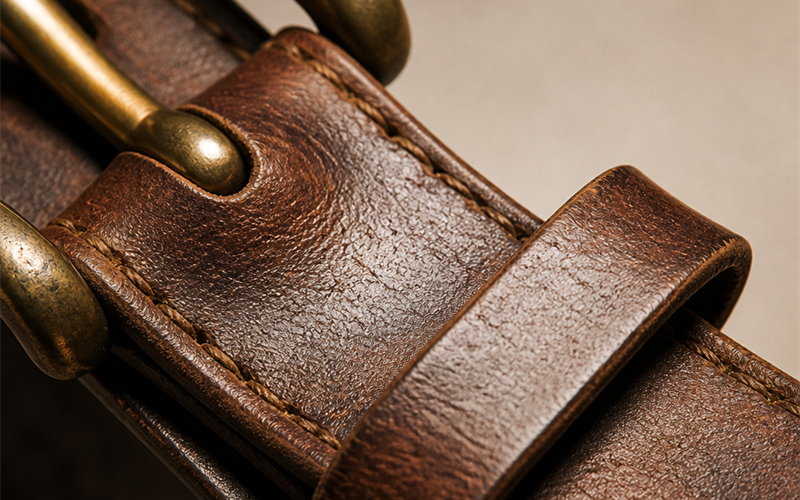
The trend-resistant version is the opposite: classic single-prong or quiet plaque buckle in solid brass or stainless, smooth or subtly-pebbled full-grain leather, single solid color. This belt formula has been correct in every decade since the 1920s and will continue being correct.
Trend-resistant vs trend-driven belt elements
| Element | Trend-resistant | Trend-driven |
|---|---|---|
| Leather grade | Full-grain (always) | Corrected-grain with novelty finishes |
| Width | 1.25"-1.5" classic standards | Ultra-thin or ultra-wide fashion widths |
| Color | Black, dark brown, cognac | Bright fashion colors, two-tones |
| Buckle | Single-prong, plaque | Logo-stamped, oversized novelty |
| Buckle metal | Solid brass or stainless | Gold-plated, antiqued, "fashion finish" |
| Edges | Burnished or painted | Raw + decorative |
| Stitching | Tight, single or double row | Decorative contrast stitching |
| Overall vibe | Classic menswear | "On trend" fashion |
How long does a 2026-purchased belt stay in style?
Indefinitely if you choose the classic formula. A 2026 purchase of a 1.25" or 1.5" smooth full-grain belt in black, dark brown, or cognac with a simple stainless or brass single-prong buckle will look correct in 2030, 2040, and 2050. The same physical belt, in good condition, would have looked correct in 1990, 2000, and 2010. This is what "timeless" actually means — not "currently popular," but "outside the trend cycle entirely."

The risk to long-term style is choosing trend-driven elements. A 2026 belt with a 2025-specific logo, novelty finish, or fashion buckle may look dated by 2028. The buyer who wants long-term style picks classic elements; the buyer who wants current-trend signaling picks fashion elements. Both are legitimate; just understand which you're buying.
What about full-grain leather more broadly — declining or growing?
Growing. Cultural attention to full-grain leather has increased in the past decade, driven by Reddit communities (r/BuyItForLife, r/leather, r/heritage), YouTube reviewer culture, and DTC brand education. Consumers are more informed about leather grades than they were 10 years ago, which has accelerated demand for full-grain and reduced demand for "genuine leather" and bonded products. See what does "100% full-grain leather" actually mean for the broader education context.

The DTC model has also made full-grain accessible at prices that used to be department-store-exclusive. A real full-grain belt at $100 is increasingly normal in 2026; in 2010, the same belt typically required $200+ retail. The combination of better consumer education and accessible pricing means full-grain leather is more relevant culturally than it has been in decades.
The Bottom Line
Full-grain leather belts are timeless menswear and womenswear staples that exist outside trend cycles. In 2026, they're not just "still in style" — they're more culturally relevant than they were a decade ago, driven by Buy It For Life consumption, cost-per-wear math, and accessible DTC pricing for quality goods. The classic formula (1.25"-1.5" full-grain belt in black or brown with a simple single-prong or plaque buckle) has been correct in every decade for a century and will continue being correct for the next century. Trend-driven elements (logos, oversized buckles, novelty finishes) come and go; classic full-grain belts don't. BELTLEY's full-grain leather belt collection, men's collection, and women's collection are built specifically around timeless formulas in real materials — backed by a 10-year warranty. Ready for a belt that's in style today and in 2040? Start there.
Frequently Asked Questions
Q: Are leather belts still fashionable in 2026?
Yes — full-grain leather belts are a timeless staple, not a trend item, so they don't go in or out of fashion the way trend pieces do. In 2026, the broader culture has shifted further toward quality and longevity, making full-grain leather more relevant than it was a decade ago, not less.
Q: What belt styles are trending in 2026?
The notable trends are: 1.38" (35mm) as the modern dress-casual standard width, quiet plaque buckles in addition to traditional single-prong, mid-brown and cognac as popular colors alongside classic black and dark brown, and oxblood/burgundy as an emerging third color. The core full-grain leather belt remains the foundation; these are surface-level shifts.
Q: Will my full-grain leather belt look dated in 10 years?
Not if you chose a classic style. A 1.25"-1.5" full-grain belt in black, dark brown, or cognac with a single-prong or plaque buckle in stainless or brass will look correct indefinitely. Trend risk comes from designer logos, oversized fashion buckles, and novelty finishes — avoid those for long-term style longevity.
Q: Is full-grain leather still considered premium in 2026?
Yes, more than ever. Consumer awareness of leather grades has increased significantly in the past decade, and full-grain is widely recognized as the top tier (above top-grain, genuine, and bonded). Premium DTC brands and heritage US tannery brands continue to set the quality standard.
Q: Should I buy a logo belt for 2026 trends?
Most logo belts are trend-driven — they're "on" for 2-4 years and then read dated. If you want to participate in current-year fashion signaling, logo belts can work; if you want a belt you'll wear for 10+ years, choose classic full-grain without logos. Both are legitimate purchases for different reasons.