Why Exotic Belt Prices Vary So Much (2026 Buyer's Guide)
Quick answer: Exotic belt prices vary because the face leather, not the strap, drives the cost. A printed "croc-look" belt can sell for $40, while a genuine American alligator belt runs $150–$300 at direct-to-consumer brands and $400–$2,000+ at luxury houses. Species rarity, the cut of the hide, legal CITES sourcing, hardware, and brand markup explain almost every dollar of the gap.
Last updated: June 2026 • By BELTLEY
TL;DR:
- The biggest price driver is the species and grade of skin — cowhide is cheap, python is mid, alligator and crocodile sit at the top.
- One crocodile belly skin costs a tannery $200–$800 and yields only a few belts, so scarcity is baked in.
- CITES permits and hand-matched scales add real cost that printed-leather belts skip entirely.
- The widest gap is brand markup — the same grade of skin can cost $200 or $2,000 depending on the logo.
Exotic belts confuse shoppers for a good reason: two belts that look almost identical can be priced ten times apart. A glossy crocodile-grain strap might be $45 of embossed cowhide, or it might be a genuine American alligator belt that took a craftsman a full day to cut and match. The animals behind the priciest options — saltwater crocodile, Nile crocodile, and American alligator from Louisiana and Florida — are farmed and traded under strict rules, and that paperwork follows every hide. Below is exactly where your money goes, from raw skin to finished buckle. If you want to see the range in one place, browse our exotic leather belts collection as you read.
Which Exotic Belt Actually Fits Your Budget?
Match your goal to the smartest pick — every recommendation below uses real BELTLEY pricing, not invented numbers.

| Your situation | Go with |
|---|---|
| Trying the exotic look for the first time | A python or textured belt — the lowest-cost way to test the style |
| You want the real croc or alligator icon without the markup | Genuine crocodile/alligator at fair pricing ($118–$288.88), not $1,500 |
| You need an everyday workhorse, not a flex | Full-grain cowhide from $58 — exotic isn't the value play here |
| Buying a once-in-a-lifetime heirloom or gift | Top-grade alligator or elephant ($288+), where the wow factor earns its keep |
| Trap to avoid | A four-figure "designer" croc belt where most of the price is the logo, not the leather |
Not sure crocodile and alligator are even different? Our guide on alligator vs crocodile belts breaks it down.
Why do exotic belt prices vary so much?
Exotic belt prices vary because five things stack on top of the plain strap: the animal species, the grade and cut of the hide, legal CITES sourcing, the hardware, and the brand's markup. Each layer can double the price, and a genuine exotic skin alone can cost more than an entire finished cowhide belt.
Think of an exotic belt as two products in one: a leather strap and a rare animal skin on its face. The strap is cheap and consistent. The skin is not. Crocodile and alligator skins make up less than 1% of global leather production, so supply — not sewing — sets the floor. Everything else, from tannery skill to buckle metal, adds from there.
Which exotic leather is the most expensive?
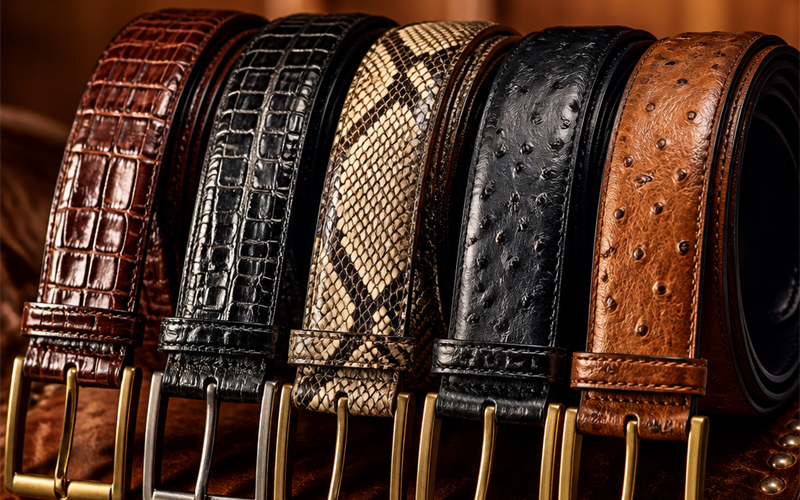
American alligator and saltwater crocodile are the most expensive belt leathers, followed by Nile crocodile and ostrich, with python and embossed cowhide far cheaper. The priciest skins are scarce, slow to tan, and graded strictly for flaws, so a flawless belly strip costs many times more than a printed lookalike.

Roughly 750,000 alligator and 750,000 crocodile skins are harvested each year — about 0.2% of the leather the world makes, according to Gentleman's Gazette. For comparison, the world turns out around 350 million cowhides. Here is how common belt leathers stack up:
| Leather | Typical genuine belt price | What drives the cost |
|---|---|---|
| Full-grain cowhide | $40–$150 | Abundant hides, easy to work |
| Python | $80–$180 | Exotic look, larger supply, thin skins |
| Ostrich | $150–$350 | Distinctive quill pattern, limited farms |
| Alligator / crocodile | $150–$300 (DTC) · $400–$2,000+ (luxury) | Scarce hides, hand-matched scales, CITES |
| Elephant | $250–$400+ | Tightly restricted, rare supply |
At BELTLEY, our genuine crocodile and alligator belts run $118–$288.88 — the same grade of skin the big houses use, without the four-figure ticket. For the full breakdown, see our crocodile leather belt price guide.
Key stat: A single crocodile belly skin costs a tannery $200–$800 — and after the scarred and uneven sections are cut away, one hide may yield only 2–4 belts.
The cut of the hide matters as much as the species
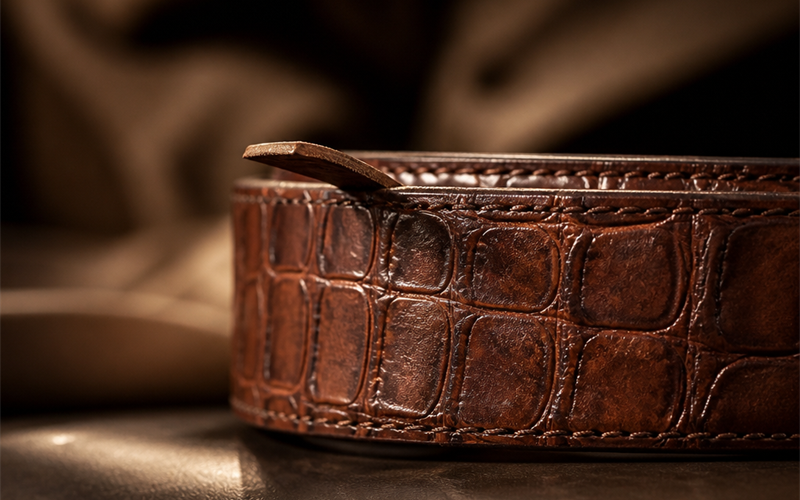
Two alligator belts from the same animal can carry very different prices depending on which part of the hide they use. The belly — with its clean, even, square-tile scales — is the most prized and the most expensive. The hornback, the bony ridged section along the spine, looks dramatic but is harder to work and usually cheaper.

First-grade crocodile skin is valued at around $9 per centimeter, so a belt-length strip of flawless center-cut belly adds up fast. Matching matters too: because no two crocodile patterns are identical, a maker often buys several skins just to find two panels that line up across one belt. That waste is priced in. Our guide to why alligator leather is so expensive goes deeper on cuts and grades.
CITES rules and legal sourcing add real cost
Every legal exotic skin travels with paperwork. Crocodilians are protected under CITES, the international treaty that controls trade in protected species, so hides move only with permits and certification. The American alligator is a conservation success story — it came off the endangered list in 1987 and is now managed through regulated harvests, as documented by the U.S. Fish & Wildlife Service.
That system keeps the species healthy, but it also adds cost: tagging, permits, inspections, and a short list of tanneries licensed to process exotic skins. Crocodile farming is a real industry — worth $60–$70 million in Louisiana alone — and those controls are part of why a legal exotic belt will never be as cheap as a printed one. To be clear, BELTLEY provides the legal import documentation for the leather; we do not issue a separate wildlife certificate with each belt.
Why does the same crocodile belt cost $200 at one brand and $2,000 at another?
Most of that gap is brand markup, not better leather. A heritage fashion house and a direct-to-consumer maker can buy nearly identical first-grade alligator skin; the difference you pay is the logo, the boutique, and the marketing. A Hermès crocodile Birkin can pass £50,000 — a price the skin alone never explains.

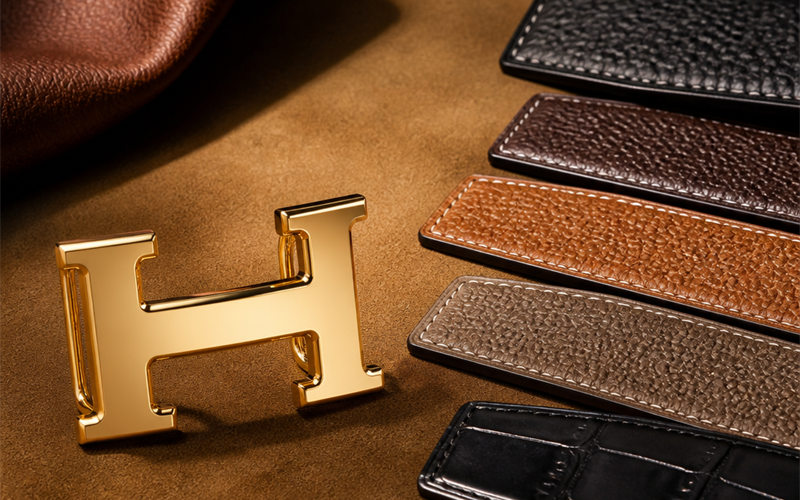
This is where shoppers overpay most. Once you know a genuine alligator belt's real material cost, a $1,500 sticker starts to look like a tax on the name. The smarter move is to judge the belt by what it is actually made of: a quality exotic face, a solid brass or stainless steel buckle, and sealed, hand-finished edges. We call that the 3-Material Rule, and it is where durability lives. See our take on why designer belts cost so much.
Are expensive exotic belts worth it?
A mid-priced genuine exotic belt is usually worth it; a four-figure logo belt usually is not. Real alligator and crocodile age beautifully and last decades with care, so the cost-per-wear stays low. You simply do not need luxury-house money to get luxury-house leather.

If you wear a belt daily and want a piece that signals taste over logo-chasing, a $120–$290 genuine exotic belt is the sweet spot — backed, in our case, by a 10-year warranty. If you only want the look for a single season, an embossed texture does the job for less. And if you want the rarest flex, elephant leather belts sit at the top of our range at $288.
The Bottom Line
Exotic belt prices vary because you are really paying for the skin, not the strap — and skins range from a few dollars of embossed cowhide to a few hundred dollars of hand-graded alligator belly. Species, hide cut, CITES sourcing, and hardware explain the honest part of the price; brand markup explains the rest. Once you can name those layers, you stop overpaying for a logo and start paying for leather. At BELTLEY, we sell the same grade of exotic skin the big names use — handcrafted, fairly priced from $112–$288.88, and built to outlast the trend. Browse the exotic leather belt collection and pay for the hide, not the hype.
Frequently Asked Questions
Q: What is the most expensive type of exotic belt leather?
American alligator and saltwater crocodile are the most expensive belt leathers, prized for their even belly scales and strict legal sourcing. Nile crocodile and ostrich follow, while python and embossed cowhide cost far less.
Q: Why is alligator leather more expensive than python?
Alligator hides are scarcer, slower to tan, and harvested under tight quotas, while python is more plentiful and thinner to work. A genuine python belt often runs $80–$180, while genuine alligator typically starts around $150.
Q: How can I tell if an exotic belt is real or embossed?
Genuine exotic leather has slightly irregular scales, soft pores, and patterns that never perfectly repeat; embossed cowhide shows identical, machine-stamped tiles. Price is also a clue — a $30 "crocodile" belt is almost always printed cowhide.
Q: Is an expensive crocodile belt worth it?
A genuine, well-made crocodile or alligator belt is worth it if you will wear it for years, because the cost-per-wear stays low. A four-figure designer version usually is not — most of that price is brand markup, not better leather.
Q: Why are BELTLEY exotic belts cheaper than designer brands?
BELTLEY sells direct, skipping boutiques and licensing fees, so you pay for the leather and craftsmanship rather than a logo. Our genuine exotic belts run $112–$288.88 with a 10-year warranty. Learn more on our about page.