Why Do My Belts Always Crack? The Truth Your Belt Isn’t Telling You (And How to Fix It)
Quick guide
- Belts crack because the leather loses its internal oils and moisture — once collagen fibers dry out, they stiffen, fracture, and split under normal bending stress.
- The #1 accelerator is cheap leather grade: bonded and "genuine" leather belts crack within months because they lack the continuous fiber structure that resists fatigue.
- Prevention comes down to three things: buy full-grain leather, condition it 2-3 times per year, and store it properly.
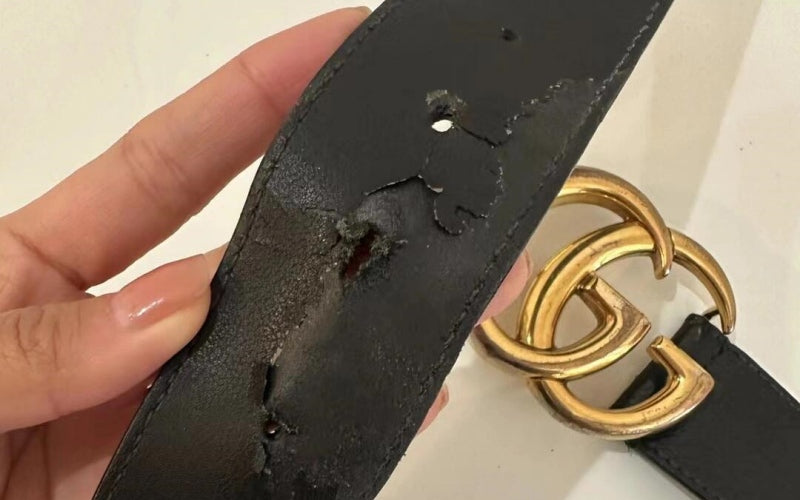
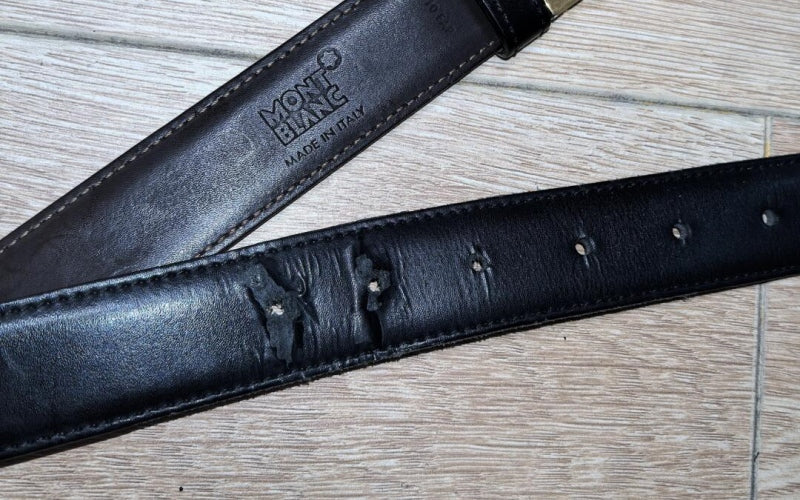
You pull your belt out of the drawer and there they are — hairline cracks spreading across the surface like dried mud. Maybe the leather is peeling near the buckle. Maybe the holes have started to split. If your belts always crack, you're not being rough with them. The leather is failing you.
Belt cracking is the most common leather complaint we hear at BELTLEY, and it's almost always caused by one of six specific problems. Most of them are fixable. Some require replacing the belt entirely. Here's how to tell the difference — and how to stop the cycle for good. If your belt is already showing damage, our leather care guide covers first-aid steps.

What Actually Causes Leather to Crack?
Leather cracks when the collagen fibers that make up its structure lose the oils and moisture that keep them flexible. Healthy leather contains roughly 10-15% bound water and a layer of fatliquors (oils applied during tanning) that lubricate the fibers as they flex. Without that lubrication, the fibers stiffen, grind against each other, and fracture.
Think of it like your skin in winter. When humidity drops, your hands crack — not because of damage, but because of dehydration. Leather behaves the same way because it is skin. According to leather science research by Advanced Leather Solutions, once the internal oil content drops below a critical threshold, micro-fissures form at stress points and spread outward with every bend.
This is a chemical and mechanical process, not a defect. All leather will eventually crack if neglected. But the speed at which it happens depends almost entirely on two variables: the quality of the leather and how you care for it.

Is Your Belt Made from the Wrong Leather Grade?
The fastest path to cracking is starting with low-grade leather. Bonded leather — made from shredded leather scraps glued to a fabric backing with polyurethane — cracks within 6-18 months regardless of care. It has no continuous collagen fiber network. The adhesive dries, the scraps separate, and the surface peels and flakes.
"Genuine leather" is only marginally better. Despite the reassuring name, genuine leather is the lowest grade of real leather — a split layer from the underside of the hide with a corrected, painted surface. That surface coating cracks independently from the leather beneath it, creating the classic "peeling paint" failure pattern that Broadway Leather Company documented as the most common reason customers return belts.
Here's how leather grades compare on cracking resistance:
| Leather Grade | Fiber Structure | Typical Lifespan Before Cracking | Can Conditioning Prevent Cracking? |
|---|---|---|---|
| Full-grain | Dense, intact, unaltered | 10-25+ years | Yes — highly effective |
| Top-grain | Sanded surface, mostly intact | 5-10 years | Yes — effective |
| Genuine (corrected) | Split layer, painted surface | 1-3 years | Partially — coating still cracks |
| Bonded | Shredded scraps + adhesive | 6-18 months | No — structural failure |
Full-grain leather resists cracking because its outermost layer — the densest, tightest part of the hide — remains intact. That dense fiber network distributes stress evenly and holds conditioning oils far longer than sanded or split alternatives. For a deeper comparison, see our guide on how to tell if a belt is full-grain leather.

How Does Sun and Heat Damage Cause Belt Cracking?
UV radiation and heat are the two fastest environmental killers of leather. UV-B rays (280-315 nm) directly break the peptide bonds in collagen proteins, while UV-A rays degrade the fatliquors that keep fibers lubricated. Heat compounds the problem by accelerating moisture evaporation from inside the leather.
According to research on UV damage to leather products, leather left in direct sunlight can lose significant structural integrity within weeks — not months. The collagen fibers contract as they dehydrate, drawing closer together and creating internal tension that manifests as surface cracks.
Common high-risk scenarios:
- Car dashboards and back seats — interior temperatures can exceed 150°F (65°C) in summer, baking belts left in the car
- Windowsill or open-closet storage — even indirect sunlight through glass delivers enough UV to degrade leather over months
- Radiators and heating vents — dry heat in winter strips moisture from leather rapidly, often within a single season
The fix is simple: store belts in a closed closet, away from heat sources and direct light. Hang them on a belt rack or roll them loosely — never fold, which creates permanent crease lines that become crack initiation points.

Why Do Belts Crack at the Buckle Fold?
The buckle fold — where the leather wraps around the buckle bar — absorbs more stress than any other point on the belt. Every time you fasten or unfasten the belt, the leather bends sharply at this fold. Over months and years, that repeated flexing fatigues the fibers.
Leatherworking experts at Leatherworker.net identify buckle-fold cracking as especially common in belts made from thick but poorly tempered leather. If the leather wasn't properly fatliquored during tanning, the fibers at the fold point dry out first because they're under the most mechanical stress.
Three factors that accelerate buckle-fold cracking:
- Leather thickness without flexibility — a stiff 5mm belt that wasn't broken in properly will crack at the fold before a supple 4mm belt
- Sharp buckle edges — cheap buckles with unfinished metal edges cut into the leather at the fold
- Never conditioning the fold area — most people condition the visible strap but forget the interior fold, which needs it most
At BELTLEY, we pre-condition every belt at the buckle fold during production. The leather is flexed and oiled before it reaches you, so the fold point starts with maximum flexibility rather than fighting against a stiff break-in period.

The Moisture Cycle: Sweat, Rain, and Over-Drying
Leather's relationship with moisture is a balancing act. Too little moisture and it cracks. Too much moisture and it warps, stretches, and develops mold. The worst-case scenario is a rapid cycle between the two — getting soaked and then drying out quickly.
Sweat is the most common culprit. Your body produces sweat that contains salt and uric acid, both of which pull moisture from leather fibers while depositing mineral residue that stiffens the surface. If you wear a belt against a tucked cotton shirt, the shirt absorbs most of the sweat. If you wear a belt against bare skin or a synthetic fabric, the leather takes the hit directly.
After a belt gets wet (rain or sweat):
- Blot with a dry cloth — never rub
- Let it air-dry at room temperature — never use a hair dryer or place near a heater
- Once fully dry, apply a thin coat of leather conditioner to restore lost oils
- For ongoing maintenance, follow our 7 tips for keeping a leather belt in good condition

How to Prevent Your Belts from Cracking
Prevention is faster, cheaper, and more effective than repair. A belt that's never allowed to fully dry out won't develop the micro-fissures that lead to visible cracking.
The conditioning schedule:
- Normal wear (office, casual): condition every 3-4 months
- Daily wear in dry climates: condition every 6-8 weeks
- Frequent sweat exposure (outdoor work, hot climates): condition monthly
Best conditioners for belts:
- Mink oil — deep penetration, slight darkening effect
- Neatsfoot oil — traditional, excellent for thick full-grain
- Beeswax-based cream — surface barrier plus conditioning
- Avoid: silicone sprays (coat the surface but trap moisture inside) and petroleum-based products (can break down tanning agents)
Apply conditioner in thin, circular coats. Let it soak in for 15-20 minutes — overnight if the leather is very dry — then buff with a soft cloth. Focus extra attention on the buckle fold and the most-used holes, where stress and drying are greatest.
For a comprehensive walkthrough, read our full guide on how to keep leather belts from cracking.
The Bottom Line
Belts crack because of dried-out collagen fibers, and the speed of cracking depends on leather grade, environmental exposure, mechanical stress at the buckle fold, and how often you condition. Bonded and genuine leather will crack no matter what you do — the material isn't built to last. Full-grain leather, conditioned 2-3 times per year and stored away from heat and UV light, will develop a rich patina instead of cracks.
If your belts always crack, the most cost-effective fix is to stop buying cheap belts and invest once in a full-grain leather belt built from materials that respond to care rather than resist it. BELTLEY belts ship free worldwide, include 30-day hassle-free returns, and carry a 10-year warranty — because leather this good doesn't crack.
Frequently Asked Questions
Q: Can you fix a cracked leather belt?
Minor surface cracks can be improved with leather conditioner — it softens the surrounding fibers and reduces the visual appearance of fine cracks. Structural cracks (where the leather has split through) are irreparable. Bonded leather peeling and delamination cannot be reversed. For light cracking, conditioning your belt is worth trying before replacing it.
Q: How often should you condition a leather belt to prevent cracking?
Every 3-4 months for normal wear. Increase to every 6-8 weeks if you live in a dry climate or wear the belt daily in hot conditions. Use mink oil, neatsfoot oil, or a beeswax cream — avoid silicone sprays and petroleum-based products that seal the surface without nourishing the fibers beneath.
Q: Why does my new belt crack so quickly?
A new belt cracking within the first few months almost always indicates bonded or corrected-grain leather. These grades use adhesive layers and surface coatings that dry out rapidly. Check your belt's label — if it says "genuine leather" or "bonded leather" and nothing more, the material was never built to last. Full-grain leather belts rarely crack in their first several years, even without conditioning.
Q: Does rolling or hanging a belt prevent cracking?
Yes — both methods are far better than folding. Folding creates a permanent crease that concentrates stress and accelerates cracking at the fold line. Hanging a belt on a hook or rack is ideal. Rolling loosely (grain side out) is the best option for travel or drawer storage. Read our guide on the best way to store leather belts.
Q: What's the difference between belt cracking and belt peeling?
Cracking occurs when leather fibers dry out and fracture — it happens to real leather of all grades. Peeling is the separation of a surface coating or bonded layer from the base material — it only happens to corrected-grain leather (with a painted finish) or bonded leather (with a polyurethane coating). If your belt is peeling rather than cracking, the material is either bonded or heavily corrected, and conditioning won't fix it.