Why Are Leather Belts So Expensive? 10 Reasons Explained by BELTLEY
TL;DR: Quick Answer
- Leather belts are expensive because of the raw material (hide grade), tanning method, hardware, and skilled labor — not just the brand name on the buckle. A full-grain cowhide belt costs $35–$55 to produce; an exotic crocodile belt costs $80–$150+.
- The biggest price variable is markup, not materials. DTC brands multiply production costs by 2–3x. Designer labels multiply by 8–12x. Same leather, vastly different price tags.
- The sweet spot for quality is $75–$150 — enough to get full-grain leather, solid hardware, and handcrafted construction without paying Brand Tax.
A $25 belt and a $500 belt can look nearly identical in a product photo. They both say "leather." They both have a buckle. So why does one cost twenty times more than the other — and is the expensive one actually worth it?
The answer isn't a single factor. It's a stack of ten cost drivers that compound on top of each other — some legitimate, some inflated, and some pure marketing. This guide breaks down every reason leather belts are expensive, explains where your money actually goes at each price point, and shows you how to get maximum quality without the maximum markup. For the full pricing breakdown by tier, our guide on how much a leather belt should cost covers exact price-to-quality benchmarks.

The Leather Grade Determines Everything
The single biggest factor in a leather belt's price is the hide grade — and most shoppers don't know what they're actually buying.
Full-grain leather — the outermost layer of the hide with the natural grain intact — costs $5–$15 per square foot at wholesale, according to Hoplok Leather's pricing analysis. A single belt uses 2–3 square feet, putting the raw leather cost at $10–$45 per belt.
Genuine leather (a misleading industry term for the lowest usable grade) costs $2–$4 per square foot — less than a third of full-grain. That's where the $25 belt gets its "leather" label without the structural quality. Our full-grain vs. genuine leather comparison explains exactly why this distinction matters for durability and aging.
Exotic leathers — crocodile, alligator, elephant, python — sit in an entirely different pricing tier. A single crocodile belly skin suitable for belts can cost $200–$800, depending on size, grade, and species. This is why exotic leather belts start at $128 even from a DTC brand with no retail markup.

How Is Vegetable Tanning Different from Chrome Tanning?
Vegetable tanning takes 30–60 days using natural tannins from chestnut and oak bark. Chrome tanning takes 1–2 days using chromium salts. The time difference alone creates a massive cost gap.
According to Steel Horse Leather's tanning comparison, chrome tanning dominates roughly 90% of global leather production because it's faster, cheaper, and requires less skilled labor. Vegetable tanning produces leather that's stiffer, more durable, and develops the rich patina that full-grain enthusiasts prize — but at 15–30x the processing time.
The practical cost impact: vegetable tanning adds $0.50–$2.00 per square foot beyond the base hide cost, according to Szoneier Leather's cost analysis. For a belt using 2.5 square feet, that's an extra $1.25–$5.00 — a modest amount that translates to dramatically better aging and longevity.

Hardware Quality Is the Hidden Cost Driver
A buckle can cost $1 or $15 — and the difference shows up within months.
Plated zinc alloy buckles (found in sub-$50 belts) cost $1–$3 to manufacture. The base metal corrodes, the plating chips, and the prong can snap under daily stress. Effortless Gent's belt value analysis identifies buckle failure as one of the top three reasons cheap belts end up in landfills.
Solid brass buckles cost $5–$10. They develop a warm patina and won't corrode.
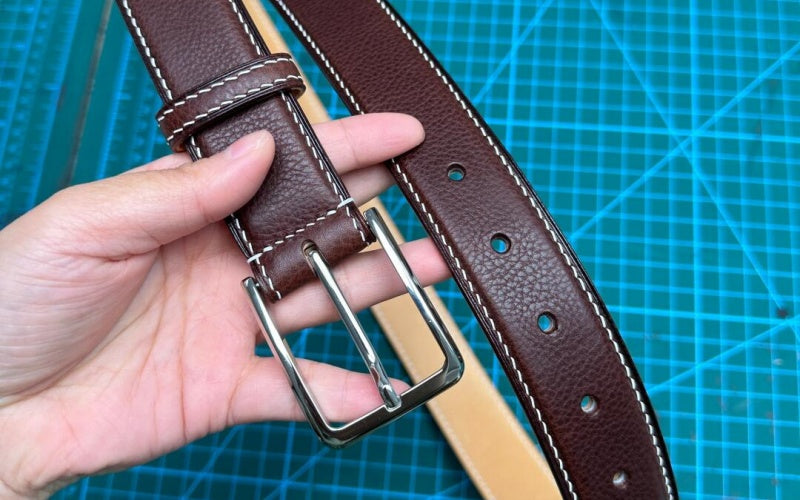
316L stainless steel buckles — the grade used in surgical instruments and high-end watches — cost $8–$15 per unit. They're immune to corrosion, tarnishing, and skin reactions. At BELTLEY, we use 316L stainless steel buckles exclusively because they match the 10+ year lifespan of the leather itself.

What Does Handcrafted Construction Actually Cost?
Skilled labor is the cost factor most invisible to buyers — and the one that separates a belt that lasts a decade from one that falls apart in a year.
A mass-produced belt takes 5–10 minutes of machine time. An artisan-crafted belt requires 45–90 minutes of skilled hand labor, according to Leatherworker.net forum pricing discussions among professional craftspeople.
That labor breaks down into specific operations: edge burnishing (sanding and waxing each edge 50+ times for a smooth, moisture-resistant finish — 20–30 minutes), hand or lock stitching (15–20 minutes), and hole punching, buckle fitting, and quality inspection (10–15 minutes). According to Weaver Leather Supply's pricing guide, skilled leather artisans command $20–$40/hour depending on region and expertise.
The result: burnished edges resist moisture and fraying for decades, while the painted edges on cheap belts chip and peel within the first year. For a closer look at construction quality markers, see our guide on how to choose a good leather belt.

Exotic Leather Scarcity and Regulation
Exotic leather pricing reflects genuine scarcity — not manufactured exclusivity.
Crocodile and alligator hides come from regulated farms that comply with CITES (Convention on International Trade in Endangered Species). Each hide is tagged, traced, and certified from farm to finished product. This regulatory infrastructure adds compliance costs that cowhide simply doesn't carry. Our guide on why alligator leather is so expensive breaks down the full supply chain.
The hides themselves are also smaller and more delicate to work with. A crocodile belly panel suitable for a belt strap yields fewer usable pieces than a cowhide back, and the cutting, matching, and finishing require specialized skill that general leather workers may not possess.
Where Does the Brand Tax Go?
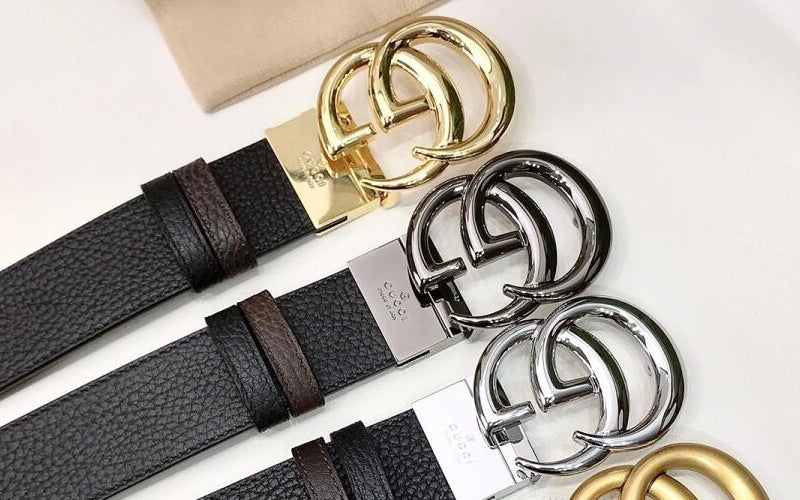
This is where leather belt pricing breaks from reality. The materials and labor in a $400 designer belt and a $120 DTC belt are often functionally identical — but the retail economics are completely different.
According to McKinsey's State of Fashion analysis, luxury brands typically spend 12–18% of revenue on marketing alone. Add flagship retail rent ($500–$2,000+ per square foot annually on Fifth Avenue or the Champs-Élysées), celebrity endorsement deals, and layered wholesale-to-retail distribution margins, and a belt costing $40 to produce retails at $400–$600.
DTC brands like BELTLEY eliminate the wholesale layer entirely. Our production cost multiplier is 2–3x — not 8–12x. That's why our full-grain leather belts sit in the $78–$128 range using the same grade of leather that commands $300+ with a designer logo.
For a full comparison of designer pricing, our guide on why designer belts are so expensive covers all 12 factors in detail.

Does Ethical Sourcing Add to the Price?
Yes — and it should. Responsible leather production costs more than cutting corners.
Tanneries that meet Leather Working Group environmental standards invest in water treatment, chemical management, and energy efficiency that budget operations skip. Tanner Bates' leather cost analysis notes that "environmental regulations and ethical sourcing practices increase costs, but they ensure the leather you're buying isn't contributing to environmental harm."
Chrome tanning with improper waste treatment is a well-documented pollution source in developing countries. Brands that source from LWG-rated tanneries pay a premium for compliance — typically 10–20% above uncertified alternatives. That premium shows up in the belt's price, but it also shows up in a cleaner supply chain.
Why Does Leather Finishing Matter So Much?
The finishing process after tanning — dyeing, conditioning, surface treatment — adds another layer of cost that separates premium belts from commodity ones.
Hand-applied dyes penetrate the leather's full depth, meaning scratches and scuffs don't reveal a different color underneath. Machine-sprayed surface coatings (common in sub-$50 belts) sit on top of the leather and crack or peel under flexing stress. According to Satchel & Page's tannery pricing data, hand-patina and specialty finishes add $5–$15 per square foot to the base leather cost.
Edge finishing is equally critical. Burnished edges — created by repeatedly sanding, waxing, and polishing each edge by hand — cost 20–30 minutes of labor per belt but create a seal that resists moisture infiltration for years. Painted edges cost seconds and peel within months.

How Does Belt Thickness Affect Price?
Thicker leather belts cost more because they require higher-grade hide sections — and the hides themselves must meet stricter quality standards.
A 3.5–4.0mm (8–9 oz) belt strap — the ideal range for daily wear — must be cut from the "double butt" or "back" section of the hide, which is the densest and most consistent area. According to Szoneier Leather's thickness guide, these premium sections represent only 30–40% of a full hide's usable area.
Thinner cuts (2.0–2.5mm) can be taken from less premium sections, reducing material waste and cost. But they also reduce lifespan — a thin belt stretches, sags, and loses shape faster than a properly weighted one. The premium for proper thickness is $3–$8 per belt in raw material, but it adds years of service life.
Reason #10: Warranty and After-Sale Support
A belt backed by a 10-year warranty costs more to produce than a belt with no warranty — because the manufacturer has to build a product that won't come back.
Warranty support creates a quality feedback loop: if belts fail, the brand eats the cost of replacement. That financial incentive drives investment in better materials, better construction, and better quality control. A brand offering a 10-year warranty is telling you — with money on the line — that the belt will last.
Brands with no warranty (or a 90-day warranty) have no financial incentive to build beyond the return window. The price is lower because the commitment is lower.
The Complete Cost Breakdown: Where Your Money Goes
Here's the full picture — what a belt actually costs to produce vs. what you pay at retail:
| Cost Component | Budget Belt ($25) | Quality DTC Belt ($100) | Designer Belt ($400) |
|---|---|---|---|
| Leather | $3–$6 (genuine) | $15–$30 (full-grain) | $15–$30 (full-grain) |
| Hardware | $1–$3 (zinc alloy) | $8–$15 (316L steel) | $8–$15 (brass/steel) |
| Labor | $2–$5 (machine) | $15–$25 (handcraft) | $15–$25 (handcraft) |
| Finishing | $1–$2 (painted) | $5–$10 (burnished) | $5–$10 (burnished) |
| Production Total | $7–$16 | $43–$80 | $43–$80 |
| Retail Markup | 1.5–2x | 2–3x | 8–12x |
| You Pay | $15–$30 | $78–$150 | $350–$600 |
The production cost of a quality DTC belt and a designer belt is nearly identical. The price difference is markup — not materials.
The Bottom Line
Leather belts are expensive for ten legitimate reasons — hide grade, tanning method, hardware, skilled labor, exotic scarcity, brand markup, ethical sourcing, finishing quality, thickness, and warranty backing. The first nine add real value. The Brand Tax does not.
The quality sweet spot is $75–$150: full-grain leather, solid metal hardware, handcrafted construction, and a warranty that proves the maker trusts their own product. Below $50, you're buying disposable leather. Above $200, you're paying for a logo.
Explore BELTLEY's handmade belt collection — every piece is handcrafted from full-grain or exotic leather, fitted with 316L stainless steel buckles, and backed by a 10-year warranty with free worldwide shipping and 30-day hassle-free returns.
Frequently Asked Questions
Q: Why are leather belts more expensive than fabric belts?
Leather belts cost more because of the raw material (animal hide vs. woven textile), the multi-week tanning process required to make the hide usable, and the specialized hardware and construction techniques. A full-grain leather belt using vegetable-tanned hide and solid metal hardware costs $43–$80 to produce — compared to $5–$15 for a nylon or canvas belt.
Q: How much does it actually cost to make a leather belt?
A full-grain leather belt costs roughly $35–$55 to produce at the mid-range quality level — including $15–$30 for leather, $8–$15 for hardware, and $15–$25 for skilled labor. DTC brands retail at 2–3x this cost ($78–$150). Designer brands retail at 8–12x ($300–$600). See our how much should a leather belt cost guide for the full tier breakdown.
Q: Are expensive leather belts actually better quality?
Up to a point, yes. Quality rises steeply between $30 and $150, plateaus between $150 and $250, and flatlines above $250. A $100 full-grain belt dramatically outlasts a $30 genuine leather belt. A $400 designer belt uses essentially the same materials as a $120 DTC belt — the extra cost is brand markup. Our guide on whether expensive belts are worth it covers the value equation in detail.
Q: Why do designer belts cost $400+ when the materials are $40?
Designer brands operate on 8–12x markup models that fund retail storefronts, celebrity endorsements, marketing campaigns, and wholesale distribution layers. According to McKinsey research, luxury brands spend 12–18% of revenue on marketing alone. The materials and construction are often comparable to $100–$150 DTC alternatives.
Q: What makes full-grain leather belts worth the higher price?
Full-grain leather retains the hide's strongest outermost fiber layer, delivering tensile strength above 20 MPa, a 10–20 year lifespan, and patina that improves with age. Lower grades (genuine, bonded) crack and peel within 1–3 years. At $10/year cost over a decade, full-grain is cheaper long-term than replacing $30 belts every 18 months. See our full-grain leather belt collection for examples.
Q: How can I tell if a leather belt is worth the price?
Check four things: leather grade (should say "full-grain," not just "genuine" or "real leather"), hardware material (solid brass or 316L stainless steel, not "metal alloy"), edge quality (burnished and smooth, not painted), and warranty length (10+ years signals manufacturer confidence). If any of these are missing or vague, the price likely exceeds the quality.

,%20tanning%20method,%20hardware,%20and%20skilled%20labor%C2%A0%E2%80%94%20not%20just%20the%20brand%20name%20on%20the%20buckle.%20A%20full-grain%20cowhid...)