Why Are Designer Belts So Expensive? (12 Reasons EXPLAINED)
Quick answer for busy readers
- Designer belts are expensive because of premium materials, handcrafted labor, exotic leather sourcing, and brand heritage — but a massive chunk of the price is pure Brand Tax (marketing, retail overhead, and profit margins).
- Luxury conglomerates like LVMH operate at 22% operating margins, and designer accessories typically carry 8x–20x markups over raw material cost.
- You can get the same (or better) materials and craftsmanship from DTC brands at 50–70% less — because the Brand Tax disappears when you cut out the middlemen.
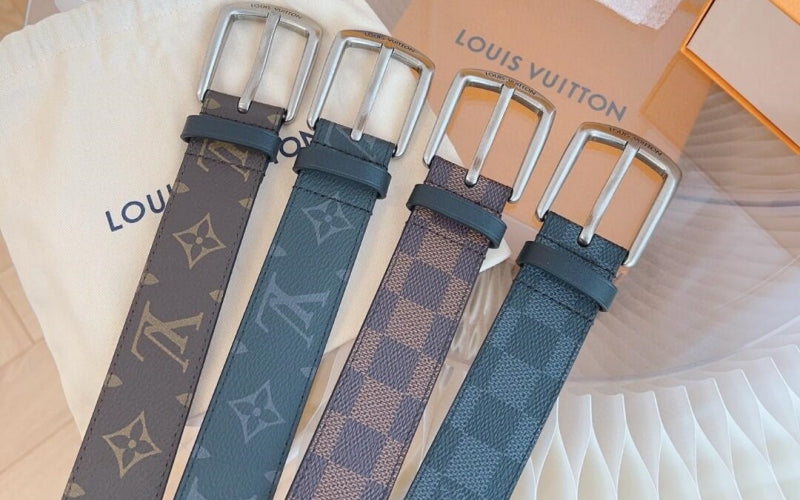
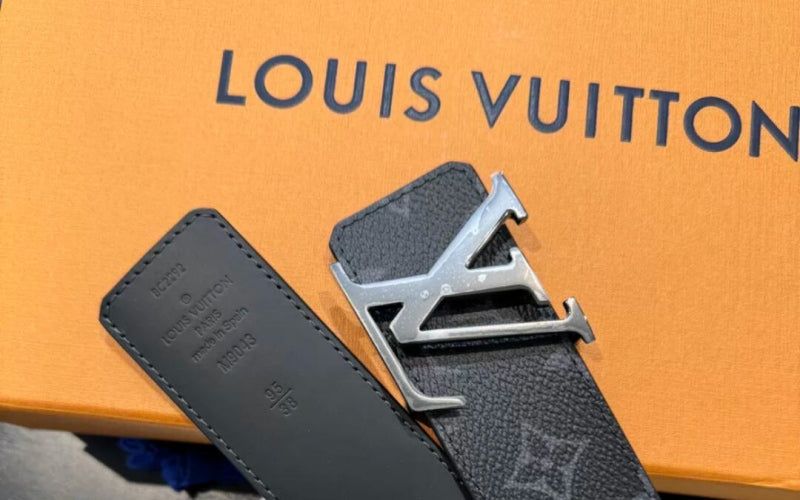
A Gucci belt runs $450–$600. A Hermès H belt? $900+. A basic Louis Vuitton monogram belt will set you back $600 — and that belt isn't even made of leather (it's coated canvas).
So why are designer belts so expensive, really? Is it the materials? The craftsmanship? The logo?
The honest answer: it's all of those things — but not in the proportions most people assume. Here are 12 reasons broken down, with real numbers where possible, so you can decide for yourself whether the price tag makes sense.

1. What Makes Designer Belt Materials So Costly?
Premium materials account for roughly 20–25% of a designer belt's retail price. Full-grain leather, calfskin, and exotic skins cost significantly more than the corrected-grain or bonded leather used in fast-fashion belts. But the material cost alone doesn't justify the final sticker price.
Here's a concrete example from luxury manufacturing cost breakdowns: on a $285 luxury leather accessory, approximately $71.57 goes to materials, $69.95 to labor, $7.29 to shipping, and $8.92 to taxes. The rest? An 80% brand markup on top.
That means materials represent about 25% of cost, while the brand's margin eats up the largest share. The leather in a $500 Gucci belt might genuinely cost $60–$80 — which is excellent leather — but it's nowhere near $500 worth.
At BELTLEY, we use full-grain leather — the highest grade available — because we refuse to cut corners on the part that actually touches your body. The difference? We pass material savings directly to you instead of padding a marketing budget.

2. Handcrafted Production Takes Real Time
A single handcrafted designer belt can take 3–8 hours of skilled labor to produce. Cutting, edge finishing, stitching, buckle fitting, and quality inspection all happen by hand in many luxury ateliers.
That labor cost is legitimate. Skilled leather artisans — particularly those trained in European workshops — earn premium wages. According to the European Commission's data on skilled trades employment, specialized leather workers in France and Italy command wages well above national manufacturing averages.
But here's the nuance: the same craftsmanship exists outside luxury conglomerates. Independent artisans and DTC brands employ identically trained craftspeople. The difference isn't the hands doing the work — it's whose logo goes on the box.

3. Why Does Exotic Leather Cost So Much?
Exotic leathers like crocodile, alligator, python, and elephant are expensive because of extremely limited supply, complex tanning processes, and strict international trade regulations under CITES (the Convention on International Trade in Endangered Species). A single crocodile belly hide can cost $300–$1,500+ before it's even cut into a belt.
Alligator farming alone takes 2–3 years before a hide is harvest-ready. The tanning process for exotic skins requires specialized chemicals and expertise — a single mistake can ruin a $500 hide. Only a handful of tanneries worldwide (primarily in France, Italy, Singapore, and Japan) have the capability to process these skins to luxury standards.
This is one area where the high price is largely justified. If you're buying a genuine crocodile or alligator belt, you're paying for a material that's genuinely rare, heavily regulated, and difficult to work with. Our detailed crocodile belt price guide breaks down exactly where that money goes.

4. How Much of a Designer Belt's Price Is Actually Markup?
For most designer belts, 50–70% of the retail price is markup that covers brand profit, marketing, and retail distribution. Luxury fashion houses typically operate on 8x–20x markups over raw manufacturing cost, according to industry analyses from The Fashion Law.
Let's put real numbers to this. LVMH — the parent company of Louis Vuitton, Dior, and Fendi — reported operating margins around 22% in 2025 on €80.8 billion in revenue. That's €17.75 billion in operating profit. And that's after paying for all those celebrity campaigns, flagship stores on the Champs-Élysées, and private jet brand experiences.
The global personal luxury goods market hit €1.48 trillion in 2024, and a significant portion of that revenue comes from accessories like belts, where margins are even higher than on ready-to-wear clothing.
This markup is what we call the Brand Tax — and it's the single biggest reason why are designer belts so expensive.
5. What Is the "Brand Tax" on Designer Belts?
The Brand Tax is the premium you pay for a logo, brand prestige, and the perceived social status of owning a luxury item — above and beyond the actual cost of materials and labor. On designer belts, the Brand Tax typically adds 3x–5x to what the belt would cost if sold without the name.
Think about it this way: a Hermès Constance belt retails for $900+. The materials (calfskin, palladium-plated buckle) might cost $80–$120. Labor is another $50–$80. That leaves $700+ in Brand Tax — for the H buckle and the orange box.
We're not saying brand heritage is worthless. Heritage has value. But is it $700 worth of value on a belt? That's the question every smart buyer should ask.
This is exactly why DTC brands like BELTLEY exist. We skip the department stores, the celebrity endorsements, and the Fifth Avenue rent. The result? Handmade belts built with the same quality materials at prices that reflect craftsmanship, not clout.
6. Celebrity Endorsements and Marketing Spend
Luxury fashion houses spend 8–15% of revenue on marketing and advertising, according to Deloitte's Global Powers of Luxury Goods report. That means for every $500 designer belt sold, $40–$75 of your money goes directly to paying for that Super Bowl ad, that influencer partnership, or that red-carpet placement.
Gucci's parent company Kering, for example, has historically allocated substantial budgets to digital marketing and celebrity partnerships. Those costs don't improve the leather. They don't make the stitching tighter. They make the logo more recognizable — which, in turn, lets the brand charge more.
It's a cycle: spend big on marketing → charge premium prices → use premium revenue to spend even bigger on marketing. You, the buyer, fund every loop.
7. Are Designer Belt Buckles Actually Premium Quality?
Most designer belt buckles use brass with palladium or gold plating — decent materials, but far from the best available. The buckle on a $500 Gucci belt is functionally similar to a $50 aftermarket buckle in terms of base metal. What you're paying for is the specific design (the interlocking G, the H, the LV initials) and the brand's finishing process.
Here's what actually qualifies as premium buckle hardware:
| Material | Properties | Common Use |
|---|---|---|
| Brass (plated) | Affordable, tarnishes over time | Most designer belts |
| 316L Stainless Steel | Hypoallergenic, corrosion-resistant, medical-grade | Premium artisan belts |
| Solid Brass (unplated) | Develops rich patina, extremely durable | Heritage/vintage belts |
| Sterling Silver | Precious metal, heavy, distinctive | Ultra-luxury/custom |
316L stainless steel — the same grade used in surgical instruments and high-end watches — is arguably a better material than the plated brass found on most designer belts. It won't tarnish, won't cause skin reactions, and holds up for decades.
Every BELTLEY belt ships with a 316L stainless steel buckle or solid brass hardware — because the buckle should last as long as the leather.
8. Retail Overhead and Distribution Costs
A Gucci belt sold at Neiman Marcus passes through at least three cost layers before it reaches you: manufacturing cost → wholesale markup (2x–2.5x) → retail markup (another 2x–2.5x). That's a compounding 4x–6x multiplier from factory to shelf.
Department stores typically demand 50–60% gross margins on luxury accessories, according to the National Retail Federation. Flagship boutiques in cities like Paris, Milan, New York, and Tokyo carry real estate costs that can exceed $3,000 per square foot annually. Someone has to pay that rent — and it's you.
DTC brands bypass this entire chain. Manufacturing → customer. One markup. One relationship. The savings are structural, not promotional.
9. Do Designer Belts Last Longer Than Regular Belts?
Designer belts made with full-grain leather and quality hardware generally last 5–10 years with proper care. But they don't necessarily outlast well-made artisan belts at half the price. Durability depends on material grade and construction quality, not brand name.
The real durability differentiator is leather grade. Full-grain leather — where the entire grain surface is intact — develops a beautiful patina over years and actually gets better looking with age. Corrected-grain and bonded leather (used in many sub-$200 "designer" belts) will crack and peel.
A common surprise: some designer belts in the $300–$500 range use corrected-grain or split leather with a polyurethane coating. You're paying a designer price for a belt that might not outlast a $60 full-grain alternative.
That's why we back every BELTLEY belt with a 10-year warranty. If the materials or construction fail, we replace it. Try getting that promise from a department store counter.
10. Limited Editions and Artificial Scarcity
Luxury brands intentionally limit production runs to maintain exclusivity and justify higher prices. Hermès famously uses waitlists even for its standard belt kits. Louis Vuitton releases seasonal colorways that disappear after a few months. This manufactured rarity drives demand — and prices — upward.
Scarcity psychology is powerful. Research from the Journal of Consumer Research has consistently shown that perceived scarcity increases both desire and willingness to pay, even when the product's intrinsic value hasn't changed.
But here's the thing: limited doesn't mean better. A belt produced in a run of 500 isn't inherently superior to one produced in a run of 5,000 — especially if both use identical materials and craftsmanship.

11. Why Do Gucci and Hermès Belts Cost More Than Other Designer Belts?
Gucci and Hermès command premium prices even within the designer category because of brand positioning, heritage storytelling, and extremely high consumer demand. Hermès, founded in 1837, trades on nearly two centuries of leather-working reputation. Gucci's cultural cachet, driven by its revival under creative directors like Alessandro Michele, turned the GG belt into a social media status symbol.
We've broken down the specifics in our guides on why Gucci belts are so expensive and why Hermès belts carry such extreme price tags. The short version: heritage justifies part of the price, but Brand Tax accounts for most of it.
12. Import Duties, Tariffs, and Currency Effects
Leather goods crossing international borders face import duties of 3–20% depending on the destination country, material classification, and trade agreements. A belt manufactured in Italy and sold in the United States faces U.S. Customs duties on top of the brand's own markup.
Currency fluctuations also play a role. When the euro strengthens against the dollar, European-made luxury goods become more expensive in American markets — and brands rarely lower prices when the exchange rate reverses.
These costs are real, but relatively small compared to the Brand Tax. Duties might add 5–10% to a belt's price. The brand's own margin adds 300–500%.
The Bottom Line
Why are designer belts so expensive? Twelve reasons — but they boil down to two categories: legitimate costs (premium materials, skilled handcrafting, exotic leather sourcing, import duties) and Brand Tax (marketing, celebrity endorsements, retail overhead, artificial scarcity, and profit margins that often exceed 50%).
The legitimate costs? They're worth paying for. Quality leather and expert craftsmanship make a belt that lasts a decade.
The Brand Tax? That's a personal decision. But if you'd rather put your money into the belt itself — the hide, the hardware, the hands that built it — browse BELTLEY's handcrafted collection. Every belt ships free worldwide, comes with a 10-year warranty, and costs what the craft is actually worth. No Brand Tax. No middlemen. Just the belt.
Frequently Asked Questions
Q: How much does it actually cost to make a designer belt?
The raw manufacturing cost (materials + labor) of a typical designer cowhide belt is $30–$80. For exotic leather belts, it's $100–$400. The remaining 60–80% of the retail price covers marketing, distribution, retail margins, and brand profit. This cost structure is consistent across major luxury houses including Gucci, Louis Vuitton, and Hermès.
Q: Are designer belts worth the money?
Designer belts are worth it if you value the brand experience, heritage, and social signaling that come with the logo. If you primarily value material quality and durability, you can get equivalent or superior craftsmanship from DTC artisan brands at 50–70% lower prices. The key is knowing what you're paying for.
Q: What is the most expensive belt brand?
Hermès is consistently the most expensive mainstream belt brand, with belts ranging from $900 to $15,000+ for exotic leather editions. Specialty brands using rare hides like Niloticus crocodile can price individual belts above $20,000. For context, BELTLEY offers genuine crocodile belts starting under $300 — same species, comparable craftsmanship, no Brand Tax.
Q: Why are Gucci belts $500?
Gucci belts are $500+ primarily due to brand positioning, marketing costs, and retail distribution margins — not material costs. The GG Marmont belt, for example, uses calfskin leather and brass hardware with a total material cost estimated at $40–$70. Read our full breakdown of why Gucci belts are so expensive for the complete picture.
Q: How can I tell if a designer belt is high quality?
Check three things: leather grade (full-grain is best — learn how to identify it), buckle material (316L stainless steel or solid brass outlasts plated metals), and edge finishing (hand-burnished edges indicate artisan craftsmanship). Price alone is not a reliable quality indicator.
Q: What is the Brand Tax?
The Brand Tax is the premium added to a product's price for the brand name, logo recognition, and perceived status — beyond what's justified by materials and labor. On designer belts, the Brand Tax typically accounts for 50–70% of the retail price. DTC brands eliminate this by selling directly to consumers, skipping wholesale and retail markups entirely.