Which Animal Leather Is Best for Belts? A Side-by-Side Guide
TL;DR:Quick answer
- Full-grain cowhide is the best all-around leather for everyday belts — durable, affordable, and ages beautifully over 10+ years
- Crocodile/alligator leather leads the exotic category with superior scratch resistance, a dense fiber structure, and a 20+ year lifespan
- Elephant leather offers the highest tensile strength of any belt leather, while ostrich stays supple thanks to natural oils
- The "best" leather depends on your use case: daily wear, dress occasions, or statement piece
Not every animal hide makes a great belt. Some crack within months. Others outlast the owner. The difference comes down to fiber density, tanning method, and how well the leather handles repeated flexing around your waist.
This guide ranks seven animal leathers head-to-head — covering durability, feel, price, and best use case — so you can invest in a belt that actually lasts. If you're starting from zero, our exotic leather belt collection shows how these materials look in practice.

What Makes One Animal Leather Better Than Another for Belts?
The best animal leather for belts combines three traits: high tensile strength (so it won't stretch out), tight fiber density (so it resists surface damage), and flexibility under repeated stress (so it won't crack at the buckle hole). Leather that excels in all three categories will hold its shape for decades.
The Leather Research Laboratory at the University of Northampton — one of the few academic institutions studying leather science — has documented how fiber structure directly predicts belt longevity. Hides with interlocking fiber bundles (like crocodile) dramatically outperform loosely structured ones (like lamb or pig). Tanning method matters too: vegetable-tanned leather produces a stiffer, more structured belt than chrome-tanned alternatives, which tend to stretch and soften faster.

The 7 Best Animal Leathers for Belts, Ranked
Here's a direct comparison based on real-world performance:
| Leather Type | Durability (1-10) | Scratch Resistance | Lifespan | Price Range | Best For |
|---|---|---|---|---|---|
| Full-Grain Cowhide | 8 | Moderate | 10-20 years | $58–$120 | Daily wear, work, casual |
| Crocodile / Alligator | 9 | High | 20-30+ years | $149–$299 | Dress, business, statement |
| Elephant | 10 | Very high | 25-30+ years | $149–$279 | Rugged luxury, collector |
| Ostrich | 7 | Moderate | 15-20 years | $150–$300 | Soft dress belts |
| Buffalo / Bison | 8.5 | High | 15-25 years | $70–$150 | Heavy-duty, workwear |
| Stingray | 9.5 | Highest | 30+ years | $200–$500 | Statement, collector |
| Python / Snakeskin | 5 | Low | 5-10 years | $100–$250 | Fashion, occasional wear |
Price ranges reflect DTC pricing without luxury brand markups.

Is Full-Grain Cowhide the Best Everyday Leather for Belts?
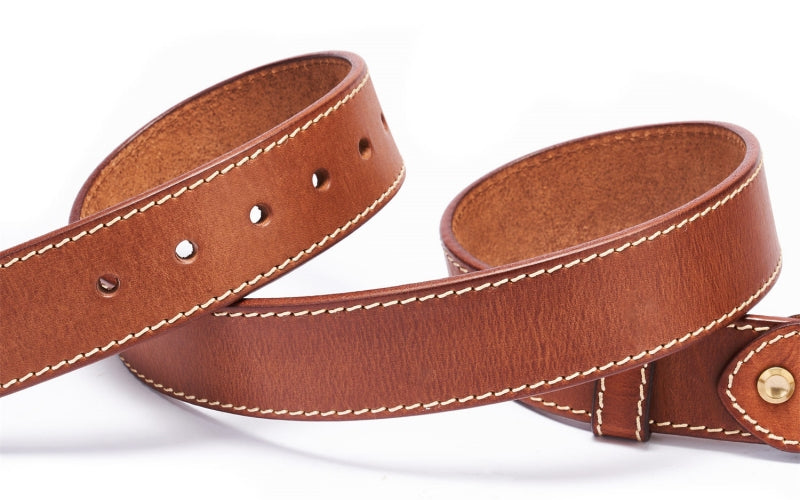
Yes — full-grain cowhide is the gold standard for daily-wear belts. It uses the outermost layer of the hide with no surface sanding, which preserves the natural grain pattern and the hide's strongest fibers intact. A properly made full-grain belt develops a rich patina over time rather than deteriorating.
The key distinction is grade. According to Tanner's Council guidelines, only full-grain retains the complete fiber surface. Top-grain has been sanded down (weaker), and "genuine leather" is an industry term that often signals the lowest usable grade. For a belt that sees daily flexing, that fiber integrity matters.
At BELTLEY, our full-grain leather belts use hides thick enough (3.5–5mm) to hold structure without a filler layer — a detail that separates a 10-year belt from a 10-month belt.

How Durable Are Crocodile and Alligator Leather Belts?
Crocodile and alligator leather belts are among the most durable you can buy. Their hides feature interlocking osteoderms — bony deposits beneath the scales — that create a naturally reinforced surface resistant to scratches, scuffs, and moisture damage. A well-maintained crocodile belt can last 20 to 30 years.
The International Crocodilian Farmers Association notes that farmed Nile crocodile hides score significantly higher on abrasion tests than bovine leather. The belly section, with its symmetrical scale pattern, is the premium cut for belts — softer, more flexible, and visually striking.
The real barrier has always been price. A Hermès crocodile belt runs $3,000–$5,000+. But that's largely Brand Tax. The leather itself, sourced from the same CITES-certified farms, costs a fraction of that. BELTLEY's crocodile and alligator belts are handcrafted from genuine Nile crocodile belly cuts at $149–$299 — the same material, without the markup.

What About Elephant Leather for Belts?
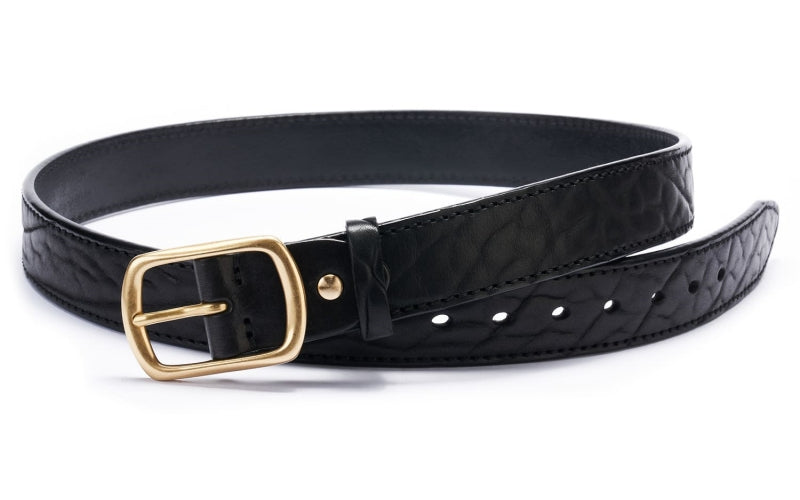
Elephant leather produces the toughest belt you can own. The hide is extremely thick, with a distinctive pebbled texture that's nearly impossible to replicate. It resists punctures, abrasion, and water better than any other commonly available belt leather.
Elephant hides used in the leather industry come exclusively from legally culled populations in southern Africa, primarily Botswana and Zimbabwe, under strict CITES Appendix II permits. The supply is limited, making elephant leather belts genuinely rare.
Browse BELTLEY's elephant leather belt collection to see the texture and buckle variety available in this material.
Is Ostrich Leather Good for Belts?
Ostrich leather is excellent for dress belts where softness and flexibility matter more than rugged durability. Its signature quill pattern — the raised bumps where feathers grew — makes it instantly recognizable and difficult to counterfeit.
What sets ostrich apart is its natural oil content. According to the South African Ostrich Business Chamber, ostrich hides contain higher levels of natural lanolin than most exotic leathers. This built-in moisture keeps the leather supple and resistant to cracking, even with minimal conditioning. The tradeoff: ostrich is softer than crocodile or elephant, so it's more prone to stretching with heavy daily use.

How Does Buffalo Leather Compare to Cowhide for Belts?
Buffalo leather is roughly 30–40% thicker than standard cowhide, with a more pronounced grain and greater resistance to tearing. It's the workhorse choice — ideal for heavy-duty belts, workwear, and anyone who puts serious daily strain on their belt.
The Indian Standards Institute's leather testing protocols show that buffalo hides consistently test higher for tear resistance than comparable cattle hides. The tradeoff is stiffness: buffalo belts take longer to break in and feel bulkier on thinner frames. For a balance of buffalo-level toughness with cowhide refinement, a double-layer full-grain belt delivers both.
Which Exotic Leather Should You Avoid for Belts?
Python and snakeskin belts look stunning but rank lowest in belt durability. The scales sit on a thin dermal layer that's prone to lifting, peeling, and catching on belt loops. Reptile leather care guides from the Italian Tanning Association confirm that snake leathers require the most frequent conditioning of any exotic — every 2–3 weeks for regular wear.
If you love the snake aesthetic but want real durability, consider a cowhide or crocodile belt with a python-inlay accent instead. You get the visual impact without the fragility.

The Bottom Line
The best animal leather for belts depends on how you'll wear it. Full-grain cowhide wins for daily versatility and value. Crocodile dominates the dress and luxury category with unmatched longevity. Elephant and stingray are for collectors who want the most indestructible belt possible. And ostrich fills the soft-luxury niche beautifully.
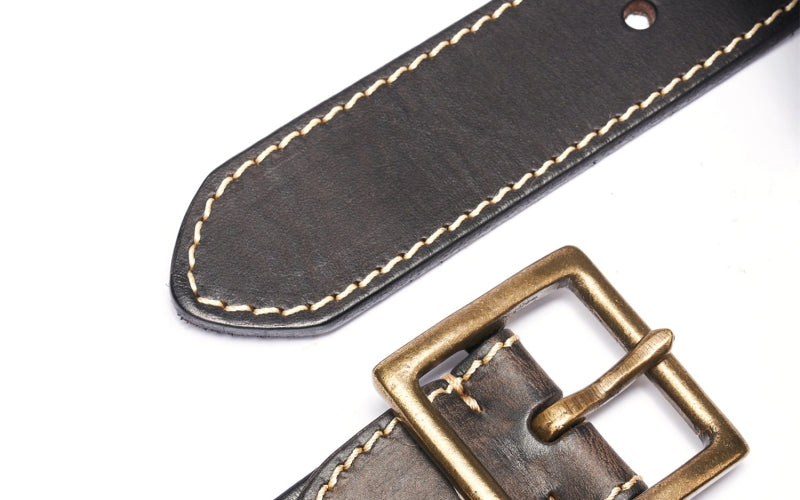
What all great belt leathers share is proper sourcing and construction. A $50 crocodile belt from an unknown source will fail faster than a well-made cowhide belt. The material matters, but so does the craftsmanship — hand-stitching, edge finishing, and buckle quality all determine whether a belt lives up to its leather's potential. Explore the full BELTLEY belt collection to see these leathers crafted the right way.
Frequently Asked Questions
Q: What is the strongest leather for a belt?
Elephant leather has the highest tensile strength of any commonly available belt leather, followed closely by stingray. For everyday strength, full-grain cowhide in double-layer construction offers excellent durability at a lower price point.
Q: How long does a full-grain leather belt last?
A quality full-grain leather belt lasts 10 to 20 years with basic care — occasional conditioning and proper storage. Double-layer full-grain belts can exceed this range because the bonded layers reinforce each other against stretching.
Q: Is crocodile leather worth the price for a belt?
Genuine crocodile leather belts last 20–30 years and develop character with age rather than deteriorating. At DTC prices ($149–$299), the cost-per-year is often lower than replacing cheap belts annually. At luxury brand prices ($3,000+), the math changes significantly.
Q: Which exotic leather is the most durable?
Stingray holds the top spot for raw abrasion resistance — its calcium-reinforced surface is nearly impossible to scratch. For overall belt performance (flexibility + durability + aesthetics), crocodile and alligator leather offer the best balance.
Q: Is genuine leather good for belts?
"Genuine leather" is a grading term that typically refers to lower-quality leather made from split hides. It's real leather, but it lacks the fiber density needed for a belt that holds up over time. Always look for full-grain leather instead.
Q: How can I tell if a crocodile belt is real or embossed cowhide?
Genuine crocodile leather has irregular scale patterns, visible pores within each scale, and a softer hand feel. Embossed cowhide has uniform, stamped patterns with no pore detail. Check our guide on crocodile leather types for visual identification tips.