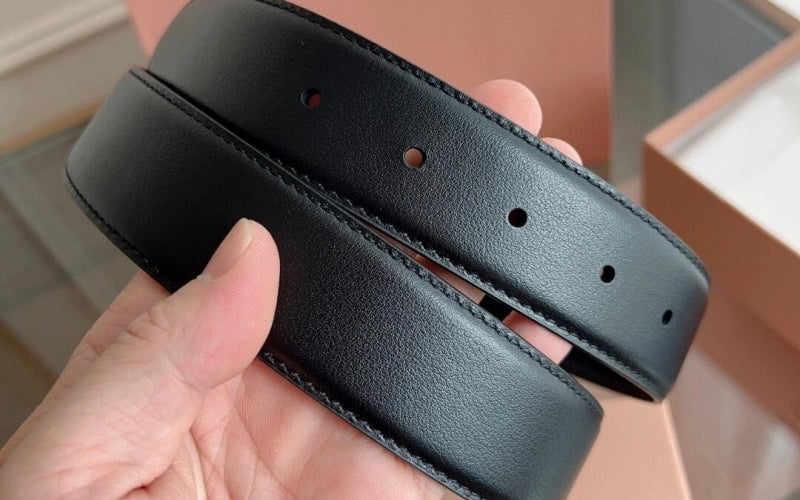
What Width Belt to Wear with a Suit? (Complete Guide)
TL;DR: Quick Answer
- The ideal belt width for a suit is 1"–1.25" (25–32mm) — slim enough to look refined, wide enough to be functional
- Match the belt to your trouser loops, your shoes to your strap color, and your buckle metal to your watch
- 1.5" works for business casual suits; anything wider than that is strictly casual territory
The belt is the most underestimated detail in a suit. Get it right and nobody notices — which is exactly the point. Get it wrong and it quietly undermines everything else you put together.
Most suit mistakes happen at the waistline. A belt that's too wide, too textured, or the wrong color breaks the clean line a suit is supposed to create. The fix is simple: know the width rules, follow the color-and-metal matching basics, and choose a dress belt that disappears into the outfit.

What Is the Best Belt Width for a Suit?
The best belt width for a suit is 1 to 1.25 inches (25–32mm). This range fits standard suit trouser loops, maintains a clean waistline, and works across business formal, business casual, and smart casual settings. A 1.25-inch belt is the single most versatile option.
According to Dalgado's men's belt guide, the classic dress belt sits at 30–32mm — just under 1.25 inches. This width threads through virtually every suit trouser loop and creates the slim, proportional line that formal dressing demands.
Wider isn't always better. As Suits Expert's belt guide notes, the skinnier the belt, the more formal the look. A 1" belt is the most formal choice. A 1.25" belt is the workhorse. A 1.5" belt crosses into business casual territory. And anything above 1.5" belongs with jeans, not suits.
For a broader comparison across all trouser types, our standard belt width guide in mm covers the full spectrum.

Belt Width by Suit Style
Different suit cuts have different loop widths. Your belt needs to fit both the loops and the aesthetic.
| Suit Style | Trouser Loop Width | Best Belt Width | Notes |
|---|---|---|---|
| Slim / modern cut | 0.75"–1" | 1" (25mm) | Ultra-clean; narrow loops demand narrow belts |
| Standard / classic cut | 1"–1.25" | 1.25" (32mm) | The universal sweet spot |
| Relaxed / American cut | 1.25"–1.5" | 1.25"–1.38" (32–35mm) | Room for slightly wider; 1.5" acceptable |
| Unstructured / casual suit | 1.25"–1.5" | 1.25"–1.5" (32–38mm) | Linen, cotton suits allow more flexibility |
According to Ask Andy About Clothes forum, proportions matter. A 1" belt looks elegant on a man with a 30" waist but disappears on a man with a 44" waist. A 1.5" belt looks proportional on a larger frame but overwhelming on a slim one. Match the width to your suit and your build.
The 1.25-inch belt collection hits the middle ground — formal enough for any suit, substantial enough for any body type.

Belt Width by Occasion
The same suit can go from a boardroom to a cocktail bar. The belt you wear signals which version of the outfit you're presenting.
Black Tie / Formal Events
Belt width: None. Skip the belt entirely. Tuxedo trousers don't have belt loops — wear suspenders or rely on the waistband's fit. According to Hockerty's suit belt guide, wearing a belt with a tuxedo is a definitive style error.
Business Formal (Suits with Tie)
Belt width: 1"–1.25" (25–32mm) Leather: Smooth calfskin or polished cowhide Buckle: Polished frame buckle — silver or gold tone, flat and minimal
This is the standard. A slim, polished belt that matches your shoes in color and your watch in metal. Nothing flashy. Nothing textured. The belt exists to complete the look, not to be the look.
Business Casual (Suits without Tie, Blazer + Trousers)
Belt width: 1.25"–1.38" (32–35mm) Leather: Smooth or lightly textured full-grain Buckle: Polished or brushed — slightly more personality acceptable
You have more room here. A 1.38-inch belt in medium brown with a brushed buckle works well under an open-collar blazer. According to Robb Report's suit belt guide, business casual allows for subtle individuality — a hint of grain texture, an antique-finish buckle, or an oxblood strap instead of standard brown.
Smart Casual (Unstructured Suit, Casual Friday)
Belt width: 1.25"–1.5" (32–38mm) Leather: Full-grain, light texture, braided Buckle: Brushed, matte, or antique finish
A 1.5-inch belt works here — especially with linen, cotton, or unstructured suits. The casual fabric invites a slightly bolder belt. Our guide on dress belt vs. casual belt explains where each style fits in the formality spectrum.

Color Matching: Belt + Shoes + Suit
The foundational rule: your belt color matches your shoe color. Same shade, same leather family. Then match the buckle metal to your other metals (watch, cufflinks, tie bar).
| Suit Color | Best Belt + Shoe Color | Alternative |
|---|---|---|
| Black | Black | — |
| Charcoal | Black | Dark brown (less formal) |
| Navy | Dark brown, oxblood | Black (most formal), tan (most casual) |
| Medium grey | Medium brown, cognac | Dark brown, black |
| Light grey | Tan, cognac | Medium brown |
| Brown / earth tones | Brown, cognac, burgundy | Tan |
According to Black Lapel's suit belt guide, belt-shoe matching is the one rule you should never break with a suit. The strap should look like it came from the same collection as your shoes — even if it didn't. Our article on how to match belts and shoes covers every combination.

Buckle Rules for Suits
The buckle is small but visible — especially when you take off your jacket. Here's what works with suits:
- Shape: Rectangular or rounded rectangle. No oversized ovals, no western horseshoes, no novelty shapes.
- Size: The buckle face should be no wider than the belt strap itself. Compact and flat.
- Finish: Polished for formal. Brushed or satin for business casual. Matte or antique for smart casual.
- Metal: Silver (stainless steel, nickel, palladium) or gold (brass, gold plate). Match to your watch. According to NexBelt's matching guide, mismatched metals are one of the most common — and most visible — suit belt mistakes.
A plaque buckle belt gives the cleanest look with suits — the buckle sits flat against the waistband with no protruding prong. At BELTLEY, our dress buckles are 316L stainless steel — the same medical-grade alloy used in premium watches. They won't tarnish, which means the match to your watch holds for years.

5 Suit Belt Mistakes to Avoid
- Too wide. A 1.5"+ belt stretches dress trouser loops and adds bulk at the waistline. Stick to 1.25" for most suits.
- Wrong leather texture. Distressed, braided, or heavily grained leather clashes with suit fabric's refined surface. Save those for jeans.
- Belt-shoe color mismatch. Brown shoes with a black belt — or vice versa — is the single most noticeable belt error in formal dressing.
- Mismatched metals. A gold buckle with a silver watch creates a visual discord that sharp dressers notice immediately.
- Wearing a belt with a tuxedo. Tuxedo pants have no belt loops for a reason. Suspenders are the correct choice for black-tie events.
For a complete overview of what separates a formal belt from a casual one, our article on what is a formal belt for men covers every marker.

The Bottom Line
The right belt width for a suit is 1"–1.25" for formal settings and up to 1.38" for business casual.
Smooth leather. Polished buckle. Color matched to your shoes. Metal matched to your watch. Those four rules handle 95% of suit-belt decisions.
BELTLEY's dress belt collection is built for exactly this — smooth full-grain leather, polished 316L stainless steel buckles, and widths from 1.25" to 1.38" that fit suit trousers perfectly.

Frequently Asked Questions
Q: What is the standard belt width for a suit?
The standard is 1"–1.25" (25–32mm). A 1.25-inch belt is the most common dress belt width and fits nearly all suit trouser loops. It provides the right proportion — slim enough for formal settings, wide enough to look intentional. For slim-cut modern suits, 1" (25mm) is the ideal choice.
Q: Can you wear a 1.5-inch belt with a suit?
In business casual and smart casual settings with suits that have standard-width loops (1.25"–1.5"), yes. For formal occasions, slim-cut suits, or trousers with narrow loops, no — 1.5 inches adds too much bulk and may not fit through the loops cleanly. When in doubt, go with 1.25".
Q: Should your belt match your suit color?
No — your belt should match your shoes, not your suit. The belt and shoes should be the same color and in the same leather family. A navy suit doesn't need a navy belt. It needs a belt that matches the brown or black shoes you're wearing with it.
Q: Is it OK to wear no belt with a suit?
If the trousers have belt loops, a belt is expected — empty loops look unfinished, especially when the jacket comes off. The exception: trousers without loops (side-tab or brace-button trousers), and black-tie events where suspenders replace belts entirely.
Q: What belt should women wear with a suit?
Women follow the same width principles — 1"–1.25" for tailored suits. Women have more flexibility with buckle shape and can incorporate slightly wider belts (up to 1.5") with wide-leg trousers and relaxed blazers. The color-matching rule is the same: belt matches shoes. Our guide on how to choose a good belt for a woman covers women's suit-belt options in detail.
%C2%A0%E2%80%94%20slim%20enough%20to%20look%20refined,%20wide%20enough%20to%20be%20functional%0AMatch%20the%20belt%20to%20your%20trouser%20loops,%20your%20shoes%20to%20your%20stra...)