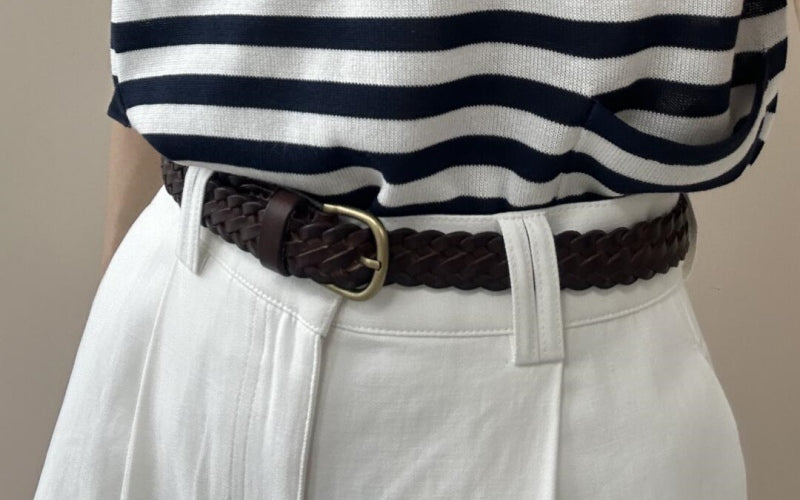
What Type of Leather Is Best for Belts? Your Ultimate Guide
TL;DR: Quick Answer
- Full-grain leather is the best type of leather for belts — it's the strongest, most durable grade and develops a rich patina over time.
- Avoid "genuine leather" belts — the label sounds premium but actually indicates one of the lowest usable grades.
- For luxury and statement pieces, crocodile and alligator leather offer unmatched texture, durability, and prestige.
- The tanning method matters as much as the leather grade — vegetable-tanned leather outperforms chrome-tanned for belt longevity.
A belt takes more daily abuse than almost any other accessory you own. It bends, stretches, bears weight, and rubs against metal hardware hundreds of times a year. The leather you choose determines whether that belt lasts 6 months or 20 years. Yet most buyers never look past the price tag — and end up replacing cheap belts every season.
This guide ranks every major leather type used in belts, from budget-friendly to ultra-premium, so you can invest in the right material the first time. If you want a broader look at all the options, our guide to the 10 most iconic leather types for belts is a great companion read.

What Is the Best Leather for Belts Overall?
Full-grain leather is the best leather for belts by virtually every measure — durability, appearance, aging character, and tensile strength. Full-grain retains the entire grain surface of the animal hide with no sanding, buffing, or correction. This means the leather's natural fiber structure stays intact, giving it superior resistance to stretching, cracking, and moisture.
The reason full-grain outperforms every other grade comes down to biology. The outermost layer of an animal hide contains the tightest, densest network of collagen fibers, according to research published by the Journal of the American Leather Chemists Association. When manufacturers sand or buff that layer away (as they do with corrected-grain and genuine leather), they permanently weaken the hide's structural integrity.
At BELTLEY, every cowhide belt in our full-grain leather collection uses hides sourced specifically for their tight grain and consistent thickness — the kind of leather that develops a beautiful patina instead of falling apart.

Leather Grades Ranked for Belt Use
Not all leather is created equal. The industry recognizes several grades, and the differences between them are massive for belt performance. Here's how they stack up:
| Leather Grade | Durability | Patina | Flexibility | Price Range | Belt Suitability |
|---|---|---|---|---|---|
| Full-Grain | Excellent | Rich, improves with age | Moderate to high | $$–$$$ | Best overall |
| Top-Grain | Good | Minimal | High | $$–$$$ | Good for dress belts |
| Bridle Leather | Excellent | Develops bloom | Stiff initially | $$$ | Excellent — niche |
| Genuine Leather | Poor to fair | None | Variable | $ | Avoid if possible |
| Bonded Leather | Very poor | None | Low | $ | Not recommended |
| Corrected-Grain | Fair | Artificial | Moderate | $–$$ | Mediocre |
Full-grain sits at the top because nothing has been removed from the hide surface. Top-grain has the outermost layer lightly sanded to remove imperfections — still real leather, still decent, but with less structural strength and almost no natural patina development. For a detailed head-to-head, check out our comparison of full-grain leather vs. top-grain leather.
Bridle leather deserves special mention. It's full-grain cowhide that's been vegetable-tanned and then stuffed with wax and tallow, giving it a distinctive waxy finish. According to Sedgwick, one of England's oldest tanneries, bridle leather was originally developed for horse tack — equipment that needed to withstand enormous stress in all weather conditions. That heritage translates perfectly to belts.

Is Genuine Leather Good for Belts?
No. Despite the name, "genuine leather" is one of the lowest usable grades in the leather hierarchy. It's made from the inner splits of the hide — the weaker, fibrous layers left over after the full-grain surface has been separated. The fibers are looser, more prone to stretching, and far less resistant to cracking.
The term "genuine leather" is a legal designation, not a quality indicator. The U.S. Federal Trade Commission allows any product made from real animal hide to carry this label, regardless of which layer of the hide was used. A belt stamped "genuine leather" might last a year with daily wear; a full-grain belt from the same animal could last two decades.
If you've been burned by belts that crack and peel prematurely, "genuine leather" is often the culprit. Our breakdown of full-grain leather vs. genuine leather explains exactly what you're getting (and missing) with each grade.

Does the Tanning Method Affect Belt Quality?
Yes — significantly. The two primary tanning methods produce very different results in belt leather, and most buyers overlook this entirely.
Vegetable tanning uses natural plant tannins (bark, leaves, fruits) to convert raw hides into stable leather. The process takes weeks to months, according to the Leather Working Group's environmental audit standards. The result is firm, structured leather that holds its shape under tension — ideal for belts. Vegetable-tanned leather also develops the deepest, richest patina over time, darkening naturally with exposure to sunlight and oils from your skin.
Chrome tanning uses chromium salts and takes just hours. It produces softer, more pliable leather with consistent color — but that softness is a disadvantage in belts. Chrome-tanned belts tend to stretch out faster, lose shape around the buckle holes, and resist patina development. Roughly 80-85% of the world's leather production uses chrome tanning, which is why truly vegetable-tanned belts are harder to find and cost more.
The bottom line on tanning: for belts specifically, vegetable-tanned full-grain leather is the gold standard. Chrome-tanned leather works better for softer goods like jackets and bags.

What About Exotic Leathers for Belts?
Exotic leathers — crocodile, alligator, python, elephant, and ostrich — occupy a tier above cowhide in terms of both prestige and material performance. They're not just luxury for luxury's sake; each skin has unique structural properties that translate directly to how a belt looks, feels, and ages.
Here's how the top exotic leathers compare for belt use:
| Exotic Leather | Key Trait | Durability | Texture | Best For |
|---|---|---|---|---|
| Crocodile/Alligator | Rectangular scale tiles | Exceptional | Distinctive, refined | Dress & statement belts |
| Elephant | Deep crosshatch grain | Extremely tough | Bold, rugged | Rugged luxury |
| Python | Diamond-shaped scales | Good | Eye-catching, dramatic | Fashion-forward pieces |
| Ostrich | Raised quill bumps | Very good | Soft, supple | Versatile dress/casual |
Crocodile and alligator leather are the most sought-after exotic skins for belts. The belly cut — the underside of the animal — produces the smoothest, most symmetrical scale pattern and is considered the most valuable section, according to Pan American Leathers, one of the largest exotic skin distributors in the Americas. Our crocodile and alligator belt collection uses exclusively belly-cut Nile crocodile, hand-dyed and finished by master artisans.
Elephant leather is remarkably thick and textured, with a grain pattern that's entirely unique to each hide. It's one of the most durable leathers in existence — and one of the rarest. BELTLEY offers a curated selection of elephant leather belts for buyers who want something truly one-of-a-kind.
For a full breakdown of how different exotic skins stack up, see our guide on which animal leather is best for belts.

How Thick Should Belt Leather Be?
The ideal leather thickness for belts falls between 8.5 and 9.5 ounces (approximately 3.4–3.8mm). This measurement refers to the weight of one square foot of leather — a standard industry metric defined by Weaver Leather Supply, a leading leather goods supplier.
Below 7 ounces, belts feel flimsy and stretch quickly. Above 11 ounces, they become rigid and uncomfortable. The sweet spot gives you enough structure to hold its shape around the waist while remaining flexible enough to thread through belt loops without a fight.
The double butt cut of a cowhide — the section from the hind legs across the rump — yields the thickest, most consistent leather and is the preferred choice for premium belt making. This is the same cut used in saddle leather, which tells you everything about its durability.

How to Identify the Best Leather for a Belt Before Buying
You can't always trust labels. Here are practical ways to evaluate belt leather quality before you commit:
- Check the edges. Full-grain leather has a smooth, dense cross-section. If the edges look fibrous, fuzzy, or layered, it's likely bonded or split leather.
- Smell it. Quality leather has a rich, natural scent. Chemical or plastic odors indicate heavy processing or synthetic materials.
- Bend it. Good belt leather creases gently and springs back. Cheap leather creases sharply and stays wrinkled.
- Look for imperfections. Paradoxically, minor natural marks (healed scars, insect bites, grain variation) indicate higher-quality leather — the manufacturer didn't need to sand them away. Our guide on how to tell if a belt is full-grain leather walks through every visual cue.
- Ask about the tanning method. If the seller can't tell you whether the leather is vegetable-tanned or chrome-tanned, that's a red flag.
The Bottom Line
The best leather for belts is full-grain, vegetable-tanned cowhide for everyday durability, and crocodile or alligator belly-cut leather for luxury and statement wear. Avoid anything labeled "genuine leather" or "bonded leather" — these grades are engineered for low cost, not long life.
A quality leather belt should last a decade or more with basic care. If yours aren't making it past a year, the problem isn't how you wear them — it's what they're made of.
Browse BELTLEY's full-grain leather belts starting at $58 or explore our exotic leather collection for something truly exceptional — all handcrafted, all backed by a 10-year warranty, with free worldwide shipping and 30-day hassle-free returns.
Frequently Asked Questions
Q: What is the most durable leather for belts?
Full-grain cowhide is the most durable leather for everyday belts. For exotic options, elephant leather and crocodile leather are exceptionally tough. Full-grain retains the hide's complete fiber structure, giving it superior resistance to stretching and cracking over years of daily wear. See our full breakdown of the most durable leather belts.
Q: Is full-grain leather better than top-grain for belts?
Yes. Full-grain leather retains the outermost surface of the hide, which contains the tightest collagen fibers. Top-grain has been lightly sanded to remove imperfections, which weakens the structure and eliminates natural patina development. For belts, full-grain lasts significantly longer.
Q: Why do genuine leather belts crack so quickly?
"Genuine leather" is made from the inner splits of a hide — the weaker, more fibrous layers. These fibers are looser and more prone to drying out and separating. Without the dense surface grain, the leather lacks the structure to withstand repeated bending and tension, leading to cracks within months of regular wear.
Q: Is vegetable-tanned leather better than chrome-tanned for belts?
For belts, yes. Vegetable-tanned leather is firmer, holds its shape better, and develops a rich patina over time. Chrome-tanned leather is softer and more uniform in color but stretches faster and doesn't age as gracefully. About 80–85% of global leather is chrome-tanned, making vegetable-tanned belts a premium option.