What Is the Point of a Belt Buckle? Function, Style &Why It Matters
TL;DR: Quick Answer and main takeaways
- A belt buckle serves three purposes: it's a mechanical fastener that holds your belt closed, a style element that defines the personality of your outfit, and — across cultures and centuries — a symbol of status, achievement, and identity.
- The buckle is also the most expensive component of a quality belt, accounting for 30–50% of the total cost. Its material determines how long the belt looks good, not just how long it holds up.
- In 2026, buckles are having a moment — oversized hardware, sculptural shapes, and the "buckle as jewelry" trend are pushing buckles from background accessory to centerpiece.

A belt buckle seems obvious — it holds your belt together. But if that were the whole story, every buckle would look the same: a simple clasp, purely functional, invisible. Instead, buckles come in dozens of shapes, a half-dozen materials, and price points from $2 to $72,500 (the record for a vintage rodeo trophy buckle at auction). That gap between "fastener" and "collectible art" tells you the real point of a belt buckle is far bigger than holding up your pants.
Here's the full picture — mechanical function, style impact, material science, and the 2026 trends that are making the buckle the most talked-about accessory in fashion. For a complete classification of every buckle type, see our types of belt buckles guide.

How Does a Belt Buckle Actually Work?
A belt buckle is a mechanical clasp that secures the belt strap around your waist using one of three basic principles: pin-and-hole, friction, or track-and-lock. The mechanism varies by buckle type, but the physics is the same — create enough holding force to resist the outward pressure of your waist without slipping.
Here's how the most common types function:
| Buckle Type | Mechanism | Hold Strength | Best For |
|---|---|---|---|
| Frame/Prong | Pin threads through hole in strap | High | Dress belts, everyday wear |
| Plate/Trophy | Hooks or snaps behind a flat plate | Medium | Western, statement wear |
| Ratchet/Track | Hidden teeth on strap back lock into buckle track | Very high | Micro-adjustable fit |
| D-Ring | Strap threads through two rings; friction holds | Low-medium | Canvas, casual belts |
| Magnetic | Neodymium magnets click strap into buckle | Medium | One-hand operation, travel |
| Cobra/Tactical | Interlocking tabs lock under tension | Very high | Outdoor, military, EDC |
GrooveLife's buckle mechanics guide explains that the frame/prong buckle accounts for roughly 70% of men's dress belts worldwide — it's simple, reliable, and hasn't fundamentally changed in centuries. The ratchet buckle is the fastest-growing category, offering micro-adjustable sizing that traditional hole-based buckles can't match. For more on whether you can swap buckles between belts, see our guide on putting a buckle on any belt.

Why Does the Buckle Material Matter So Much?
The buckle material determines whether your belt looks polished after one year or five — and it's the single biggest cost driver in belt construction. HopLok Leather's hardware analysis estimates that the buckle accounts for 30–50% of a quality belt's total retail price. The strap leather matters, but the buckle is where cheap construction reveals itself first.
Here's how the main buckle materials compare:
| Material | Durability | Tarnish Resistance | Weight | Price Tier |
|---|---|---|---|---|
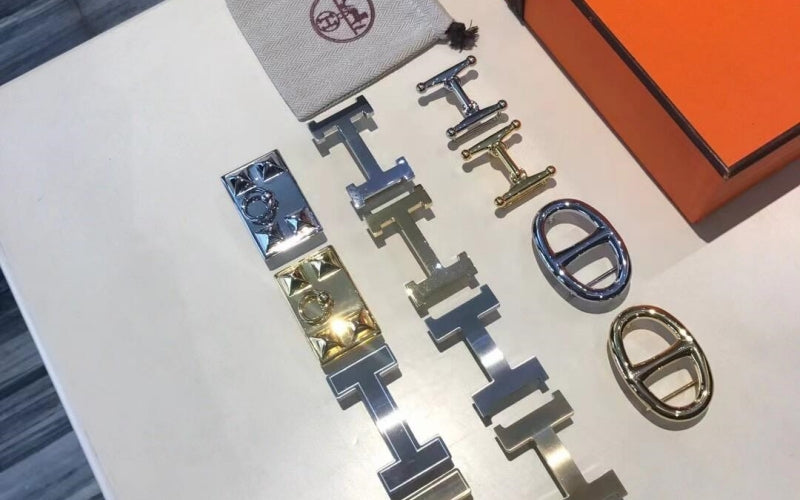
| 316L Stainless Steel | Excellent — corrosion-proof | No tarnish, no plating needed | Medium-heavy | Mid-range |
| Solid Brass | High — flexible, ages well | Develops patina; needs polishing | Medium | Mid-high |
| Brass-Plated Zinc | Low — plating chips, zinc cracks | Plating wears off in 6–12 months | Light | Budget |
| Sterling Silver | Medium — soft metal, scratches | Tarnishes without care | Medium | High |
| Titanium | Excellent — ultra-light, strong | No tarnish | Very light | Premium |
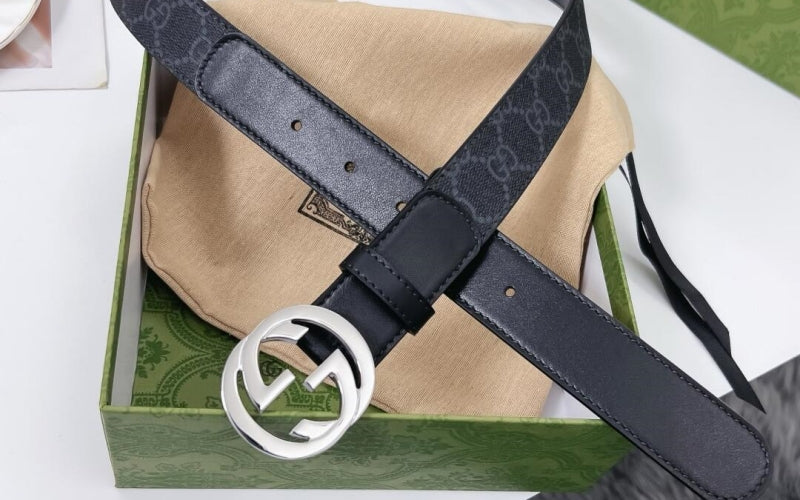
BuckleGuy's material comparison calls solid brass "the gold standard" for leather goods hardware but notes that brass-plated zinc alloy — what most designer brands use — "breaks easily and loses its luster." This is the critical distinction most shoppers miss: a "brass buckle" on a $600 designer belt is usually zinc alloy with a thin brass coating, not solid brass.
At BELTLEY, every buckle is crafted from either 316L stainless steel or solid brass — the same surgical-grade and marine-grade alloys used in Swiss watches and nautical hardware. No plating to chip. No zinc to crack. The finish you buy is the finish you keep.

What Does a Belt Buckle Symbolize?
A belt buckle has symbolized status, achievement, and identity for over 2,000 years. Roman soldiers wore buckled belts as markers of military rank. Medieval European nobility displayed silver and gold buckles inlaid with gemstones to signal wealth. In the American West, rodeo champions received — and still receive — trophy buckles as the equivalent of a gold medal.
The Buffalo Bill Center of the West traces the modern Western buckle tradition to the 1920s, when Hollywood films romanticized cowboy culture and Levi Strauss added belt loops to jeans. Rodeo associations began commissioning oversized silver and gold buckles as prizes — a tradition that turned the buckle into a wearable trophy. A Professional Bull Riders championship buckle today can appraise for $10,000–$50,000+.
Beyond the West, buckle symbolism runs across cultures. Heddels' history of belts documents that the word "buckle" itself comes from Latin buccula (cheek-strap), via Old French — a reminder that buckles were originally military hardware before they were fashion. The Sutton Hoo gold buckle, discovered in a 7th-century Anglo-Saxon burial, remains one of the most valuable archaeological artifacts in England. For more on whether vintage buckles hold monetary value, see our guide on whether old belt buckles are worth anything.

Is a Belt Buckle Considered Jewelry?
Increasingly, yes — especially in 2026. A belt buckle occupies the same visual space as a necklace or brooch, sits at the body's center of gravity, and is often the first metal accessory someone notices on your outfit. Marie Claire's 2025 accessory trend report explicitly frames buckles as functioning "as style, not just keeping your pants up."
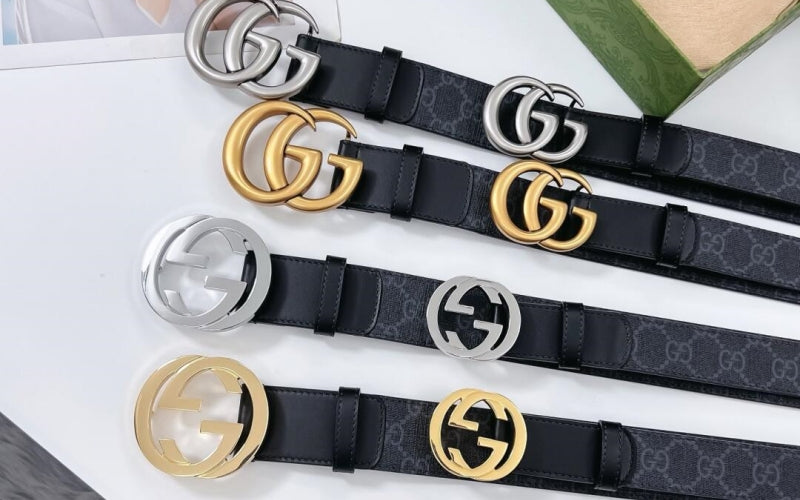
The 2026 runways reinforced this. Dior's Medaillon Belt — designed by Jonathan Anderson with an 18th-century rococo-inspired buckle — is a predicted "It-item" for the year. Khaite showed sculptural, molten-metal buckles. Balmain featured outsized gold hardware at Paris Couture Week. Who What Wear's 2026 trend report calls oversized buckles "the single most important belt trend of the year."
This shift matters because it reframes the buckle as an investment piece — not a disposable hardware detail. A buckle that tarnishes in six months fails as jewelry. A buckle in 316L stainless steel or solid brass holds its finish for years, which is why material quality matters more now than ever. For a deeper exploration, see our guide on whether a belt buckle is considered jewelry.

How Do You Choose the Right Belt Buckle?
Match the buckle to three things: the occasion's formality level, your other visible metals, and the belt width. Getting all three right makes the buckle disappear into a cohesive outfit. Getting one wrong makes the buckle the only thing people notice — for the wrong reasons.
By formality:
- Formal/suits: Small polished frame buckle, silver or gold, flush against the waist
- Business casual: Mid-size buckle, brushed or matte finish, single prong or clean plaque
- Casual/jeans: Larger buckle acceptable — roller, western, double-prong, statement hardware
- Street style/going out: Oversized, sculptural, or logo buckles — the bolder the better in 2026
By metal matching: Silver buckle pairs with silver watch and cufflinks. Gold buckle pairs with gold jewelry. The Gentleman's Gazette calls this "the most overlooked matching rule in men's dressing." The rule loosens for casual outfits — mixed metals and antiqued finishes work — but tightens for formal wear.
By width: A buckle should be proportional to the strap. A 1" dress belt needs a slim, flat buckle. A 1.5" casual belt can support a chunkier frame. A massive trophy buckle on a narrow strap looks like a hood ornament on a bicycle. Browse BELTLEY's unique buckle belts for proportionally designed options across every width.
The Bottom Line
The point of a belt buckle goes far beyond holding your pants up. It's a mechanical fastener, a style statement, a cultural symbol, and — at 30–50% of a quality belt's cost — the component that most determines whether your belt ages gracefully or falls apart.
In 2026, with oversized hardware and sculptural shapes dominating runways, the buckle is the centerpiece of the belt, not the afterthought.
That makes material quality non-negotiable: plated zinc cracks and fades; stainless steel and solid brass hold their finish for years. If your buckle is the first thing people see, make sure it's worth looking at.
Browse BELTLEY's belt buckle collection for hardware crafted from 316L stainless steel and solid brass — materials that perform as jewelry, not disposable fasteners.

Frequently Asked Questions
Q: What is the purpose of a belt buckle?
A belt buckle serves three purposes: it mechanically fastens the belt strap to hold your trousers in place, it functions as a style element that defines the personality of your outfit, and it carries cultural symbolism — from military rank markers to rodeo trophy prizes to modern fashion statements.
Q: What is the best material for a belt buckle?
316L stainless steel and solid brass are the two best materials. Stainless steel is corrosion-proof and never needs plating. Solid brass is the traditional "gold standard" for leather goods and develops a warm patina over time. Avoid brass-plated zinc alloy — the plating wears off within months.
Q: Why are belt buckles so expensive?
The buckle accounts for 30–50% of a quality belt's total cost because the material and finishing process (casting, polishing, plating or solid-metal finishing) are more labor-intensive than cutting and stitching leather. Designer belt buckles carry additional brand markup.
Q: Why do cowboys wear big belt buckles?
The tradition began in the 1920s when rodeo associations started awarding oversized silver and gold trophy buckles to champions. Hollywood Western films amplified the aesthetic. Today, a large buckle signals connection to Western heritage and rodeo achievement.
Q: Are oversized belt buckles in style in 2026?
Yes — oversized and sculptural buckles are the dominant belt trend for 2026. Dior, Khaite, Balmain, and Celine all featured statement buckles in their runway collections. Who What Wear calls big buckles "the single most important belt trend of the year."
Q: What side should a belt buckle be on?
There is no universal rule. Men's belts traditionally thread left to right (buckle centered or slightly left). Women's belts often thread right to left. In practice, center the buckle over your trouser closure — the threading direction is a personal preference, not a style rule.