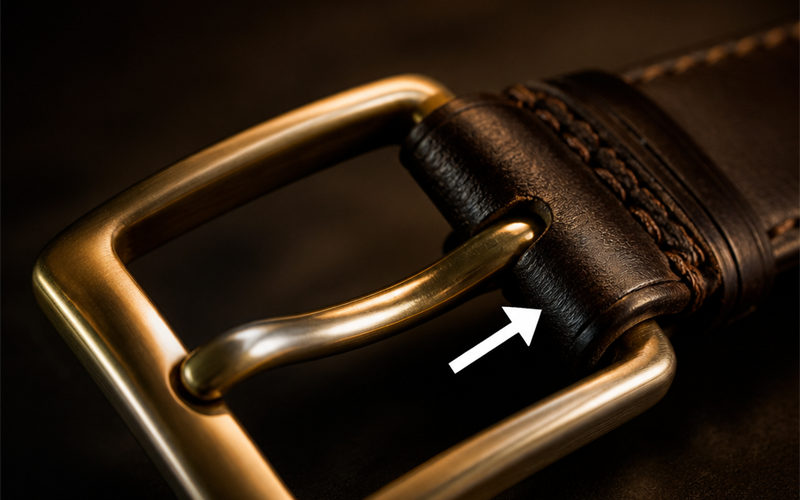
The Sprezzatura Rule: How Italians Actually Wear Leather Belts
TL;DR:
- Sprezzatura is the Italian art of looking effortlessly put together — without showing the effort.
- Applied to belts, it means: real leather, no logos, slight imperfection welcome, and never the focus of the outfit.
- The Italian belt is the most ignored part of a beautifully dressed Italian man's outfit.
- That's not an accident. That's the whole point.
There's an Italian word that menswear writers love to throw around: sprezzatura.
It gets translated as "studied carelessness" or "effortless elegance" or "deliberate nonchalance." None of those translations are quite right. They all sound contradictory in English, like a brand of paint called "Premium Cheap."
But watch an Italian man in his fifties get dressed for dinner in Milan or Rome, and you start to understand what the word means in practice. There's a kind of casual confidence — a refusal to look like you tried — that gets applied to every single detail. Including the belt.
This post is about how that idea actually shapes the way Italians wear leather belts. It's a styling philosophy, not a list of rules. For wider Italian context, our why Italian leather belts cost more post is the foundation read.
What Does Sprezzatura Actually Mean for a Leather Belt?
Sprezzatura applied to a leather belt means the belt is high quality, well-chosen, and quietly correct — but never the loudest thing in the outfit. The belt should feel like an inevitability rather than a decision. It's there. It's right. You're not supposed to notice it specifically.

The shorthand:
- A sprezzatura belt is felt, not seen.
- It's correct without being shouty.
- It looks like it's always been there.
Wikipedia's sprezzatura article traces the concept back to Baldassare Castiglione's 1528 The Book of the Courtier, where it described the noble art of making difficult things look easy. The original context was court behavior — diplomacy, conversation, dancing. Italian menswear inherited the idea and applied it to clothing, and it's been an Italian aesthetic export ever since.
Why Do Italians Avoid Logo Belts?
Italians who care about sprezzatura avoid logo belts because a visible designer logo is the opposite of effortless — it announces effort, money spent, and brand alignment. The traditional Italian aesthetic prefers anonymous excellence: a belt that's clearly quality but doesn't tell anyone who made it. The logo belt is essentially the antithesis of sprezzatura.
This is one of the most consistent rules in Italian menswear. Look at well-dressed Italian men aged 40+ and you'll almost never see:
- Large logo plaque buckles (Gucci, LV, Hermes H-logo)
- Branded edge stitching with house initials
- Color-blocked belts with brand colors
- Limited-edition collaboration belts
You will see:
- Plain solid brass or stainless buckles
- Hand-finished leather with no obvious branding
- Belt-shoe color coordination instead of belt-brand coordination
- The same belt worn for 15+ years
Our Italian designer vs artisan belts post covers the broader designer-vs-craft tension that sprezzatura sits inside.
What Are the Sprezzatura Belt Rules Italians Actually Follow?
The sprezzatura belt rules Italians actually follow are: match the belt to the shoes in color and formality, choose an unbranded or minimally-branded buckle, pick a width appropriate to the trouser (usually 30–35mm), and prefer slightly worn leather over brand-new shine. The goal is correctness without ostentation.

The actual rules in practice:
- Color matches shoes. Brown belt with brown shoes. Black belt with black shoes. Never reversed.
- Formality matches occasion. Dress belt with suit. Casual belt with chinos. Don't mix categories.
- Width appropriate to trousers. Narrower belts with dress trousers, slightly wider with casual.
- Buckle plain or minimal. Solid brass, stainless, or simple plaque. Avoid statement hardware.
- Slight wear welcome. A patinated belt reads as "lived in" rather than "just bought."
For more on belt-shoe color matching specifically, our belt-shoe-watch-strap rule post covers the full coordination logic — it's actually more flexible than English style guides claim.
Why Is "Slight Imperfection" Part of Italian Belt Style?
Slight imperfection — a small scuff, light patina, edge that's softened from wear — is part of sprezzatura because it signals that the belt belongs to a real person living a real life. Italians have historically prized lived-in quality over brand-new perfection. A belt that looks too new can read as either rented or freshly insecure.
What "good imperfection" looks like on a belt:
- Patina at the buckle fold. Natural darkening from years of wear.
- Soft edges. Slightly burnished from constant contact with shirts.
- Wear at the buckle pin hole. Sign of consistent daily use.
- Subtle color depth. Lighter spots from clothing rub, darker spots from skin oils.
What "bad imperfection" looks like:
- Cracking leather. Sign of dryness, not character.
- Hardware tarnish that's actually corrosion. Plated buckle wearing through.
- Stitching that's broken or loose. Construction failure, not patina.
- Edge fraying. Poor finishing, not natural wear.
The good kind of wear is the kind quality leather develops with care. Wikipedia's patina article covers why aged organic surfaces often outperform new ones aesthetically. Our why Italian leather belts cost more post touches on how this aging behavior is built into Italian veg-tan leather chemistry.
Does Sprezzatura Mean Italians Don't Care About Belts?
The opposite — Italians care intensely about belts, but they care about them in a way that wouldn't be obvious to outside observers. The investment goes into quality leather, proper construction, and long-term ownership rather than visible branding or trend chasing. Caring about the belt while making sure no one notices the belt is the whole sprezzatura puzzle.

Where Italian belt-care actually shows up:
- Annual conditioning. Belts get treated like dress shoes.
- Belt rotation. 3–5 belts in active wear, rotated.
- Specific tannery sourcing. Italian buyers often know their preferred tanneries by name.
- Long ownership. Belts kept 10–25+ years.
- Quality-first shopping. Workshop direct, not boutique mall.
Our How Long Does a Properly Made Italian Leather Belt Last? post covers the longevity logic that makes long ownership possible. The "I bought this in 1995" belt is genuinely a status marker in Italian style — it signals quality of original purchase plus patience and care across decades.
How Do Italians Choose Their Daily Belt?
Italian men typically choose their daily belt by matching it to the shoes they're wearing that day, then matching width and formality to the trousers. Color comes first. Material second. Hardware third. Brand is essentially irrelevant in the choice. The belt is meant to harmonize with the outfit, not compete with it.

A typical Italian belt-choice sequence:
- What shoes am I wearing? That sets the belt color.
- What trousers? That sets the width (30mm formal, 35mm business, 38mm casual).
- What's the occasion? That sets the formality (dress, business, casual).
- What hardware works? Solid brass for warm-tone outfits, stainless for cool-tone.
- Done. The belt slides into the outfit without further thought.
This decision happens in 30 seconds. The work was done years earlier when the belts were bought.
For more on Italian width preferences specifically, our why Italian men prefer 30mm belts post covers the regional sizing logic.
What's the Difference Between Italian Sprezzatura and American "Effortless"?
Italian sprezzatura is grounded in quality and tradition — the effortlessness comes from having genuinely excellent pieces that don't need to try hard. American "effortless" style is often grounded in casualness itself — wearing intentionally casual things to signal not caring. The two look different in practice. Italians are casually dressed in great clothes. Americans are intentionally casual in casual clothes.
The contrast in practice:
| Trait | Italian Sprezzatura | American "Effortless" |
|---|---|---|
| Belt | Premium, plain, well-worn | Often casual, sometimes branded |
| Shoes | Quality leather, polished | Often sneakers or casual leather |
| Tailoring | Excellent, slightly relaxed | Casual cuts |
| Watch | Mechanical, modest | Smartwatch or fashion watch |
| Overall vibe | "I always dress this well" | "I'm not trying" |
Both can look great. They're different aesthetic philosophies. Sprezzatura requires investing in quality first, then making it look easy. American effortless often allows skipping the quality investment in favor of pure casualness.
How Do You Build a Sprezzatura Belt Wardrobe?
You build a sprezzatura belt wardrobe by acquiring 3–4 quality Italian belts in the right colors and widths over time, then wearing them for decades. The actual collection is small. The quality is high. The replacement cycle is generational. The opposite of a sprezzatura wardrobe is a closet full of 20 cheap belts you replace every few years.

The classic Italian sprezzatura belt set:
- One brown dress belt (35mm, smooth or pebble-grain calf)
- One black dress belt (30–32mm, smooth calf or shell cordovan)
- One brown casual belt (35–38mm, full-grain veg-tan or pull-up)
- One specialty/character belt (vintage brass, exotic leather, or family heirloom)
That's it. Four belts. The rotation lasts decades.
For starting that wardrobe, see our dress belts collection for the formal pair, full-grain leather belts collection for the casual base, and brass buckle belts collection for the character/heritage option.
The Bottom Line
Sprezzatura isn't a styling rule — it's a philosophy about how clothes should sit in your life. Applied to belts, it means: quality first, branding last, slight wear welcome, and the belt should never be the loudest thing in the outfit. Italian men who dress well make all of that look easy because they invested in the right pieces years ago and let them age into the look they were always going to become.
If you want to try sprezzatura yourself, start with one excellent unbranded Italian belt that matches your most-worn shoes. Wear it for two years. Let it patinate. Pretty soon you'll understand why Italian men don't talk about their belts. The belt does all the talking by being completely silent. At BELTLEY, our handmade belts collection is built for this philosophy — quality leather, plain hardware, designed to age beautifully.
Frequently Asked Questions
Q: Is sprezzatura only for older men?
No — it's an aesthetic principle that applies at any age. Younger Italian men dress with sprezzatura too, just adjusting the specific pieces to suit their generation. The underlying logic — quality, restraint, no overt branding — translates across age groups.
Q: Can you have sprezzatura with a designer belt?
It's possible but harder. Designer belts with visible logos work against the "anonymous excellence" principle that defines sprezzatura. Designer pieces with minimal branding (unbranded buckles, subtle stitching) can work. Logo plaques essentially can't.
Q: How worn should a sprezzatura belt look?
Naturally worn from 2–5 years of regular use is ideal. Brand new belts look too eager. Heavily worn belts can read as careless rather than confident. The sweet spot is "obviously good quality" with "obviously real use."
Q: Do Italian women follow the same sprezzatura belt rules?
Similar principles, different specifics. Italian women's belt style tends to follow the same logic — quality leather, minimal branding, harmonized with the outfit — but with more flexibility in color, width, and decorative hardware. Our women's belts collection covers belt styles that align with the broader Italian aesthetic.
Q: What's the biggest sprezzatura belt mistake?
Trying too hard. Specifically: pairing a visibly expensive designer belt with otherwise casual clothes (signaling "I want you to notice this"), or pairing a brand-new belt with a vintage outfit (the new shine fights the lived-in vibe). Sprezzatura is about quiet correctness, not loud quality.
Q: Where do I start if I want my belts to feel more Italian?
Buy one excellent unbranded Italian belt in a color that matches your most-worn shoes. Wear it consistently for two years. Let it develop patina. Don't replace it — care for it. That single belt will teach you more about sprezzatura than any styling guide.