What Is a Snap, Friction, or No-Hole Belt Buckle?
Quick answer: Snap, friction, and no-hole buckles all secure a belt without punched holes. A snap (side-release) buckle clicks two plastic or metal halves together. A friction buckle grips the strap by pinching it against a bar. A no-hole buckle (like a ratchet) locks onto a hidden track for micro-adjustment.
Last updated: May 2026 • By BELTLEY Editorial
TL;DR:
- Snap / side-release buckles click two halves together — common on bags, gear, and casual webbing belts.
- Friction buckles hold the strap by pinching it, no holes or pins — clean and infinitely adjustable.
- No-hole / ratchet buckles lock onto a hidden toothed track for precise fit.
- All three skip the punched-hole limitation of a classic prong belt.
Not every belt closes with a pin through a hole. A whole family of no-hole belt buckle designs ditches the punched holes entirely, and they show up everywhere from tactical webbing to sleek dress belts. The three you will meet most are snap (side-release) buckles, friction buckles, and ratchet-style no-hole buckles. Each solves the same problem — securing a strap — with a different mechanism and a different look. This guide explains how each one works and where it belongs. For the complete picture, our types of belt buckles guide maps every closure in one place.
What is a snap (side-release) buckle?
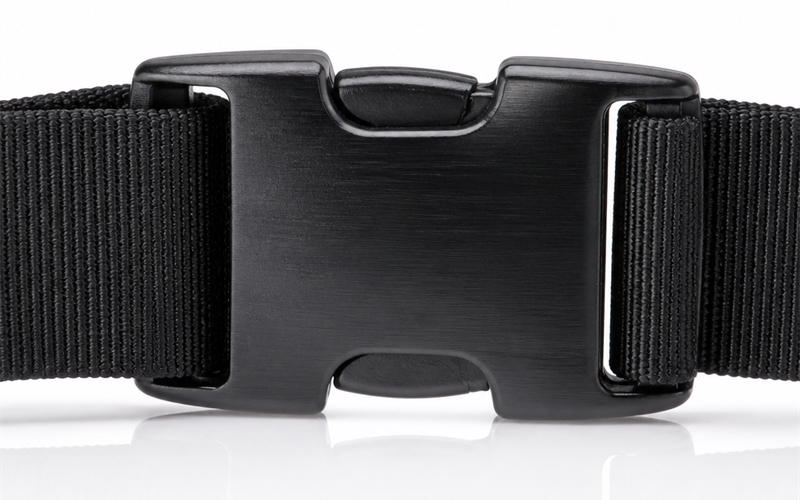
A snap buckle, also called a side-release buckle, fastens by clicking two interlocking halves together — a pronged male end that snaps into a slotted female housing. Squeeze the side tabs and it releases. It is the click-clack closure on backpacks, gear straps, and casual webbing belts.

This design is more modern than it looks: the side-release buckle was developed and patented in 1977 and quickly became the default for webbing gear because it is fast, secure, and cheap to produce. On belts, snap buckles are a casual, utilitarian choice — practical and sporty rather than dressy. You will rarely see one on a leather dress belt.
What is a friction buckle?
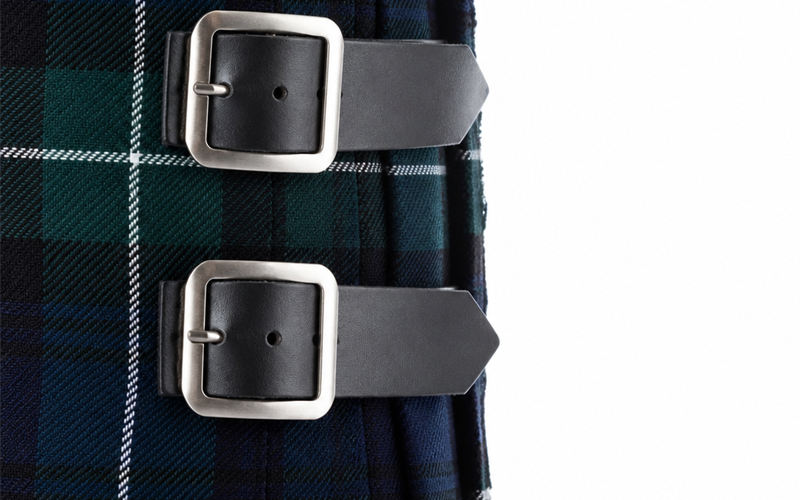
A friction buckle holds the strap purely by pressure, with no prong and no holes. The strap threads over a bar and back under itself, and the tension pinches it in place. To adjust, you simply pull the strap to a new position.

Because there are no holes to wear out and no fixed notches, a friction buckle offers smooth, infinite adjustment. The trade-off is that it relies on the strap material gripping properly — too slick a strap can slip. Friction designs are popular on military-style webbing belts and minimalist leather straps where a clean, hole-free face is the goal. Our guide to whether you can put a buckle on any belt explains why strap thickness matters so much with these.
What is a no-hole ratchet buckle?
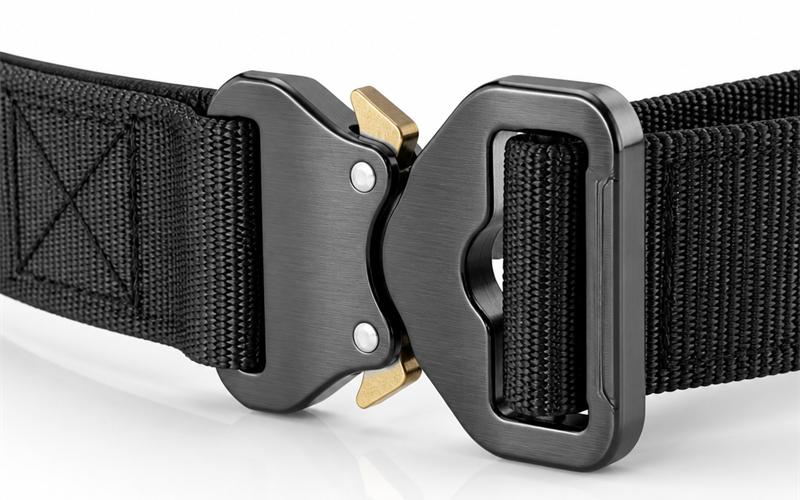
A no-hole ratchet buckle locks onto a hidden toothed track sewn into the back of the strap instead of using holes. As you slide the belt in, a latch catches the track's teeth one by one, letting you fine-tune the fit in tiny increments — usually about a quarter inch.

This is the most precise of the holeless closures, and it has its own dedicated guide. The ratchet track typically offers far more adjustment points than the five to seven holes on a traditional belt, which is why fans love the custom fit. For the full mechanism and a head-to-head with hole belts, read how ratchet belts work vs. traditional hole belts, and browse our ratchet buckle belts to see them in action.
How do the no-hole buckles compare?
All three skip punched holes, but they differ in adjustment, look, and best use. Snap buckles prioritize speed, friction buckles prioritize clean simplicity, and ratchet buckles prioritize precise fit.

| Buckle | How it holds | Adjustment | Best for |
|---|---|---|---|
| Snap / side-release | Two halves click together | Pre-set strap length | Gear, casual webbing belts |
| Friction | Pinches strap against a bar | Smooth, infinite | Military webbing, minimalist straps |
| No-hole ratchet | Latch grips hidden track | ~¼" increments | Dress and casual leather belts |
Key stat: A no-hole ratchet track commonly offers 30–40 adjustment points, versus the 5–7 holes on a traditional prong belt — a major jump in fit precision.
Are no-hole belts better than hole belts?
No-hole belts are better for fit precision and longevity, since there are no holes to stretch, tear, or limit you to fixed positions. Traditional hole belts win on simplicity, classic looks, and easy buckle swaps. The best choice depends on the outfit and your priorities.

For a dress belt you wear daily, a no-hole ratchet delivers a cleaner fit that adapts after a big meal or a small weight change. For a rugged casual belt or a traditional look, a classic prong through holes is hard to beat. Many people keep both. What matters more than the mechanism is the build quality — solid hardware and honest leather outlast any closure style.
The Bottom Line
Snap, friction, and no-hole ratchet buckles all answer the same question — how to secure a belt without holes — in three different ways. Snap buckles are fast and casual, friction buckles are clean and endlessly adjustable, and ratchet buckles give you the most precise fit going. None is universally best; each fits a different belt and a different day. At BELTLEY, we build holeless and traditional belts alike on full-grain leather with solid metal hardware, so you choose the closure without compromising on quality. Explore our ratchet buckle belts for the no-hole experience, or the full belt buckles collection for every style.
Frequently Asked Questions
Q: What is the difference between a snap buckle and a side-release buckle?
They are the same thing. A side-release buckle — the kind that clicks two halves together and releases when you squeeze the side tabs — is often casually called a snap buckle because of the snapping sound it makes. It is most common on bags, gear, and webbing belts.
Q: Do friction buckles slip?
A well-matched friction buckle holds firmly, but slipping can happen if the strap is too thin or too slick for the buckle's grip. Friction closures work best with straps of the correct thickness and a slightly textured surface. Quality construction and proper strap pairing prevent most slipping.
Q: Are no-hole belts more durable than hole belts?
Often, yes. Without punched holes, there are no weak points to stretch or tear, and the tension spreads across a track or strap rather than concentrating at one hole. The belt's overall lifespan still depends on the leather and hardware quality, not just the closure.
Q: Can you wear a no-hole belt with a suit?
Yes. A sleek ratchet or friction buckle on a slim full-grain strap looks clean and modern with tailored trousers. Keep the buckle understated and the leather quality high, and a no-hole belt is perfectly suit-appropriate.
%20buckle%20clicks%20two%20plastic%20or%20metal%20halves%20together.%20A%20friction%20buckle%20grips%20the%20str...)