Pros and Cons of Full-Grain Leather Belts (Honest Breakdown)
TL;DR: Quick Answer
- Full-grain leather belts last 10–20+ years, develop a rich patina, and outperform every other leather grade in tensile strength
- The trade-offs: higher upfront cost ($60–$200), a stiff break-in period, and regular conditioning every 3–6 months
- Cost-per-year, full-grain still wins — a $100 belt lasting 15 years costs $6.67/year vs. $20+/year for cheap alternatives
Full-grain leather is called the "best" leather for belts. You'll see that claim everywhere. But best doesn't mean perfect. There are real trade-offs — and knowing them before you buy saves you from surprises.
This guide covers every advantage and disadvantage of full-grain leather belts honestly. No sales pitch. Just the facts, backed by data and real-world performance.

Should You Buy One? Depends on Which of These You Are
The honest pre-purchase check, by buyer type:
| Your situation | The verdict |
|---|---|
| Durability is your top priority | Buy it — nothing else matches 10–20+ years and full-grain's tensile strength |
| You hate stiff break-in periods | Know it upfront: full-grain starts firm and takes weeks to soften. Worth it, but real |
| You'll never condition a belt | It needs conditioning every 3–6 months — skip that and you forfeit half its lifespan |
| Your budget is $60–$200 | You're in exactly the right range — that buys genuine full-grain with solid hardware |
Still in? Browse full-grain belts, and bookmark the leather care guide for the conditioning part. The full pros and cons:
What Is Full-Grain Leather?
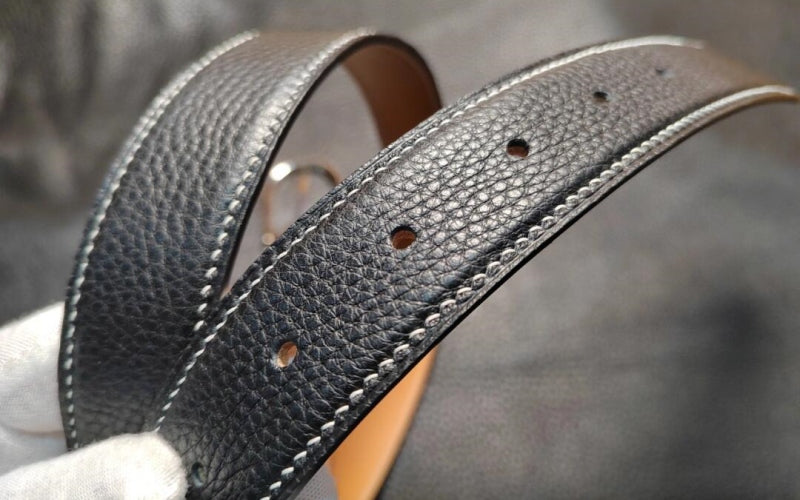
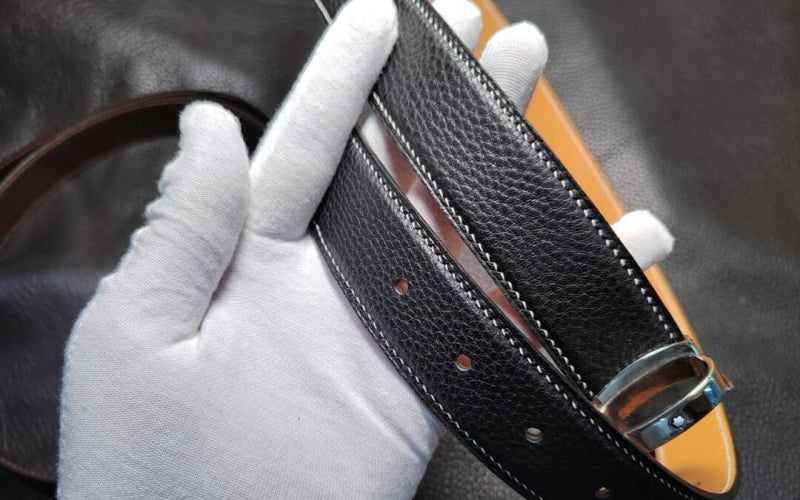
Full-grain leather is the outermost layer of the animal hide with the natural surface left completely intact. No sanding. No buffing. No correction. You can see natural grain variation — small scars, subtle texture differences, visible pores. These aren't defects. They're proof the leather hasn't been artificially altered.
This matters because the outermost fibers are the densest and tightest in the entire hide. According to Torino Leather's full-grain comparison guide, removing those fibers (as done with top-grain) reduces tensile strength by 10–20%. Full-grain keeps them all. That's why it's the strongest leather available.
For a side-by-side breakdown, our article on full-grain leather vs. genuine leather explains exactly how these grades differ.

The Pros: Why Full-Grain Leather Belts Are Worth It
Superior Durability and Lifespan
Full-grain leather belts last 10–20+ years with basic care. Some exceed 30 years. No other leather grade comes close. The intact fiber structure distributes stress evenly across the surface, preventing weak points from forming.
Lab testing backs this up. According to Szoneier Leather's durability research, high-quality tanned leather loses less than 3% of its tensile integrity after 100,000 flex cycles. PU and PVC leather lose 20–30% after the same test. The difference is structural — full-grain's natural fiber network is simply stronger than any processed or synthetic alternative.
| Leather Grade | Typical Belt Lifespan | Tensile Strength |
|---|---|---|
| Full-grain | 10–20+ years | 25–35 MPa |
| Top-grain | 5–10 years | 15–25 MPa |
| Genuine leather | 1–3 years | 10–15 MPa |
| Bonded / PU | 6–12 months | 5–10 MPa |
Develops a Patina Over Time
Full-grain leather gets better with age. The surface absorbs oils from your hands, sunlight, and daily use — creating a warm, rich patina that's unique to your belt. This is the opposite of what happens to lower-grade leather, which cracks and peels instead of aging gracefully.
According to Craft and Antler Co.'s full-grain belt guide, patina development is one of the main reasons leather enthusiasts prefer full-grain. Each belt ages differently based on how you wear it. The result is a belt that tells a story.

Strongest Available Leather
Full-grain retains the hide's complete fiber structure. As noted by Hanks Belts' leather education page, the natural grain creates a protective barrier against cracking, peeling, and surface damage. The fibers interlock in a complex pattern that no corrected or split leather can replicate.
This is why full-grain belts hold their shape at the holes. Cheap belts stretch and tear at the most-used hole within months. Full-grain handles that stress for years. Our guide on what is the most durable leather belt covers why fiber density matters so much.
Breathable and Comfortable
Full-grain leather breathes. The natural pores allow moisture to escape, preventing the sweat buildup that degrades lower-grade leather from the inside out. According to Proven Hands' full-grain care guide, this breathability also makes full-grain more comfortable against the skin during long wear.
Better for the Environment (Long-Term)
A belt that lasts 15 years replaces 5–10 cheap belts that end up in a landfill. Full-grain leather is biodegradable. It's sourced as a byproduct of the meat industry. And because it can be conditioned and restored, minor wear doesn't mean replacement — it means maintenance.

The Cons: What You Should Know Before Buying
Higher Upfront Cost
Full-grain leather belts typically cost $60–$200. That's 2–4x more than a "genuine leather" belt from a department store. The raw material costs more. The tanning process takes longer. And brands that use full-grain tend to invest in better hardware and stitching too.
But the cost-per-year math favors full-grain. A $100 belt lasting 15 years costs $6.67/year. A $30 genuine leather belt lasting 2 years costs $15/year. Over a decade, the cheap belt costs more. Our article on whether full-grain leather belts are worth the investment breaks this down further.
Stiff Break-In Period
New full-grain belts are stiff. Thick ones (4mm+) can feel rigid for the first few weeks. This is actually a sign of quality — the dense fibers haven't been weakened by sanding or processing. But it means the belt won't feel perfectly comfortable on day one.
The break-in takes 1–3 weeks of regular wear. The leather softens and molds to your body shape. According to Obscure Belts' leather care guide, you can speed this up slightly with a light application of leather conditioner — but don't overdo it on a new belt.
Requires Regular Conditioning
Full-grain leather needs conditioning every 3–6 months to stay supple. Without it, the leather can dry out and eventually crack — especially in dry climates or with daily wear. You'll need a quality leather conditioner (mink oil, neatsfoot oil, or beeswax-based products).
This isn't difficult. It takes 5 minutes. But it's more maintenance than a synthetic or bonded belt, which requires zero care (and also falls apart in 6 months). Our leather care guide covers the exact process.

Sensitive to Water and Heat
Full-grain leather handles light moisture fine. A few raindrops won't hurt it. But soaking or prolonged water exposure can warp the leather and leave water stains. Direct heat — hair dryers, radiators, car dashboards in summer — can dry out and crack the surface.
The fix is simple: if the belt gets wet, let it air dry naturally at room temperature, then condition it. Never use forced heat. This applies to all leather, but full-grain shows water damage more visibly than coated or corrected grades.
Limited Initial Color Range
Full-grain leather is typically available in natural earth tones — black, brown, espresso, tan, oxblood. Bright or unusual colors are rare because full-grain's natural surface doesn't take heavy dye coats the way corrected leather does. If you want a neon or pastel belt, full-grain isn't the answer.
That said, the natural color deepens and enriches over time. A new brown full-grain belt will look notably richer after a year of wear.

Who Should Buy a Full-Grain Leather Belt?
Full-grain is ideal if you:
- Want a belt that lasts 10+ years
- Appreciate leather that ages and develops character
- Prefer quality materials over brand logos
- Don't mind 5 minutes of conditioning every few months
- Value cost-per-year over sticker price
Full-grain might not be for you if you:
- Need a belt for a single season or event
- Want bright, fashion-forward colors
- Prefer zero-maintenance accessories
- Have a strict budget under $50
For most people, full-grain is the smartest long-term choice. The upfront cost is higher, but everything else — durability, appearance, comfort, environmental impact — favors full-grain over every other option. If you're curious about how to tell if a belt is full-grain leather before buying, our guide covers every visual and tactile test.

The Bottom Line
Full-grain leather belts earn their reputation. They last longer, age better, and feel better than any other leather grade.
The trade-offs — higher price, stiff break-in, regular conditioning — are real but manageable. For anyone who wears a belt daily, full-grain pays for itself within a few years.
BELTLEY's full-grain leather belt collection starts at $58 with 316L stainless steel buckles and a 10-year warranty — built to prove the point that quality materials don't need a luxury price tag.
Frequently Asked Questions
Q: Is full-grain leather the best leather for belts?
Yes. Full-grain leather is the highest grade available for belts. It retains the hide's complete natural surface and fiber structure, giving it the highest tensile strength and longest lifespan of any leather type. It's the only grade that develops a patina over time instead of deteriorating. Our guide on what type of leather is best for belts compares all grades.
Q: How long do full-grain leather belts last?
A well-made full-grain leather belt lasts 10–20 years with regular wear and basic care (conditioning every 3–6 months). Some last 30+ years. The lifespan depends on leather thickness, hardware quality, and how often you wear and condition the belt. Double-layer full-grain belts can exceed 20 years.
Q: Are full-grain leather belts stiff?
New full-grain belts are stiffer than processed leather because the natural fibers haven't been weakened by sanding or correction. The break-in period is 1–3 weeks of regular wear. After that, the leather softens and molds to your body. A light application of leather conditioner can help speed the process.
Q: How do you care for a full-grain leather belt?
Condition the leather every 3–6 months with mink oil, neatsfoot oil, or a beeswax-based conditioner. Wipe off dirt with a soft cloth. Store flat or hanging in a cool, dry place. Avoid soaking in water and never use direct heat to dry. That's it — 5 minutes of care every few months keeps the belt in top condition.
Q: Is full-grain leather worth the extra cost?
For daily wear, yes. A $100 full-grain belt lasting 15 years costs $6.67/year. A $30 genuine leather belt lasting 2 years costs $15/year. Over time, the cheaper belt actually costs more — and you go through the hassle of replacing it repeatedly. Full-grain also looks better with age, while cheaper leather degrades visually.
,...)