Matte vs Glossy Crocodile Leather Belt: Which Finish Is Right for You?
TL;DR:
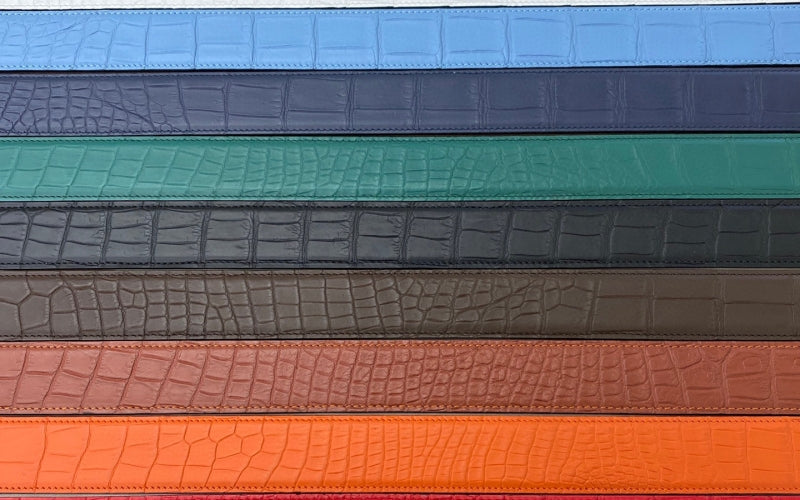
- Matte crocodile leather is oil-rubbed, more supple, hides scratches naturally, and suits everyday wear.
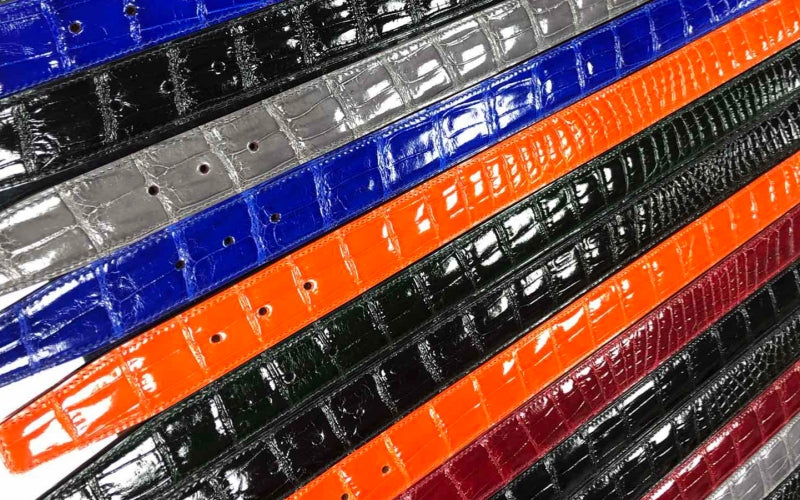
- Glossy (glazed) crocodile leather is agate-polished to a mirror shine, more formal, but vulnerable to water spots and surface scratches.
- Neither finish is objectively superior — the right choice depends entirely on how and where you plan to wear the belt.
Most people buying a crocodile leather belt focus on the hide itself — the species, the scale pattern, the belly vs. hornback cut. The finish gets treated as an afterthought. That's a mistake. Matte and glossy crocodile leather are meaningfully different materials in terms of durability, maintenance requirements, and style range. Choosing the wrong one for your lifestyle means a belt that looks rough within a year instead of a decade.
This guide breaks down exactly how each finish is made, what it means for long-term wear, and which one belongs in your wardrobe. If you're already considering a crocodile or alligator belt, the finish question deserves a direct answer before you buy.
Matte or Glossy: Match the Finish to Your Life
Neither finish is better — but one of them is better for you:
| Your situation | Go with |
|---|---|
| Daily or near-daily wear | Matte — oil-rubbed, more supple, and it hides small scratches instead of broadcasting them |
| Formal events and evening wear | Glossy — the agate-polished mirror shine is the dressier read |
| Humid climate, rain, real life | Matte — glossy is vulnerable to water spots |
| An occasional statement piece | Glossy — if it only comes out for big nights, let it shine |
BELTLEY's crocodile belts come in both finishes. How each one is made, and what that means for care:
What Is the Difference Between Matte and Glossy Crocodile Leather?
Matte crocodile leather is finished by working special conditioning oils into the hide, producing a soft, understated sheen with visible texture depth. Glossy (glazed) crocodile leather is finished by polishing each scale under pressure with an agate stone, creating a high-shine, mirror-like surface. The two finishes start from the same raw hide but diverge completely in appearance, hand feel, and maintenance needs.

The distinction matters beyond aesthetics. Matte finishes preserve the natural suppleness of the hide and allow the leather to breathe and flex more freely. Glazed finishes create a harder, more reflective surface that emphasizes the scale geometry — but that surface is more brittle and more sensitive to environmental factors. According to Sunny Exotic Leathers' breakdown of crocodile finish types, the glazed look "directly expresses the true touch of crocodile leather" while matte gives it a "discreet, casual luxury." Both are legitimate interpretations of the same exceptional material.
For a broader look at how crocodile leather types differ from cut to finish, see our guide on crocodile leather types for belts.
How Each Finish Is Made
The raw crocodile hide goes through the same tanning process regardless of which finish it will receive. The difference comes in the final stages.

Matte finish: After tanning, the hide is worked with conditioning oils that penetrate the fiber structure. This softens the leather, builds internal moisture, and produces a low-luster surface. The scales remain visually textured and tactilely soft. Because no hard surface coating is applied, the finish wears gradually and develops a deepening patina over time — scratches often blend into the overall texture rather than standing out.
Glazed finish: The tanned hide is buffed under pressure using an agate stone (or a heated metal tool in modern production). This compresses the surface of each scale, flattening and smoothing the outermost fibers until they reflect light uniformly. The result is a hard, polished surface with a mirror-like shine. No lacquer or synthetic coating is typically added — the gloss is entirely mechanical, not chemical. A&V Leather's guide to crocodile leather finishes notes that this traditional method is what distinguishes genuine glazed exotic leather from cheaper lacquered imitations.
Which Finish Is More Durable?
Matte crocodile leather is generally more durable for everyday wear. It is more supple, more forgiving with minor scratches, and significantly more resistant to water spotting. Glazed crocodile leather offers an exceptional formal appearance but demands careful handling — water contact, even from slightly damp hands, can permanently diminish the glazed surface without professional restoration.
This doesn't mean glossy crocodile is fragile in absolute terms. Crocodile leather at any finish is structurally robust — research published in PMC/NIH on saltwater crocodile hide structure confirms that the dense collagen fiber matrix and scale architecture hold up regardless of finishing treatment. The vulnerability of glazed leather is surface-level, not structural. The underlying hide remains one of the strongest animal leathers available, as we cover in depth in are alligator or crocodile leather belts durable.
The practical implication: a matte belt worn daily to the office, on weekends, and through the occasional rain shower will outlast a glossy belt used in the same way. A glossy belt treated with care — worn for formal occasions, stored properly, kept away from moisture — can last just as long.
Does Glossy Crocodile Leather Scratch Easily?
Glazed crocodile leather scratches more visibly than matte, because the polished surface creates a uniform reflective plane where any disruption becomes immediately apparent. A light scratch that would blend into the texture of a matte hide becomes a bright white line on a glazed surface.

That said, deep structural scratches are rare — the compressed surface is actually harder than untreated leather. The issue is cosmetic visibility, not material damage. The other risk factor is water: moisture causes the compressed surface fibers to swell unevenly, producing white spots or milky streaks that require specialist treatment to reverse. According to AMTAN (American Tanning and Leather), one of the most respected alligator tanneries in the US, restoring a glazed finish after water damage requires a professional polishing machine — it cannot be done at home.
For buyers who wear their belts in unpredictable conditions, this is a meaningful practical constraint.
Matte vs Glossy: Which Finish Is More Formal?
Glazed crocodile leather is more formal. The mirror-like surface reads as high-occasion — it pairs naturally with dress suits, black-tie adjacent outfits, and business formal. Matte crocodile reads as refined but versatile: it works equally well with tailored trousers, smart casual, and elevated denim.

This makes matte the more flexible choice across a wardrobe. A single matte crocodile belt can serve as your only exotic leather belt and cover most dress scenarios from business casual upward. A glazed belt is a specialist tool — it elevates a formal look in a way matte simply can't match, but it looks slightly out of register in a weekend outfit.
Browse our dress belts collection if your primary use case is formal wear — several styles are available in glazed exotic leather suited to that context. If you need a belt that transitions across settings, alligator vs. crocodile belts covers how species choice also affects the overall register of the piece.
How to Care for Each Finish
The conditioning approach differs between finishes. Using the wrong product on either can damage the surface.

| Care Factor | Matte Finish | Glossy (Glazed) Finish |
|---|---|---|
| Conditioning frequency | Every 3–4 months | Every 4–6 months (lighter application) |
| Conditioner type | Exotic leather oil or cream | Exotic-specific cream only — no oil sprays |
| Water resistance | Moderate — pat dry if wet | Low — keep dry; blot immediately if wet |
| Scratch visibility | Low — blends into texture | High — shows clearly on polished surface |
| Home repair | Light conditioning hides minor scuffs | Professional polishing machine needed for gloss restoration |
| Storage | Flat or loose roll, dry space | Flat in dust bag, climate-stable environment |
For a full care protocol that applies to both finishes, our leather care guide walks through exotic-specific conditioning step by step. The key universal rule: never use silicone sprays, generic shoe polish, or petroleum-based products on crocodile leather in either finish.
The Bottom Line
The matte vs glossy decision for a crocodile leather belt comes down to lifestyle, not quality. Matte is more forgiving, more versatile, and better suited to regular wear across casual and business settings. Glossy delivers an unmatched formal elegance but demands careful handling and controlled conditions to stay pristine.
At BELTLEY, our handcrafted crocodile and alligator belts are available in both finishes, made in small batches by master artisans who source full-grain exotic hides and pair them with stainless steel buckles built to the same lifespan standard as the leather. Every belt is backed by a 10-year warranty on materials and construction — because the finish you choose should be a style decision, not a durability gamble.
Free worldwide shipping and a 30-day hassle-free return policy mean you can make that choice with confidence.
Frequently Asked Questions
Q: What is the difference between matte and glossy crocodile leather?
Matte crocodile leather is oil-finished for a soft sheen and supple feel. Glossy (glazed) crocodile leather is agate-polished under pressure for a mirror-like shine. Both start from the same hide but differ in appearance, durability under daily wear, and maintenance requirements.
Q: Which is more durable — matte or glossy crocodile leather?
Matte crocodile leather holds up better under everyday conditions because it hides minor scratches, tolerates light moisture, and conditions more easily. Glossy finishes are structurally sound but sensitive to water spots and surface scratches that require professional restoration to reverse.
Q: Is glossy crocodile leather waterproof?
No. Glazed crocodile leather is particularly sensitive to moisture — even contact with slightly damp hands can cause white spots on the polished surface. Matte finishes are more water-tolerant but should still be dried promptly and kept away from prolonged moisture exposure.
Q: Which finish is better for a dress belt?
Glazed (glossy) crocodile leather is the traditional choice for formal dress wear. Its high-shine surface pairs naturally with suits and formal trousers. Matte is more versatile and works well from business casual upward, making it a better all-rounder if you need one belt to cover multiple settings.
Q: Can you restore a scratched glossy crocodile belt at home?
Minor surface scratches on a glazed belt can sometimes be reduced by gently warming the area with clean hands and light buffing, but full restoration of the glazed finish requires a professional polishing machine. Deep scratches or water damage should be handled by a leather specialist. Matte finishes are far more forgiving — light conditioning often masks minor scuffs entirely.
%C2%A0crocodile%20leather%20is%20agate-polished%20to%20a%20mirror%20shine,%20more%20formal,...)