Belly Cut vs Hornback Crocodile Belt: What's the Real Difference?
TL;DR:
- Belly cut uses the smooth, symmetrical underside scales — it's the premium choice for formal wear, softer out of the box, and used in most high-end luxury belts.
- Hornback cut uses the raised, bony spine scales — it delivers bold texture and visual drama, suits casual or statement-driven outfits, and breaks in over a few wears.
- Neither cut is inferior. They serve different aesthetics, and knowing which hide section you're buying helps you avoid paying a premium for the wrong one.
Most buyers shopping for a crocodile leather belt focus on color, finish, or buckle style. The hide cut — which section of the animal the leather came from — often gets overlooked on the product page. That's worth correcting. Belly cut and hornback crocodile are made from the same animal, but they look, feel, and wear so differently that choosing the wrong one for your wardrobe is like buying dress shoes when you needed boots.
This guide covers everything that matters: the structural differences, how each cut performs over time, the price gap, and which one belongs in your wardrobe based on how you actually dress. If you're already exploring crocodile and alligator belts, the cut question deserves a direct answer before you buy.
Belly or Hornback: A One-Minute Decision
Same animal, opposite personalities. Pick by where the belt is going:
| Your situation | Go with |
|---|---|
| Suits, office, formal occasions | Belly cut — smooth, symmetrical scales; this is what high-end dress belts use |
| Casual outfits that need a statement | Hornback — the raised spine scales bring drama smooth leather can't |
| You want softness from day one | Belly — supple out of the box; hornback needs a few wears to settle |
| You're paying belly prices for "croc" | Verify the cut — knowing the hide section keeps you from paying a premium for the wrong one |
Both cuts live in the crocodile & alligator collection. What each cut actually is:
What Is a Belly Cut Crocodile Belt?
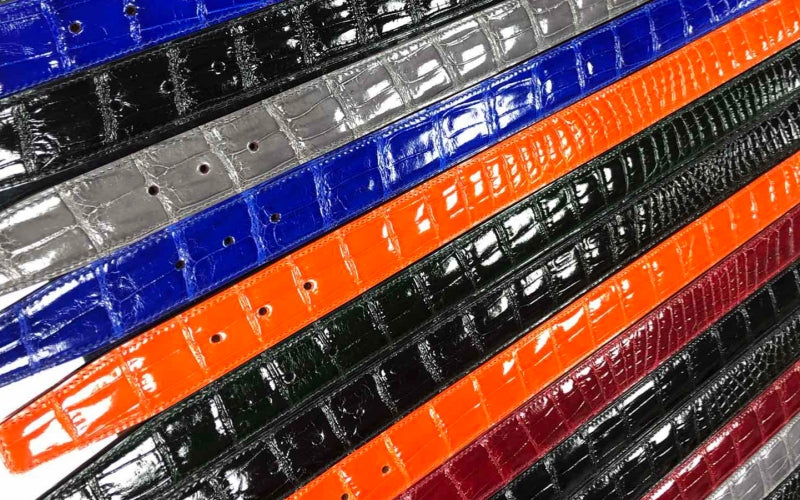
A belly cut crocodile belt uses leather from the underside of the hide — the ventral section that runs from the neck to the tail. This area produces small, flat, symmetrical square-shaped scales arranged in clean parallel rows, prized across luxury goods for their uniform appearance and smooth surface texture.

The belly is the most sought-after section of any crocodile hide. The scales here contain minimal ossification (bony deposits), which means the leather is pliable, soft to the touch, and drapes naturally around the body. High-end fashion houses and heritage belt makers have used belly leather as the standard for fine crocodile goods for over a century, because its visual consistency makes it ideal for precision cutting and stitching. As Vinacreations' breakdown of alligator and crocodile hide sections explains, the belly cut "features the smoothest, most aesthetically pleasing small, square-shaped scales" of any section on the animal.
For context on how this compares across species, our guide on crocodile leather types for belts covers how belly sections differ between Nile crocodile, saltwater crocodile, and American alligator.
What Is a Hornback Crocodile Belt?
A hornback crocodile belt uses leather from the dorsal (back) surface of the hide — the spine ridge that runs from the neck toward the tail. This section features prominently raised scutes: large, irregular bony plates embedded within the scales, giving the leather a dramatic three-dimensional texture that no other section of the hide replicates.
Hornback leather is structurally harder than belly leather due to the ossified scale cores. The surface is visibly and tactilely rugged — ridged, asymmetrical, and bold. That distinctive profile is its main appeal. A hornback belt makes a statement in a way that a smooth belly-cut belt simply doesn't. The trade-off is stiffness: hornback belts run rigid out of the box and require several wears before they conform naturally to the body. According to Biker Ring Shop's guide to identifying authentic crocodile leather, hornback's raised scutes are one of the most distinctive markers of genuine crocodile leather, making authentication easier.
How the Two Cuts Compare at a Glance
| Factor | Belly Cut | Hornback |
|---|---|---|
| Scale appearance | Small, flat, symmetrical squares | Large, raised, irregular bony plates |
| Surface texture | Smooth and uniform | Dramatically ridged and three-dimensional |
| Softness | Soft from day one | Stiff initially; softens with wear |
| Formality | Formal to business casual | Casual to smart casual |
| Scale pattern | Consistent, symmetrical rows | Asymmetrical, bold |
| Typical price | Higher (premium cut) | Slightly lower |
| Break-in period | Minimal | Several wears |
| Best use | Dress belts, suits, tailored trousers | Jeans, chinos, western or statement outfits |

Which Cut Is More Durable?
Both belly cut and hornback crocodile leather are exceptionally durable — the structural advantage of crocodile hide applies regardless of which section is used. The dense, interlocking collagen fiber matrix present throughout the entire hide gives both cuts tensile strength well above standard cowhide. That said, the two cuts age differently.
Belly leather develops a patina over time as the smooth surface acquires depth from wear and conditioning. The softness that makes it immediately comfortable also means it will show fine creasing over years of daily use — a natural sign of a well-worn piece, not a quality defect. Hornback leather, because of the ossified scutes, is more rigid and resists surface deformation more effectively. The raised scutes are less susceptible to the pressure creasing that affects smooth leather. However, the stiffer surface can crack along the scale joints if it's not conditioned regularly — the inter-scute tissue needs moisture to stay flexible.
Both cuts benefit from the same care protocol: exotic-specific conditioning every 3–4 months, storage away from heat and moisture, and rotation across a small collection. See our leather care guide for a full exotic maintenance routine. For a broader durability comparison across the exotic leather category, are alligator or crocodile leather belts durable covers the full picture.
Which Is More Expensive — Belly Cut or Hornback?
Belly cut crocodile leather is generally more expensive than hornback. The belly section yields a smaller usable surface area per hide and requires more precise cutting to produce symmetrical scale alignment across a belt's length. The premium is built into those production constraints.

Hornback leather, while visually distinctive, comes from a section of the hide that produces less consistent output from the finest tanneries — the scale patterns are irregular by nature, and matching them across a belt requires skill. A well-executed hornback belt is not cheap, but it typically sits slightly below the belly-cut equivalent for equivalent construction quality. Both cuts are genuine luxury goods. The price difference between them is rarely the deciding factor for a buyer who already knows they want exotic leather; the aesthetic and occasion fit matters more. For context on whether the investment is justified overall, our piece on are alligator or crocodile belts worth it walks through the long-term value case.
Which Crocodile Belt Cut Should You Choose?
The answer comes down to three questions: Where will you wear it? How important is immediate comfort? What visual statement are you making?

Choose belly cut if:
- Your primary use is business formal, suits, or dress trousers
- You want a belt that transitions from boardroom to dinner without adjustment
- You prefer a refined, understated scale pattern over bold texture
- You want immediate softness and don't want a break-in period
- You're investing in one exotic belt that covers most occasions
Choose hornback if:
- You dress primarily casual to smart casual — jeans, chinos, weekend wear
- You want a piece that commands attention and reads as distinctive rather than classic
- You appreciate bold, three-dimensional texture as a design feature
- You don't mind a stiff first few wears while the belt conforms
If the primary use is formal wear, the dress belts collection includes belly-cut crocodile options that pair naturally with tailored outfits. For a deeper comparison of how species affects these same variables, is crocodile leather better than alligator leather addresses the cut and species question together.
The Bottom Line
Belly cut and hornback crocodile are two genuinely different products made from the same animal. Belly leather is the classic choice for luxury belts — smooth, symmetrical, formal-capable, and immediately soft. Hornback delivers visual drama and bold texture at the cost of initial stiffness and a narrower style range.
At BELTLEY, our handcrafted crocodile and alligator belts are made in small batches using full-grade exotic hides sourced and finished to the same standard across both cuts. Every belt pairs the leather with stainless steel hardware and is backed by a 10-year warranty on materials and construction. Free worldwide shipping and 30-day hassle-free returns mean you can compare and choose without risk.
Pick the cut that fits how you dress — not just what looks best in a product photo.
Frequently Asked Questions
Q: What is the difference between belly cut and hornback crocodile leather?
Belly cut uses the smooth underside of the hide, producing small, flat, symmetrical scales ideal for formal belts. Hornback uses the spine section, producing large, raised, bony scutes with bold three-dimensional texture suited to casual and statement-driven wear. Both are genuine crocodile leather; they simply come from different sections of the same animal.
Q: Which is better — belly cut or hornback crocodile belt?
Neither is objectively better. Belly cut is superior for formal and business wear because of its uniform scale pattern and immediate softness. Hornback is superior for casual or statement outfits because of its dramatic raised texture. The right choice depends entirely on how you plan to wear it.
Q: Is belly cut crocodile more expensive than hornback?
Generally yes. The belly section yields less usable area per hide, requires more precise alignment during cutting, and is considered the premium section across the exotic leather industry. Hornback typically costs slightly less for equivalent construction quality, though both are genuine luxury goods.
Q: How long does a hornback crocodile belt take to break in?
A hornback belt typically needs three to five wears before the stiffness softens noticeably. The ossified scutes make the leather more rigid than belly cut, but consistent wear and regular conditioning accelerate the break-in process. Avoid forcing the belt into a tight coil during storage, which can stress the scale joints.
Q: Can you tell belly cut from hornback just by looking?
Yes, easily. Belly cut features small, square, flat scales arranged in symmetrical parallel rows. Hornback features large, prominent, raised scales (scutes) with an irregular, asymmetrical pattern running along the center of the belt. The raised, bumpy spine ridge of hornback is one of the most immediately recognizable features in exotic leather goods.