How to Match Your Calfskin Belt to Dress Shoes (Black, Brown, Burgundy)
TL;DR:
- Black shoes pair with a black calfskin belt. No exceptions for traditional dress codes.
- Brown shoes pair with a brown calfskin belt within one shade of the shoe. Slightly darker is safer than lighter.
- Burgundy (oxblood) shoes pair best with a burgundy or dark brown belt — never black.
- Match the finish (matte vs polished) and the buckle metal to your watch and shoe hardware.
- Calfskin's smooth, fine grain is the easiest leather to color-match because it takes dye evenly.
A great outfit can be ruined by one mismatch. And the mismatch most guys get wrong? Belt and shoes. You spent real money on calfskin dress shoes. Then you grabbed whatever belt was on top of the drawer. Now the whole outfit looks slightly off — and you can't figure out why.
This guide fixes that. We'll cover the three dress-shoe colors you actually wear — black, brown, and burgundy — and give you exact rules for matching a calfskin dress belt to each one. No fashion theory. Just rules that work.
Why does belt and shoe matching matter so much?
Belt-and-shoe matching matters because the human eye reads them as a single visual frame around your outfit. When they match, the eye relaxes and notices the whole look. When they clash, the eye gets stuck on the conflict and your suit, shirt, and tie stop working as a team.

This isn't a new idea. Classic menswear authorities like Gentleman's Gazette have hammered the rule for decades, and it shows up in nearly every tailoring manual published since the 1950s. The reason is simple: your belt sits at the waistline and your shoes anchor the floor. Together they frame the suit. Mismatch them and the frame breaks.
Calfskin makes this easier than other leathers. Because calfskin has a fine, dense grain — Britannica notes that calfskin is prized for its tight fiber structure and smooth surface — it accepts dye evenly. That means a black calfskin belt actually looks black, not "almost black with weird undertones." Cheap split leather can't do that.
What color belt goes with black dress shoes?
Black dress shoes pair with a black calfskin belt. Full stop. This is the one rule that has zero flexibility in traditional dress codes — business, formal, black tie, and anything wedding-adjacent. Brown belts with black shoes is the single fastest way to look like you got dressed in the dark.
Black is the most rigid color in menswear, and that's actually good news — it removes decision fatigue. A polished black calfskin belt works with charcoal suits, navy suits, black tuxedos, and every shade in between.
A few finer points most guys miss:
- Match the shine level. Patent leather shoes (black-tie territory) want a patent or high-gloss belt. Standard polished oxfords want a matte-to-satin belt finish. Big shine on the belt with matte shoes looks like a costume.
- Watch the buckle metal. Silver/stainless buckle with silver watch and silver shoelace tips. Gold buckle with gold-toned hardware. Mixing metals isn't a crime, but it's a tell.
- Belt width matters with dress shoes. Stick to 30–35mm (1.18"–1.38"). Anything wider belongs with jeans, not oxfords. We cover this in our best calfskin belt thickness for dress wear guide.
What color belt goes with brown dress shoes?
Brown shoes pair with a brown calfskin belt within one shade of the shoe color. If you can't match exactly, go slightly darker — never lighter. Light brown belt with dark brown shoes screams "I bought what was on sale." Dark brown belt with medium brown shoes still reads as intentional and put-together.

Brown is where most guys panic, because "brown" is fifty colors. Here's a simple decoder:
| Shoe Color | Best Belt Match | Acceptable Backup |
|---|---|---|
| Light tan / camel | Tan calfskin | Medium brown |
| Medium brown | Medium brown | Dark brown |
| Dark brown | Dark brown | Espresso |
| Espresso / near-black | Espresso | Dark brown |
The reason "darker is safer than lighter" works: shoes patina and darken over time, but belts (worn under a jacket most of the day) often stay closer to their original tone. A belt that starts slightly darker will catch up to your shoes within a year of normal wear. A belt that starts lighter will look mismatched forever.
Carl Friedrik and other quality makers note that fine European calfskin develops a richer, deeper color with use — your medium brown belt at year three will be noticeably darker than the day it arrived. Plan for that.
Can you match brown shoes with a black belt?
No. Brown shoes with a black belt breaks the most basic rule of belt-shoe matching and reads as a mistake in every traditional dress code. The single exception is high-fashion intentional contrast (think runway styling) — but in a real-world office, wedding, or interview, it just looks wrong.

This includes "almost black" espresso shoes paired with a true black belt. They are not the same color and the human eye notices. If you only own one belt and one pair of dress shoes, make sure they're the same color family. Period.
For a versatile brown that handles 80% of business-casual situations, a medium-to-dark brown calfskin belt is the workhorse. Pair it with khakis, navy chinos, mid-gray suits, brown shoes from tan to dark brown, and you're set.
What color belt goes with burgundy or oxblood shoes?
Burgundy (oxblood) shoes pair best with a burgundy calfskin belt or a dark brown calfskin belt. Black belts are a hard no — black with burgundy looks like a bruise. The dark brown option is the safer bet if you don't want to commit to a burgundy belt that limits other outfits.
Burgundy shoes are having a moment. They've moved from "edgy menswear flex" to mainstream staple over the last decade, and the Permanent Style crowd has been pushing them as the most versatile alternative to brown for years.
Here's the truth about matching burgundy:
- Exact match (burgundy belt + burgundy shoes): Sharpest look. But you need an actual burgundy belt, which most guys don't own.
- Dark brown belt + burgundy shoes: Universally acceptable, slightly more conservative. Works with navy, gray, and brown suits.
- Cordovan-tone belt + burgundy shoes: The luxury move. Shell cordovan develops that signature burgundy-with-purple-undertone patina. A burgundy calfskin belt mimics this beautifully at a fraction of the price.
The pure logic of our brand-tax breakdown applies here too — a calfskin belt in oxblood tone delivers the same visual effect as a four-figure cordovan belt without the four-figure receipt.
Do you have to match finish (matte vs polished), not just color?
Yes — finish matching matters almost as much as color matching. A high-gloss polished belt with matte suede shoes looks unbalanced. A casual matte belt with mirror-shined oxfords looks like you forgot to dress up your waist. Match the surface sheen, and the outfit reads as cohesive even when the colors aren't a perfect mirror.

Calfskin shows up in three common finishes:
- Box calf (polished, slight sheen) — pairs with most polished dress shoes. The default dress belt finish.
- Aniline / natural calf (matte to satin) — pairs with brogues, suede dress shoes, and most business-casual leather shoes.
- Pebbled / grain calf — casual end of the spectrum. Pair with derbies, monks, and chunky-soled dress shoes — not oxfords.
Joseph Cheaney walks through the difference between calf finishes in their care content, and the principle is the same on belts: a glossy box calf belt and a hand-polished oxford speak the same visual language. A matte belt and a mirror-shined shoe don't.
What about belt and shoe hardware (buckle, eyelets, sole stitching)?
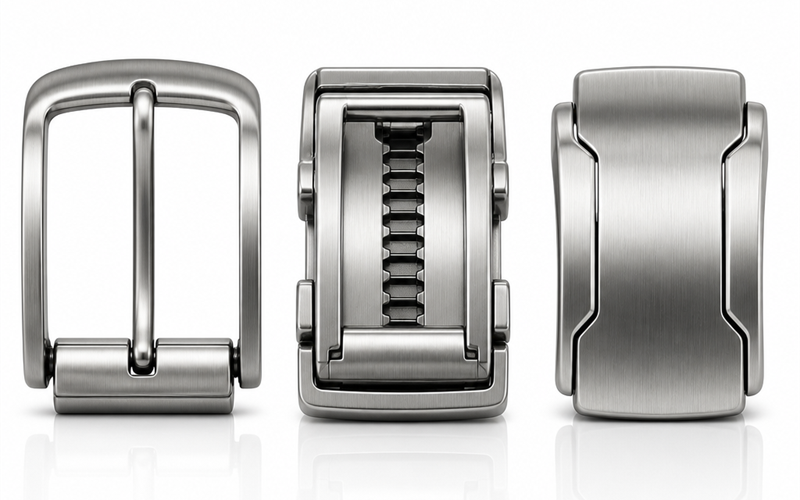
Match buckle metal to your shoe's metallic details and your watch. Silver/stainless buckles pair with silver shoelace tips and silver watches. Gold-tone buckles pair with gold watches and gold cufflinks. This isn't fashion-week rules — this is the same logic that makes a kitchen with all-stainless appliances look more expensive than one with mixed metals.

A few hardware-matching shortcuts:
- stainless steel buckle (BELTLEY's standard) — neutral cool tone, pairs with virtually any silver-toned hardware
- Solid brass buckle — warm gold tone, pairs with gold-tone watches and warm leather tones (tan, cognac, espresso)
- Polished chrome — bright, formal, pairs with patent leather and tuxedos
- Antiqued or aged finish — matches workwear and casual leather (don't put it with a tuxedo)
We cover buckle materials in detail in the 4 quality markers of a calfskin belt post if you want to go deeper.
The Bottom Line
Belt-and-shoe matching isn't fashion theory — it's just visual logic. Same color family, same finish family, same hardware tone. Black with black. Brown within one shade of brown. Burgundy with burgundy or dark brown, never black. Get those three rules right and 95% of outfits handle themselves.
Calfskin makes all of this easier because it takes color cleanly, holds finish consistently, and develops a believable patina that keeps up with your shoes. At BELTLEY, every dress belt is built from full-grain calfskin with stainless or solid brass hardware — so when you buy a black belt, it's actually black; when you buy a burgundy belt, it patinas like one. No surprises, no Brand Tax, and a 10-year warranty on the build.
Ready to match the gap in your rotation? Browse our calfskin dress belt collection — black, brown, espresso, and burgundy, all built to pair with the shoes you already own.
Frequently Asked Questions
Q: Does the belt have to be the exact same shade as the shoes?
No. The belt needs to be in the same color family and ideally within one shade. Slightly darker is safer than slightly lighter, since shoes darken with patina and belts will catch up.
Q: Can I wear a brown belt with black pants?
Yes, in casual contexts (jeans, chinos with brown shoes). For dress codes — suit, tuxedo, business formal — match the belt to the shoes, not the pants.
Q: What's the most versatile single calfskin belt color to own?
A dark brown or espresso calfskin belt. It pairs with brown and burgundy shoes, navy and gray suits, khakis, and dark denim. If you can only buy one quality belt, this is it.
Q: Should the belt match the shoe brand or just the color?
Color and finish only. Belt brand doesn't matter — and chasing matching brands across a wardrobe is how Brand Tax happens. Focus on the leather, the dye, and the build quality.
Q: Is it okay to wear a burgundy belt with black shoes?
No. Burgundy and black don't share a color family and the contrast looks unintentional in a dress context. Save your burgundy belt for burgundy or dark brown shoes.