What Do Leather Belts Symbolize in Different Cultures?
TL;DR:
- Leather belts have symbolized rank, honor, identity, and status in nearly every major civilization for over 2,000 years
- Roman soldiers, Japanese samurai, Native American wampum keepers, and American cowboys all used belts as codified cultural markers
- The modern leather belt still carries echoes of these traditions — from martial arts ranking to the boardroom dress belt
The leather belt is the rare accessory that appears in almost every civilization in recorded history — and in almost every culture, it has meant something far beyond holding up clothing. Belts have marked soldiers apart from civilians, chiefs apart from commoners, masters apart from students, and champions apart from competitors. This guide walks through what leather belts symbolize in different cultures, from ancient Rome to modern martial arts dojos, and why those meanings still echo in the belts we wear today.
What Does a Leather Belt Symbolize Across Cultures?
A leather belt symbolizes authority, rank, achievement, and identity across nearly every major culture in history. It has served as a military insignia in Rome, a spiritual marker for samurai, a legal document for Indigenous nations, a championship trophy in the American West, and a rank indicator in East Asian martial arts — always encoding who the wearer is and what they have earned.

This consistency is not coincidence. A belt sits at the physical center of the body, visible from every angle, impossible to hide. That visual prominence made it the natural place for civilizations to encode identity. For a broader survey of the belt's origins, see When Were Leather Belts Invented?.
At BELTLEY, we work almost exclusively with full-grain and exotic leather because the belt's role as a cultural symbol has always depended on the quality and craft of the material itself.
Ancient Rome: The Belt as Military Rank and Honor
In ancient Rome, the leather military belt — called the cingulum militare or balteus — was the single most important symbol distinguishing a soldier from a civilian. It wasn't issued; it was earned. Roman legionaries wore elaborately decorated belts fitted with bronze or silver plaques, pendants, and ornamental studs, and the level of decoration directly signaled the wearer's rank and years of service.

Academic research on Roman military dress has documented that the belt was so culturally charged that its public removal was used as a formal disciplinary punishment. A soldier stripped of his belt for even a few hours was considered publicly dishonored — the equivalent of losing his identity as a soldier altogether. Ordinary Romans understood this: the belt, not the sword or the armor, was the definitive mark of the legionary.
This pattern — belt as earned insignia — would repeat across cultures for the next two millennia.
Why Did Samurai Wear Belts So Differently?
Samurai wore belts — called obi — as both a functional armor component and a spiritual marker of honor, duty, and family responsibility. The obi held the samurai's sword (katana) and short blade (wakizashi), and the manner of tying it reflected social position, clan affiliation, and even philosophical lineage. Leather components within samurai armor (yoroi) added both reinforcement and status signaling.
In Japanese tradition, the warrior's belt was inseparable from the concept of bushido — the code of honor. A samurai without his obi was a samurai without his place in society. Later, this belt-as-identity principle would transfer directly into Japanese martial arts, where the cloth belt became the universal symbol of practitioner rank (more on this below).
Japanese leatherwork was never mass-produced in the European sense. Each piece of kacchū — lacquered leather armor — was handmade, lacquered in multiple stages, and decorated with the wearer's family mon (crest). The modern handmade leather belt carries a direct lineage from this tradition of leather as personal, marked, and earned.
Medieval Europe: Belts as Chivalry and Status
In medieval Europe, the leather belt — worn with a buckle and often long trailing end — was a marker of knighthood, nobility, and legal status. Being "girded" with a sword belt was part of the formal ceremony of knighting. A knight who lost honor was ceremonially "un-belted": his belt was cut in front of witnesses, symbolically removing his status.
Medieval belts were also regulated by sumptuary laws in several European kingdoms. Only certain classes were permitted to wear belts decorated with gold, silver, or precious stones. Research on medieval dress codes from the Victoria and Albert Museum archives documents how belt hardware — buckles, chapes, and strap ends — became major areas of metalwork investment in the 12th-15th centuries, often rivaling jewelry in craftsmanship and cost.
The heraldic belt-as-rank tradition carried into the modern military. Dress uniform belts across NATO militaries today still trace their design lineage back to medieval and early-modern officer regalia.
What Do Native American Wampum Belts Mean?
Wampum belts — made from white and purple shell beads woven into leather or hide — functioned as treaties, historical records, and credentials of office for the Haudenosaunee (Iroquois) Confederacy and other Eastern Woodlands nations. They are not ordinary belts; they are legal and diplomatic instruments that physically encode agreements, laws, and oral histories.

According to the Onondaga Nation, every Chief of the Confederacy holds specific wampum strings that serve as the formal certificate of their office. The colors carry distinct meaning — white beads represent clarity, peace, and brightness, while purple beads denote solemnity, mourning, or the gravity of a binding agreement. The Haudenosaunee Confederacy preserves wampum belts that record treaties dating back centuries, including agreements with European colonists still referenced today.
Unlike Roman or medieval belts, wampum belts are not worn casually. They are ceremonial objects of the highest importance — closer to a written constitution than a fashion item. They are the oldest and most sophisticated example in this guide of a belt functioning as a living document.
The Cowboy Belt: American Trophy Buckle Tradition
The American cowboy belt evolved from pure utility — wide leather to support tools, holsters, and revolvers during long days in the saddle — into one of the most recognizable cultural symbols in the world: the engraved trophy buckle. By the late 19th and early 20th centuries, rodeo associations began presenting silver belt buckles to championship winners rather than trophies. The buckle was portable, wearable proof of victory.
Today, the oversized Western belt buckle remains a symbol of achievement, regional identity, and tradition. Many working cowboys and rodeo competitors wear their championship buckles daily — a direct continuation of the Roman principle of the belt as earned insignia. For more on how buckles carry symbolic weight, see What Is the Point of a Belt Buckle? and Types of Belt Buckles.
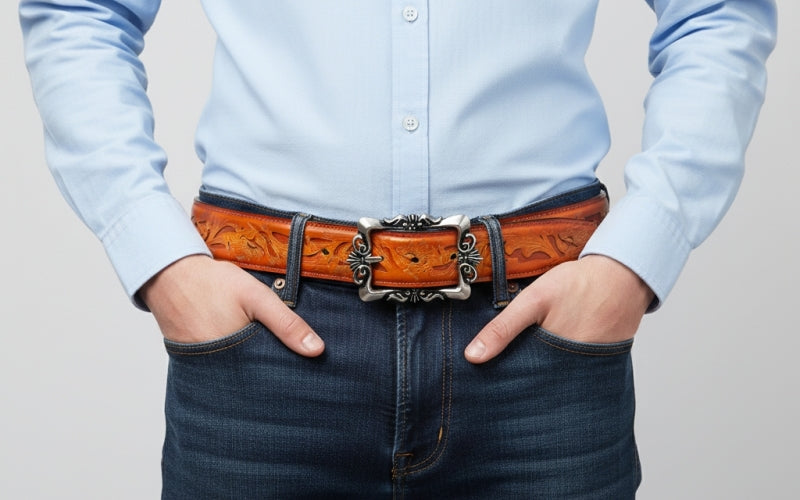
The cowboy tradition also produced one of the most unique American leather traditions: hand-tooled belts featuring regional floral carving patterns (Sheridan style, Texas star, California vaquero), each signaling geographic origin and personal identity.
What Do Martial Arts Belt Colors Symbolize?
Martial arts belt colors symbolize the student's stage of progression, with colors loosely mapped to the growth of a plant — white belt as the new seed, green as sprouting, brown as ripening, and black as mastery. The ranking system was formally invented in 1883 by Kanō Jigorō, the founder of Judo, who introduced the dan (段) grading system to organize his students.

According to Premier Martial Arts historical research, Kanō initially used only white and black belts to distinguish beginners from advanced practitioners. The multi-color ranking system we know today was expanded later — first in Japan, then adopted and elaborated upon by Karate, Taekwondo, Brazilian Jiu-Jitsu, and other disciplines as they spread globally in the 20th century.
The popular myth that black belts become black because students "never wash them" is not historically accurate — the colors were always intentional, representing a structured progression of learning. The belt-as-rank tradition, though only about 140 years old, has become one of the most globally recognized symbolic uses of the belt in modern culture.
Chinese Imperial Belts: Jade, Rank, and Dynasty
In imperial China, the leather belt (dai) fitted with jade, gold, or silver plaques was a codified marker of rank at the Emperor's court. The Tang, Song, and Ming dynasties each formalized belt regulations that specified exactly how many plaques, of what material, in what arrangement, a minister or official was permitted to wear based on his rank.
A first-rank court official might wear a belt with 13 jade plaques. A fifth-rank official would wear fewer plaques, in a lesser material. Research on Chinese court dress in museum collections documents these belts in extraordinary detail — they were so strictly regulated that a single extra plaque could be grounds for legal punishment. The belt was, in effect, a wearable rank patch enforced by imperial law.
This tradition survives today in Chinese wedding attire and ceremonial costume, where elaborate jade-inlaid belts still signal occasion and honor.
Biblical and Religious Symbolism of the Belt
In biblical and religious contexts, the belt symbolizes readiness, truth, and spiritual discipline. The phrase "gird your loins" — literally, tighten your belt — appears throughout Judeo-Christian scripture as a metaphor for preparing for work, battle, or spiritual action. The Apostle Paul describes the "belt of truth" as the foundational piece of the "armor of God" in Ephesians 6.
In monastic traditions, a simple rope or leather belt (cincture) worn over a robe symbolizes chastity, humility, and vows of service. The Franciscan cord with three knots represents the vows of poverty, chastity, and obedience. In Eastern Orthodox clergy vestments, the belt (zone) represents readiness to serve and is blessed before being worn.
Across these traditions, the belt appears as a spiritual metaphor for self-discipline made visible — an idea that resonates with the Roman and martial arts traditions of the belt as earned readiness.
What Does a Leather Belt Symbolize Today?
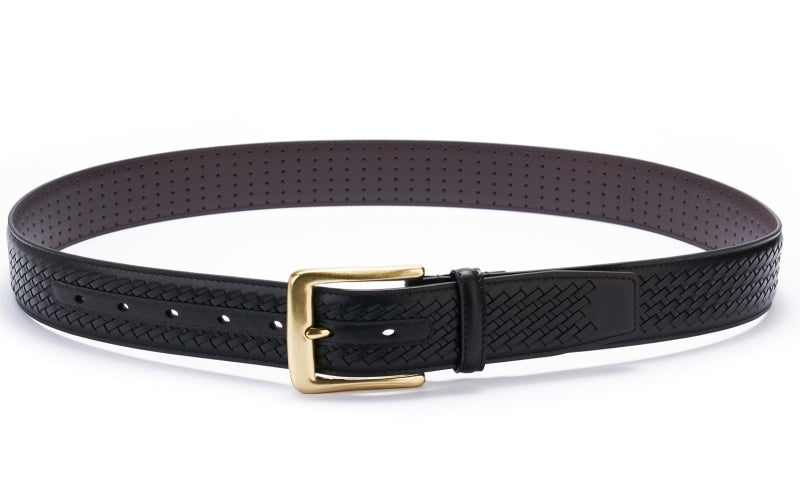
Today a leather belt symbolizes taste, professionalism, and personal identity rather than formal rank — but echoes of every older tradition remain visible in how belts are worn. A dress belt with a minimal buckle signals corporate professionalism. A hand-tooled Western buckle signals regional and cultural heritage. An exotic leather belt signals refinement and an understanding of material quality.

What has changed is that modern belts are chosen rather than assigned. A buyer today selects a belt the way a Roman legionary's ancestors once selected a sword hilt — as a personal statement of who they are. This is why craft still matters: the leather you choose, the hardware that closes it, and the finish that ages on your body are all readable by anyone who understands the tradition. For collectors drawn to this lineage, the exotic leather belt collection sits closest to the historical heritage of belts as status markers.
The Bottom Line
Across 2,000 years of recorded history, leather belts have symbolized almost everything a culture cared about: military rank, chivalric honor, spiritual readiness, legal authority, championship achievement, and progression through mastery. The Roman cingulum, the samurai obi, the Haudenosaunee wampum belt, the cowboy trophy buckle, and the martial arts black belt are not separate traditions — they are variations on the same deep cultural instinct that the belt, worn at the center of the body, is the right place to encode who you are.
At BELTLEY, we build every belt with that history in mind — handcrafted full-grain and exotic leathers, 316L stainless steel buckles, and the kind of construction that was meant to be worn daily and remembered generationally. Every belt is backed by a 10-year warranty because a belt worth owning is a belt worth keeping. Explore the handmade belt collection to find one that carries its own story.
Frequently Asked Questions
Q: What does a leather belt symbolize in ancient cultures?
In ancient cultures, a leather belt most commonly symbolized military rank, earned status, or formal identity. Roman soldiers wore the cingulum militare as a mark of service, Chinese officials wore jade-plaque belts signifying court rank, and medieval European knights were "girded" with ceremonial belts during the knighting ritual.
Q: Why do samurai wear belts differently than Western cultures?
Samurai belts (obi) functioned as both armor components and spiritual markers. The obi held the sword, represented bushido honor code, and signaled clan identity. Losing or misusing the obi carried deep cultural shame, similar to a Roman soldier losing his cingulum.
Q: What is a wampum belt?
A wampum belt is a ceremonial belt made of white and purple shell beads used by the Haudenosaunee (Iroquois) and other Eastern Woodlands nations to record treaties, laws, and oral histories. Wampum belts are living legal documents and credentials of tribal office — not ordinary accessories.
Q: What do the colors of martial arts belts mean?
Martial arts belt colors map to stages of growth — white (new seed), yellow (sunlight), green (sprouting plant), blue (sky), brown (ripening), black (mastery). The system was invented by Kanō Jigorō in 1883 for Judo and adopted worldwide.
Q: Why are cowboy belt buckles so large?
Large Western belt buckles originated as championship trophies in rodeo and Western competitions in the late 19th and early 20th centuries. Winners received engraved silver buckles instead of trophies, and the tradition grew into a broader symbol of regional identity and personal achievement.
Q: What does a leather belt symbolize today?
Today, a leather belt symbolizes taste, professionalism, and personal identity. A quality full-grain or exotic leather belt signals attention to material, craftsmanship, and longevity — modern echoes of the belt's ancient role as a marker of who the wearer is.