What Belt Color for a Business Meeting? The Complete Guide
TL;DR:
- Your shoes decide the belt color — always match them, not the suit
- Black is the safest and most formal choice; dark brown (espresso) works in business casual and creative settings
- Belt width matters as much as color — keep it 35mm or narrower for formal meetings
A belt is a small detail that carries an outsized amount of visual weight in professional settings. The wrong color creates a break in your outfit that draws the eye downward — exactly where you don't want attention during a pitch, interview, or board presentation. The right belt disappears into the outfit and lets your presence do the work. Here's exactly how to choose the right belt color for a business meeting, broken down by formality level, suit color, and context.
Meeting in an Hour? Color Decided
Belt color triage, fastest first:
| Your situation | Go with |
|---|---|
| Black shoes (any meeting) | Black belt. Done. The shoes always decide. |
| Brown shoes, formal meeting | Dark brown/espresso belt matched in tone and shine. |
| Business casual, no jacket | Espresso over black — warmer and less severe without a suit's structure. |
| High-stakes pitch, want an edge | Glazed black croc — registers as quality subconsciously without breaking a single formality rule. $118–$289. |
Meeting-grade belts in both colors: BELTLEY's men's collection.
What Is the Rule for Belt Color in a Business Meeting?
Your shoes determine your belt color — not your pants, not your suit jacket. Black shoes require a black belt. Brown shoes require a brown belt. This is the foundational rule of professional dress and applies in every formal and semi-formal business context. Deviating from it signals an unintentional mistake, not a style choice.

This rule is consistent across major professional dress code guides, style publications, and menswear authorities. The belt and shoes form a visual anchor at the lower half of the body — when they match, the outfit reads as coherent and considered. When they don't, the mismatch is the first thing most people notice.
For further detail on when you can bend this rule and when you can't, see Should Belt and Shoes Match Exactly?
Black Belt or Brown Belt: Which Is More Professional?
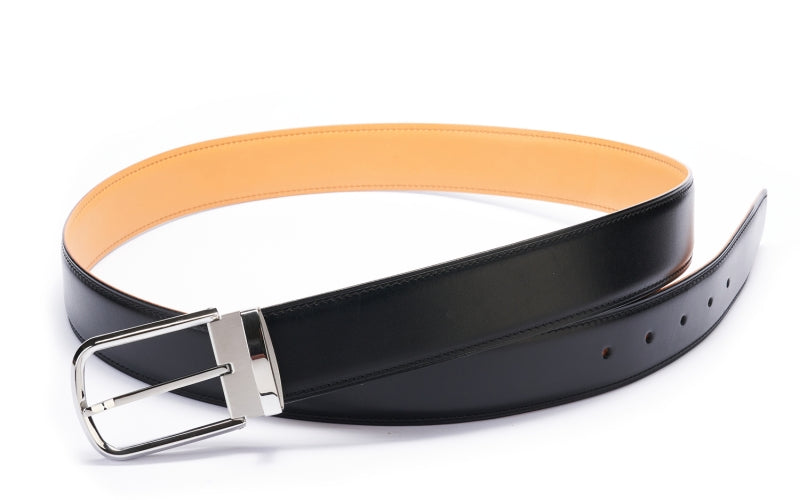
For formal business meetings — board rooms, client presentations, interviews, law firms, finance — a black belt is the more authoritative choice. Black reads as sharp, decisive, and unambiguous in high-stakes professional environments. It pairs with black, charcoal, and navy suits without question.

Brown has its place in business settings, but it is the second-choice color in formal contexts. Dark brown — espresso, dark chocolate — is the most professional shade of brown. It works well with tan, beige, grey, and medium navy suits in business casual and creative office environments. Light tan or cognac brown in a formal boardroom setting risks looking underdressed.
According to Paul Smith's business dressing guidelines, black accessories including the belt remain the dominant choice for high-stakes business presentations because they project authority and minimalism. For the full breakdown, see Brown Belt vs. Black Belt: When to Wear Each.
Belt Color by Suit Color: Quick Reference
| Suit Color | First Choice Belt | Second Choice Belt |
|---|---|---|
| Charcoal / Black | Black | — (no brown) |
| Navy | Black | Dark brown / espresso |
| Mid Grey | Black | Dark brown |
| Light Grey | Black | Dark brown |
| Tan / Beige | Dark brown | Black |
| Brown | Dark brown | Cognac |
| Blue (business casual) | Black or dark brown | Cognac |
The charcoal and black suit columns are non-negotiable in formal business settings — brown of any shade creates a contrast that reads as an error. For navy and grey suits, dark brown is acceptable in business casual contexts. Tan and beige suits call for brown; black creates too stark a contrast.
What Belt Color Works for Business Casual Meetings?
In business casual settings, both black and dark brown are equally appropriate — the choice should be driven by your shoe color and the overall tone of your outfit. Business casual allows slightly more flexibility in shade, so cognac and medium brown become viable options where they would look out of place in a formal meeting.

The key constraint in business casual is consistency: your belt should still match your shoes. A navy chino with a white shirt and tan loafers calls for a tan or cognac belt. The same outfit with dark brown loafers calls for a dark brown belt. The formula doesn't change — the range of acceptable colors just widens.
Business attire research from Artful Tailoring's 2026 dress code guide notes that business casual dress codes now place higher emphasis on fit and coordination over strict color rules — meaning a well-coordinated brown belt in a casual meeting outperforms a black belt that clashes with the rest of the outfit. For a full work outfit guide, see How to Match a Belt with Your Work Outfit.
Does Belt Color Matter for Women in Business Settings?
Yes, the same shoe-to-belt rule applies. In business professional settings, a black or dark espresso belt paired with matching shoes is the cleanest, most authoritative choice for women. The difference is that women's business attire more frequently incorporates the belt as a visible style element — worn over a blazer or dress — which makes the color choice more prominent, not less.

For women wearing a tailored dress or suit jacket in a formal meeting, a slim black belt (30mm or under) in smooth leather is the most versatile option. It works with black, navy, and charcoal. For business casual, dark brown and cognac coordinate well with earth-toned separates. The Belt Color 101 guide for women covers outfit-specific combinations in detail.
Belt Width and Buckle Matter Too
Color is half the equation. A belt's width and buckle finish determine whether it reads as formal or casual — and in a business meeting, getting this wrong is as visible as the wrong color.

Width: For formal business meetings, keep the belt at 35mm (1.38 inches) or narrower. Dress trouser belt loops are designed for slim belts, and a wide casual belt (38-40mm) will either not thread through properly or look visually heavy against a tailored trouser. Business casual allows up to 38mm. According to Suits Expert's dress code guidance, the dress belt standard sits between 1.25" and 1.5" for professional environments, with narrower being more formal.
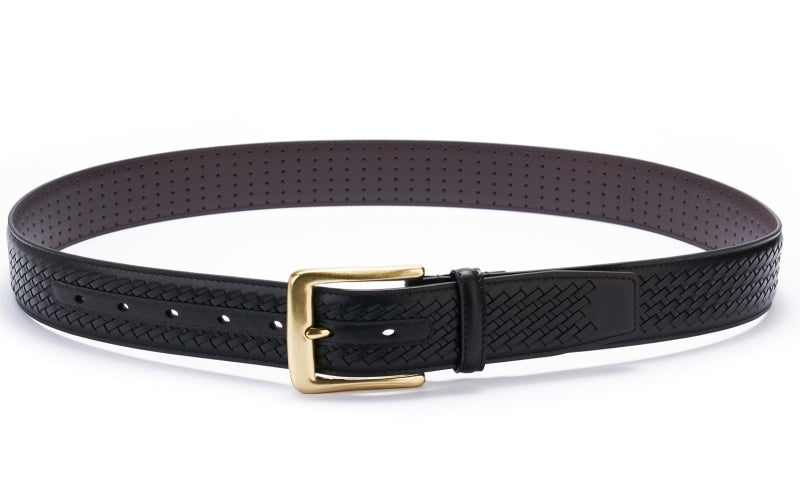
Buckle: A slim, flat plaque buckle or simple frame buckle in silver or gold tone keeps things professional. Large buckles, logo buckles, and novelty hardware read as casual or fashion-forward — fine for creative industries, misplaced in conservative business settings. Match the buckle metal to your watch and other hardware for a polished, coherent look. See Should Your Belt Buckle Match Your Watch? for the full rule set.
At BELTLEY, our dress belt collection is built specifically for these contexts — slim profiles, smooth full-grain leather, and understated buckles that hold their finish without polishing.
The Bottom Line
The formula for belt color in a business meeting is straightforward: match your shoes, read the formality level, and choose the width to fit your trousers. Black is the default for formal contexts and the safest choice across the board. Dark brown and espresso work in business casual and with warmer-toned suits. Every other color — cognac, tan, burgundy — belongs in casual or creative settings, not formal boardrooms.
The belt is a finishing detail, not an afterthought. In a business meeting, it signals whether you dressed with intention. A well-made black leather dress belt or espresso leather belt in full-grain leather covers both formal and smart-casual meetings — and with BELTLEY's 10-year warranty and DTC pricing, it's an investment that covers years of professional appearances without the Brand Tax.
Frequently Asked Questions
Q: What color belt should I wear to a job interview?
Black is the correct choice for a job interview in most industries. Pair it with black dress shoes and a charcoal, navy, or black suit. The goal is a cohesive, undistracting outfit — black belt and shoes achieve that without any risk.
Q: Can I wear a brown belt to a formal business meeting?
Dark brown or espresso can work in business formal settings if your shoes are the same shade and your suit is navy, grey, or tan. Avoid brown with a charcoal or black suit — the contrast reads as a mismatch rather than a style choice.
Q: What color belt goes with a navy suit to a meeting?
A black belt is the most formal pairing with a navy suit. Dark brown or espresso also work well, particularly in business casual environments. The deciding factor is your shoe color — match the belt to whichever shoe color you're wearing.
Q: What belt width is appropriate for a business meeting?
35mm (1.38 inches) or narrower for formal business settings. This width fits standard dress trouser belt loops and maintains a slim, tailored appearance. A 38mm belt is acceptable for business casual.
Q: Should a woman wear a belt to a business meeting?
It depends on the outfit. A slim belt worn over a blazer or with a tailored dress adds polish and structure. Keep it narrow (25-30mm), smooth-finished, and matched to your shoes. Avoid wide or embellished belts in formal business settings.

%20works%20in%20business%20casual%20and%20creative%20settings%0ABelt%20widt...)