Is Veg Tan Leather Good for Belts? The Raw, Unfiltered Truth
TL;DR: Quick Answer
- Good? It's the best leather for belts. Not second best. Not "one of the best." The best.
- Five reasons: resists stretching (stays on the right hole), develops patina (gets prettier), molds to your body (custom fit for free), lasts 15-20 years (outlasts your car), and edges can be burnished (no paint to peel).
- The only downsides: stiff for the first week, limited to earth tones, and costs more upfront. All of which stop mattering by month two.
- If you're buying one belt for the next decade, make it veg-tan full-grain. Everything else is a compromise.

Detailed post
Some questions have nuanced answers. This isn't one of them.
Is veg tan leather good for belts? It's the gold standard. The undisputed champion. The leather that professional belt makers choose when they're making a belt for themselves — not for a catalog, not for a price point, but for their own waist.
The reason is simple: belts need leather that holds tension, resists stretching, takes daily abuse, and ideally looks better with age rather than worse. Veg-tan does all four. Chrome-tan does one. Maybe. Here's the full breakdown. For the complete tanning comparison, our guide on vegetable-tanned leather belt vs regular leather covers every metric.

Should Your Next Belt Be Veg-Tan?
It's the best leather for belts — but check your fit first:
| Your situation | Go with |
|---|---|
| Patina obsessive, buy-once mentality | Veg-tan, absolutely — it gets visibly better for 15–20 years. |
| Want comfort from day one | Know the deal: veg-tan starts stiff. A week of break-in buys two decades of custom fit. |
| Want bright or unusual colors | Chrome-tan or exotic leathers — veg-tan lives in earth tones. |
| Dress belt territory | Glazed calfskin or crocodile reads more formal than rustic veg-tan. |
Vegetable-tanned and full-grain options: BELTLEY's full-grain belts from $58.
Why Is Veg Tan the Best Leather for Belts?
Vegetable-tanned leather is the best leather for belts because its dense fiber structure resists stretching under daily tension, molds to the wearer's body over time, develops a unique patina with use, and allows edges to be burnished rather than painted — eliminating the most common point of belt failure.
According to Hoplok Leather's expert guide, "full-grain vegetable-tanned cowhide is the undisputed best leather for belts" — lasting 15-20+ years with proper care. Proven Hands' work belt guide confirms that veg-tan is "sturdy, resists stretching, and molds to your waist over time for a fit that gets better with every wear."
Five specific properties make veg-tan dominant for belts. Let's walk through each one.

1: It Doesn't Stretch Out
This is the big one. A belt's entire job is maintaining tension around your waist. Chrome-tanned leather stretches. Veg-tan doesn't. A quality veg-tan belt notched to hole 3 stays at hole 3 for years. A chrome-tan belt gradually migrates to hole 4, then 5.
According to How to Make a Belt's tanning comparison, a high-quality veg-tan belt cut from the butt section has "very low stretch — typically less than 5% over its lifetime, just enough to mold to your hips without losing its size." Proven Hands adds that chrome-tanned leather "doesn't have the same backbone" — it's "more likely to stretch out, lose its shape, and start looking tired."
What this means daily: Your belt stays where you put it. Your pants stay where they should. You don't look in the mirror at 3pm wondering why everything's sagging. The belt holds. That's the job. Veg-tan does the job.

2: It Develops Patina
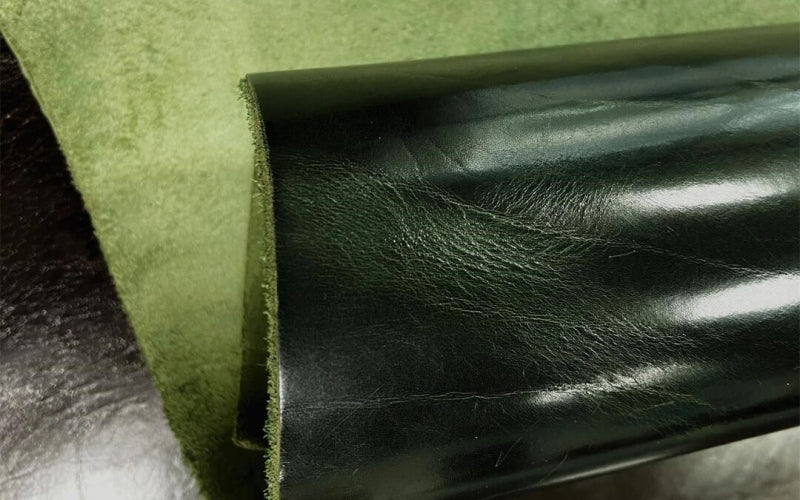
Most belt materials just age. Veg-tan leather improves. The oils from your hands, exposure to sunlight, and daily friction gradually darken the leather and create a rich, glossy surface that's completely unique to your wearing patterns. No two patinas are identical.
According to Denimhunters' veg-tan belt guide, "the oil from our skin transfers to the belt and it takes on beautiful brown tones that no amount of dye can replicate." Andriiart's veg-tan guide adds that "scratches and scuffs become character, not flaws."
The patina timeline:
| Time | What Happens |
|---|---|
| Week 1 | Stiff. You're not sure about this. |
| Month 1 | Softening. Subtle color shift beginning. |
| Month 3 | Visibly darker. Starting to tell a story. |
| Month 6 | Real patina emerging. Scratches blending in. |
| Year 1 | Rich, deep tone. People ask where you got it. |
| Year 5 | Museum-grade. Your belt has more character than most people. |
Chrome-tanned leather skips this entire journey. It starts looking like it does at month 3. Then it stays there. Then it cracks. For the full explanation of leather aging, our guide on the truth about leather belt durability covers every scenario.

3: It Molds to Your Body
Veg-tan leather conforms to your specific body shape over time. The belt curves where you curve. It fits your waist like it was custom-ordered. Chrome-tan doesn't do this — it's either soft and floppy from day one (no structure) or it stays rigid without adapting.
According to Steel Horse Leather, "one of the best features of vegetable-tanned leather is its ability to mold to your body — as you wear it, the leather softens and shapes itself." Movien Design's belt guide confirms that veg-tan "molds to the curve of your waist over time but does not stretch out lengthwise."
That's the key distinction. Molds ≠ stretches. Veg-tan conforms to your shape (good). Chrome-tan elongates under tension (bad). One gives you a custom fit. The other gives you a saggy belt.

4: It Lasts 15-20+ Years
A quality veg-tan belt isn't a purchase. It's an investment that pays dividends in years of wear. Chrome-tanned belts last 2-5 years. Veg-tan belts last 15-20+. Some last generations.
According to Hoplok Leather, full-grain veg-tan belts can last "15 to 20+ years, developing a rich patina over time." Gentleman's Gazette sells veg-tan belts specifically because the dense fiber structure "provides exceptional tensile strength and resistance to stretching."
The cost-per-year math (again, because it bears repeating):
| Belt Type | Price | Lifespan | Cost Per Year |
|---|---|---|---|
| Budget chrome-tan | $30 | 2 years | $15.00 |
| Mid-range chrome-tan | $70 | 4 years | $17.50 |
| Quality veg-tan | $120 | 15 years | $8.00 |
| Premium veg-tan | $180 | 20 years | $9.00 |
The "expensive" belt wins the math. Every time. Our guide on how much should a leather belt cost breaks down the full pricing landscape.

5: Edges Can Be Burnished
This is the nerdy reason leather craftspeople obsess over veg-tan. Its dense fiber structure allows edges to be burnished — sealed through friction and heat — instead of painted. Burnished edges are part of the leather itself. They can't peel. They can't crack. They last as long as the belt.
According to Tanner Bates' edge finishing guide, burnishing only works on vegetable-tanned leather — chrome-tanned leather "tends to be hidden by a turning process, or covered with edge paint." Weaver Leather Supply confirms that veg-tan's natural properties make it "ideal for burnishing, tooling, and stamping."
Edge paint on chrome-tan belts is the #1 failure point. It peels. It flakes. It makes your belt look neglected. Burnished edges on veg-tan belts get smoother with use. Our guide on what are edge painting belts explains why this difference matters.

What Are the Trade-Offs?
Three. All manageable. All stop mattering within weeks.
1. Stiff at first. Three to seven days of break-in. Then it molds to your body and becomes the most comfortable belt you own. Our guide on the disadvantages of vegetable-tanned leather covers all seven downsides honestly.
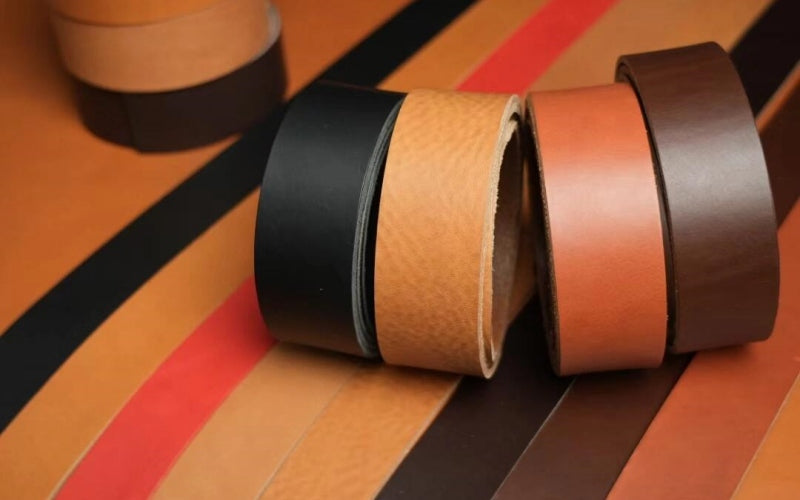
2. Earth tones only. Brown, tan, cognac, black. If you need navy or red, chrome-tan is your only option. But brown and black cover 90% of belt needs.
3. Costs more. $80-200 vs $20-100 for chrome-tan. But the cost-per-year is lower because the belt lasts 3-5x longer. You're not paying more. You're paying less, slower.
The Bottom Line
Is veg tan leather good for belts? It's the best. Full stop. Five properties make it dominant: stretch resistance (holds tension for years), patina development (gets better looking), body molding (custom fit through wear), lifespan (15-20+ years), and burnishable edges (nothing to peel).
The trade-offs — initial stiffness, limited colors, higher price — all shrink over time while the benefits compound. If you're buying one belt for the next decade, veg-tan full-grain is the only answer that doesn't require an asterisk.
At BELTLEY, our full-grain leather belts are built from premium hides with 316L stainless steel hardware — the belt that earns its place on your waist and keeps earning it for years. 10-year warranty. Free worldwide shipping. Browse the men's collection or women's collection and pick the belt you won't need to replace.
Frequently Asked Questions
Q: Is veg tan leather good for belts?
It's the best leather for belts. Vegetable-tanned leather resists stretching, molds to your body, develops a rich patina, lasts 15-20+ years, and allows edges to be burnished instead of painted. Professional belt makers consistently rank full-grain veg-tan as the top choice for daily-wear belts.
Q: How long does a veg tan belt last?
With proper care, 15-20+ years of daily wear. Some last generations. The dense fiber structure created by slow plant-tannin processing resists the stretching, cracking, and sagging that shortens chrome-tanned belt lifespans to 2-5 years.
Q: Why is veg tan better than chrome tan for belts?
Five reasons: it resists stretching (holds your pants up properly), develops patina (looks better with age), molds to your waist (custom fit), lasts 3-5x longer, and edges can be burnished (no paint to peel). Chrome-tan is softer initially but stretches, sags, and shows wear much sooner.
Q: Does a veg tan belt need breaking in?
Yes — expect 3-7 days of stiffness. The dense fibers that make veg-tan durable also make it rigid when new. After a week of daily wear, the leather softens and conforms to your body. By month one, it's more comfortable than a chrome-tan belt ever was.
Q: What thickness should a veg tan belt be?
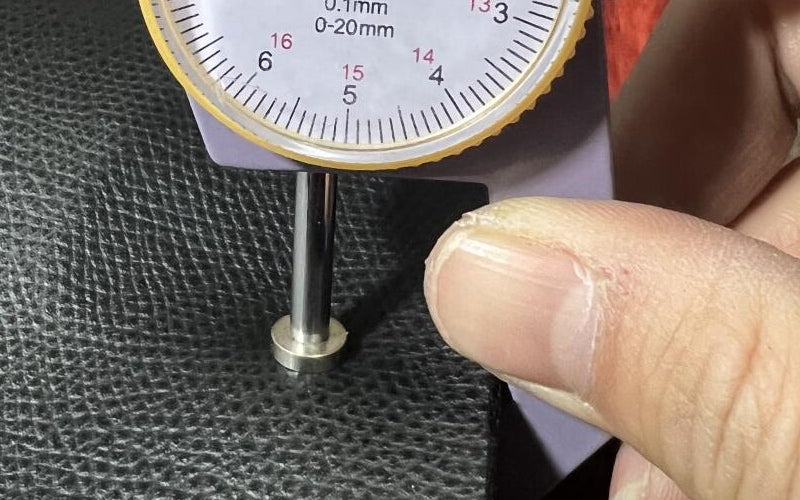
8-10 oz (3.2-4mm) is the sweet spot for daily-wear belts. This provides enough structure to resist stretching while remaining comfortable after break-in. Thinner (6-7 oz) works for dress belts. Thicker (10-12 oz) suits work belts and tool belts.
Q: Is a veg tan belt worth the higher price?
Yes. A $120 veg-tan belt lasting 15 years costs $8/year. A $30 chrome-tan belt lasting 2 years costs $15/year. The "expensive" belt is cheaper over time — plus it looks better every year instead of worse. The higher upfront cost is an investment, not an expense.
,%20develops%20patina%20(gets%20pret...)