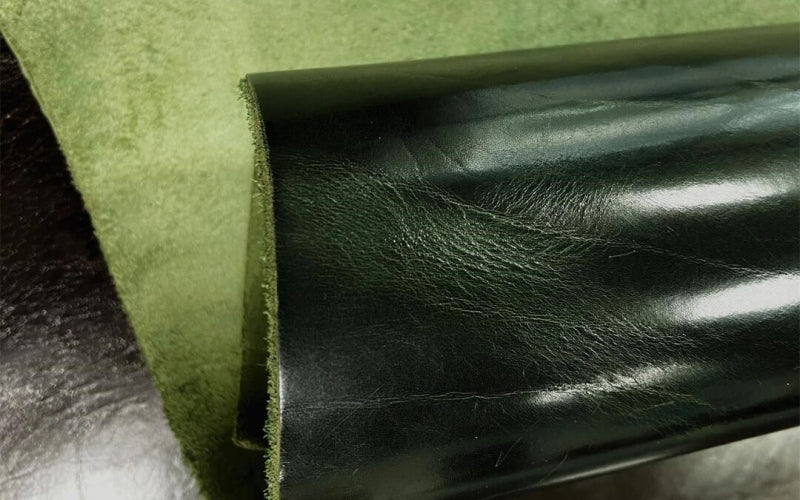
Is Vegetable Tan Leather Real Leather?(Detailed Answer By BELTLEY)
TL;DR: Quick Answer
- Yes. Vegetable-tanned leather is 100% real leather. Full animal hide. The real deal.
- The "vegetable" part describes how the leather is tanned (with plant tannins), not what the leather is made of. No vegetables were harmed. No tofu involved.
- It's actually higher quality than most leather labeled "genuine leather" — which sounds premium but is the second-lowest grade on the leather quality ladder.
- Don't confuse it with "vegan leather." Vegan leather is plastic pretending to be leather. Vegetable-tanned leather is real leather processed with tree bark instead of chemicals.

The name does all the damage here. "Vegetable-tanned leather." The word "vegetable" makes people think plants. Plants make people think vegan. Vegan makes people think fake.
It's not fake. It's the opposite of fake. Vegetable-tanned leather is one of the oldest, most authentic, highest-quality forms of real leather in existence. The tanning process dates back over 5,000 years. Cavemen didn't have chemistry labs. They had tree bark. And it worked.
Here's why the name is confusing, what it actually means, and how it stacks up against every other type of leather on the market. For the full tanning breakdown, our guide on what is a vegetable-tanned leather belt covers the process in detail.

What Makes Vegetable-Tanned Leather "Real"?
Vegetable-tanned leather is made from genuine animal hide — typically cowhide — that has been preserved using natural tannins from tree bark, leaves, and other plant matter. It is real leather by every definition: real animal skin, real tanning process, real leather fibers, real durability, real patina development.
According to Galen Leather's veg-tan guide, vegetable tanning "is one of the oldest known methods for the manufacture of leather" — predating chemical tanning by thousands of years. Billy Tannery's leather guide confirms that veg-tan uses "full-hide animal leather tanned using natural tannins derived from plant sources."
The word "vegetable" refers to the tanning agents — bark, leaves, roots — not the leather itself. Just like "sun-dried tomatoes" are still tomatoes, vegetable-tanned leather is still leather. The adjective describes the process. Not the product.

Why Do People Think Veg-Tan Isn't Real Leather?
Two reasons: the name sounds plant-based, and "vegan leather" has entered the mainstream vocabulary at exactly the wrong time. People hear "vegetable" and their brain autocorrects to "vegan." Different word. Different universe.
According to Floto's veg-tan vs vegan comparison, the confusion is widespread — many consumers "mistakenly assume vegetable-tanned leather is a plant-based or vegan product." Montana Leather adds that the two couldn't be more different: "vegetable-tanned leather is real animal hide; vegan leather is synthetic material designed to imitate it."
Here's the clearest way to understand it:
| Term | What It Actually Is | Real Leather? |
|---|---|---|
| Vegetable-tanned leather | Animal hide processed with plant tannins | Yes — 100% real |
| Chrome-tanned leather | Animal hide processed with chromium salts | Yes — 100% real |
| Full-grain leather | Top layer of hide, natural grain intact | Yes — highest quality |
| Genuine leather | Real leather, but often lowest usable grade | Yes — but low quality |
| Bonded leather | Ground-up leather scraps glued together | Technically, barely |
| Vegan leather | Plastic (PU or PVC) | No — synthetic |
| Faux leather | Plastic (PU or PVC) | No — synthetic |
The word "genuine" on a leather label actually means less quality than vegetable-tanned. Ironic, right? Our guide on is a genuine leather belt real leather explains that misleading label.

Where Does Veg-Tan Sit on the Leather Quality Ladder?
Near the top. Vegetable-tanned leather — when it's also full-grain — sits at or near the pinnacle of leather quality. It's denser, more durable, and ages more beautifully than chrome-tanned leather. It's leagues above "genuine leather" and in a completely different category than bonded or faux leather.
According to Steel Horse Leather's veg-tan guide, "vegetable tanned leather is real leather — however it's much better quality than genuine leather." Moonster Leather adds that veg-tan's slow processing creates leather with superior "structural integrity and durability."
The quality ladder for belts:
| Rank | Leather Type | Durability | Patina | Belt Lifespan |
|---|---|---|---|---|
| 1 | Full-grain vegetable-tanned | Excellent | Rich, beautiful | 10-20+ years |
| 2 | Full-grain chrome-tanned | Very good | Minimal | 5-10 years |
| 3 | Top-grain leather | Good | Some | 3-7 years |
| 4 | Genuine leather | Fair | None | 1-3 years |
| 5 | Bonded leather | Poor | None | 6-18 months |
| 6 | Faux/vegan leather | Very poor | None | 6-12 months |
A full-grain leather belt in vegetable-tanned leather is the gold standard for longevity and aging. Our guide on what type of leather is best for belts ranks every option.

How Is Veg-Tan Different from Vegan Leather?
Completely different. Vegetable-tanned leather is real animal hide tanned with plants. Vegan leather is plastic (polyurethane or PVC) manufactured to look like leather. One ages gracefully over decades. The other peels, cracks, and ends up in a landfill within two years.
According to Alise Design's comparison, vegan leather "is made entirely of plastic materials" while veg-tan leather uses "natural tannins from bark, roots, and other plant matter" on real animal hides. Realeather's guide adds that real leather "has pores, a natural earthy smell, and improves with age" — none of which faux leather can replicate.
| Feature | Vegetable-Tanned Leather | Vegan Leather |
|---|---|---|
| Material | Real animal hide | Plastic (PU/PVC) |
| Tanning | Plant tannins (weeks) | N/A — manufactured |
| Smell | Natural, warm leather | Chemical, plastic |
| Breathability | High | Low |
| Patina | Yes — improves with age | No — deteriorates |
| Lifespan | 10-20+ years | 1-3 years |
| Biodegradable | Mostly (natural tannins) | No (petroleum-based) |
| Price | Higher | Lower |
| Pores | Yes (natural) | No (uniform surface) |
According to Manuel Dreesmann's leather guide, faux leather is "primarily made from petroleum and involves the use of toxic chemicals" — making it less eco-friendly than most people assume. Veg-tan, ironically, is the greener option despite being real leather.

How Can You Tell If Your Belt Is Real Veg-Tan?
Four quick checks. No lab required.
1. Smell it. Vegetable-tanned leather smells warm, earthy, and natural. Faux leather smells like chemicals. Chrome-tan sometimes has a faint chemical odor too. Veg-tan smells like a nice leather shop. Your nose knows.
2. Look at the edges. According to Von Baer's leather authentication guide, real leather edges show visible fibers. Faux leather edges look like layers of fabric or plastic. Veg-tan edges can be burnished to a glossy finish — faux leather can't.
3. Check for natural grain. Real veg-tan has subtle grain variations, tiny imperfections, and natural texture differences across the surface. Cuero Design's veg-tan guide notes that this inconsistency is a hallmark of authentic vegetable-tanned leather. Faux leather looks perfectly uniform. Too perfect = not real.
4. Test water absorption. Place a tiny water drop on an inconspicuous spot. Veg-tan absorbs it within seconds, darkening slightly. Faux leather repels it completely. Chrome-tan absorbs slowly. This is the quickest authenticity test — though it only works on unconditioned leather.
Our guide on how to tell if a belt is full grain leather covers the complete authentication process.

The Bottom Line
Is vegetable-tan leather real leather?
Yes. Emphatically, unambiguously, 100% yes. It's real animal hide tanned with natural plant tannins — one of the oldest and highest-quality leather processing methods in existence. The "vegetable" describes the tanning agents (tree bark, leaves), not the material itself. Don't confuse it with "vegan leather," which is plastic.
Veg-tan sits near the top of the leather quality ladder — above "genuine leather," far above bonded, and in a completely different category than faux. It develops patina, lasts decades, and gets better with age. The name is confusing.
The leather is exceptional. At BELTLEY, our full-grain leather belts are crafted from premium hides with stainless steel hardware — real leather, real craftsmanship, real 10-year warranty. Free worldwide shipping. Browse the men's collection or women's collection and feel the difference real leather makes.

Frequently Asked Questions
Q: Is vegetable-tanned leather real leather?
Yes — 100%. Vegetable-tanned leather is genuine animal hide (typically cowhide) processed using natural plant tannins from tree bark, leaves, and roots. The "vegetable" refers to the tanning method, not the material. It is one of the oldest and most authentic forms of real leather.
Q: Is vegetable-tanned leather the same as vegan leather?
No. They are completely different. Vegetable-tanned leather is real animal hide tanned with plants. Vegan leather is synthetic material (polyurethane or PVC plastic) made to imitate leather. Veg-tan lasts decades and develops patina. Vegan leather typically peels within 1-3 years.
Q: Is vegetable-tanned leather better than "genuine leather"?
Yes. Despite the misleading name, "genuine leather" is actually one of the lowest grades of real leather — often thin, heavily processed, and lacking durability. Vegetable-tanned full-grain leather is significantly higher quality, more durable, and develops a rich patina that genuine leather cannot achieve.
Q: Why is it called "vegetable" tanned if it's real leather?
The name refers to the tanning agents, not the leather source. "Vegetable" tannins — compounds found in tree bark, leaves, and plant matter — are used to preserve and process real animal hide. It's the same logic as "sun-dried" tomatoes — the adjective describes the process, not the product.
Q: How can I tell if my belt is real vegetable-tanned leather?
Four tests: smell it (warm, earthy scent vs chemical), examine the edges (visible fibers vs plastic layers), check the grain (natural variations vs uniform surface), and do a water drop test (veg-tan absorbs quickly and darkens; faux leather repels water completely).
Q: Is vegetable-tanned leather eco-friendly?
More so than chrome-tanned leather — it uses renewable plant tannins instead of chromium salts and avoids toxic chemical waste. However, it still uses animal hides and requires water and energy. It's the most environmentally responsible option within real leather, but not zero-impact.
,%20not%C2%A0wha...)