Is Python Leather Good for Belts? Durability & Care
Quick answer: Yes — python leather makes an excellent belt, as long as it's built right. The skin itself is strong and surprisingly flexible, and every belt has a one-of-a-kind scale pattern. The catch is the individual scales are delicate and can lift or peel, so a good python belt must be backed with full-grain leather for strength and cared for gently (wipe with the scales, condition with exotic-safe products, store dry). Done well, a python belt is durable, lightweight, and strikingly unique.
Last updated: June 2026 • By BELTLEY
TL;DR:
- Yes, it's a great belt leather — strong, flexible, and visually one-of-a-kind.
- The skin is durable overall, but individual scales are delicate and can lift.
- Backing is everything: quality python is bonded to a full-grain leather base.
- Care matters: wipe with the scales, use exotic-safe conditioner, store dry.
- Lightweight and bold — works dress or casual, and no two are identical.
- Buy quality: cheap python or embossed "snake print" won't last; real + backed will.
Python is one of the most eye-catching leathers you can put on a belt — but its reputation for being "delicate" makes people hesitate. The truth sits in the middle: python is genuinely durable when it's constructed and cared for correctly, and fragile when it isn't. This guide explains how tough python really is, what to look for, and how to keep one looking sharp for years. For the wider category, see our exotic leather belts.
Is a Python Belt Right for You?
Match your situation to the verdict.

| Your situation | Is python a good pick? |
|---|---|
| Want a bold, unique statement belt | Yes — no two patterns are alike |
| Need an everyday workhorse belt | A full-grain belt may suit better |
| Love exotic texture, dress or casual | Yes — python flexes both ways |
| Won't do any special care | Reconsider — scales need gentle upkeep |
| Want lightweight comfort | Yes — python is notably light |
If you want exotic character with reasonable durability, python delivers. For another option, see alligator vs crocodile belts.
Is python leather durable enough for a belt?
Yes. As a whole skin, python leather is strong and resists tearing and stretching well, and it's prized for staying flexible rather than stiff. The one weakness is the individual scales, which are delicate and can lift or peel if abused. With a proper backing and gentle care, a python belt lasts for years.

It helps to separate the skin from the scales. The hide overall is tough — pythons are large reptiles with strong, fibrous skin that handles daily flexing without cracking. But as one exotic-leather care guide puts it, "while a whole piece of snake skin leather is strong and durable, the individual scales are quite delicate." That's the trade-off: the structure is robust, the surface needs respect. The fix is construction and habits — a strong backing supports the skin, and gentle care keeps the scales lying flat. Treated that way, python is far more durable than its reputation suggests. For more on what makes exotic leather last, see are alligator or crocodile leather belts durable.
Why does the backing matter so much on a python belt?
Because python skin alone is thin and flexible, a quality python belt is bonded to a full-grain leather backing that provides the strength and structure to hold up to daily wear. The backing is what turns a beautiful but delicate skin into a belt that lasts — without it, the python would stretch and wear out fast.

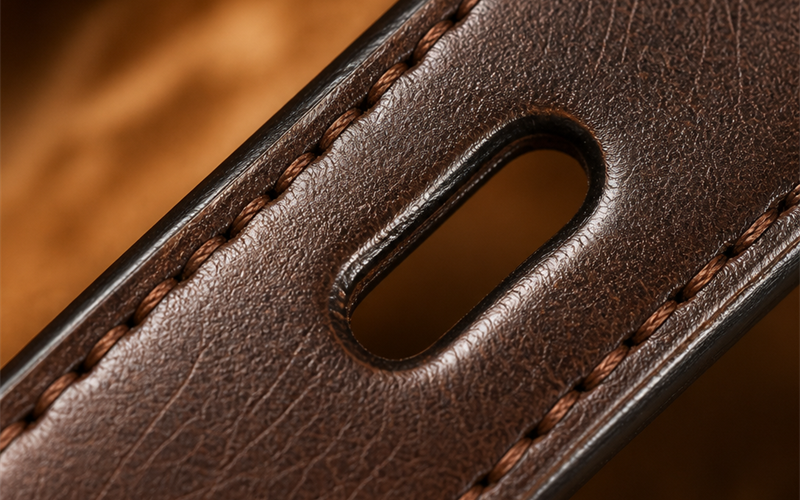
This is the single most important quality marker. A well-made python belt is essentially two layers: the exotic snakeskin on top for looks, and a full-grain cowhide base underneath for muscle. That pairing gives you the best of both — the striking python surface and the proven durability of full-grain leather, plus a solid metal buckle to finish it. Cheap python belts skip the good backing (or use "snake print" embossed cowhide that isn't python at all), which is why they stretch, curl, and fail. When you shop, ask what the skin is backed with. To understand the gold-standard base material, see how to tell if a belt is full-grain leather.
Key stat: A quality python belt is really two leathers in one: the exotic snakeskin surface for its one-of-a-kind pattern, bonded to a full-grain leather backing for strength. The skin brings the looks; the backing brings the years. Skip the backing and even real python won't last.
How do you care for a python leather belt?
Wipe it gently with a slightly damp cloth in the direction of the scales (never against them), condition it two to three times a year with a product made for exotic leathers, and store it flat in a cool, dry place. Avoid silicone, petroleum, wax, and harsh cleaners, which clog or damage the scales.

Python care is simple but specific. The cardinal rule, per exotic-leather specialists, is to "always wipe in the direction of the scales" — wiping against them lifts and frays the edges. Use a barely-damp cloth, never a soaking one. For conditioning, choose a formula made for exotic or reptile leather; ordinary conditioners and anything with silicone, petroleum, or wax can clog the scales and stop the leather breathing. Storage matters too: keep the belt flat in a cool, dry spot, since humidity and heat encourage scales to lift. A couple of gentle conditioning sessions a year keep a python belt supple and the scales flat. For general principles, see our leather care guide.
What makes python leather special for a belt?
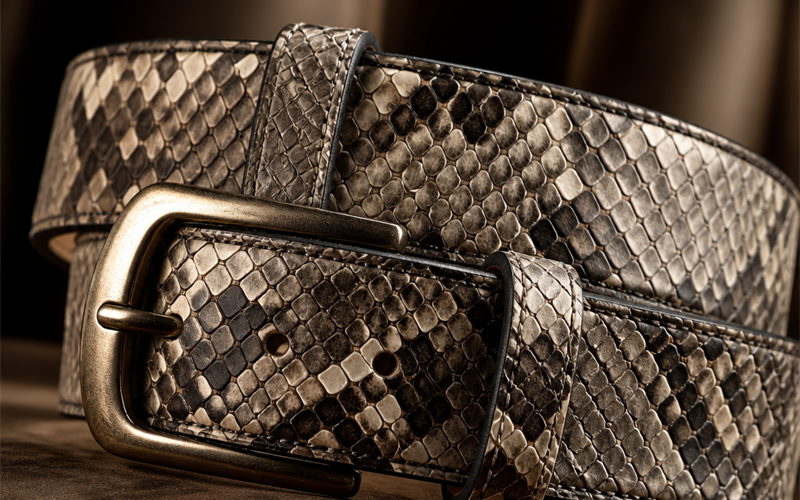
Python's appeal is its pattern: every skin is unique, with bold, natural scale markings that no two belts share. It's also lightweight and flexible, so it feels comfortable while looking premium. That combination — striking, individual, and easy to wear — is what sets a python belt apart from plain leather.

There's a reason python sits in the exotic tier. As Wikipedia notes, "snakeskin is used to make clothing such as... belts" and other accessories precisely for its distinctive scaly appearance. Unlike uniform cowhide, python's pattern is organic and irregular, so your belt is genuinely one of a kind. It's also surprisingly versatile: the natural finish dresses up a suit or adds character to jeans, and its light weight keeps it comfortable all day. For the smart-money buyer, python offers the individuality of a luxury exotic without a loud logo — substance and uniqueness over branding. To explore the range, see exotic leather belts.
The Bottom Line
So, is python leather good for belts? Yes — when it's real and well-built. The skin is strong and flexible, the pattern on every belt is unique, and the lightweight feel makes it comfortable for dress or casual wear. The two things that decide whether a python belt lasts are construction and care: insist on a full-grain leather backing and a solid buckle, then treat the scales gently — wipe with the grain, condition with exotic-safe products, and store it dry. Get those right and a python belt is a durable, striking piece you'll keep for years. That's exactly how we approach exotics at BELTLEY — genuine skins on quality foundations, fairly priced and backed by a 10-year warranty. Explore exotic leather belts or browse our full designer-style belts.
Frequently Asked Questions
Q: Is python leather durable for a belt?
Yes. The skin as a whole is strong and resists tearing and stretching, and it stays flexible rather than stiff. Its only weak point is the individual scales, which are delicate and can lift if mistreated. With a full-grain backing and gentle care, a python belt is durable enough to last for years.
Q: How do you care for a python leather belt?
Wipe it gently with a barely-damp cloth in the direction of the scales, never against them. Condition it two to three times a year with a product made specifically for exotic leathers, and store it flat in a cool, dry place. Avoid silicone, petroleum, wax, and harsh household cleaners.
Q: Why is python leather backed with another leather?
Because python skin is thin and flexible on its own. Bonding it to a full-grain leather backing adds the strength and structure needed for a belt to hold up to daily wear without stretching or failing. The backing is a key sign of quality — cheap python belts often skip it.
Q: How can I tell real python from fake snake print?
Real python has an irregular, one-of-a-kind scale pattern with slight natural variation and a supple feel, while embossed "snake print" cowhide has a repeating, too-perfect stamped pattern and a stiffer, plasticky feel. Genuine python is also lightweight with subtle scale texture you can feel, not just see.
Q: Are python belts good for everyday wear?
They can be, with care. Python is lightweight and flexible, so it's comfortable daily, but the scales need gentle treatment, so it suits someone willing to do light upkeep. If you want a zero-maintenance everyday belt, a full-grain leather belt may be the more practical choice.