How to Wear a Belt to Hide Your Tummy: The Smart Woman's Guide
TL;DR:
- Position your belt at or just above your natural waist — never at the hips — to create a slimmer silhouette
- A 1.25"–1.38" (32–35mm) medium-width belt is the most flattering choice for hiding a tummy
- Match your belt color to your top or go monochromatic — sharp color contrast at the midsection draws the eye there
- Layering a belt under a blazer or cardigan creates waist definition without exposing the belly from the side
You want to wear a belt — but you're not sure if it'll help or make things worse. That hesitation is common. A belt placed wrong can spotlight exactly what you're trying to minimize. Placed right, it reframes your entire silhouette. This guide covers exactly how to wear a belt to hide your tummy, with specific advice on placement, width, color, buckle, and layering — so the belt works for you.

Does a Belt Actually Help Hide Your Tummy?
Yes — a properly placed belt can create the visual illusion of a smaller waist and redirect attention away from the midsection. The key is strategic positioning. A belt that sits at the narrowest part of your torso emphasizes that narrowness, not the area below. The wrong placement does the opposite.
According to research on visual perception and clothing, horizontal lines and color contrasts at the midsection attract the eye. A belt used correctly acts as a visual anchor above the tummy, not across it. Browse BELTLEY's women's belt collection for styles specifically suited to flattering silhouettes.
Where Should You Position a Belt to Look Slimmer?
The most flattering belt placement for hiding a tummy is at your natural waist — roughly 1–2 inches above your belly button, where your torso naturally bends side to side. This is the narrowest point on most women's bodies. Wearing a belt here creates a defined waistline without drawing attention to the lower belly.
Avoid wearing your belt at the hips. Low-slung belts frame the exact area you want to minimize and pull the eye downward. The high-waist position does the opposite: it draws the eye up toward the smallest part of your frame and lengthens the appearance of your legs.
If you're apple-shaped or carry weight in the midsection, try positioning the belt just below the ribcage — an empire-waist effect that creates the illusion of a longer, leaner torso. Check the BELTLEY size guide to make sure your belt is sized correctly for your natural waist measurement.

What Belt Width Is Most Flattering If You Have a Tummy?
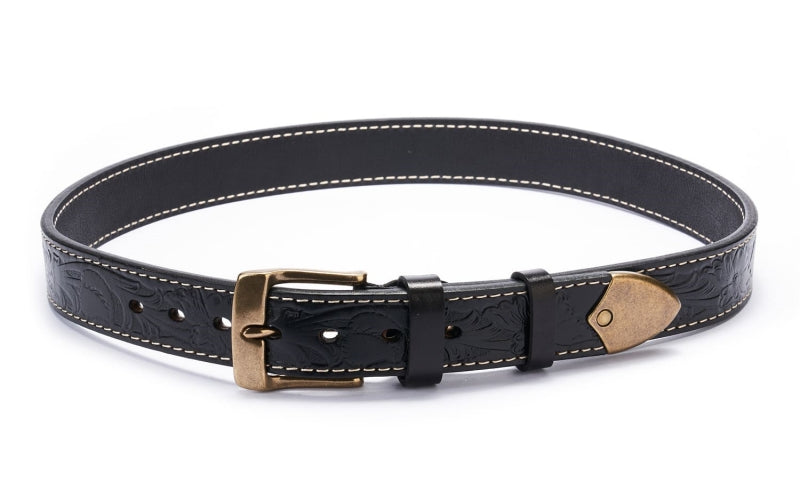
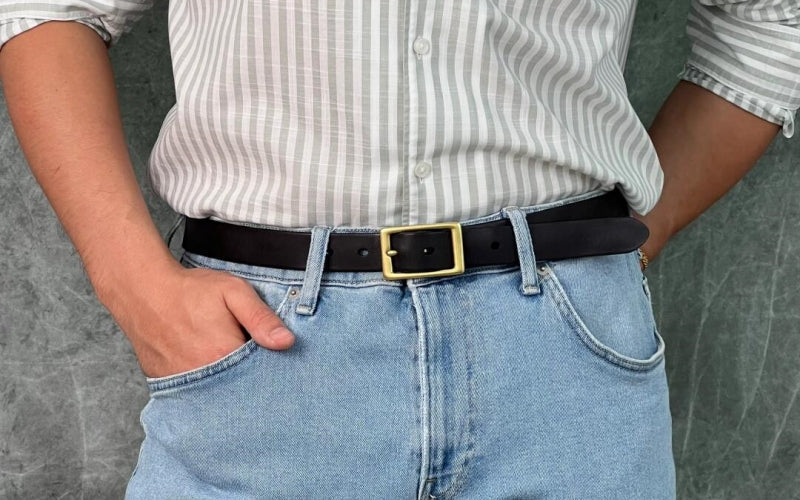
A medium-width belt — 1.25" to 1.38" (32–35mm) — is the most flattering option for hiding a tummy. It's wide enough to create visible waist definition without dominating the midsection. Very skinny belts (under 1") create sharp contrast that can make the belly more noticeable, while very wide belts (over 1.5") can overwhelm shorter torsos.
Width should also scale with your frame. Petite women get the most from a 1.18"–1.25" belt; taller women can handle up to 1.5" without losing the effect. Our 1.25" (32mm) leather belt collection and 1.38" (35mm) belts sit in that optimal sweet spot.
The complete belt width guide walks through exactly how to match belt width to your proportions if you want the full breakdown.

The Color Rule That Makes Any Belt More Flattering
Color contrast is the single most misunderstood factor in belt styling. A black belt worn over a white dress creates a hard horizontal stripe across your middle — exactly the visual signal you want to avoid. The solution is simple: match your belt to your top, or dress in a single color family head to toe.
Monochromatic dressing is one of the most effective slimming techniques recognized in fashion styling, as this monochromatic outfit guide documents. When your belt blends into your outfit rather than breaking it up, the eye reads your silhouette as one continuous line — longer and narrower.
Dark colors (black, navy, espresso brown) are universally flattering at the waist. If you wear a patterned or multicolor outfit, pick the darkest color in the print for your belt. For a complete breakdown of matching, the Belt Color 101: A Woman's Guide covers every scenario.
Which Buckle Style Minimizes Attention to the Midsection?
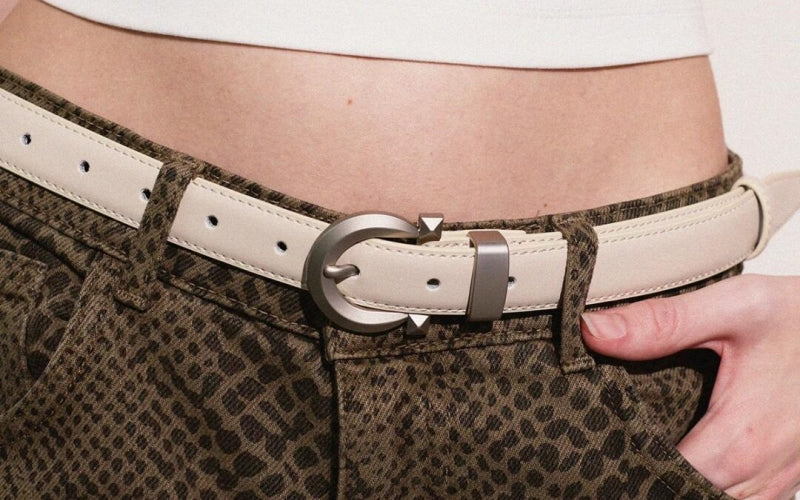
A simple, low-profile buckle — like a thin box-frame or single-bar plaque buckle — keeps the focus on your waistline, not the hardware. Oversized, chunky, or ornate buckles draw the eye directly to the center of your belly, working against the slimming goal.
That doesn't mean buckles have to be boring. A well-designed plaque buckle in polished stainless steel or subtle brass adds elegance without broadcasting your midsection. The visual weight of the buckle should be proportional to your frame — a large statement buckle works better on tall women, while smaller, refined hardware suits petite and medium builds.
BELTLEY's full-grain leather belts feature 316L stainless steel buckles that are polished without being loud — crafted to complement a look rather than compete with it. Explore the full-grain leather belt collection for styles with clean, minimal hardware.

How to Layer a Belt for Maximum Effect
Layering is the technique that transforms belt styling for women concerned about their midsection. Here's how it works: wear your belt, then layer an open blazer, structured cardigan, or longline jacket over it. The outerwear covers the sides of the belt — and the sides of your belly — while the front buckle remains visible, creating the impression of a cinched waist.
The formula that works consistently: structured top + belt at natural waist + open blazer = defined silhouette without exposure. This works equally well with oversized shirts, tunic tops, and belted dresses.
Fashion editors and stylists frequently cite this technique as the most versatile slimming strategy for women, as The Wardrobe Consultant's belt styling guide demonstrates. For inspiration on styling a belt with a dress specifically, the guide on whether belts with dresses are in style has practical examples.
Avoiding belts altogether to hide a tummy often backfires — a shapeless silhouette without any waist definition can read as larger than it is. A strategically placed belt and a layer of outerwear gives structure without restriction.
Quick Reference: Belt Rules by Body Type
| Body Type | Placement | Best Width | Buckle | Color Tip |
|---|---|---|---|---|
| Apple (round middle) | Just below ribcage | 1.25"–1.38" | Slim plaque | Match to top |
| Pear (wider hips) | Natural waist | 1.38"–1.5" | Medium plaque | Any color works |
| Rectangle (straight) | Natural waist | 1.25"–1.5" | Statement ok | Contrast for definition |
| Plus-size | Natural waist or empire | 1.25"–1.38" | Slim, low-profile | Monochromatic |
| Petite | Just above natural waist | 1"–1.25" | Minimal | Tone-on-tone |
For a deeper look at belt styling by body type, the 12 Different Types of Leather Belts for Women guide covers how different constructions and widths suit different frames.
The Bottom Line
Wearing a belt to hide your tummy isn't about finding a magic fix — it's about understanding three things: where to position the belt (natural waist, not hips), which width to choose (1.25"–1.38" for most builds), and how to frame it with color and layering. The combination creates a defined waistline that draws the eye upward and away from the midsection.
The leather itself matters too. A stiff, cheap belt rolls, creases, and creates pressure marks. A full-grain leather belt molds to your body over time and lies flat against fabric — no bunching, no digging. At BELTLEY, every belt is handcrafted in small batches using full-grain hides and backed by a 10-year warranty, because a belt that fits well and holds its shape will always look better than one that doesn't.
Shop the BELTLEY women's belt collection — free worldwide shipping, 30-day returns, and sizing guidance included.
Frequently Asked Questions
Q: Should I wear a wide or narrow belt if I have a belly?
A medium-width belt of 1.25"–1.38" (32–35mm) is the safest choice. Skinny belts under 1" create visible contrast that highlights the belly, while very wide belts can overwhelm shorter torsos. The medium range delivers waist definition without drawing excess attention to the midsection.
Q: Where should a belt sit on a plus-size woman?
At the natural waist — roughly 1–2 inches above the belly button. This positions the belt at the narrowest part of the torso and creates an hourglass visual effect. Avoid placing the belt at the hips, which broadens the lower silhouette.
Q: What color belt is most flattering for hiding a tummy?
Match your belt to the color of your top for the most flattering result. A belt that blends into your outfit creates a continuous, vertical visual line that reads as slimmer than a contrasting belt that divides the body horizontally. Black-on-black or navy-on-navy combinations are classics for a reason.
Q: Can wearing a belt actually make your waist look smaller?
Yes — visual perception research confirms that the eye is drawn to points of contrast and definition. A belt worn at the narrowest part of the torso signals the waistline to the viewer, creating the impression of a smaller waist regardless of actual measurements.
Q: What's the best belt style for an apple body shape?
For apple shapes, position the belt just below the ribcage rather than at the natural waist to maximize the slimming effect. Choose a 1.25" medium-width belt in a color that matches your top, with a slim plaque buckle. Layer an open blazer over the belt to frame the waist without exposing the sides.
%20medium-width%20belt%20is%20the%20most%20flattering%20choice%20for%20hidin...)