How to Remove Sticker or Adhesive Residue From a Leather Belt
Quick answer: To remove sticker or adhesive residue from a leather belt, start gentle: rub it with your fingers or a soft cloth to ball it up, then use a small amount of leather conditioner or a tiny bit of oil to soften and lift the glue, wiping as it loosens. For stubborn residue, a dab of mild adhesive remover on a cloth (tested first) works. Avoid harsh solvents, scraping, and excess liquid, which damage leather.
Last updated: June 2026 • By BELTLEY Editorial
TL;DR:
- Start with the gentlest method — finger-rub or soft cloth to ball up residue.
- Leather conditioner or a little oil softens and lifts most adhesive safely.
- For stubborn glue, test a mild adhesive remover on a hidden spot first.
- Avoid harsh solvents, scraping, and soaking — they damage leather.
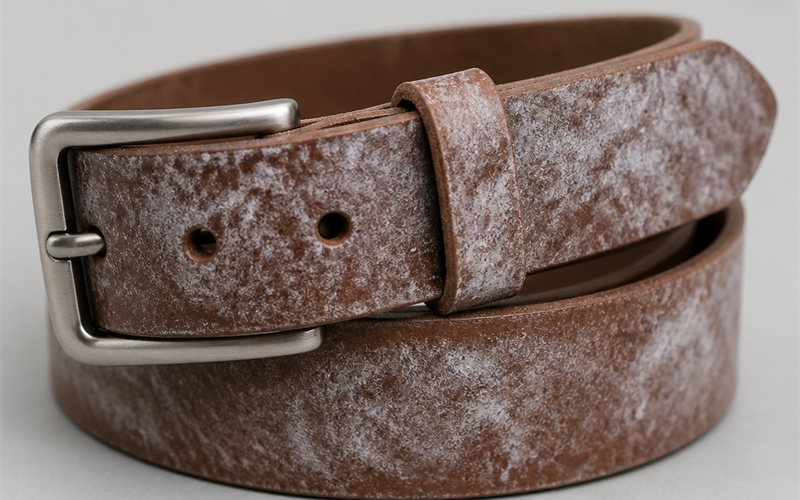
Price-tag gunk, a stray bit of tape, a sticker that won't budge — adhesive residue on a leather belt is annoying and easy to make worse with the wrong approach. The trick is to work from gentlest to strongest, never reaching for aggressive solvents on a hide that can't take them. This guide walks through the safe methods in order. For general cleaning principles, see our leather care guide.

Sticky Situation: Gentlest Fix First
Escalate only as needed:
| Your situation | Go with |
|---|---|
| Fresh sticker residue | Finger-roll it off, then a soft cloth — most residue surrenders here. |
| Stubborn dried glue | A dab of leather conditioner or light oil to soften, wipe as it lifts. |
| Industrial-strength residue | Adhesive remover on a cloth, tested on the strap's hidden inside first. |
| Tempted by acetone or scraping | Stop — solvents strip dye and blades scar grain; the residue is the lesser evil. |
Aftercare: condition the spot per BELTLEY's leather care guide.
How do you remove adhesive residue from leather?
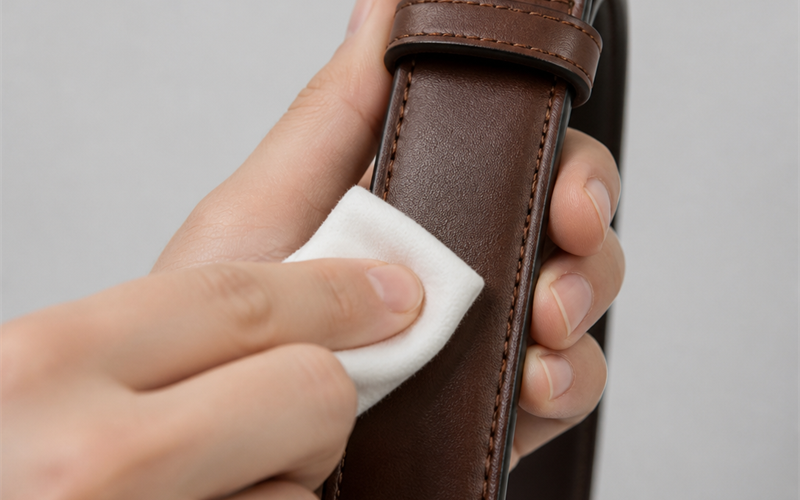
Work gentlest first. Rub the residue with a clean finger or soft cloth to roll it into a ball and lift it. If it persists, apply a small amount of leather conditioner or a tiny bit of natural oil to soften the glue, let it sit briefly, then wipe it away. Repeat as needed. Only escalate to a mild adhesive remover if these fail.

Patience and gentleness win with adhesive on leather. An adhesive is a substance designed to bind to surfaces, but most sticker and tape residue is relatively weak and responds to gentle persuasion. Simply rubbing it with a fingertip often balls it up enough to peel away — the safest method of all. If that's not enough, a little leather conditioner or oil softens the glue and breaks its grip while nourishing the leather rather than harming it. Wipe in the direction that lifts the residue, and repeat patiently. Most adhesive comes off without anything stronger, so resist jumping straight to solvents.
What's the safest way to lift stubborn glue?
Soften it with oil or conditioner, then gently lift. For glue that resists finger-rubbing, work a small amount of leather conditioner, mink oil, or even a dab of olive oil into the residue, let it penetrate for a minute or two, then wipe it off with a soft cloth. The oil breaks down the adhesive's tack so it releases without scraping.

Key stat: Most household sticker and tape residue is a pressure-sensitive adhesive with relatively weak bonds — which is why a little oil or conditioner, given a minute to penetrate, lifts it without the harsh solvents that risk stripping leather's finish.
Oil works because it gets under the adhesive and undermines its grip. Here's the gentle escalation ladder:
| Step | Method | When to use |
|---|---|---|
| 1 | Finger/cloth rub | First — balls up light residue |
| 2 | Conditioner or oil | Softens stubborn glue |
| 3 | Mild adhesive remover | Last resort, tested first |
| Avoid | Acetone, scraping, soaking | Damages leather |
Give the oil or conditioner a moment to do its work rather than scrubbing immediately. A blunt edge like a fingernail or plastic card can help coax softened residue off, but never use a sharp blade, which gouges leather. This oil-softening approach is gentle enough for most belts, including conditioned full-grain, and it leaves the leather better-nourished than you found it.
When is it safe to use an adhesive remover?
Only as a last resort, in a tiny amount, on a tested spot, with a mild leather-safe product. If oil and conditioner fail, apply a small dab of a gentle adhesive remover to a cloth — never directly to the belt — and test it on a hidden area first (behind the buckle). Wipe gently, then condition. Avoid acetone, nail polish remover, and harsh solvents entirely.

Commercial adhesive removers can work, but they're the nuclear option for leather and demand caution. The testing step is non-negotiable: dab a little on the strap behind the buckle and wait to confirm it doesn't discolor or dull the finish. Apply it to the cloth, not the leather, to control the amount, and use the minimum needed. Crucially, avoid acetone, nail polish remover, and other aggressive solvents, which strip dye and dry leather out — the same warning that applies to removing ink stains. The Leather Repair Company is blunt about it: "do not use acetone, nail polish remover, or alcohol-based solutions, as they can strip the leather's finish and cause permanent damage." After any solvent use, condition the area to replace stripped oils. If you're nervous about a valuable or exotic belt, a leather professional is the safe choice.
How do you protect the leather afterward?
Condition the cleaned area once it's dry. Adhesive removal — especially with oil or any remover — can leave the spot slightly oily, dull, or stripped, so wipe off excess and apply a light, even coat of leather conditioner, then buff. This restores a uniform finish and replaces any oils lost in the process, keeping the leather supple.

Finishing well is what separates a clean fix from a blotchy one. If you used oil to soften the glue, wipe off the excess so the spot doesn't stay greasy; if you used a remover, condition to replace stripped oils. Conditioning the whole belt, not just the treated patch, keeps the finish even. This is the same restorative step that follows any leather cleaning, covered in how to keep a leather belt in good condition. A quality full-grain belt takes this gentle treatment in stride and looks none the worse — another reason a well-made belt is worth the small effort. Explore lasting options in our full-grain leather belts collection.
The Bottom Line
Removing sticker or adhesive residue from a leather belt is all about restraint: start by rubbing it off with a finger or cloth, escalate to leather conditioner or a little oil to soften stubborn glue, and only reach for a mild, tested adhesive remover as a last resort — never acetone or harsh solvents that strip and dry the leather. Finish by conditioning the area for an even, supple result. Worked gently from mildest method up, almost any residue comes off without harming the hide. At BELTLEY, our full-grain belts are built to be cleaned and conditioned through decades of small mishaps like this one. Keep yours in shape with our leather care guide and explore the range in our full-grain leather belts collection.
Frequently Asked Questions
Q: How do you get sticky residue off a leather belt?
Start by rubbing it with a finger or soft cloth to ball it up and lift it. If it persists, work in a little leather conditioner or oil to soften the glue, wait a minute, then wipe it off. Repeat as needed, and only use a mild, tested adhesive remover as a last resort.
Q: Can you use Goo Gone or adhesive remover on leather?
Only with caution, as a last resort. Apply a tiny amount to a cloth (never directly to the belt), test a hidden spot first, wipe gently, and condition afterward. Many removers are too harsh for leather, so try oil or conditioner first. Avoid acetone and nail polish remover entirely.
Q: Will adhesive remover damage my leather belt?
It can, if it's too harsh or overused. Acetone and strong solvents strip dye and dry leather out. Mild, leather-safe removers used sparingly and tested first are safer, but oil or conditioner is gentler and works for most residue. Always condition the area afterward to replace lost oils.
Q: How do you remove a price tag sticker from leather?
Peel off as much as you can by hand, then rub the leftover residue with a finger or cloth to ball it up. Soften any stubborn glue with a little leather conditioner or oil, wait a moment, and wipe it away. Condition the spot afterward for an even finish.