How Often Should You Condition a Crocodile Belt?
TL;DR:
- Condition a crocodile belt twice a year for normal indoor wear; quarterly in dry, desert, or heated-winter climates.
- Never condition monthly — over-conditioning softens the scales and dulls the glazed finish.
- Use neutral, exotic-safe products only: Saphir Reptan or Renapur. Avoid mink oil, beeswax-heavy balms, and anything formulated for cowhide.
- Apply a rice-grain amount to a microfiber cloth and work the edges, back, and keeper loops — not the glazed scale surface.
- Always test on the buckle-end tip first, and stop the moment the belt looks darker or feels tacky.

Quick Facts
- Frequency (normal climate): 2x per year
- Frequency (dry/desert/heated winter): 3–4x per year
- Frequency (humid/tropical): 1x per year
- Best products: Saphir Reptan, Renapur Leather Balsam
- Avoid: Mink oil, neatsfoot oil, beeswax-heavy waxes, saddle soap
- Application surface: Back, edges, keeper loops — never the glazed front scales
I've been hand-finishing crocodile belts in our small workshop since 1999, and the single most common question I get from new exotic-leather owners isn't about sizing or buckles — it's how often to condition a crocodile belt. The honest answer surprises people: far less than you think. Over-conditioning ruins more exotic belts than neglect does. This guide gives you the precise schedule, the exact products we trust on our own pieces, and the warning signs you've gone too far. If you're newer to exotic skins, pair this with our complete leather care guide.

How often should you condition a crocodile belt?
For everyday wear in a normal climate, condition a crocodile belt twice a year — once in spring and once in fall. In dry desert air or heated winter homes, step it up to quarterly. In humid or tropical climates, once a year is plenty. Never condition monthly: it softens the scales and dulls the glaze.
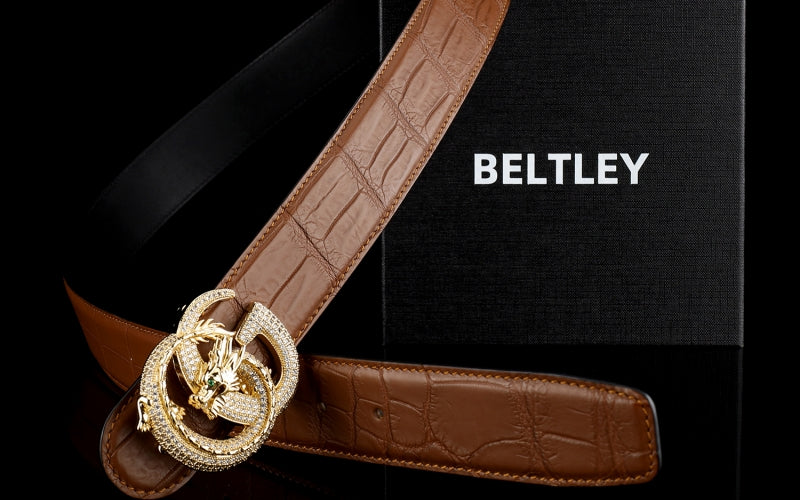
Crocodile leather is denser and naturally oilier than cowhide. The scales contain their own fat structure that takes decades to deplete under normal use. A well-tanned, properly finished croc belt — the kind we produce at BELTLEY — already carries enough internal moisture to outlast its owner. Conditioning is a top-up, not a feeding.

Why does over-conditioning ruin a crocodile belt?
Over-conditioning saturates the dermis with oils that the scales can't disperse, which softens the tile-like structure, blooms a hazy film across the glaze, and permanently darkens the color. Once a glazed crocodile finish goes dull, no polish brings it back.
The glossy mirror surface on a finished crocodile belt isn't a coating — it's the result of agate-stone burnishing during tanning, a centuries-old technique documented in leather-craft history. Excess conditioner clogs the micro-channels between scales and lifts that polish. Exotic-leather repair has become a fast-growing sub-discipline within leather conservation precisely because owners over-care for their pieces.

What conditioner is safe for crocodile leather?
Use a neutral, pH-balanced, exotic-safe conditioner. The two products our workshop recommends are Saphir Médaille d'Or Reptan (formulated specifically for reptile skins) and Renapur Leather Balsam (lanolin-based, used by museum conservators). Both are colorless, non-darkening, and silicone-free.
Avoid anything marketed for boots, baseball gloves, or saddles — those are tuned for thick vegetable-tanned cowhide and will overwhelm exotic skins. As tanning chemistry overviews regularly note, the right product matters more than the schedule. For routine care on our cowhide pieces — like a full-grain leather belt — different rules apply; never cross-use conditioners between cowhide and crocodile.
Products to actively avoid on crocodile:
- Mink oil — darkens permanently, swells the scales
- Neatsfoot oil — too penetrating, breaks down the tannage
- Beeswax-heavy balms (Sno-Seal, Obenauf's) — clog the glaze
- Saddle soap — strips natural oils, dries out scale edges
- Silicone sprays — seal the surface and prevent any future care

How do you apply conditioner without damaging the glaze?
Put a rice-grain-sized drop on a clean microfiber cloth — never directly on the belt. Work it into the smooth back of the strap, along the cut edges, and around the keeper loops. Skip the glossy scale face entirely. Let it rest 20 minutes, then buff with a dry second cloth.
The back and edges are where moisture loss actually happens; the glazed front is sealed by the tannery's finish and doesn't need to be fed. This is the same protocol we use on our crocodile briefcases and accessories before they ship — a careful edge treatment, nothing on the scales.
The test-patch protocol
Before any new conditioner touches your belt, run this 24-hour test:
- Apply a pinpoint dab to the tip behind the buckle (the part that hides inside the loop).
- Buff and wait 24 hours.
- Check for darkening, tackiness, or haze.
- Only proceed if the patch looks identical to the rest of the belt.

What are the warning signs you over-conditioned?
Watch for four signs: a hazy or cloudy bloom across the scales, a noticeably darker color than the rest of the belt, a soft or "spongy" feel when you flex the strap, and conditioner residue collecting in the scale grooves. If you see any of these, stop conditioning for at least 12 months.
A belt that's been over-fed can sometimes be partially rescued by gently buffing with a clean horsehair brush and letting it air out in a cool, ventilated drawer for several weeks. Severe cases — where the glaze has gone permanently matte — usually can't be reversed. This is why we ship every belt with care guidance and offer our 10-year warranty on construction, not on owner-applied product damage.
Key Takeaways (mid-post recap)
- Twice a year is the default — not monthly, not quarterly unless your climate is dry.
- Saphir Reptan and Renapur are the only two products worth keeping in your kit.
- Apply to the back and edges, never the glazed scale face.
- Test patch first, every time, even with a familiar product.
- Over-conditioning is irreversible on glazed finishes.
Does climate really change the schedule?
Yes — humidity is the deciding variable. Crocodile leather loses moisture faster in air below 30% relative humidity, which is common in Arizona, Nevada, alpine regions, and any home with forced-air winter heating. In those conditions, move to a quarterly schedule. Coastal and tropical climates need less, not more.
If you live somewhere with hard seasonal swings, a simple $10 hygrometer in your closet tells you everything you need to know. When indoor humidity drops below 30% for more than two weeks, that's your signal to condition — regardless of the calendar date. For the same reason, we recommend rotating belts and storing them flat or rolled loosely; tight coiling stresses the scales. See our notes on how to store a leather belt for the full storage protocol.
How does conditioning fit into the full crocodile belt care cycle?
Conditioning is one of five care tasks. The full cycle: daily wipe-down with a dry cloth, weekly hardware check on the buckle, monthly inspection of stitching and edges, twice-yearly conditioning, and annual professional cleaning if the belt sees heavy rotation. Done together, this routine keeps an exotic belt looking new for decades.
Our customers who pair a crocodile dress belt with this schedule routinely report belts still in showroom condition after 15+ years. That's the BELTLEY thesis — pay fairly for craftsmanship once, care for it correctly, and skip the Brand Tax forever.
The Bottom Line
Twice a year. That's the headline answer to how often to condition a crocodile belt — bumped to quarterly only if you live in genuinely dry air. Use Saphir Reptan or Renapur, apply a tiny amount to the back and edges with a microfiber cloth, and stay off the glazed scale face. Test every product on the buckle-end tip first, and trust the leather: crocodile is one of the most self-sustaining materials in the luxury wardrobe, and the worst thing you can do is smother it with too much love. Every belt that leaves our workshop is hand-finished, in stock, and ships within 2–3 days — so when you're ready to add a piece built to outlast trends, browse our crocodile belt collection or our broader exotic leather belts.
Frequently Asked Questions
Q: Can I use coconut oil or olive oil on a crocodile belt? No. Food-grade oils go rancid inside the leather, attract dust, and permanently darken exotic skins. Stick to purpose-made products like Saphir Reptan or Renapur Leather Balsam.
Q: How do I clean a crocodile belt without conditioning it? Wipe gently along the grain with a barely damp microfiber cloth, then dry immediately with a second cloth. Routine cleaning and conditioning are separate tasks — most months, your belt only needs a wipe.
Q: My crocodile belt got caught in the rain. Should I condition it? Not right away. Blot dry with a cotton towel, stuff the strap loosely to hold shape, and let it air-dry at room temperature for 48 hours away from heat. Only consider a light conditioning two weeks later if the leather feels stiff.
Q: Is conditioning the same for matte and glazed crocodile? Matte (unglazed) finishes tolerate conditioner slightly better because they lack the burnished seal, but the twice-a-year schedule still applies. Glazed crocodile is the more sensitive of the two — when in doubt, condition less.
Q: How long does a properly cared-for crocodile belt last? With the schedule above, 20 to 40 years of regular wear is realistic. Every BELTLEY exotic belt is covered by our 10-year construction warranty, and many of our oldest customers are still wearing pieces from our early 2000s production.