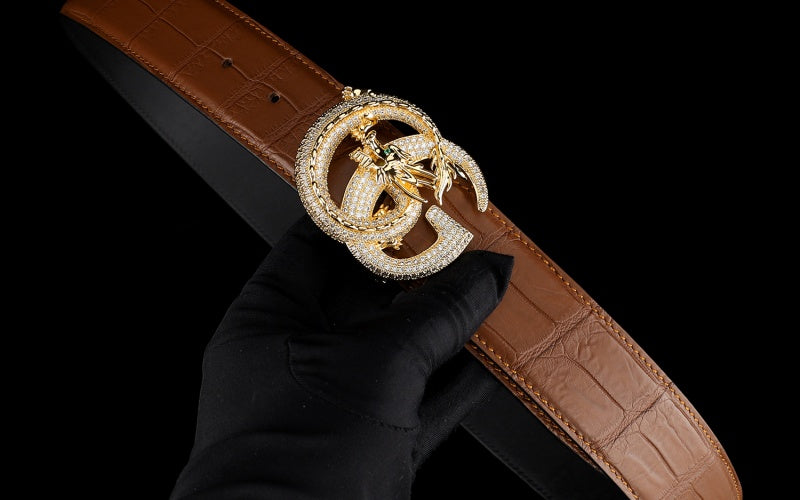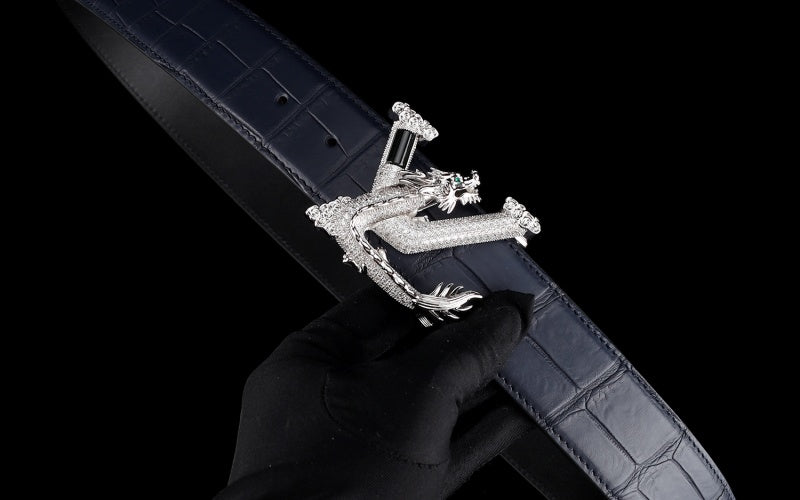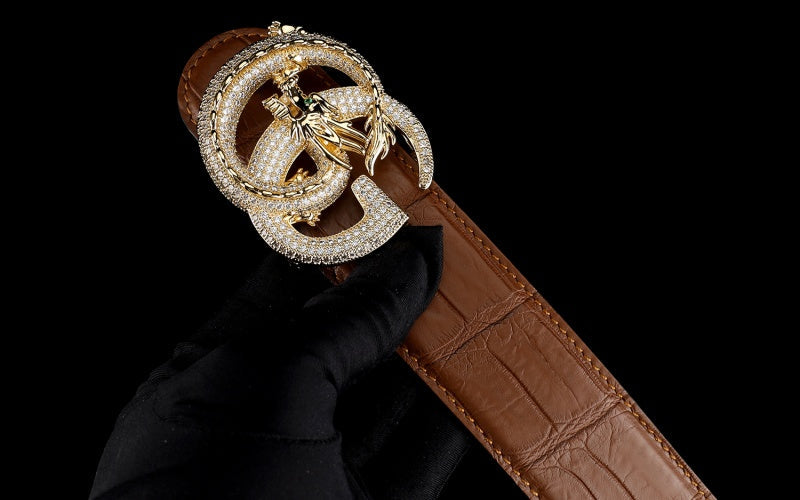
Why a Crocodile Scale Lifts (and How to Fix It)
TL;DR:
- A lifted crocodile scale is almost always caused by dryness, heat exposure, or a snag — not a defect.
- The press-flat field test tells you in 5 seconds whether it's fixable at home or needs a pro.
- DIY fix: a pinhead of conditioner under the scale edge, finger-press, then weight overnight.
- BELTLEY's 10-year warranty covers lifted scales caused by adhesive or finishing failure.

Quick Facts
- Most common cause: dryness (roughly 7 of 10 cases we see in our workshop)
- Fastest test: press the scale flat — springs back means fixable
- DIY success rate: ~85% when treated within the first month
- Tools needed: microfiber cloth, neutral leather conditioner, a heavy book
- Time to fix: 10 minutes hands-on, plus one night under weight
- When to call us: if the gap is permanent or the scale tears at the edge
We've been hand-cutting and finishing crocodile belts in our atelier since 1999, and the single question that lands in our inbox more than any other is some version of: "One of my scales is lifting at the edge — is my belt ruined?" The honest answer, almost every time, is no. A lifted scale is a maintenance issue, not a death sentence. Below is exactly how we diagnose and fix it on our own bench — the same process we'd walk you through on a phone call.

What does it actually mean when a crocodile scale "lifts"?
A lifted scale is when the edge of an individual scute — the raised plate on the hide's surface — separates slightly from the dermis or substrate beneath it, creating a small lip or gap you can feel with a fingernail. It's a surface-layer issue, not a structural failure of the belt itself.
Crocodilian skin is built in keratinized plates over a collagen layer, and each scale has a natural micro-seam at its border. When the leather dries out or flexes hard, that seam is the first place stress shows up. The University of Florida's herpetology program has good background on crocodilian skin anatomy if you want the biology, but practically speaking: think of it like a fingernail catching slightly at the cuticle. Annoying, fixable, not catastrophic.

Why do crocodile scales lift in the first place?
Five causes account for nearly every lifted scale: dryness (most common), heat exposure, a snag against a buckle or keeper, weak original finishing, and simple age. Dryness alone explains roughly 70% of cases — exotic leather loses moisture faster than cowhide because its scale structure has more surface area.
Let's break each one down, because the cause dictates the fix.
- Dryness. Crocodile and alligator hides are tanned with oils that slowly migrate out over months and years. Once the leather drops below roughly 12% moisture, scales begin to curl at the edges. Heated indoor air in winter accelerates this dramatically.
- Heat exposure. A belt left on a sunny dashboard, near a radiator, or in a hot car trunk can lose conditioning oils in a single afternoon. We've seen scales lift after one weekend road trip.
- Snag damage. A scale that catches on a sharp buckle tongue, a keeper loop, or a belt-rack hook can pop its edge in one motion. This is the only cause that often produces a permanent gap.
- Original finishing. On lower-grade exotic belts, the topcoat is sprayed thin and the adhesive between scale and substrate is under-applied. The first stress cycle exposes it. (Reputable makers — typically CITES-licensed tanneries — use full-thickness hides and proper glassing; corner-cutting shows up here.)
- Age. After 8–10 years, even a perfectly maintained belt will show some scale movement. That's not failure; that's patina.

How do I tell if a lifted scale is fixable at home?
Use the press-flat field test: lay the belt on a hard surface, press the lifted scale firmly with your thumb for three seconds, then release. If the scale springs back flat and stays there for at least 30 seconds, it's a dryness or flex issue — fully DIY-fixable. If a visible gap returns immediately, the adhesive layer is compromised and you'll want a professional repair.
This single test saves people a lot of anxiety. We use it on our own bench before deciding whether a returned belt gets reconditioned or rebuilt. Run your fingernail along the scale edge after pressing — if it catches, the seam is still open and needs treatment. If it glides smoothly, you're already halfway home.

The DIY fix: step-by-step
Before you start, gather: a clean microfiber cloth, a neutral pH leather conditioner (we recommend a beeswax-and-lanolin blend; avoid anything with silicone or mineral oil), a toothpick or wooden coffee stirrer, and a heavy hardcover book.
- Clean the area. Wipe the scale and the surrounding 1 cm with a barely-damp microfiber. Let it air-dry for 10 minutes. Never use baby wipes or solvents — full reasoning in our leather care guide.
- Apply conditioner under the edge. Put a pinhead-sized dot of conditioner on the toothpick. Gently work it under the lifted edge, not on top of the scale. You want to rehydrate the seam, not slick the surface.
- Press and hold. With your thumb, press the scale flat for 30 seconds. The conditioner needs to wick into the dry collagen beneath.
- Weight overnight. Lay the belt flat on a smooth surface, place a piece of parchment paper over the scale (so the book doesn't pick up conditioner), and stack a hardcover book on top. Leave it for 8–12 hours.
- Buff and inspect. In the morning, buff the area with a clean microfiber. The scale should now sit flush. If a tiny lip remains, repeat once.
That's it. No heat guns, no superglue, no leather "miracle" sprays. The fancier the product, the more likely it is to discolor the hide.
Key Takeaways (Mid-Post Recap)
- Diagnose before you treat. The press-flat test tells you in seconds whether you're dealing with dryness or a structural issue.
- Conditioner goes under the scale, not on top. A pinhead is plenty.
- Weight beats heat. Time and gentle pressure outperform any quick fix.
- Don't wait. A scale treated within the first month has roughly an 85% DIY success rate. After six months of neglect, that drops sharply.

When should I send the belt in for professional repair?
Send it in if the press-flat test fails, if you see a tear at the scale's base, if more than three scales are lifted in the same area, or if the lift appeared within the first 90 days of ownership. Those signs point to adhesive or finishing issues that need a re-glass and re-set on a proper leather bench — work we do in-house in 2–3 business days.
For BELTLEY customers, the process is simple: email us a clear photo, we tell you whether it's a warranty repair or a service repair, and we send a prepaid label either way. Our 10-year warranty covers any lifted scale caused by materials or construction — including original adhesive failure, finishing flaws, or stitching issues at the scale border. Snag damage and dryness from missed conditioning are service repairs, but we keep those affordable; this is a brand built on legacy, not on add-on fees.
How do I prevent scales from lifting in the first place?
Condition the belt every 3–4 months in a heated climate, never leave it in direct sun or a hot car, and rotate among at least two belts so each gets a rest day. Store belts hanging straight, not coiled, and keep them away from radiators. Five minutes of maintenance per quarter is enough.
A small ritual goes a long way. After a long day of wear, we run a horsehair brush down the scales (with the grain, never against), let the belt rest flat overnight, and condition lightly each season change. Conservators have long written about why aniline leather rewards routine care — and the math is the same on our bench: the belts that come back looking ten years younger are the ones that got two minutes of attention a quarter. Pair that with a proper crocodile belt built on full-thickness hide and you'll likely never see a lifted scale at all.
The Bottom Line
A lifted crocodile scale is one of those problems that looks worse than it is. In our workshop, the vast majority resolve with a pinhead of conditioner, a thumb-press, and a hardcover book. The few that don't are usually adhesive issues we can re-set in a couple of days. The brands that bury this kind of guidance behind a service fee are charging you for what should be common knowledge — at BELTLEY, we'd rather you fix it yourself in ten minutes and trust the belt for another decade. If you're shopping for a belt built to age this gracefully in the first place, our handcrafted exotic leather belts and full-grain leather belts are in stock now, hand-finished and shipped in 2–3 business days. Browse the latest drops in men's belts or read our deep-dive on crocodile vs alligator leather before you commit.
Frequently Asked Questions
Q: Can I use olive oil or coconut oil on a lifted crocodile scale? No. Food oils oxidize inside the leather, darken the hide unevenly, and can cause permanent staining around the scale. Use a neutral leather conditioner formulated for exotic hides.
Q: Will a hair dryer help flatten a lifted scale? We don't recommend it. Direct heat drives moisture out of the leather, which is the opposite of what a dry scale needs. Weight and time outperform heat every time.
Q: How long should a crocodile belt last before scales start lifting? A well-made, well-cared-for crocodile belt should go 8–10 years before showing any scale movement, and many last 20+. If yours lifts in the first year, that's a finishing or adhesive issue and should be covered under warranty by any reputable maker.
Q: Does scale lifting mean the leather is fake? Not necessarily. Even genuine crocodile lifts when it dries out. However, if multiple scales lift in straight rows or pop off entirely, you may be looking at embossed cowhide rather than real crocodile. Our size and authentication guide covers how to tell.
Q: Is a lifted scale covered under the BELTLEY warranty? Yes, if the cause is materials, adhesive, finishing, or construction. Dryness from missed conditioning and snag damage are service repairs, not warranty claims — but we keep service pricing fair and turnaround under one week.