Hair-on-Hide & Pony Belts — The Western Statement
Quick answer: A "hair-on-hide" or "pony" belt is made from leather with the animal's hair left on, almost always cowhide or calfskin — not actual pony. It delivers a bold, textured, often spotted or brindled look popular in Western and statement styles. The leather underneath is durable, but the hair can shed and wear at friction points over time, so it's a striking accent piece more than an everyday workhorse.
Last updated: June 2026 • By BELTLEY Editorial
TL;DR:
- "Pony hair" is a misnomer — it's almost always cowhide or calf hair, not pony.
- The hide underneath is durable; the hair sheds and wears at friction points.
- The look is bold and Western/statement — spotted, brindled, or natural markings.
- Best as an accent belt, not a daily-driver; keep it dry and brush gently.
Few belts make a statement like a hair-on-hide piece — the natural spots, brindles, and sheen of an animal's coat turned into a wearable accent. But the names attached to these belts cause endless confusion: "pony hair" rarely involves any pony at all. This guide clears up what hair-on-hide belts actually are, how durable they are, whether they shed, and how to wear one without overdoing it. For the broader material landscape, see the most iconic leather types for belts.

What is a hair-on-hide or "pony" belt?
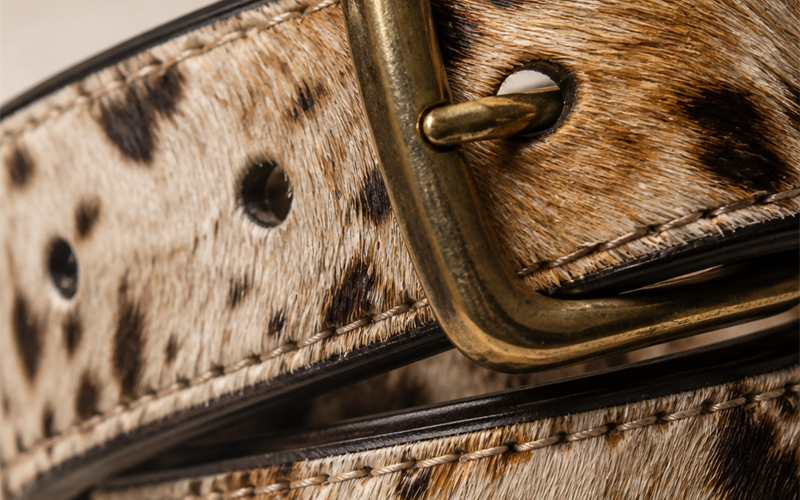
A hair-on-hide belt is leather with the animal's hair left intact instead of removed during tanning, creating a furry, textured surface. Despite the common name "pony hair," these belts are almost always made from cowhide or calfskin — the term refers to the short-haired look, not the animal. True pony leather is rare and not what most "pony" belts use.

The naming is the first thing to understand. As the reference on cowhide makes clear, "cowhide is the natural, unbleached skin and hair of a cow" — and that hair-on cowhide is exactly what most "pony hair" and "hair-on-hide" belts are. "Pony" became a generic fashion term for short, sleek animal hair, much as "calf hair" or "haircalf" describes the finer version from calfskin. Leather house MAHI Leather confirms the point bluntly: pony hair leather "is usually created from cow or goat hide," not actual ponies. So when you see a "pony hair" belt, read it as hair-on cowhide or calf unless a reputable maker specifically states otherwise. The look — natural spots, brindles, or dyed prints — comes from the coat, while the strength comes from the leather beneath.
Is hair-on-hide durable, and does it shed?
The leather underneath is durable, but the hair is the vulnerable part — it can shed and wear thin at friction points like the buckle area and belt loops over time. So a hair-on-hide belt is sturdy structurally but shows wear on its surface faster than smooth leather, making it better as an accent than a daily belt.

Key stat: The hair on a hair-on-hide belt wears fastest exactly where the belt sees the most friction — the buckle fold and belt-loop contact points — which is why these belts age best when worn occasionally rather than every single day.
It helps to separate the two layers. Here's how hair-on-hide holds up:
| Aspect | Durability |
|---|---|
| Leather substrate | Durable, like normal cowhide/calf |
| Hair surface | Wears and sheds at friction points |
| Buckle/loop areas | Hair thins fastest here |
| Overall role | Statement accent, not daily-driver |
Some shedding is normal early on and usually settles, but the hair will gradually rub thin where the belt flexes and rubs. This is simply the nature of the material, not a defect. The fix is to treat it as a rotation piece — worn now and then for impact — rather than the belt you cinch on every morning. Underneath, a well-made hair-on belt should still follow solid construction standards (firm backing, sealed edges, real hardware) so the structure outlasts the surface. For how to judge belt quality generally, see how to tell a good quality leather belt.
How do you style a hair-on-hide belt?
Treat it as the focal point and keep everything else simple. Hair-on-hide belts shine with Western, ranch, and statement-casual looks — pair a spotted or brindled belt with plain jeans and a solid shirt so the belt leads. Match the dominant hide color to your boots or shoes, and avoid competing patterns elsewhere in the outfit.

Because the texture and markings are already loud, restraint everywhere else is the rule. A natural cowhide-print belt with classic blue jeans, a clean shirt, and leather boots is the classic Western pairing — the belt does the talking. These belts also work as a bold accent in fashion-forward city looks, again with simple surrounding pieces. Keep the buckle in proportion: a clean Western or plate buckle complements the hide, while an overly busy one fights it. For Western pairing logic, our guide on whether your belt should match your cowboy boots applies. Used thoughtfully, a hair-on belt is a standout; overused or over-accessorized, it tips into costume.
How do you care for a hair-on-hide belt?
Keep it dry and brush it gently. Hair-on-hide hates moisture — water can mat and damage the hair — so avoid rain, blot any wetness immediately, and never soak it. Brush the hair occasionally with a soft brush in the direction of growth to keep it sleek, and store it flat or loosely rolled away from heat, sun, and crushing.

Care centers on protecting the hair, which is far more delicate than the leather beneath. Water is the main enemy: it can mat, stain, and loosen the hair, so a hair-on belt is a fair-weather piece. A soft brush keeps the coat looking its best, always brushing with the grain rather than against it. Don't condition the hair side with oils meant for smooth leather, as they can clump the hair; focus any conditioning on exposed leather edges only. Store it where the hair won't get crushed flat. This delicate-care approach is the trade-off for the dramatic look — handled gently and worn occasionally, a hair-on-hide belt keeps its impact for years. For general storage principles, see the best way to store leather belts.
The Bottom Line
A hair-on-hide or "pony" belt is a bold Western statement made from hair-on cowhide or calfskin — not actual pony — with natural spots, brindles, or prints that turn an animal's coat into a wearable focal point. The leather underneath is durable, but the hair sheds and wears at friction points, so it's best treated as an occasional accent rather than a daily belt, kept dry and brushed gently. Worn with simple surrounding pieces, it's a genuine standout. At BELTLEY, we build statement and everyday belts alike on solid construction with real hardware, priced fairly without a Brand Tax. Explore distinctive options in our unique belts and men's belts collections.
Frequently Asked Questions
Q: Is "pony hair" belt actually made from pony?
Almost never. "Pony hair" is a fashion term for short, sleek animal hair, and these belts are typically made from hair-on cowhide or calfskin. True pony leather is rare. Unless a reputable maker specifically states otherwise, read "pony hair" as hair-on cow or calf hide.
Q: Does a hair-on-hide belt shed?
Some shedding is normal, especially when new, and usually settles down. Over time, the hair wears thinnest at friction points like the buckle fold and belt loops. The leather underneath stays durable, but the hair surface ages faster than smooth leather, which is why these are best as accent belts.
Q: Can a hair-on-hide belt get wet?
Avoid it. Water can mat, stain, and loosen the hair on a hair-on-hide belt, so it's a fair-weather piece. If it does get wet, blot it immediately and let it air-dry away from heat, then gently brush the hair back into place once dry. Never soak it.
Q: How do you clean a pony hair belt?
Brush it gently with a soft brush in the direction of hair growth to keep it sleek and lift dust. Avoid water and don't apply smooth-leather oils to the hair side, which can clump it. Spot-clean carefully if needed, and store it flat or loosely rolled where the hair won't be crushed.