First Real Leather Belt: 5 Questions to Ask Before You Buy
Quick answer: Before buying your first real leather belt, ask five questions: (1) Is it full-grain leather? (2) Is the buckle solid metal (stainless or brass), not plated? (3) Are the edges sealed or burnished? (4) Did you size by your natural waist, not pant size? (5) Does it come with a real warranty? Get those right and one belt will outlast a drawer full of cheap ones.
Last updated: May 2026 • By BELTLEY Editorial
TL;DR:
- Full-grain leather is the only grade worth your money — everything else is splits, plastic, or shredded scraps.
- Solid metal buckle (stainless or solid brass) — plated buckles flake within a year.
- Sealed or burnished edges — raw, fraying edges are the #1 sign of a cheap belt.
- Size by your natural waist + 2", not your jeans tag — and confirm the brand's warranty isn't theatre.
A first real leather belt is a small decision with an outsized payoff. Buy right once and you can wear it daily for a decade; buy wrong and you'll be back at the mall in nine months with a cracked, peeling strip of bonded scraps. The trick isn't price — plenty of $200 designer belts use the same cheap leather as a $20 mall belt. The trick is knowing what five things to check. Below is the exact checklist we'd hand a friend buying their first proper belt. If you want a sense of the price range before you read on, see our guide on how much a leather belt should cost.
Question 1: Is it full-grain leather?
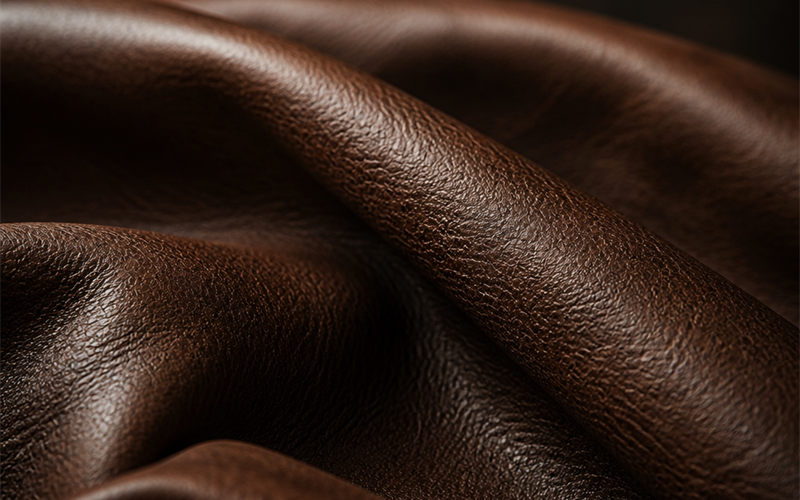
Yes, it must be. Full-grain is the top, unaltered layer of the hide — the strongest, most durable part — and the only grade that develops a real patina over time. "Genuine leather," "bonded leather," and "PU leather" all sit below it in quality, and most won't survive five years of daily wear.

The label game is rigged against beginners. Leather is graded by which layer of the hide is used, and full-grain sits at the top — split leather, bonded leather, and "genuine" leather are progressively cheaper. We break it down in full-grain leather belt vs genuine leather and how to tell if a belt is full grain leather. If the tag doesn't explicitly say full-grain, assume it isn't. Start your search inside our full-grain leather belts collection.
Question 2: Is the buckle solid metal — or just plated?
It must be solid metal. A good buckle is solid stainless steel or solid brass — both will last decades. Plated buckles (a thin coating of nickel, chrome, or gold over zinc alloy) look fine in the store, but the plating chips and flakes within a year, exposing the dull alloy underneath.

Hardware is where cheap belts cheat. stainless steel is the marine-grade stainless steel used in surgical implants and dive watches — corrosion-resistant, hypoallergenic, and basically indestructible. Solid brass is equally rugged and develops a warm patina. We cover the difference in what is the point of a belt buckle. Browse our stainless steel buckle belts or brass buckle belts.
Key stat: A solid stainless steel buckle will outlive the leather strap it's attached to — usually by a factor of two or three. Plated buckles often fail in under 12 months of daily wear.
Question 3: Are the edges sealed or burnished?
They should be. Quality belt edges are either burnished (rubbed smooth with friction and beeswax) or painted/sealed with edge paint. Raw, fuzzy, fraying edges — the kind that peel and unravel — are the single fastest tell of a cheap belt. The edge says everything about how it was made.

Edges are the canary in the coal mine. Burnishing is a slow, manual step that fast-fashion factories skip to save minutes per belt. A burnished edge looks glossy and feels rounded; a sealed edge is matte but smooth and even. Run your thumbnail along the edge before buying — if fibers come up or paint chips off, walk away. The same care that goes into the edges goes into everything else, which is why our handmade belts collection is a good place to start.
BELTLEY 3-Material Rule
The 3-Material Rule = full-grain leather + stainless or solid brass buckle + sealed (painted or burnished) edges. If a belt fails any of the three, it isn't a real-quality belt — it's a fashion accessory with a short shelf life. Get those three right and your first belt will likely be your favorite belt for years.
Question 4: Did you size by your natural waist?
You should — your pant size isn't your belt size. Belt size is measured around your natural waist (where the belt actually sits), and most brands recommend going about 2 inches larger than that measurement, so the buckle prong lands on the middle (third) hole. Going by your jeans tag is the #1 reason new belts don't fit.

Measure with a soft tape, not a guess. Belt length is typically measured from where the strap meets the buckle to the middle hole — not end-to-end. Our men's size guide walks you through it in two minutes, and we cover the common errors in how do I know what size men's belt to buy. When in doubt, size up — you can trim down at the buckle end, but you can't add length.
The 5-question first-belt checklist
| # | Check | Pass | Fail |
|---|---|---|---|
| 1 | Leather grade | Full-grain | "Genuine," bonded, PU |
| 2 | Buckle | Solid stainless or brass | Plated zinc alloy |
| 3 | Edges | Burnished or painted | Raw, fuzzy, peeling |
| 4 | Sizing | Natural waist + ~2" | Pant tag size |
| 5 | Warranty | Real, written, 5+ years | Vague "satisfaction" line |
Question 5: Is the warranty real?
It must be specific and written. A real warranty names a duration (often five years or more), names what's covered (materials and construction), and tells you exactly how to claim it. "100% satisfaction guarantee" with no terms is marketing, not a warranty — and a brand that won't stand behind a belt past 30 days doesn't believe in its own product.

Warranty terms reveal confidence. A factory making bonded leather belts can't offer 10 years because it knows the belt won't last that long. At BELTLEY, every belt comes with a 10-year warranty on materials and construction, free worldwide shipping, and 30-day hassle-free returns — because we make belts to outlast them. Read the warranty page of any brand you're considering; if it isn't there, that's your answer.
The Bottom Line
Your first real leather belt isn't a fashion gamble — it's a small craftsmanship checklist. Confirm full-grain leather, a solid metal buckle, sealed edges, the right size (natural waist + 2 inches), and a real written warranty, and you'll own a belt that gets better with age instead of falling apart in a year. Skip any one of the five and you're back to buying replacements. At BELTLEY, we build every belt around exactly that checklist — full-grain hides, stainless or solid brass hardware, hand-finished edges, and a 10-year warranty. Ready to start with one that ticks all five boxes? Browse our full-grain leather belts or men's collection.
Frequently Asked Questions
Q: What's the most important thing to look for in a first leather belt?
The leather grade. If it isn't full-grain, nothing else matters — the strap will crack, peel, or stretch out within a year or two. Everything else (buckle, edges, fit) is a secondary check after you've confirmed full-grain.
Q: How much should I spend on my first real leather belt?
Most quality full-grain belts land in the $60–$150 range from honest DTC brands; designer names mark up the same leather to $300+. Spending much less than $50 usually means cutting on leather grade, hardware, or both.
Q: What size belt should I buy?
Measure your natural waist (where the belt sits) with a soft tape and add about 2 inches. That should land the buckle prong on the middle hole and give you room to adjust up or down as you go.
Q: Is a full-grain belt really worth the price?
Yes — it usually pays for itself in a few years. A cheap belt lasts 12–24 months; a full-grain one can last 10+ years and looks better the longer you wear it. The math favors quality almost every time.
%20Is%20it%20full-grain%20leather?%20(2)%20Is%20the%20buckle%20solid%20metal%20(stainless%20or%20brass),%20not%20plated?%20(3)%20Are%20the%20edges%20sealed...)