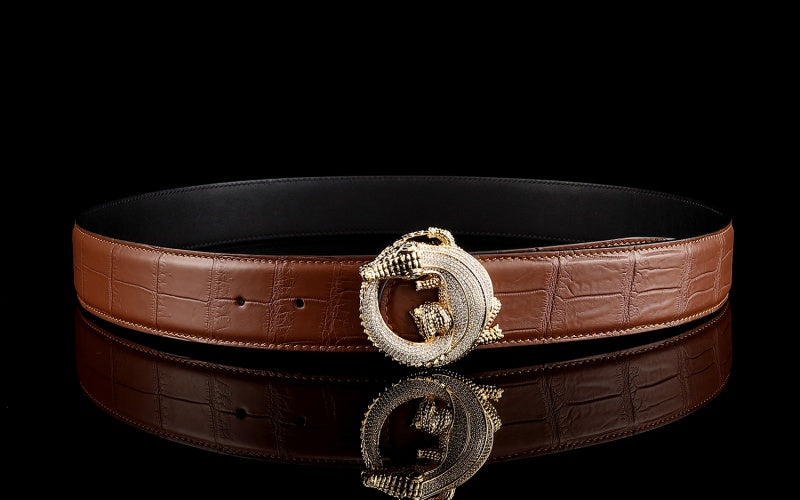
Does Crocodile Leather Develop a Patina Like Calf?
TL;DR:
- Yes, crocodile leather develops a patina — but in a fundamentally different way than calf.
- Scale tops polish from skin oil and wear; the valleys (umbilical lines) deepen in color, creating a high-contrast, sculpted finish.
- Glazed crocodile gains a "broken-in glow," matte crocodile warms in tone without becoming shiny.
- Browns drift from cognac toward amber; blacks gain a faint brown undertone over decades.
- Healthy patina takes about 1 year to start, 5 years to look characterful, 10–20 years to become heirloom-grade.
Quick Facts
- Does crocodile patina? Yes — on the scales, in the valleys, and across the whole hide differently.
- Time to visible patina: 6–12 months of regular wear.
- Key driver: Natural skin oils, UV, friction, and humidity.
- Glazed finish: Develops glossy "broken-in glow"; cannot be re-glazed at home.
- Matte finish: Warms in color without gaining shine.
- BELTLEY belts: In stock, hand-finished in 2–3 days, shipped worldwide.
I run the bench at the BELTLEY workshop, and the question I get most from collectors isn't about price or sizing — it's about aging. A customer who's worn the same Horween calf wallet for fifteen years wants to know what happens to a crocodile belt after the same stretch of time. The honest answer: it ages beautifully, but the mechanics are different. Calf softens and darkens uniformly. Crocodile develops topography — high points polish, low points deepen, and the whole hide gains a three-dimensional character that no factory finish can replicate.

Does crocodile leather actually develop a patina?
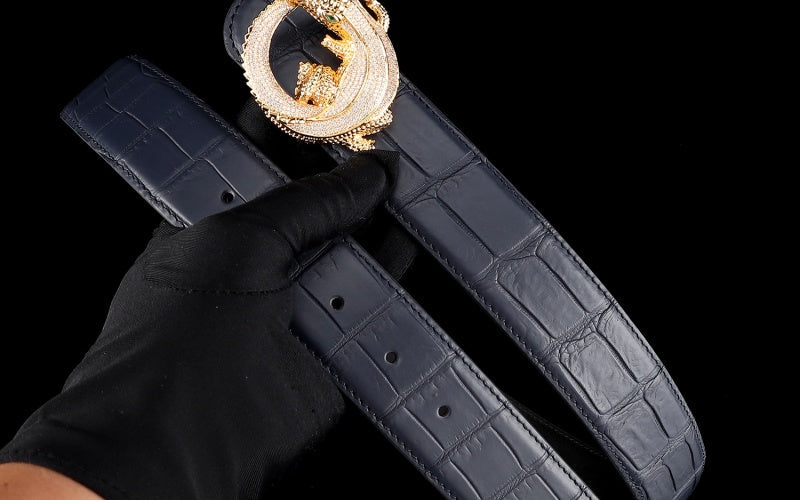
Yes, crocodile leather develops a patina, but it ages by topography rather than by uniform color shift. The raised scale tops polish from skin oil and friction, while the deep umbilical valleys absorb more oil and darken. The result is higher contrast and a sculpted, hand-rubbed look after about a year of wear.
This is the single biggest misconception in exotic leather. People assume the dense, oil-cured surface of crocodile resists aging the way patent leather does. It doesn't. Crocodile is still a genuine full-grain skin, and full-grain hides breathe, absorb, and respond to wear. The difference is that calf is geographically uniform — every square millimeter ages at roughly the same rate. Crocodile isn't. The scutes (the keratin-rich scale tops) and the valleys between them are structurally different tissue, so they patina at different speeds. For more on the hide's structure, our guide on how crocodile leather is made walks through tanning and finishing.

How is crocodile patina different from calf or shell cordovan?
Calf patinas uniformly — the whole surface darkens and softens together. Shell cordovan develops "rollers" and a glassy sheen from compressed fibers. Crocodile patinas in three layers simultaneously: scale tops polish, valleys deepen, and the underlying dermis warms in hue, creating contrast no other leather achieves.
Shell cordovan is famous for its rolling, glass-like glow after years of wear — that's because the equine fiber structure compresses rather than abrades. Calf, by contrast, abrades very slightly, picks up skin oil, and slowly darkens (a Hermès calf wallet at twenty years is the canonical example of how aniline-tanned leather develops patina). Crocodile does something neither of those does: it gains visual depth. Run your fingertip across a well-aged BELTLEY crocodile dress belt and you'll feel the scale relief more, not less, because the valleys have settled and the tops are slicker.

Why do glazed and matte crocodile age differently?
Glazed crocodile is finished by pressing the hide under an agate stone, which compresses the surface and creates shine. With wear, that compression deepens — the leather gains a "broken-in glow" that's brighter than new. Matte crocodile is left uncompressed, so it warms in color but never develops gloss.
This trips up a lot of first-time buyers. They wear a glazed black crocodile belt for two years and notice it's shinier than the day they bought it — not duller. That's correct behavior. The agate compression sets up the surface to keep polishing under friction (your shirt tail, the belt loops, your hand reaching for your wallet). Matte crocodile, popular in casual and rugged contexts, takes a different path: the open grain absorbs oils and slowly deepens in tone, but the finish stays soft and powdery. Our crocodile leather care guide covers maintenance for both. If you're choosing between finishes, the exotic leather belt collection shows both side by side.

Why does brown crocodile shift from cognac to amber?
Brown crocodile aniline dyes oxidize when exposed to UV light and skin oil. The red pigments fade faster than the yellow and brown tones, which pulls the overall color from a cool cognac toward a warmer amber over five to ten years. This is desirable — it signals genuine aniline dye, not pigmented sealant.
You see the same effect in vintage Hermès Barenia and in well-loved chestnut shell cordovan. According to general leather science literature, aniline dyes are translucent and react to light differently from surface pigments. A pigmented (corrected-grain) belt won't shift color at all — which is actually a tell that the leather is lower grade. If your brown crocodile belt looks warmer at year five than at year one, the leather is doing exactly what premium crocodile is supposed to do. Similar aging patterns appear across heritage aniline leather goods.

Why do black crocodile belts gain a brown undertone over decades?
Black crocodile is dyed with a stack of pigments, and the surface black slowly micro-abrades while the underlying brown drum-dye remains. After 15–25 years of wear, the edges of the scales reveal a faint warm undertone — collectors call this "smokey black" and it's prized in vintage exotic leather.
This is one of those details that separates a real crocodile heirloom from a synthetic. Plastic and bonded "croc-print" stays jet-black forever (or it cracks). Real crocodile slowly tells you it's alive. You'll first notice it on the high-traffic zones — the belt's keeper loop area, the buckle return. It's not damage. It's the leather thinning by microns and letting the under-color breathe through.
Key Takeaways (Mid-Post)
- Crocodile patinas by topography — scales polish, valleys deepen.
- Glazed = gains shine. Matte = gains warmth, not shine.
- Brown drifts cognac → amber; black gains a brown undertone after 15+ years.
- Skin oil, UV, and friction are the three drivers of healthy aging.
- A patina you can see at year one is the start of a 20-year process.

What's the crocodile patina timeline at 1, 5, 10, and 20 years?
Year 1: scale tops begin to polish, color stays close to original. Year 5: clear contrast between scales and valleys, brown tones warm noticeably. Year 10: heirloom character — surface glows on glazed pieces, deep tonal complexity on matte. Year 20: full vintage patina with under-color showing through wear zones.
Here's how it breaks down in the workshop. We bring back customer belts for refinishing and resizing, so we've watched hundreds of pieces age in real time.
| Age | Glazed Crocodile | Matte Crocodile |
|---|---|---|
| 1 year | Scale tops slightly slicker; color almost identical to new | Slight tonal deepening; finish unchanged |
| 5 years | Visible "broken-in glow"; valleys darker | Clear color warming; cognac → light amber |
| 10 years | High-contrast sculpted look; heirloom appearance | Deep, complex tone; soft hand-feel |
| 20 years | Surface mirror-polished where worn; under-color visible at edges | Vintage character; black shows brown undertones |
Browse our men's belts collection or women's belts collection to find a piece you'll still be wearing in 2046.
How do you encourage a healthy crocodile patina?
Wear the belt often, keep it out of direct sun for long storage, condition lightly with a neutral cream once every 6–12 months, and never over-polish glazed crocodile. Friction from regular wear is what drives patina — a belt left in a drawer doesn't age, it dries.
The single best thing you can do is use the belt. Skin oils and gentle friction are the patina engine. Avoid drowning the leather in conditioner — exotic leathers come tanned with their own oil balance, and over-conditioning can cloud glazed surfaces. For glazed pieces, a soft microfiber buff is usually all you need. For matte, our leather care guide gives the conditioner cadence we recommend to BELTLEY owners. And every BELTLEY belt is covered by our 10-year warranty — we want you to wear it hard.
The Bottom Line
Crocodile leather absolutely develops a patina, but it's a different conversation than calf or shell cordovan. Where calf darkens uniformly and cordovan glasses over, crocodile sculpts itself — tops polish, valleys deepen, browns warm, blacks reveal under-tones. At BELTLEY we cut, edge, and hand-finish every belt in the shop in 2–3 days, then ship it to you ready to start its 20-year aging arc. The patina isn't a bonus feature; it's the whole point of buying real exotic leather. If you're ready to start one of your own, take a look at our alligator belt collection or the broader exotic leather belts lineup.
Frequently Asked Questions
Q: How long does it take crocodile leather to develop a visible patina? A: Roughly 6–12 months of regular wear. You'll see scale tops becoming slicker and valleys deepening in tone before any overall color shift.
Q: Can you ruin a crocodile patina by over-conditioning? A: Yes. Too much conditioner clouds glazed surfaces and oversaturates matte hides. Once every 6–12 months with a neutral cream is plenty.
Q: Is a shinier crocodile belt actually older or newer? A: For glazed crocodile, shinier usually means older. The agate-pressed surface keeps polishing under friction, so a 5-year-old glazed belt is glossier than a brand-new one.
Q: Does black crocodile really turn brown? A: Not fully — but after 15–25 years, surface black abrades enough to reveal a warm brown undertone at the scale edges. Collectors call this "smokey black."
Q: Do BELTLEY belts come pre-patinated? A: No. Every belt ships in its original finish so the patina becomes yours, not a factory's. Our belts are in stock and hand-finished in 2–3 days before shipping.
By the BELTLEY artisan team — handcrafting exotic leather belts since 1999.
%20deepen%20in%20color,%20creating%20...)