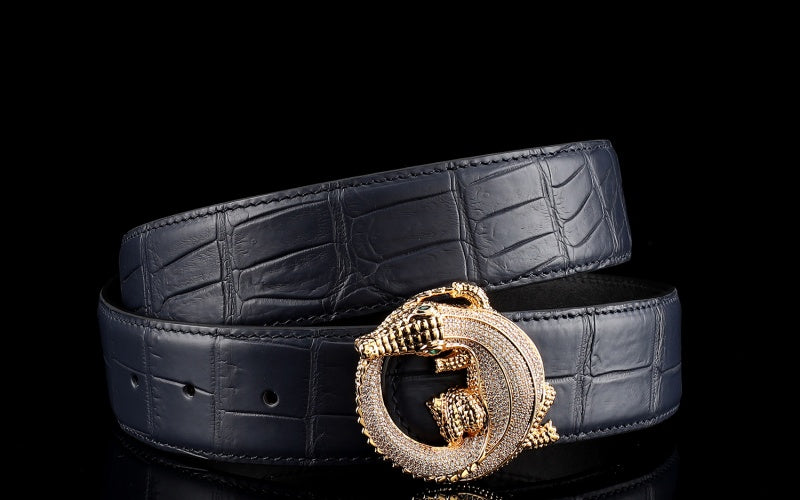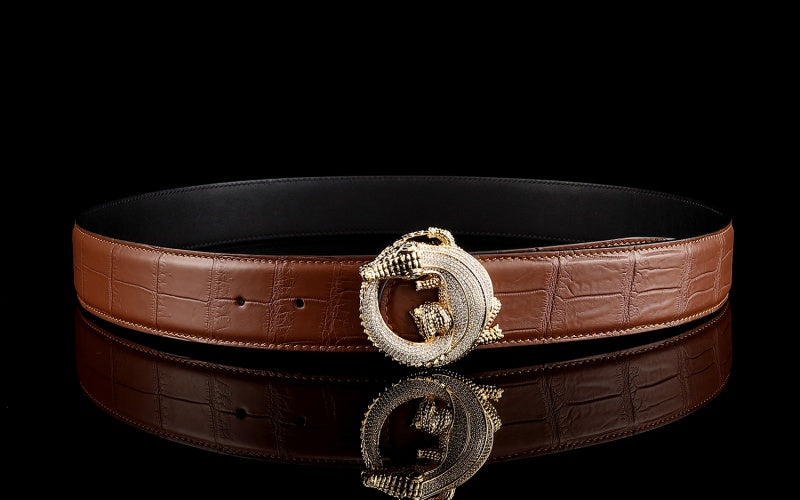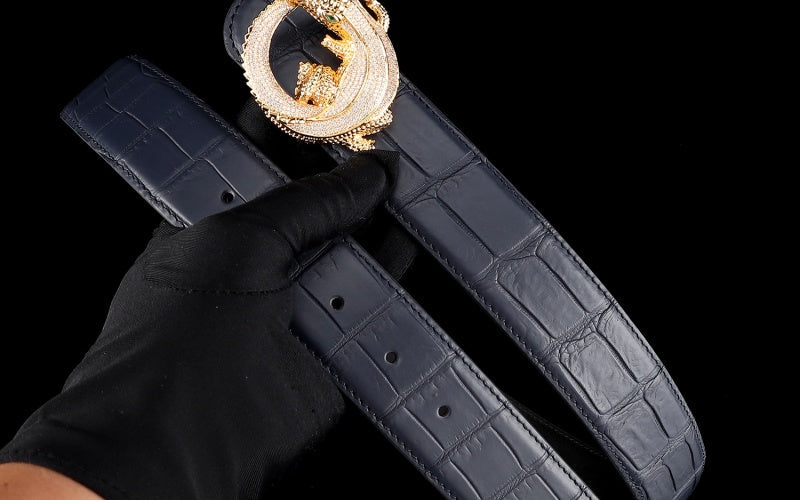
Crocodile Belt Price in 2026 — What You're Actually Paying For
TL;DR:
- The honest DTC crocodile belt price in 2026 sits between $300 and $500 for a real, legally sourced, hand-finished belt.
- Anything in the $1,500–$4,000 tier is mostly Brand Tax — boutique rent, ad spend, and logo premium, not better leather.
- BELTLEY crocodile belts run $118–$289 because we cut the middlemen, not the materials.
- Real cost drivers: raw hide grade, CITES paperwork, premium tannery time, stainless steel or solid brass hardware, and 4–6 hours of skilled labor per belt.
Quick Facts
- Average raw crocodile hide cost (2026): $180–$420 per skin, depending on size and grade.
- CITES compliance adds ~$15–$40 in documentation and permits per belt.
- Premium European/Asian tanning: $60–$120 per usable strap.
- stainless or solid brass hardware: $18–$45 per buckle at workshop cost.
- Skilled hand-finishing: 4–6 hours of artisan labor per belt.
- BELTLEY belts ship in 2–3 days from in-stock workshop inventory.

I'm writing this from our cutting bench, with three Porosus crocodile straps drying on the rack behind me and a stack of CITES paperwork on the desk. Customers email us almost weekly with the same question: "Why does this $1,800 crocodile belt at a flagship boutique look basically the same as your $249 one?" Fair question. The honest answer is in the math — so we're going to walk you through every line item that builds a crocodile belt price in 2026, then show you where the markup hides.
Your Budget, Decoded
Match what you're seeing on price tags to what's actually inside the belt:
| The price you're looking at | What it means |
|---|---|
| Under $100 "crocodile" | Walk away — at this price it's embossed cowhide or low-grade caiman wearing the name |
| $118–$500 from a DTC brand | The honest tier — real legally sourced hide, hand finishing, no middlemen markup |
| $1,500–$4,000 at a boutique | Mostly Brand Tax: boutique rent, ad spend, and logo premium — not better leather |
| You want the math, not the marketing | Raw hide $180–$420, plus CITES paperwork, tannery time, hardware, and 4–6 hours of labor — it's all itemized below |
BELTLEY crocodile belts run $118–$289 for exactly this reason — see the collection. Now the line-item breakdown:
What is a fair crocodile belt price in 2026?
A fair crocodile belt price in 2026 is roughly $300 to $500 for a fully legally sourced, hand-finished belt with quality hardware. Anything below $200 likely cuts corners on hide grade or paperwork; anything above $700 is mostly paying for a logo, retail rent, and marketing — not better leather.
That range assumes a DTC brand, real Porosus or Niloticus skin, a premium tannery, and a solid metal buckle. Industry analysis has tracked the widening gap between production cost and luxury retail pricing — what economists call a Veblen good effect — across leather goods for years — exotics are the most extreme example. At our crocodile belt collection, we deliberately price closer to true cost-plus, not luxury-multiplier.

How much does a raw crocodile hide actually cost?
A raw, farm-raised crocodile hide in 2026 costs about $180 for a small skin (25–30 cm belly width), $260–$320 for a medium, and $380–$420 for a large grade-1 Porosus. Wild Niloticus hides from regulated African farms sit slightly lower. Only 30–40% of any hide yields belt-grade strap.
Most buyers don't realize how much hide gets wasted. A 35 cm belly skin sounds huge — until you cut around scarring, tail-end thinning, and uneven scale rows. One quality 38mm dress belt eats nearly a third of a small hide. That's why exotic leather belts carry materials cost that ordinary cowhide simply can't approach. Hide auctions in Singapore and Paris saw a 7–9% price bump in early 2026 due to tightened CITES farming quotas reported across trade outlets.
Why does CITES compliance add to the price?
CITES compliance — the international treaty governing trade in protected species — adds about $15–$40 in real compliance cost per belt. That covers tagged hides, export permits, import permits, customs handling, and audit trails. It's not optional, and brands that skip it are selling either illegal product or non-crocodile leather labeled as croc.
You can read the framework directly on Wikipedia's CITES overview — every legitimate crocodile belt should be traceable from farm to finished product. We file paperwork on every skin that enters our workshop. If a "crocodile" belt costs $89 with no certification trail, it almost certainly isn't crocodile — read our breakdown on how to spot real crocodile leather before you buy.

What does premium tanning add to the cost?
Premium tanning at a top-tier French, Italian, or Singaporean tannery adds $60–$120 per usable belt strap. The process takes 4–8 weeks, uses vegetable and chrome-combination methods specific to reptile skin, and is what gives a real crocodile belt its glassy "glazed" finish or matte "mat" hand-feel.
Cheap tanneries can finish a hide in under two weeks, but the leather comes out brittle, the scales lift after six months, and the dye fades unevenly. That's the actual difference between a $90 "crocodile-print" belt and a real one. Our hides are tanned alongside skins destined for the largest names in luxury — same tannery, same process, different pricetag at checkout. See the difference in our full-grain leather belt collection too, where we apply the same sourcing discipline to cowhide.
How much does the buckle and hardware really cost?
Belt hardware ranges from $4 for cheap zinc alloy up to $45 for solid brass or stainless steel surgical stainless steel, with gold-plated jewelry-grade pieces hitting $60–$90 at workshop cost. The buckle alone can account for 15–25% of a belt's honest price — and it's the easiest place for brands to quietly downgrade.
We use stainless and solid brass on every BELTLEY buckle, plated with real gold microns (not flash-coating that wears off in a year). The CZ stones on our designer buckle belts are jewelry-grade, not glass. Hardware is invisible math: customers feel the weight and click in the hand, but they rarely calculate that a real stainless steel plaque buckle costs 8–10x what a no-name zinc one does.
Key Takeaways (so far)
- Raw hide: $180–$420
- CITES + compliance: $15–$40
- Premium tanning (per strap): $60–$120
- Hardware (real metal, real plating): $18–$90
- Skilled labor (4–6 hrs at workshop rates): $80–$140
- Honest workshop cost subtotal: ~$350–$810 per belt
Add fair brand margin, shipping, returns, warranty reserves, and you land at the $300–$500 DTC retail range. So where does the $3,800 boutique price come from?

Why do luxury crocodile belts cost $1,500 to $4,000?
Luxury crocodile belts hit $1,500–$4,000 because of Brand Tax — Madison Avenue rent, billboard campaigns, celebrity contracts, wholesale margins, and the simple fact that a logo on the keeper loop lets a house multiply cost by 6 to 10x. The leather and hardware are often identical to what DTC brands use.
This isn't a conspiracy theory — it's standard luxury accounting. A typical European luxury house targets a 70–80% gross margin at retail, plus another 50% wholesale markup if sold through department stores. That stacks. We covered the math in our DTC vs designer belt comparison and our piece on why luxury belts cost so much. You're paying for the boutique chandelier, not better crocodile.

How does BELTLEY price crocodile belts at $118–$289?
BELTLEY belts run $118–$289 because we operate direct-to-consumer, hold our own workshop inventory, source hides through long-term tannery relationships, and skip wholesale, retail, and ad-agency layers. Same Porosus, same tanneries, same stainless steel hardware as houses charging ten times more — different distribution model.
A few things make this work. We've been handcrafting belts since 1999, so we buy hides at scale-pricing. We don't pay department-store wholesale margins. We don't sponsor F1 cars. Our crocodile belts ship from in-stock workshop inventory in 2–3 days, backed by a 10-year warranty and 30-day returns. The price tag reflects the belt — not the marketing.
What's changing in 2026 specifically?
Three shifts in 2026 are nudging crocodile belt prices upward across the entire industry: CITES quota tightening in Australia and PNG reduced Porosus supply by ~6%, premium European tannery labor costs rose 8% post-2025 wage adjustments, and hide auction prices climbed roughly 7–9% on the back of restored Asian luxury demand.
The net effect: budget "exotic" brands are quietly switching to embossed cowhide while keeping the same prices, and top-tier luxury houses are passing 10–15% increases to consumers. DTC brands like us absorb part of the cost and adjust modestly — our men's belts and women's belts saw a single-digit adjustment, not a luxury-level jump.
The Bottom Line
Real crocodile belt price in 2026 is built from five honest line items — hide, CITES, tanning, hardware, labor — that add up to roughly $350–$810 in workshop cost. Fair DTC retail lands at $300–$500. Everything above that is Brand Tax: logo rent, advertising, and retail theater. BELTLEY's $118–$289 range exists because we kept the craftsmanship and cut the middlemen, not the other way around. If you want a real crocodile belt that ships in 2–3 days with a 10-year warranty, shop our crocodile collection — and read our size guide before you order.
Frequently Asked Questions
Q: Is a $200 crocodile belt real crocodile? Sometimes, yes — if it's a DTC brand with direct tannery sourcing. But if there's no CITES tag, no country-of-origin documentation, and the scales look too uniform, it's almost certainly embossed cowhide. Always ask for the certification.
Q: Why is alligator usually more expensive than crocodile? American alligator (Alligator mississippiensis) skins are smaller, more regulated, and harder to source than farm-raised Niloticus or Porosus crocodile. Expect a 15–30% premium for true alligator at the same finishing quality.
Q: Does a 10-year warranty really matter for a crocodile belt? Yes. Exotic leather can crack, scale-lift, or fade if tanning was rushed. A real warranty signals a brand stands behind its tannery work. BELTLEY covers materials and construction defects for a full decade — details on our warranty page.
Q: How long does a real crocodile belt last? With proper care, 15–25 years of regular rotation use. The leather actually develops richer patina over time. Read our leather care guide to keep the scales tight and the finish glossy.
By the BELTLEY artisan team — handcrafting exotic leather belts since 1999.