Crocodile Belt vs Python Leather Belt-Who wins?
TL;DR:
- Crocodile wins on durability (20–25+ year lifespan), water resistance, and structural strength — the clear choice for a long-term investment belt.
- Python wins on flexibility, lighter weight, intricate natural patterning, and lower entry price — the better pick for fashion-forward or statement-driven wear.
- The two hides serve different purposes in a wardrobe. Choosing between them is less about quality and more about how you intend to use the belt.
Both crocodile and python are genuine exotic leathers. Both are regulated under CITES. Both command prices that put them well above standard cowhide. But the comparison stops there — these are fundamentally different materials with different strengths, different aesthetics, and different lifespans. Buying a python belt expecting crocodile-level durability leads to disappointment. Buying a crocodile belt expecting python's distinctive natural color patterns leads to the wrong choice for a different reason.
This guide puts the two side by side on every dimension that matters: appearance, durability, price, care, and style range. If you're starting with our exotic leather belt collection, this comparison tells you exactly where each material earns its place.
Croc or Python: Pick Your Winner by Use Case
Both are genuine CITES-regulated exotics — they just win different games:
| Your situation | Go with |
|---|---|
| Long-term investment piece | Crocodile — 20–25+ year lifespan, better water resistance, stronger structure |
| Fashion-forward, statement-driven wear | Python — lighter, more flexible, and that intricate natural pattern |
| The belt will see weather | Crocodile — python prefers a sheltered life |
| First exotic, easing in on price | Python — the lower entry price makes it the gentler first step |
Both species are in the exotic leather collection. The full comparison, scale by scale:
What Is the Difference Between a Crocodile and Python Leather Belt?
A crocodile leather belt uses hide from the belly or spine of a farmed or regulated wild crocodilian — characterized by large, flat, symmetrical scales and exceptional tensile strength. A python leather belt uses the skin of a reticulated or Burmese python — characterized by smaller, more intricate scales with natural color variation and a notably thinner, more flexible hide structure.

The most important practical difference is thickness and density. Crocodile hide is thick, tightly structured, and built around an interlocking collagen fiber matrix that delivers industry-leading durability. Python hide is thinner and more pliable — genuinely soft from the first wear — but that suppleness comes at the cost of long-term structural resilience. According to Panam Leathers' direct comparison of crocodile and python skins, crocodile's "thickness and toughness" make it the preferred choice for high-wear applications, while python excels in pieces where "flexibility and lighter weight" are prioritized. For a broader look at where these two rank across all exotic leather options, which animal leather is best for belts covers the full exotic leather hierarchy.
How They Look: Scale Pattern, Texture, and Visual Character
This is where the two hides diverge most dramatically — and where personal preference genuinely matters.
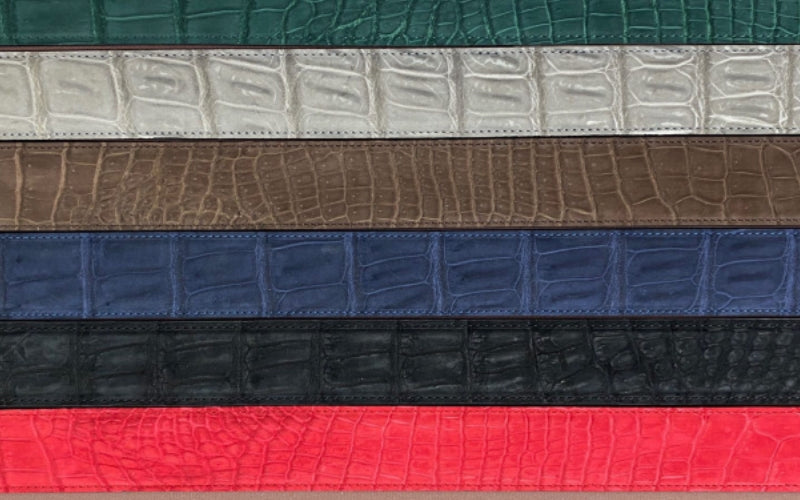
Crocodile leather produces large, pronounced, square-to-rectangular scales arranged in orderly rows across the belly section. The pattern is structured and symmetrical, with a sense of architectural precision. The surface reads as substantial — refined but clearly powerful. Crocodile's visual register tends toward formal and classic: it pairs naturally with tailored suits and dress trousers without demanding attention.
Python leather tells a completely different visual story. The scales are much smaller and more intricate, covering the hide in a dense mosaic of irregular shapes. More distinctively, python hides carry natural color variation — fawn, cream, tan, olive, and dark brown patterns that no tanning process creates from scratch. These are the animal's actual markings, preserved through the tanning process. The result is a belt that reads as bold, fashion-forward, and individual: no two python belts have identical patterning.
Sherrill & Bros.' style breakdown of python versus crocodile frames it well: crocodile is "understated elegance," python is "statement making." Both are correct — just for different occasions and different wardrobes.
Which Leather Is More Durable?
Crocodile leather is significantly more durable than python leather. A well-maintained crocodile belt lasts 20–25+ years; a comparable python belt typically reaches 10–15 years under similar conditions — already exceptional by any standard, but roughly half the crocodile lifespan.

The gap comes down to hide structure. Crocodile hide is dense, thick, and reinforced by a multi-directional collagen fiber weave beneath each scale. Python hide is thinner and lacks the same ossified scale support. Under repeated flexing, buckle pressure, and environmental exposure, python's thinner scale edges are more prone to lifting and cracking over time, especially if conditioning is neglected. Country View Western's comparison of exotic leather durability ranks crocodile and alligator at the top of the exotic durability hierarchy, with python performing well but in a clearly secondary position.
Water resistance also favors crocodile. The natural oils throughout a crocodile hide create inherent moisture resistance. Python's thinner hide is more vulnerable to water spotting and moisture damage — a meaningful practical difference for a belt worn daily. For the full durability breakdown on the crocodile side, are alligator or crocodile leather belts durable covers the structural data in detail.
Is Python Leather Good for Belts?
Python leather makes an excellent belt material for buyers who prioritize distinctive visual character over maximum longevity. It is genuinely soft, lightweight, and flexible from day one — qualities that make it comfortable to wear and easy to dress with casually. The natural pattern variation means every python belt is effectively unique.

The limitations are real but manageable. Python's thinner hide means it shows wear faster than crocodile under identical conditions — particularly around the buckle area, where repeated flexing concentrates stress. The scale edges can lift slightly over years of daily wear if conditioning is skipped. Python also shows moisture damage more readily than crocodile. For buyers willing to rotate their belts across a small collection and condition consistently, these limitations rarely become serious problems. For buyers who want one belt worn every day with minimal maintenance, crocodile is the more forgiving material. Panam Leathers' exotic leather belt guide ranks both materials highly, noting that python's "intricate natural markings" make it particularly well-suited to fashion applications where visual distinction matters most.
Which Is More Expensive — Crocodile or Python?
Crocodile leather belts are generally more expensive than python leather belts. Genuine python belts from quality sources typically range from $80 to $180, making them the most accessible entry point into exotic leather. Crocodile and alligator belts from DTC brands range from $150 to $299, with heritage luxury house pricing reaching $400 to $800.
The price difference reflects sourcing complexity, hide yield, and processing requirements. Crocodile farming and tanning is more regulated and resource-intensive than python processing. The Grade 1 belly hide required for a quality crocodile belt is genuinely scarce and commands a raw material premium that python does not. For buyers on a defined budget who want genuine exotic leather, python delivers authentic exotic character at a lower cost of entry. For buyers making a long-term investment, crocodile's 20+ year lifespan makes the price difference less significant over the belt's full life. Our guide on are alligator or crocodile belts worth it runs the cost-per-year math in full.
Care Comparison: What Each Needs to Stay in Shape
| Care Factor | Crocodile Leather | Python Leather |
|---|---|---|
| Conditioning frequency | Every 3–4 months | Every 2–3 months (thinner hide dries faster) |
| Conditioner type | Exotic-specific leather cream or oil | Exotic-specific cream — avoid heavy oils |
| Water resistance | Moderate-high; pat dry if wet | Low — keep dry; blot immediately if wet |
| Scale edge vulnerability | Low — scales are thick and stable | Moderate — edges can lift if dehydrated |
| Scratch resistance | High — thick scale surface resists scuffs | Moderate — thinner scales show abrasion |
| Break-in period | Minimal on belly cut; slight stiffness on hornback | Virtually none — soft from day one |
| Storage | Flat or loose roll, dry environment | Flat only — avoid any tight coiling |
Both materials benefit from regular conditioning and storage away from heat and direct sunlight. Python requires slightly more frequent attention due to its thinner hide structure. For a full exotic leather care protocol, our leather care guide covers both material types in detail.

Which Belt Should You Choose?
Choose a crocodile leather belt if:

- You want a belt built to last 20+ years with proper care
- Your primary use is formal, business, or smart casual wear
- Water resistance and abrasion resistance matter for daily use
- You're making a long-term investment piece and want maximum material quality
- You prefer a structured, symmetrical scale aesthetic
Choose a python leather belt if:
- You want a bold, fashion-forward statement piece with natural color variation
- Everyday formality isn't the priority — you dress primarily casual to smart casual
- You want exotic leather character at a lower price point
- Lighter weight and immediate softness matter more than maximum lifespan
- You rotate your belt collection and won't wear this piece daily
Both belong in a serious wardrobe. Crocodile is the foundation; python is the accent. The exotic leather belt collection covers both, along with elephant, caiman, and full-grain options for buyers building out across the full exotic range.
The Bottom Line
Crocodile and python leather belts are both genuine exotic leathers that outperform standard cowhide on visual character and longevity. Crocodile leads on durability, water resistance, and structural strength — it's the right choice for a primary investment belt intended to last decades. Python leads on natural color variation, flexibility, and accessible pricing — it's the right choice for a statement piece or a first step into exotic leather.
At BELTLEY, our handcrafted crocodile and alligator belts use Grade 1 belly hides paired with stainless steel hardware, backed by a 10-year warranty and 30-day hassle-free returns. Free worldwide shipping means you can see the material quality in person with no risk. Start with whichever hide fits your wardrobe — both choices are worth making correctly.
Frequently Asked Questions
Q: What is the main difference between a crocodile belt and a python belt?
Crocodile leather features large, structured, symmetrical scales with exceptional durability and water resistance. Python leather features small, intricate scales with natural color patterning, a softer feel, and a lighter weight. Crocodile lasts 20–25+ years; python typically reaches 10–15 years under comparable care. Crocodile costs more; python is the more accessible exotic leather entry point.
Q: Which is more durable — crocodile or python leather?
Crocodile leather is significantly more durable. Its thick, densely structured hide and interlocking collagen fiber matrix deliver twice the lifespan of python leather under similar conditions. Python is genuinely durable by standard leather comparisons but cannot match crocodile's tensile strength, water resistance, or long-term wear resistance.
Q: Is python leather good for belts?
Yes, with appropriate expectations. Python leather produces a lightweight, soft, visually distinctive belt ideal for fashion and casual wear. It requires more frequent conditioning than crocodile due to a thinner hide structure, and shows wear faster under daily heavy use. For a statement piece or a belt worn in rotation, it performs well. For a single daily-wear investment belt, crocodile is the stronger choice.
Q: Which exotic leather belt is more expensive?
Crocodile leather belts are more expensive — typically $150–$299 from DTC brands versus $80–$180 for quality python belts. The gap reflects sourcing complexity, hide yield, and the scarcity of Grade 1 crocodile material. Python is the most affordable genuine exotic leather option.
Q: Can you wear a python leather belt with a suit?
A python belt can work with a suit in fashion or creative professional contexts, but it reads as a statement piece rather than a classic formal accessory. For traditional business formal or black-tie adjacent occasions, crocodile leather's structured scale pattern is the more appropriate choice. Python pairs best with smart casual, fashion-forward, or business casual outfits where its natural color patterning can register as intentional style rather than a mismatch.
,%20water%20resistance,%20and%20structural%20strength%20%E2%80%94%20the%20clear%20choice%20for%20a%20long-term%20investment%20belt.%0A%0APython%C2%A0wins%20on%20flexibility,%20lighter%20weig...)