Crocodile Belt Resale Value: What Holds, What Doesn't (2026)
TL;DR:
- Hermès Porosus belts are the only crocodile belts that consistently hold or appreciate — vintage matte black or natural pieces resell at 80–110% of original retail.
- Hermès Niloticus belts typically resell at 60–80% of retail. Solid value retention but rarely appreciation.
- Other luxury crocodile belts (Brioni, Stefano Ricci, Tom Ford, Berluti) usually depreciate 40–60% on first resale.
- Designer logo belts (Gucci, LV, Ferragamo) in crocodile depreciate steepest — often 50–70% even with original packaging.
- DTC crocodile belts have negligible resale markets but offer the strongest cost-per-wear value.
- Authentication is non-negotiable. A belt without CITES documentation has zero secondary-market value.
Quick Facts
- Hermès Porosus resale (vintage): 90–150% of original retail
- Hermès Niloticus resale: 60–80%
- Designer logo crocodile resale: 25–40%
- DTC crocodile resale: 10–25%
- Vintage Hermès annual appreciation (10-year avg): ~4–6%
- CITES documentation impact on resale: Lose 60% of value without it
If you're considering a $3,000 crocodile belt as an investment piece, the math deserves a careful look. The luxury accessory resale market has matured significantly since 2020, with platforms like Fashionphile, Vestiaire Collective, and Christie's now handling enough volume to provide meaningful price-discovery data. The honest summary: most crocodile belts depreciate sharply on resale, a few hold value, and only a handful appreciate. Whether yours falls into the right category depends almost entirely on the brand and the documentation.
This post covers what each major luxury house's crocodile belts actually fetch on the secondary market, which factors drive value retention, and where the false-investment narrative breaks down. We've watched our customers consign pre-owned designer pieces over the past decade — the depreciation patterns described here aren't theoretical, they're the realities buyers face when they finally try to resell.
Do Crocodile Belts Hold Their Value?
Crocodile belts hold their value much more selectively than crocodile bags. Hermès Porosus pieces consistently retain or appreciate. Most other luxury crocodile belts depreciate 30–60% on first resale, with steeper declines for logo-heavy designer pieces. Belts depreciate faster than bags because the wear surface is more exposed and the resale market is smaller.

The resale-friendly characteristics of a crocodile belt are predictable: a top-tier brand with sustained demand, classic neutral color, conservative buckle design, original receipts and CITES documentation, and minimal visible wear. Belts that miss any one of those criteria see significant resale discounts. Industry data from major luxury resale platforms consistently identifies belts as one of the slowest-moving accessory categories — bags, watches, and shoes all liquidate faster.
This is a structural feature, not a bug. A buyer in the secondary market for a $2,000 crocodile belt is rare. The same buyer in the market for a $20,000 crocodile bag exists in volume. Lower demand at the resale stage produces lower resale prices.
Which Crocodile Belt Brands Appreciate in Value?
Hermès Porosus belts in classic colorways (noir, gold, etoupe) and conservative buckle styles (H, Constance, Médor) are the only crocodile belts that consistently appreciate. Vintage pieces from the 1990s–2000s in unworn condition can resell at 110–150% of original retail. Hermès Niloticus retains value but rarely appreciates significantly.

The Hermès appreciation pattern depends on three structural factors: the brand's strict supply control, the broader appreciation of all Hermès Porosus pieces, and the historical scarcity of belts compared to bags. Vintage Hermès crocodile pieces have outperformed inflation by roughly 4–6% annually over the past decade — making them one of the few accessory categories that legitimately functions as a store of value.
Three Hermès belt sub-categories with documented appreciation:
- Vintage Porosus H belts in matte black or matte cognac, 1990s–2000s production
- Constance belt with Porosus strap and palladium hardware, retired or limited colors
- Médor belt with Porosus strap, original studs intact
Outside Hermès, appreciation is rare. A small handful of Brioni and Stefano Ricci pieces from limited runs hold value or appreciate slightly, but they're exceptions, not patterns.
Why Do Most Luxury Crocodile Belts Depreciate?
Most luxury crocodile belts depreciate because the resale buyer pool is smaller than the new-buyer pool, the wear surface is highly visible, and the brand stamp on the back can fade. Even mint-condition belts from major designer houses typically resell at 40–60% of original retail because the secondary market discounts every visible scuff and every year of age.
The structural problem with belt resale is the wear pattern. Unlike a handbag, which can be carried only on certain occasions and stored otherwise, a belt sees daily friction at the buckle fold and at every belt hole. After a year of regular wear, the leather shows. After three years, the visible wear is enough to drop a belt's resale value by another 20–30%. Our are luxury belts worth it and crocodile leather belt durability guide cover the wear mechanics.
| Brand | Typical resale (% of retail) | Appreciation potential |
|---|---|---|
| Hermès Porosus (vintage) | 90–150% | Strong |
| Hermès Niloticus | 60–80% | Modest |
| Hermès Alligator | 70–90% | Modest |
| Brioni Porosus | 40–55% | Rare |
| Stefano Ricci | 35–50% | Rare |
| Tom Ford crocodile | 30–45% | Minimal |
| Berluti | 35–50% | Minimal |
| Gucci/LV/Ferragamo logo | 25–40% | None |
| DTC brands | 10–25% | None |
The numbers are sobering and consistent across resale platforms. Designer logo belts depreciate steepest because the buyer pool for visibly-branded crocodile is fundamentally smaller than for unbranded luxury crocodile.
Key Takeaways
- Only Hermès Porosus consistently appreciates on resale
- Most luxury crocodile belts depreciate 40–60% on first resale
- Designer logo crocodile depreciates steepest (25–40% retained)
- DTC crocodile has minimal resale market but best cost-per-wear value
- CITES documentation absence kills 60% of resale value automatically
What Factors Affect Crocodile Belt Resale Value Most?
Six factors drive resale value: brand prestige, original CITES documentation, color (neutrals appreciate most), buckle condition, leather wear, and authentication paperwork. Of these, the documentation is the single biggest swing factor — a belt without CITES paperwork can lose 60% of resale value, regardless of brand.

The full resale-value checklist:
- CITES Appendix II export certificate — non-negotiable for legal resale across borders
- Original receipt or proof of purchase — adds 10–20% to resale price
- Original dust bag and packaging — adds 5–10%
- Brand stamp clearly legible — critical for authentication
- No visible cracks, scratches, or buckle scuffs — each visible flaw discounts 5–15%
- Classic colorway (black, espresso, cognac, natural) — appreciates over trend colors
- Conservative buckle (plate, H, Constance) — outsells novelty buckles 3:1 on resale
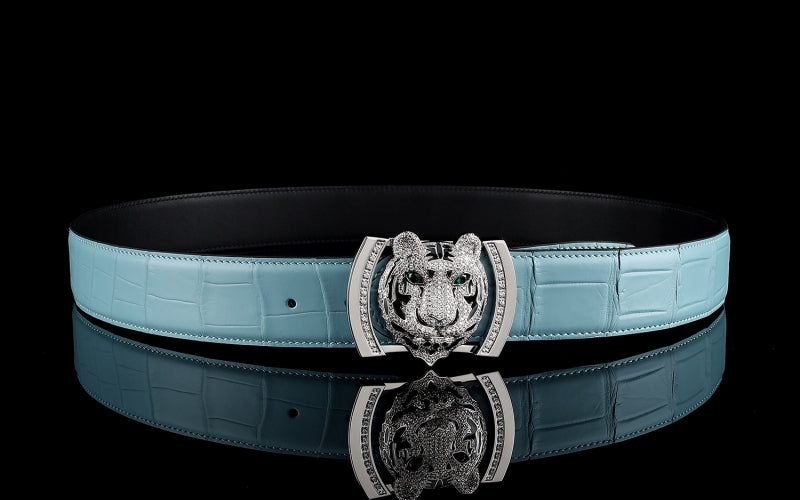
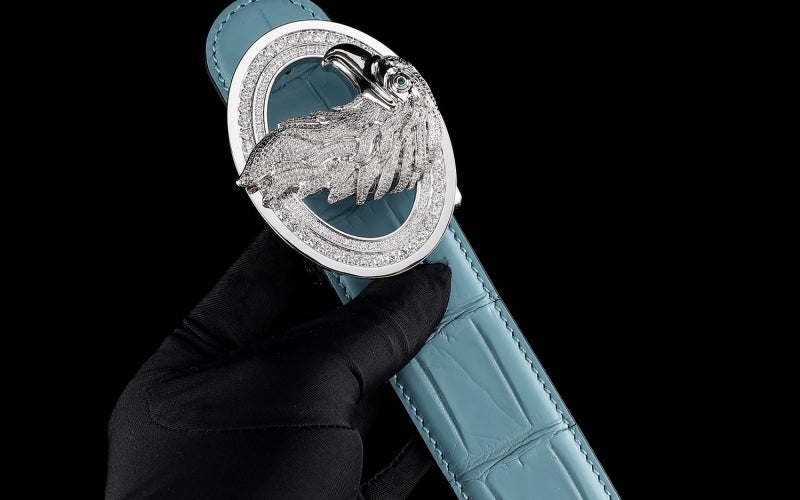
Trend colors — Tiffany blue, peacock green, hot pink, white — almost always depreciate on resale, even from premium brands. The buyer pool for trend colors is smaller, and trend cycles age the leather visually faster than the leather actually ages. Our matte vs glossy crocodile leather belt guide covers why neutral matte finishes consistently outperform glossy trend colors at resale.
Should You Buy a Crocodile Belt as an Investment?
For most buyers, no. The only crocodile belt that legitimately functions as an investment is a vintage Hermès Porosus piece in classic color and minimal wear, purchased with full documentation. Everything else should be bought because you want to wear it, not because you expect to flip it.

The investment math is unforgiving. A $5,000 designer crocodile belt depreciating to $2,500 on resale represents a $2,500 loss plus the opportunity cost of having held the capital. A $700 well-made DTC crocodile belt with no resale value but a 15-year wearable lifespan represents a $47/year cost-per-wear — far better than the depreciated luxury piece. We've covered this math in detail in our why some crocodile belts cost $500 and others $5,000 breakdown.
Three honest scenarios where the investment angle works:
- Vintage Hermès Porosus purchased pre-owned at a fair secondary-market price and held — modest appreciation likely
- Limited-edition or retired-color Hermès — speculative but historically rewarding
- Estate or heirloom pieces with documented provenance — slow appreciation as Hermès raises retail prices
Three scenarios where it doesn't:
- New designer logo belt purchased at retail with the intent to flip
- Trend-color crocodile of any brand
- Heavily worn vintage pieces, even from top brands
Where Should You Sell or Buy a Crocodile Belt on the Resale Market?
The major platforms with verified authentication are Fashionphile, The RealReal, Vestiaire Collective, and Rebag for designer brands, and Christie's or Sotheby's for vintage Hermès auctions. Buy from authentication-verified platforms only — third-party marketplaces without verification typically have 30–50% counterfeit rates on crocodile pieces.

A buyer/seller framework that minimizes risk:
- Buying premium: Christie's, Sotheby's, Hermès consignment partners
- Buying mid-luxury: Rebag, Fashionphile, Vestiaire Collective (with concierge authentication)
- Buying with caution: The RealReal (good selection, occasional authentication gaps)
- Avoid buying: eBay direct, Mercari, Facebook Marketplace for any crocodile piece without documented provenance
For sellers, the platform fee structure varies — typically 15–40% commission. Higher-fee platforms often deliver higher net proceeds because their authentication and audience translate to higher final prices. Our where to buy real crocodile leather belt online post covers the buying side in more depth.
The Bottom Line
The crocodile belt resale market rewards a narrow set of choices: Hermès Porosus, classic colorways, conservative buckles, and full documentation. Outside that envelope, the depreciation curve is steep and predictable. For most buyers, the smarter framing isn't "investment" but "cost-per-wear" — and on that metric, a well-made DTC crocodile belt at $118–$700 with a long warranty often beats a $5,000 designer piece that loses half its value the moment it leaves the boutique.
At BELTLEY, we don't position our crocodile belts as investment pieces — we position them as 15–25-year wardrobe staples with cost-per-wear math that holds up against any luxury alternative. Our 10-year warranty covers structural defects across that entire lifespan. Out-of-stock or custom pieces are made to order in roughly 3 weeks. If you're choosing between a depreciation-prone designer piece and a quietly excellent DTC alternative, the Black Nile Crocodile Automatic 1.5" makes the cost-per-wear case better than any resale-value argument.
Browse the BELTLEY Crocodile Belt Collection →
Frequently Asked Questions
Q: Do Hermès crocodile belts appreciate in value?
Vintage Hermès Porosus belts in classic colors and minimal wear consistently retain or appreciate in value, often reselling at 90–150% of original retail. Newer Hermès Niloticus belts typically retain 60–80% of retail. The strongest appreciation has been documented in 1990s–2000s Porosus pieces.
Q: How much does a crocodile belt depreciate?
Average depreciation across the luxury crocodile belt category is 40–60% on first resale. Designer logo pieces depreciate steepest at 60–75%. Hermès Porosus is the only category that consistently bucks the depreciation pattern.
Q: Can I sell my crocodile belt on eBay?
You can, but cross-border legal restrictions apply. Crocodile belts require CITES Appendix II documentation to sell across most international borders. Authentication-verified platforms handle the documentation properly; eBay and similar marketplaces often don't, exposing both buyer and seller to legal risk.
Q: What's the highest-resale-value crocodile belt?
Hermès Porosus belts in vintage Médor or Constance styles, with full documentation and minimal wear, are the highest-resale-value crocodile belts on the market. Verified pieces have sold at major auction houses for prices 30–50% above their original retail.
Q: Does the buckle metal affect resale value?
Yes, modestly. Palladium and white-gold buckles tend to outperform yellow gold on resale because the buyer pool for cool-tone metals is broader in the current market. Solid sterling silver and 316L stainless retain value well; plated buckles depreciate faster.
Q: Should I buy a crocodile belt for resale?
Generally no, unless you're targeting vintage Hermès Porosus specifically and purchasing at a verified secondary-market price. New designer crocodile belts almost always depreciate. Buy crocodile belts to wear, not to flip.
Q: How does DTC crocodile belt resale compare to designer?
DTC crocodile belts have minimal resale markets — typically 10–25% of original retail when sold pre-owned. The trade-off is significantly lower entry price, longer warranties, and structurally identical leather quality. Cost-per-wear math favors DTC for most buyers; resale math favors Hermès for collectors.
By the BELTLEY artisan team — handcrafting exotic leather belts since 1999. Last updated: May 10, 2026.