The Cowboy Trophy Buckle — Why Rodeo Champions Wear Them Daily
Quick answer: Rodeo champions wear their trophy belt buckles daily because, unlike a trophy that sits on a shelf, a buckle is a wearable badge of earned achievement — like an Olympic medal you can carry every day. Rodeo began awarding engraved trophy buckles in the 1920s, and by the 1940s–50s the custom-engraved winner's buckle became the ultimate symbol of skill, pride, and Western identity, worn openly as proof of victory.
Last updated: June 2026 • By BELTLEY Editorial
TL;DR:
- A trophy buckle is earned, not bought — it's worn daily as visible proof of a rodeo win.
- Rodeo began awarding trophy buckles in the 1920s; the tradition solidified by the 1940s–50s.
- Each is custom-engraved with the winner's name, event, and year — one of a kind.
- Hollywood silversmiths like Edward Bohlin turned them into wearable works of art.
To outsiders, the big, gleaming buckle on a cowboy's belt can look like pure flash. To anyone in Western culture, it's something else entirely: a résumé worn at the waist. The cowboy trophy buckle is one of the only awards in sport that champions wear every single day, and that habit isn't vanity — it's tradition rooted in a century of rodeo history. Each buckle is earned through skill and risk, engraved with a name and a win, and worn as living proof. This guide explains where the tradition came from and why those buckles never come off. It builds on our look at why cowboys wear large belt buckles.

Why do rodeo champions wear their trophy buckles every day?
Because a buckle is a wearable trophy — earned achievement you can carry, not display on a shelf. In rodeo culture, winning a trophy buckle is likened to winning an Olympic gold medal, except you can wear it daily. It signals to everyone, without a word, that the wearer is a proven champion in a demanding, dangerous sport.

The daily wear is the whole point. As the Buffalo Bill Center of the West explains in its history of the Western belt buckle, trophy buckles became "wearable symbols of skill, pride, and status." Unlike a medal in a drawer, a buckle is functional and visible every day, so a champion's accomplishment travels with them. That fusion of utility and honor is uniquely Western — and it's why the buckle, not a cup or ribbon, became rodeo's prize.
When did the rodeo trophy buckle tradition begin?
In the 1920s. Rodeo competitions in California began awarding engraved belt buckles to event winners in that decade, replacing generic trophies with prizes that better reflected the rugged Western heritage of the sport. By the 1940s and 50s, the trophy buckle had fully cemented its place as the standard award for champions in events like bull riding and barrel racing.

Key stat: Rodeo began awarding trophy belt buckles in the 1920s, and by the 1940s–50s the engraved winner's buckle had replaced ribbons and medals as the definitive symbol of rodeo achievement.
The timing aligned with rodeo's explosive popularity and Hollywood's love affair with the West. Organizers wanted prizes that matched the cowboy image, and a hand-engraved buckle — practical, durable, and distinctly Western — was perfect. Institutions like the National Cowboy & Western Heritage Museum now preserve this legacy in their American Rodeo gallery, home to championship trophies and saddles. The custom caught on quickly: within a generation, the trophy buckle was as central to rodeo identity as the hat and boots. For how this fits the buckle's broader story, see our short history of the belt buckle.
What makes a trophy buckle one of a kind?
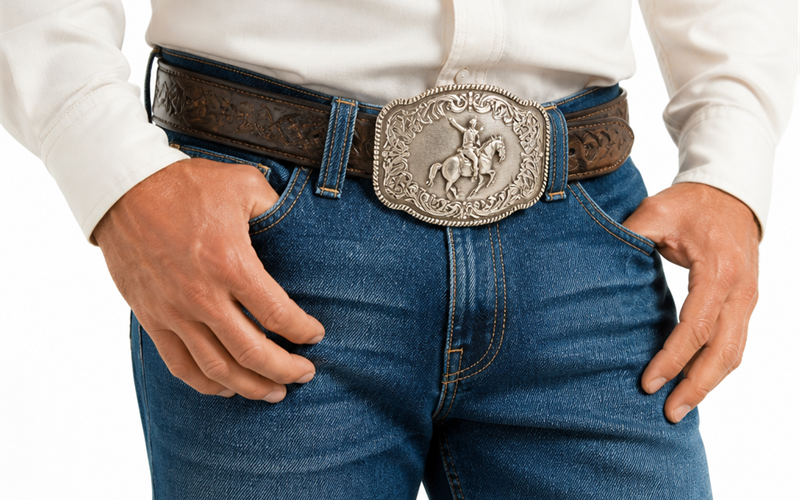
Custom engraving. A genuine rodeo trophy buckle is engraved with the winner's name, the specific event, and the year, making each one unique and impossible to replicate. Often crafted in silver or silver-plated metal with intricate floral and Western motifs, these buckles are individualized records of a specific victory — personal, dated, and earned.

The engraving is what separates a trophy buckle from a store-bought one. You can buy a Western-style buckle, but you can't buy that buckle — the one stamped with your name and your win. Hollywood silversmiths elevated this craft: Edward Bohlin, a Swedish immigrant who made custom gear for film star Tom Mix, "transformed buckles into wearable works of art, engraved with names, dates, and events." Here's what typically appears on a trophy buckle:
| Element | What it records |
|---|---|
| Winner's name | The champion |
| Event | Bull riding, barrel racing, roping, etc. |
| Year | The season of the win |
| Rodeo/association | Where it was won |
| Motifs | Floral, paisley, Western engraving |
That personalization is why trophy buckles hold deep sentimental and collector value, a theme we explore in are old belt buckles worth anything.
What does the trophy buckle mean in Western culture?
It means earned identity. The trophy buckle represents skill, courage, and belonging in a culture that prizes those above wealth or branding. Wearing one says you competed, risked, and won — it's respect you can't purchase. That's the opposite of a logo belt: the value is in the achievement, not the brand or the price tag.

This is what gives the cowboy buckle its quiet power. In a fashion world increasingly driven by logos, the trophy buckle is a reminder that the most meaningful hardware is earned, not bought — a value that resonates well beyond rodeo. It's also why authentic Western buckles favor solid, hand-crafted construction over flashy plating. That respect for genuine craftsmanship over branding is something BELTLEY shares; for those drawn to the bold Western look, our unique buckle belts and casual belts offer character without the logo tax.
The Bottom Line
Rodeo champions wear their trophy buckles every day because the buckle is a wearable trophy — earned through skill and risk, engraved with a name and a win, and far more meaningful worn than shelved. The tradition began in the 1920s as rodeo sought prizes worthy of Western heritage, and by mid-century the custom-engraved buckle had become the sport's ultimate badge of honor, elevated to wearable art by silversmiths like Edward Bohlin. More than flash, it's an identity you compete for, the opposite of a purchased logo. For anyone drawn to that bold, characterful Western aesthetic, BELTLEY offers distinctive buckles built on quality leather. Explore the unique buckle belts and casual belts collections.
Frequently Asked Questions
Q: Why do cowboys wear their rodeo buckles every day?
Because the buckle is a wearable trophy — proof of an earned rodeo victory that they can carry daily, unlike a medal that sits on a shelf. Wearing it signals championship status and skill to everyone, which is a point of pride in Western culture where achievement is highly respected.
Q: When did rodeo start giving belt buckles as prizes?
Rodeo competitions began awarding engraved trophy belt buckles in the 1920s, starting in California, as organizers sought prizes that reflected Western heritage better than generic trophies. By the 1940s and 50s, the trophy buckle had become the standard award for rodeo champions.
Q: What's engraved on a rodeo trophy buckle?
A genuine trophy buckle is typically engraved with the winner's name, the event won (such as bull riding or barrel racing), the year, and often the rodeo or association, along with decorative Western motifs. This personalization makes each buckle a unique, one-of-a-kind record of a specific victory.
Q: Who was Edward Bohlin?
Edward Bohlin was a Swedish immigrant and master silversmith who made custom Western gear, including saddles and belts, for Hollywood stars like Tom Mix. He helped transform belt buckles into intricate, engraved works of art in the early-to-mid 20th century, shaping the trophy buckle tradition.