Dragon, Tiger & Elephant Buckle Symbolism Across Cultures
Quick answer: The same animal buckle motif carries very different meanings across cultures. The dragon is benevolent power and good fortune in China but a fearsome adversary in the West. The tiger means courage and protective guardianship in China and Korea. The elephant signifies wisdom and good luck in Hindu and Buddhist traditions. So an animal buckle isn't one symbol — it's a different message depending on the cultural lens.
Last updated: June 2026 • By BELTLEY Editorial
TL;DR:
- The dragon = auspicious power/luck in East Asia, but a menacing beast in Western myth — opposite meanings.
- The tiger = courage, military authority, and guardian against evil in China and Korea.
- The elephant = wisdom, royal power, and good luck in Hindu and Buddhist (and broader Asian) cultures.
- One motif, many meanings — context decides what your buckle "says."
Wear an animal-motif buckle and you're carrying a symbol — but which symbol depends entirely on who's reading it. A dragon means something profoundly different to someone steeped in Chinese tradition than to someone raised on European fairy tales. The same is true of the tiger and the elephant, whose meanings shift across China, Korea, India, Africa, and the West. This cross-cultural guide compares how the three most popular powerful-animal buckles are read around the world, so you understand the full weight of the motif you choose. (For the practical "what each means and how to wear it" guide, see our companion piece on animal-motif buckle symbolism.) It builds on what a leather belt symbolizes.
Why does the same animal buckle mean different things in different cultures?
Because symbolism is cultural, not universal. An animal's meaning is shaped by a society's mythology, religion, and history, so the same creature can signal opposite ideas in different places. The dragon is the clearest example: a benevolent symbol of fortune in East Asia and a destructive monster in Western myth. Context determines the message.

This is why a motif is never "just" decorative. The dragon, tiger, and elephant each carry centuries of accumulated meaning that differs by region, so the buckle you wear communicates differently to a viewer in Beijing, Bangkok, or Boston. Understanding those differences turns a stylistic choice into an informed one. For the brand's full range of these motifs, see the unique buckle belts collection.
How does dragon symbolism differ between East and West?
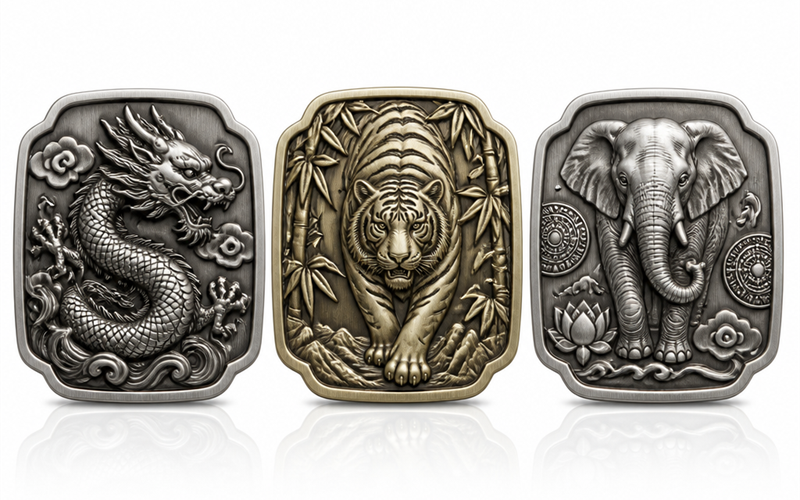
Dramatically — they're nearly opposite. In Chinese and East Asian culture, the dragon is a benevolent, auspicious symbol of imperial power, prosperity, and control over water and weather. In Western mythology, the dragon is typically a fearsome, fire-breathing adversary to be slain. So a dragon buckle reads as good fortune in the East and as fierce power or danger in the West.

The contrast is stark and well-documented. The reference on the Chinese dragon confirms it was "associated with the emperor of China" and symbolizes "potent and auspicious powers" plus "prosperity and good luck" — even noting Chinese people call themselves "Descendants of the Dragon." Western dragons, by contrast, descend from myths of hoarding, fire-breathing beasts confronted by heroes. Encyclopaedia Britannica draws the same line, noting that in the West the dragon was "symbolic of sin and paganism," while in East Asia it "retains its prestige and is conceived as a beneficent creature". Same creature, inverted meaning. Here's the cross-cultural breakdown:
| Culture | Dragon meaning |
|---|---|
| China / East Asia | Benevolent power, prosperity, good fortune, imperial authority |
| Western (European) | Fearsome adversary, danger, greed, chaos to be conquered |
| Modern global | Strength, ambition, "cool" power (blended) |
For more on the Eastern dragon specifically, our dragon buckle belt collection embodies the auspicious tradition.
What does the tiger symbolize across Asian cultures?
Power, courage, and protective guardianship. In Chinese tradition the tiger represents war and high military authority; in Korean culture it's a sacred guardian that drives away evil spirits and brings good luck — a symbol of courage and absolute power. Across East Asia, the tiger is a fierce protector rather than a villain, often used as a guardian figure.

Key stat: In Korean culture the tiger is regarded as "a guardian that drives away evil spirits and a sacred creature that brings good luck" — and tigers were carved onto Chinese tombs as guardians against thieves, making the tiger a protective symbol across East Asia rather than a threatening one.
The protective reading is consistent across the region. As the reference on cultural depictions of tigers details, the tiger symbolizes "courage and absolute power" in Korea and the "highest army General Officer" in Chinese tradition, and was "carved onto Chinese tombs and monuments as guardians against thieves." So a tiger buckle reads as fearless strength and protection — a guardian motif, not mere aggression. Explore it in the tiger buckle belt collection.
What does the elephant symbolize in different cultures?
Wisdom, strength, and good luck. In Hindu tradition the elephant-headed deity Ganesha embodies wisdom and removes obstacles; across Asian cultures elephants symbolize intelligence, memory, and royal power; in Thailand and Burma the white elephant is sacred and signifies royalty and good luck. The elephant is consistently a gentle, auspicious, revered symbol.

Unlike the dragon, the elephant's meaning is fairly consistent and positive across cultures. The reference on cultural depictions of elephants notes "wisdom is represented by the elephant in the form of the deity Ganesha," that Asian cultures associate elephants with "wisdom and royal power," and that white elephants symbolize "royalty… and good luck." In the West, the elephant connotes memory, strength, and (via the "lucky elephant" trunk-up motif) fortune. Here's the comparison:
| Culture | Elephant meaning |
|---|---|
| Hindu (India) | Wisdom, obstacle-removal (Ganesha), divinity |
| Buddhist / SE Asia | Royalty, sacredness, good luck (white elephant) |
| Broader Asia | Intelligence, memory, royal power |
| Western | Memory, strength, good luck (trunk-up) |
For this auspicious motif, see the elephant buckle belt collection — and note BELTLEY also crafts genuine elephant leather belts.
How should this shape the animal buckle you choose?
Choose with the cultural meaning in mind. If you want a symbol of good fortune and benevolent power, the Eastern dragon or the elephant fits; if you want courage and protection, the tiger. Be aware that the dragon especially reads differently East versus West, so consider the message you intend and the audience who'll see it. The motif is a quiet statement — pick the meaning that resonates with you.

The point isn't to overthink a buckle, but to wear one knowing what it represents. A symbol you understand carries more personal meaning than a random decorative shape. And as with any quality buckle, the craftsmanship matters as much as the motif — a well-made solid buckle honors the symbol better than a cheap cast one. For the practical styling companion to this cultural guide, plus the snake and horse motifs, see our animal-motif buckle symbolism guide, and browse all motifs in the unique buckle belts collection.
The Bottom Line
The dragon, tiger, and elephant prove that an animal buckle is never a single symbol — its meaning bends to the culture reading it. The dragon flips from benevolent fortune in East Asia to fearsome adversary in the West; the tiger reads as courage and protective guardianship across China and Korea; the elephant signifies wisdom, royalty, and good luck throughout Hindu, Buddhist, and broader Asian traditions. Choosing one of these motifs is choosing a message, so it's worth knowing what that message says — and to whom. Whichever symbol resonates, craftsmanship honors it best. Explore the dragon, tiger, and elephant motifs in BELTLEY's unique buckle belts collection, and find the practical styling guide in our animal-motif symbolism companion piece.
Frequently Asked Questions
Q: Why is the dragon lucky in China but evil in the West?
Because symbolism is shaped by each culture's mythology. Chinese tradition cast the dragon as a benevolent, auspicious bringer of rain, prosperity, and imperial power, while European myth cast dragons as dangerous, hoarding monsters to be slain by heroes. Same creature, opposite cultural meanings.
Q: What does a tiger symbolize in Asian cultures?
Across China and Korea, the tiger symbolizes courage, power, and protective guardianship — it represents high military authority in China and is a sacred guardian against evil spirits in Korea. Rather than a villain, the tiger is a fierce protector and a bringer of good luck.
Q: Why is the elephant a symbol of good luck?
In Hindu tradition the elephant-headed god Ganesha represents wisdom and removes obstacles, and across Asia elephants symbolize royal power, intelligence, and fortune — the white elephant is especially sacred in Thailand and Burma. The trunk-up elephant is widely worn as a good-luck symbol.
Q: Does the meaning of an animal buckle matter when choosing one?
It can add personal significance. The same motif means different things in different cultures — a dragon signals fortune in the East but danger in the West, for example. Knowing the symbolism lets you choose a buckle whose meaning resonates with you and reads as you intend to others.