A Short History of the Belt Buckle — Roman Legions to Gucci
Quick answer: The belt buckle began as functional military hardware — Roman legionaries wore the cingulum militare, a belt with metal fittings and a buckle (fibula) that marked military status as early as the 1st century. Over two millennia it evolved through medieval heraldic clasps, utilitarian frontier hardware, and 20th-century rodeo and military buckles, before becoming a pure status and branding emblem in the designer era, epitomized by Gucci's GG.
Last updated: June 2026 • By BELTLEY Editorial
TL;DR:
- The buckle started as Roman military equipment — the cingulum's fibula marked a soldier's status.
- Medieval buckles grew ornate, tied to heraldry, rank, and craftsmanship.
- The frontier and rodeo eras made the buckle a symbol of Western identity and achievement.
- The designer era turned the buckle into pure branding — the Gucci GG being the archetype.
The belt buckle is one of the oldest pieces of personal hardware still worn daily, and its 2,000-year journey mirrors the history of status itself. What began as a strictly functional fastener for soldiers became, over centuries, a canvas for heraldry, a badge of frontier achievement, and finally a luxury branding device. Understanding that arc explains why a small metal clasp can carry so much meaning — and why some buckles cost a few dollars while others cost thousands. This short history traces the buckle from Roman legions to the Gucci logo, hitting the moments that transformed its meaning. It builds on our look at when leather belts were invented.
When was the belt buckle invented?
The buckle dates to antiquity, with the Roman cingulum militare — a military belt with metal fittings and a buckle — as one of its most documented early forms, worn by the 1st century. Buckles existed in various cultures before and after Rome, but the Roman military belt is the clearest early example of a buckle as both fastener and status marker.

Rome made the buckle meaningful. As the reference on the cingulum militare explains, it was "a piece of ancient Roman military equipment in the form of a belt decorated with metal fittings, which was worn as a badge of military status by soldiers and officials." The belt's buckle was called the fibula, one of five components alongside the balteus, bulla, pensilium, and lamna. From the start, then, the buckle did double duty — holding the belt and signaling who you were. For the mechanical fundamentals, see our types of belt buckles guide.
How did belt buckles evolve in the medieval era?
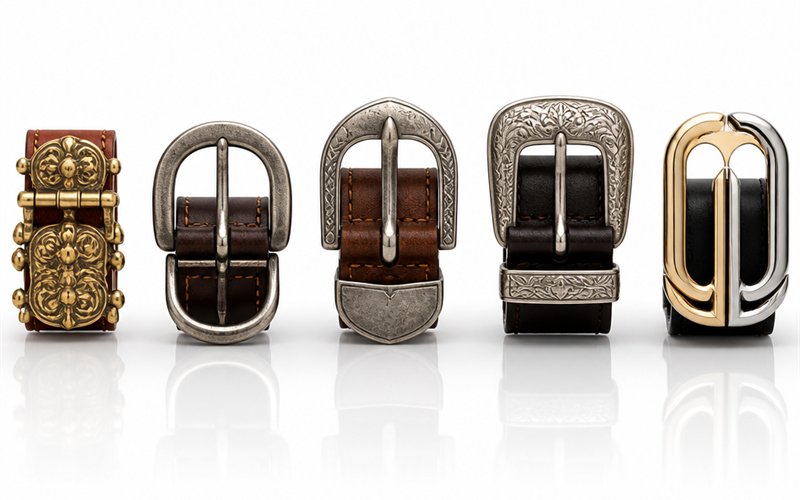
They became ornate and rank-coded. As metalworking advanced through the medieval period, buckles grew more decorative, crafted in bronze, brass, and precious metals, and their style signaled the wearer's class and identity. Buckles intertwined with heraldry, the visual language of family and rank, turning hardware into a marker of lineage and status.

The medieval buckle was status you could see. With heraldry organizing identity across Europe — the system of heraldic charges and arms used "to identify individuals and families [and] denote rank" — buckles and belt fittings became part of that visual hierarchy. A noble's buckle was finer, heavier, and more elaborately worked than a commoner's. This is also when the buckle began its long association with craftsmanship, the idea that the quality of your hardware reflected your standing — a theme that echoes in collectible buckles today, as covered in are old belt buckles worth anything.
How did the buckle become a Western and rodeo icon?
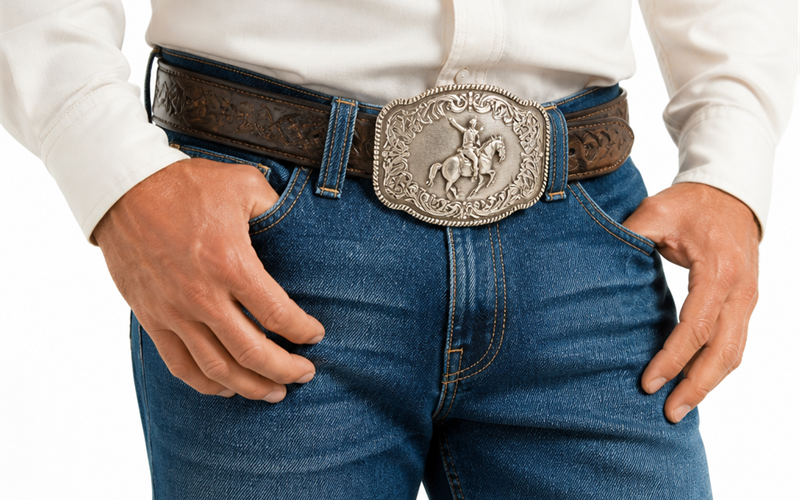
Through the American frontier and 20th-century rodeo culture. Frontier life demanded rugged, functional buckles, and by the 1920s rodeo competitions began awarding engraved trophy buckles to champions. Hollywood silversmiths like Edward Bohlin elevated these into wearable art, and by the 1940s–50s the ornate Western buckle was cemented as a symbol of skill, pride, and identity.

Key stat: Rodeo competitions began awarding trophy belt buckles in the 1920s, and by the 1940s–50s the Western buckle was firmly established as a wearable badge of achievement — like an Olympic medal you can wear every day.
This era gave the buckle a new meaning: earned achievement. Unlike a logo you buy, a rodeo trophy buckle had to be won, and champions wore them daily as proof. As the Buffalo Bill Center of the West recounts in its history of the Western belt buckle, these became "wearable symbols of skill, pride, and status." The frontier-to-rodeo arc made the large, decorative buckle distinctly American and tied it to merit rather than money — the opposite of the branding era that followed. We explore that tradition in depth in our piece on why rodeo champions wear their buckles daily.
How did the buckle become a designer status symbol?
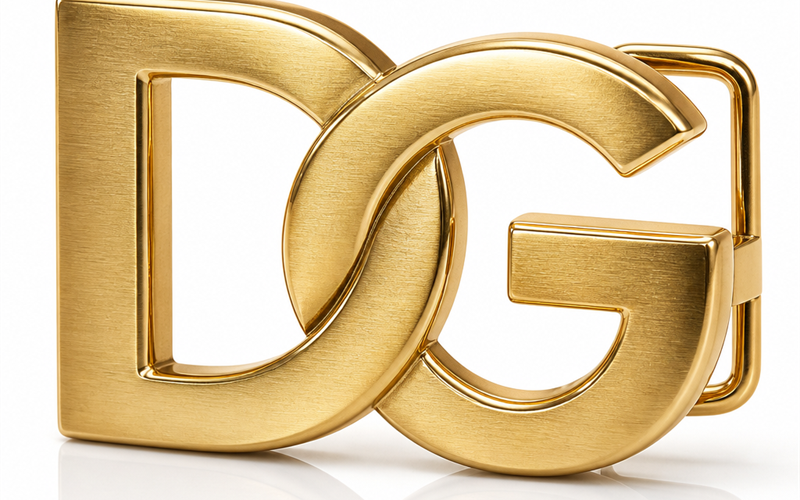
Through logo branding in the 20th century. As fashion houses built identities around recognizable emblems, the buckle became prime real estate — a place to stamp a monogram that signaled the brand (and price) instantly. Gucci's double-G buckle, introduced for accessories in 1964, became the archetype: the buckle as pure status branding rather than function or earned merit.

This was the buckle's final transformation, from fastener to logo. The Gucci double-G "for belt buckles and other accessory decorations was introduced in 1964," turning the buckle into a billboard for the brand — one of the emblems Highsnobiety dissects in its rundown of the inspirations behind fashion's best-known logos. Where the Roman fibula signaled military rank and the rodeo buckle signaled earned skill, the designer buckle signaled purchasing power — wealth made visible, a modern form of conspicuous status. Here's the buckle's meaning across eras:
| Era | Buckle form | What it signaled |
|---|---|---|
| Roman (1st c.) | Cingulum fibula | Military status |
| Medieval | Ornate bronze/brass, heraldic | Rank, lineage, craft |
| Frontier/Rodeo (1920s–50s) | Engraved Western/trophy | Earned skill, identity |
| Designer (1960s–) | Logo/monogram plaque | Wealth, brand status |
| Quiet-luxury (2020s) | Clean, logo-free | Taste, restraint |
Today the pendulum is swinging back toward restraint — the quiet-luxury era, where a clean logo-free buckle signals taste over branding, as we cover in why minimalist no-logo buckles are the new flex.
What does the buckle's history tell us about buying one today?
That the most enduring buckles signal quality and craft, not just a logo. Across two millennia, the buckles that retained meaning were the well-made ones — Roman bronze, medieval craft, hand-engraved trophies. The designer-logo era was a detour into pure branding, and the current quiet-luxury shift returns to valuing the make itself. A solid, well-crafted buckle is the timeless choice.

History rewards substance. The Gucci-logo moment showed that branding can sell, but the broader story — and the current trend — favors buckles judged by craftsmanship and material. That's the philosophy behind BELTLEY: solid brass and stainless buckles on full-grain leather, built to last and age well, without a logo tax. It's the buckle as the Romans and rodeo silversmiths understood it — quality you can feel. Explore that heritage approach in the full-grain leather belts and brass buckle belts collections.
The Bottom Line
The belt buckle's history is a 2,000-year story of shifting status. It began as Roman military hardware, where the cingulum's fibula marked a soldier's rank; grew ornate and heraldic through the medieval era as a marker of lineage and craft; became a badge of earned achievement in the American frontier and rodeo eras; and finally turned into a pure branding device in the designer age, archetyped by Gucci's GG. Now the pendulum swings back toward quiet, quality-first restraint. The throughline is that the buckles that endure are the well-made ones — which is exactly the standard BELTLEY builds to. Discover buckles made to last in the full-grain leather belts and men's belts collections.
Frequently Asked Questions
Q: When was the belt buckle invented?
Buckles date to antiquity, with the Roman cingulum militare — a military belt with metal fittings and a buckle (fibula) — as a well-documented early form worn by the 1st century. Buckles appeared in various cultures, but Rome's military belt is a clear early example of the buckle as both fastener and status marker.
Q: What did the Roman cingulum belt symbolize?
The cingulum militare was worn as a badge of military status by Roman soldiers and officials. Beyond holding equipment, it visibly marked the wearer as a member of the military, making it one of the earliest examples of a belt and buckle signaling identity and rank.
Q: Why did belt buckles become status symbols?
Because they sit at the center of the body and are highly visible, buckles became a natural place to signal identity — military rank in Rome, lineage in medieval heraldry, earned skill in rodeo, and brand/wealth in the designer era. Their visibility made them ideal status markers across history.
Q: When did the Gucci buckle logo start?
Gucci introduced its double-G logo for belt buckles and accessory decorations in 1964. It became the archetype of the buckle as pure branding — a recognizable monogram signaling the brand and its prestige, marking the designer era's transformation of the buckle into a status emblem.
%20that%20marked%20military%20status%20as%20...)