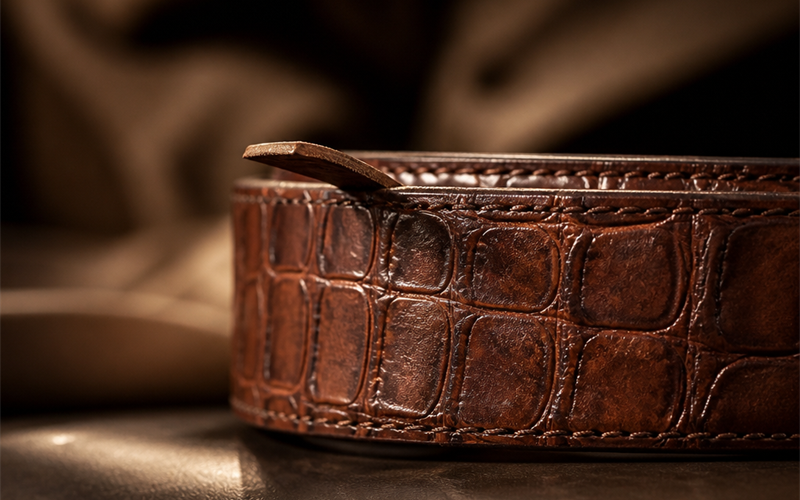
Bottega Veneta vs Hermès Belt: Which Quiet-Luxury Pick?
Quick answer: Both are "quiet luxury" belts with no loud logo — but they get there differently. Bottega Veneta signals status through its signature intrecciato woven leather, with essentially no visible branding; the material is the identity. Hermès signals through heritage hardware — the discreet H buckle — saddle-stitched craftsmanship, and a modular kit you keep for life. Choose Bottega for a modern, texture-led, logo-free look; choose Hermès for iconic hardware, heritage, and stronger resale.
Last updated: June 2026 • By BELTLEY
TL;DR:
- Bottega Veneta — signature intrecciato weave, no visible logo, modern and texture-led.
- Hermès — discreet H buckle, saddle-stitched, modular kit, heritage and resale strength.
- Most logo-free: Bottega — the weave is the only "branding."
- Strongest heritage + resale: Hermès — built and valued to last generations.
- Both are premium "quiet luxury" — recognized by those in the know, not by a logo.
- Price: both are four-figure territory; Hermès leans higher and holds value best.
Quiet luxury turned the loud logo belt into a faux pas — and pushed two names to the front: Bottega Veneta and Hermès. They share a philosophy (let the craftsmanship talk, not the logo) but express it in opposite ways. One makes the leather the signature; the other makes the hardware and heritage the signature. If you want a belt that reads as expensive to people who know, without screaming a brand name, this is the matchup that matters. Here's how they actually differ, and which suits you. For the wider field, start with what designer belt should I buy.
Bottega Veneta vs Hermès: Which Should You Choose?
Match what you value to the brand.

| What you want | Go with |
|---|---|
| Zero visible logo, pure material flex | Bottega Veneta — the intrecciato weave is the signature |
| Iconic, recognizable hardware | Hermès — the discreet H buckle |
| A modern, contemporary, texture-led look | Bottega Veneta |
| Heritage, saddle-stitch craft, lifetime build | Hermès |
| Best resale and investment value | Hermès — holds value best |
| A modular belt you swap straps on | Hermès — interchangeable kit system |
For the broader quiet-luxury vs logo debate, see designer belt brands vs luxury brands.
What makes a Bottega Veneta belt special?
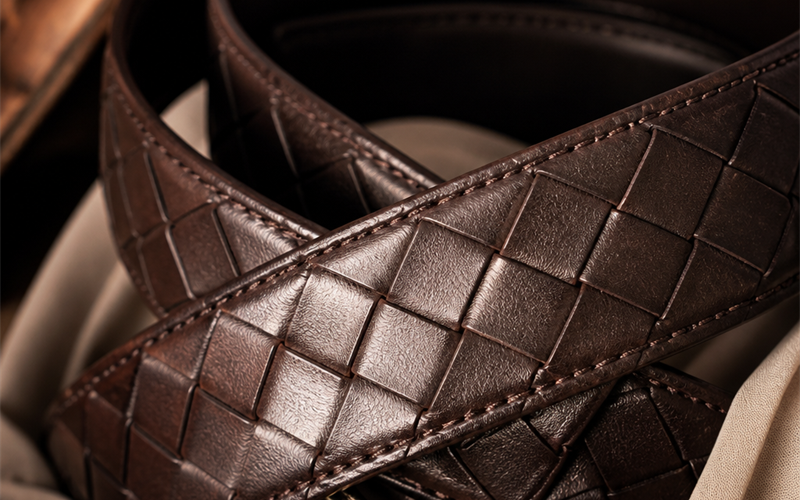
A Bottega Veneta belt is defined by its intrecciato weave — leather strips hand-woven into a distinctive diagonal texture — and by having essentially no visible logo. The weave itself is the brand signature, so the belt reads as luxury through material and craftsmanship rather than any name or symbol.
This is logo-free luxury taken to its logical end. Bottega operates on the idea that "when your own initials are enough," rejecting overt branding entirely and letting the intrecciato become "a dominant structural element" rather than a decorative detail. The weave began as a practical way to reinforce supple nappa leather and evolved into the house's whole design language. The result is a belt only the knowledgeable recognize — no plaque, no monogram, just an unmistakable texture. It's the purest "if you know, you know" belt in luxury.
What makes an Hermès belt special?
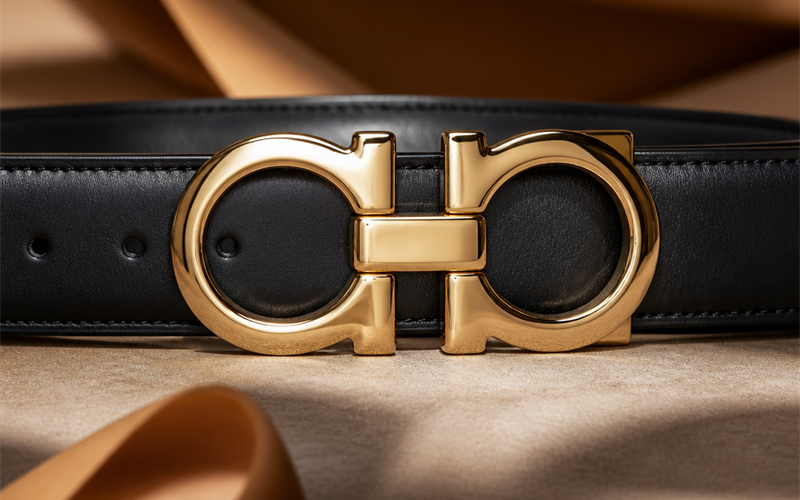
An Hermès belt is defined by its discreet hardware — most iconically the H buckle — its saddle-stitched, single-artisan craftsmanship, and its modular kit system that lets one buckle carry many straps. It signals luxury through heritage details and build quality rather than a loud logo.

Hermès doesn't eliminate branding so much as whisper it. Its discretion comes through "refined details—the 'H' clasp, saddle stitch, and discrete hot-stamping—that signal insider knowledge," all rooted in the brand's equestrian heritage. The belt is also a system, not a single object: the buckle and strap separate so you can swap colors and leathers for years, as we cover in Hermès belt kit vs full belt. And it's built to outlast you — Hermès is "engineered to last generations and repairable by artisans decades later." The H buckle is recognizable, but quietly so; you read it as taste, not as a billboard.
A tale of two heritages
The two houses arrive at quiet luxury from opposite histories, and that backstory is half of what you're buying.
Bottega Veneta is the younger, craft-obsessed Italian house from Vicenza, founded in 1966. Its intrecciato weave wasn't born as a logo at all — it began as a practical fix. Early machines couldn't stitch the supple leathers Bottega favored without tearing them, so artisans hand-wove thin strips together for strength. That problem-solving weave became the brand's identity, and the house leaned into anonymity with its famous early slogan about your own initials being enough. Bottega is, in other words, a house built on technique first and branding never.
Hermès is the institution — a Parisian maison founded in 1837 that began as a harness and saddle workshop for European nobility. Everything about its leather goods still traces back to that equestrian root: the saddle stitch, the obsessive hand-finishing, the idea that an object should outlive its owner. The belt's modular kit system, the discreet hardware, the made-to-be-repaired construction — all of it is the saddlery mindset applied to a wardrobe. Where Bottega is a modern atelier perfecting a single technique, Hermès is two centuries of accumulated craft codified into a house style.
That difference matters for a belt buyer because you're not just choosing a look — you're choosing which story you want on your waist. Bottega says contemporary mastery; Hermès says living heritage.
Bottega Veneta vs Hermès: side-by-side
Here's how the two stack up across what drives the decision:

| Feature | Bottega Veneta | Hermès |
|---|---|---|
| Signature | Intrecciato woven leather | H buckle + saddle stitch |
| Logo visibility | None — the weave is the "logo" | Discreet hardware, subtle stamp |
| Aesthetic | Modern, sculptural, texture-led | Heritage, refined, iconic |
| Construction | Hand-woven supple leather | Single-artisan, modular kit |
| Reversible/modular | Typically fixed | Yes — swap straps on one buckle |
| Resale/value | Strong, but moment-led | Strongest — deepens over generations |
| Best for | Logo-free modern flex | Heritage, hardware, investment |
The split is clean. Bottega is about "radical materiality and sculptural abstraction" — contemporary, tactile, of-the-moment. Hermès is about "enduring legacy" through perfected traditional technique, with value that deepens over generations. Neither is "better"; they're two different definitions of quiet luxury. Bottega is the modernist; Hermès is the institution.
Which holds its value better?
Hermès holds its value better. It's widely considered the global benchmark for luxury resale, with pieces engineered to last generations and prized as investments. Bottega Veneta holds value well too, but its appeal is more tied to current taste, so Hermès is the safer long-term store of value.

If resale is part of your calculus, Hermès has the edge — its craftsmanship and brand gravity mean a well-kept belt retains demand for decades, the same dynamic that makes its bags investment pieces. Bottega's intrecciato is timeless in look but more fashion-cycle sensitive as a brand, so resale can swing with trends. For a belt you might pass down or sell on, Hermès is the more reliable bet; for a belt you'll simply wear and love now, Bottega's value story matters less.
Key stat: Both are four-figure "quiet luxury" belts with no loud logo — but they signal differently: Bottega through material (the intrecciato weave) and Hermès through heritage hardware (the H buckle) plus generational resale value. You're choosing how you want to whisper status, not whether you do.
How do you style each belt?
Style a Bottega Veneta belt as the texture in an otherwise clean outfit — the intrecciato weave reads best against solid, unfussy pieces where it can be the quiet detail. Style an Hermès belt as the discreet anchor of a tailored or smart-casual look, letting the H buckle catch the light without dominating.
Because Bottega has no logo, its belt leans into modern, minimalist outfits: a fine-gauge knit, tailored trousers, clean sneakers or loafers. The weave does the talking, so you want the rest of the look calm enough to let it. It's the belt for someone whose whole wardrobe is built on material and cut rather than labels — it disappears into a considered outfit and rewards a closer look.
Hermès, with its recognizable buckle, flexes a little more deliberately. It pairs naturally with sharp tailoring, crisp shirting, and the kind of smart-casual uniform where a single discreet signal of quality lands. The reversible strap also makes it practical: one belt covers a black-leather formal side and a brown or canvas casual side. If you dress across formality levels in a week, that versatility is real value, not just a gimmick.
A useful rule: Bottega is the belt you notice second, after the outfit; Hermès is the belt that quietly confirms the outfit was expensive all along.
Which belt is right for you?
Choose Bottega Veneta if you want the most logo-free, modern, texture-driven belt and you love the idea of the material being the only signature. Choose Hermès if you want iconic hardware, saddle-stitched heritage craftsmanship, a modular swap-strap system, and the strongest resale value.

Think about what "quiet" means to you. If it means no identifiable branding at all — just beautiful leather — Bottega wins. If it means a discreet but recognizable icon backed by centuries of craft, Hermès wins. Both ask a serious price, so let the philosophy decide. And there's a third path worth naming: if you love quiet-luxury looks — clean lines, real leather, no logo tax — but not the four-figure entry, a full-grain leather belt with a solid, understated buckle delivers the same logo-free confidence with honest materials. The point of quiet luxury was never the price; it was the restraint.
The Bottom Line
Bottega Veneta and Hermès are two answers to the same question: how do you look expensive without a logo? Bottega makes the leather itself the signature through its intrecciato weave, with no visible branding — the modern, sculptural, texture-led pick. Hermès makes heritage and hardware the signature through its discreet H buckle, saddle stitching, modular kit, and best-in-class resale — the institutional, investment-grade pick. Choose Bottega to flex pure material, Hermès to flex craft and legacy. And if the real goal is quiet, logo-free confidence on a sane budget, a well-made designer-quality leather belt gets you there without paying for the name. Decide which silence speaks to you.
Frequently Asked Questions
Q: Is Bottega Veneta or Hermès better for a belt?
Neither is universally better — they suit different tastes. Bottega Veneta is best for a completely logo-free, modern belt where the intrecciato weave is the signature. Hermès is best for iconic hardware, heritage craftsmanship, a modular swap-strap system, and stronger resale value. Choose by which philosophy you prefer.
Q: What is the Bottega Veneta intrecciato weave?
Intrecciato is Bottega Veneta's signature technique of hand-weaving leather strips into a distinctive diagonal pattern. It started as a way to reinforce supple leather and became the brand's identity. On a belt, the weave acts as the "logo," letting the material signal luxury without any visible branding.
Q: Why do Hermès and Bottega belts have no big logo?
Both follow a "quiet luxury" philosophy that values craftsmanship over visible branding. Bottega removes logos entirely and lets the intrecciato weave speak; Hermès uses discreet hardware like the H buckle and subtle stamping. The idea is to be recognized by those in the know, not by a logo.
Q: Which holds value better, Bottega Veneta or Hermès?
Hermès generally holds value better and is considered the global benchmark for luxury resale, with pieces built to last generations. Bottega Veneta holds value well but is more tied to current taste. For long-term resale or an heirloom, Hermès is the safer bet.
Q: Are Bottega Veneta and Hermès belts worth the price?
It depends on what you value. You're paying for exceptional craftsmanship and quiet status, not durability you can't get elsewhere. If logo-free prestige and heritage matter to you, they can be worth it. If you mainly want the clean, no-logo look, a quality full-grain leather belt delivers it for far less.