Best Belt for Teachers: Style Meets Durability
TL;DR:
- The best belt for teachers is full-grain leather, 32–38mm wide, matching shoes — chosen for durability over seasons of daily wear, not just daily appearance
- School level matters: elementary teachers need maximum durability and comfort; secondary and university teachers benefit from a sharper professional finish
- A quality belt bought once outlasts four or five cheap replacements — the math favors the initial investment, especially on a teacher's budget
Teaching is physically demanding in ways most office jobs are not. You spend six or more hours on your feet, move between sitting on a chair to crouching at a student's desk, carry bags, write on boards, and go through all of it five days a week for ten months a year. A belt that looks fine on day one but cracks by spring break is not a good belt for a teacher. Here is what actually holds up — and looks good doing it.
What Is the Best Belt for Teachers?
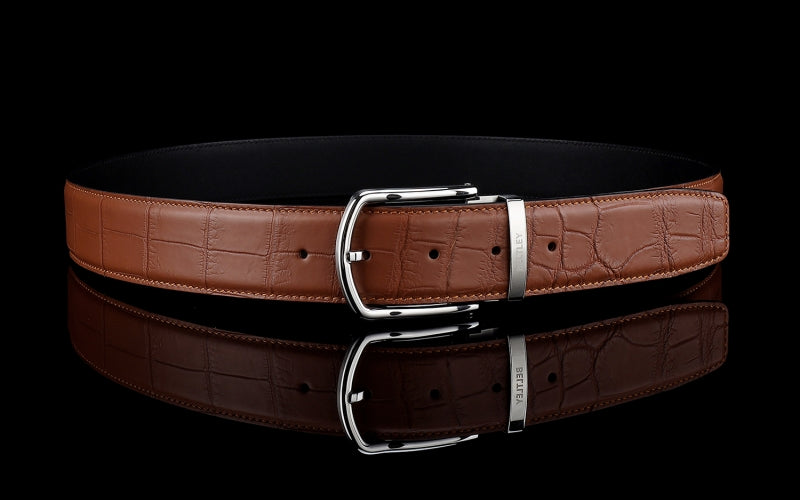
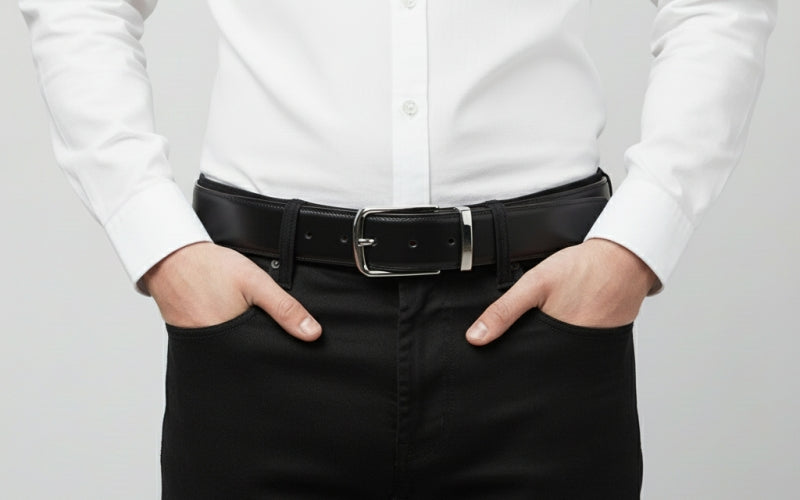
The best belt for teachers is a full-grain leather belt, 32–38mm wide, in black or dark brown, with a simple metal buckle. Full-grain leather is the only material that withstands daily bending, sitting, and movement without cracking at the stress points. Width depends on school level and dress code — narrower for formal secondary and university settings, wider for business-casual elementary contexts.

According to NEA Member Benefits' professional wardrobe guide for teachers, teachers should have belts that match each pair of shoes they wear regularly — meaning the belt is a core wardrobe investment, not an afterthought. That investment pays off most when the belt is built from material that lasts. See Are Full-Grain Leather Belts Worth It? for the full durability breakdown.
Belt by School Level: A Practical Breakdown
Teachers' physical demands and dress code expectations shift significantly by school level. A one-size answer doesn't serve an elementary PE-adjacent classroom teacher the same way it serves a university lecturer.
| School Level | Dress Code Standard | Recommended Belt Width | Key Priority |
|---|---|---|---|
| Elementary (K–5) | Business casual, active | 35–38mm (1.38"–1.5") | Durability, comfort, flexibility |
| Middle School (6–8) | Business casual | 35mm (1.38") | Balance of polish and practicality |
| High School (9–12) | Business casual to professional | 32–35mm (1.25"–1.38") | Professional finish, daily wear |
| University / Higher Ed | Professional to smart-casual | 32–35mm (1.25"–1.38") | Polish, matches suit or blazer |
| Private / Independent School | Business professional | 32–35mm (1.25"–1.38") | Conservative, high-quality finish |
Research on teacher dress codes published by Education Week confirms that approximately 78% of public school districts maintain formal dress code policies for educators, with consistent baseline expectations — professional enough to model standards, comfortable enough to teach in. The belt is part of that baseline.
What Belt Material Lasts Longest for Teachers?
Full-grain leather lasts the longest for teachers. It is the outermost layer of the hide — the densest, most structurally intact section — and it flexes without cracking under daily movement. A quality full-grain belt worn five days a week through an academic year and properly maintained can last a decade or more without visible deterioration.

The alternatives don't hold up. Genuine leather — the most common material in budget belts — is made from lower hide layers bonded with adhesives and coated with artificial finish. The Truth About Leather Belt Durability documents exactly what happens to lower-grade leather under daily stress: the coating peels at flex points (the prong hole, the buckle bar) within months of regular use. For a teacher buying a belt in September, that means a visibly degraded belt by spring.
The math is straightforward: a $40 genuine leather belt replaced every 18 months costs roughly $27 per year. A $150 full-grain leather belt lasting 10 years costs $15 per year — and looks better throughout. At BELTLEY, every full-grain leather belt carries a 10-year warranty on materials and construction, which means the cost-per-year math is effectively guaranteed.
What Belt Width Works Best for Teacher Dress Pants?
For most teachers wearing standard business-casual dress pants, 35mm (1.38 inches) is the most versatile single width. It threads cleanly through both dress trouser loops and heavier chino-style loops, maintains a professional proportion, and works across a range of outfit formality levels — from dress shirt and blazer to a smart casual polo and slacks.

Elementary teachers working in more active environments, or those whose school dress code trends casual, can move up to 38mm (1.5 inches) — particularly with chinos, khakis, or heavier-weight trousers. The wider belt reads slightly more casual but adds to the belt's visual presence and feels more proportional with fuller-cut casual trousers.
Narrower options — 32mm and under — are better suited for university lecturers or private school teachers wearing more formal attire, where a slim dress belt under a blazer is the appropriate choice. The Ultimate Guide to Standard Belt Width in MM covers every width-to-context combination in detail.
Does a Teacher's Belt Need to Handle Active Days?
Yes — and this is where most belt guides for professionals fall short. Teaching is not desk work. An elementary teacher might crouch at student desks, sit cross-legged on a reading rug, reach overhead to pin work on a bulletin board, and carry stacks of materials across campus — all before lunch. The belt experiences real mechanical stress that an office belt simply doesn't.
The stress points are specific: the prong hole (where the pin punches through the leather repeatedly), the buckle bar (where the leather loops back on itself under tension), and the tail end (where the leather bends through the last loop). These are where cheap belts fail first. According to Real Men Real Style's career wardrobe guide for teachers, teachers should prioritize durability in accessories above decorative appeal — particularly for items that experience daily physical stress.
Full-grain leather's structural advantage is density. The natural grain surface hasn't been sanded away, which means the fiber structure beneath it is intact and can flex without separating. Properly maintained with occasional conditioning, it handles the prong-hole and buckle-bar stresses of daily teaching without visible wear for years. BELTLEY's leather care guide shows exactly what that maintenance looks like — it takes about ten minutes twice a year.
Best Belt for Female Teachers
Female teachers have more flexibility in how a belt functions within their outfit — it can be a waist-defining accessory over a dress or blouse, a practical trouser belt, or a styling element that ties a neutral outfit together. The core principles remain the same: quality leather, appropriate width for the garment, and color coordinated with shoes.

For trouser wear, 25–32mm (1"–1.25") is the most versatile width for women's dress trousers and chinos. According to Career Addict's teacher dress code guide, accessories for female teachers should complement the outfit without drawing distraction — which means a slim, smooth leather belt in black or dark brown handles the widest range of classroom contexts.
For belted dresses, cardigans, or to define the waist of a blazer-and-trouser combination, a slightly wider belt (32–38mm) in a complementary color — tan, cognac, or burgundy — adds personality within professional limits. Elementary teachers especially often use the belt as a small style signature that engages students without violating dress code. Browse women's belts organized by width and color for specific options.
How to Get the Most Value from a Teacher's Belt
Teachers earn less than comparably educated professionals in most other fields — data from the National Education Association's annual teacher salary report reflects consistent wage gaps versus other degree-required occupations. This makes "buy once, buy well" more than a style principle — it is a financial strategy.

Three steps maximize belt value:
1. Choose full-grain over genuine leather from the start. The price difference is $50–$100. The lifespan difference is 8–10 years versus 1–2 years.
2. Rotate between two belts. Leather needs 24–48 hours to recover its shape after a full day of wear. Two belts alternated daily last significantly longer than one belt worn every day.
3. Condition twice a year. A $10 leather conditioner applied in September (start of school year) and March (mid-year) prevents the drying and cracking that shortens belt life. This is the single highest-return maintenance step.
A dark brown leather belt and a black leather belt rotating across a teaching week covers every outfit combination in most school dress codes. That's the full investment — two belts, used well, for a decade.
The Bottom Line
The best belt for teachers is one built for the physical reality of the job: full-grain leather that flexes without cracking, a width calibrated to school level and dress code, and a color that matches shoes. For elementary teachers the priority is durability and comfort under active conditions; for secondary and university teachers it shifts toward professional finish and longevity.
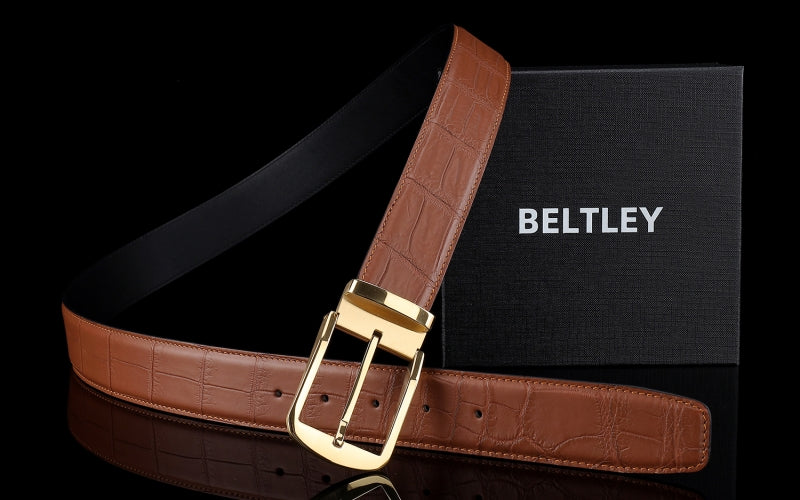
Teaching demands more from a wardrobe than most people outside the profession realize. The belt is a small part of that — but it's visible every day, in every parent meeting, every classroom observation, every hallway conversation. Getting it right once is easier than replacing it repeatedly. BELTLEY's full-grain dress belt collection is built for exactly that kind of daily service, with a 10-year warranty that makes the investment straightforward.
Frequently Asked Questions
Q: What kind of belt should a teacher wear to school?
A teacher should wear a full-grain leather belt, 32–38mm wide depending on school level, in black or dark brown matched to their shoes. Full-grain leather handles the active movement of a teaching day without cracking, and maintains a professional appearance through years of daily wear — important for a profession where the same clothes cycle weekly.
Q: What is the best belt width for teacher dress pants?
35mm (1.38 inches) works for most teacher dress pants and chinos. Elementary teachers in more active settings can go up to 38mm. University and private school teachers in more formal attire should stay at 32–35mm. The key is matching belt width to the belt loop size on your specific trousers.
Q: How long should a teacher's belt last?
A full-grain leather belt with basic care (conditioning twice a year, alternating between two belts) should last 8–12 years of daily teaching wear. A genuine leather belt typically lasts 12–18 months before peeling or cracking under the same conditions. The cost-per-year difference makes full-grain the more economical long-term choice.
Q: Can a female teacher wear a colored belt to school?
Yes, within the limits of the school's dress code. Most school dress codes allow accessories that complement professional attire without being distracting. A tan, cognac, or burgundy belt worn with coordinating shoes and a neutral outfit reads as polished and intentional. Avoid novelty buckles, oversized hardware, or very bright colors in formal school environments.
Q: What belt should a teacher wear to a parent-teacher conference or school interview?
For a parent-teacher conference or school interview, use the same standard as a business professional meeting: black smooth leather belt, 32–35mm, matched to black dress shoes. This is the most conservative and authoritative combination, appropriate for any formal school setting regardless of what you wear in the classroom day-to-day.