Are LV Belts Worth Buying Used? (Pre-Owned Risk Guide)
Quick answer: A used Louis Vuitton belt can be worth it — you skip a chunk of the retail markup, and genuine LV belts hold value well. But the secondary market is flooded with convincing fakes, and the two most common condition problems (cracked coated canvas and peeling edges) are the ones LV won't repair. Buy used only if you can authenticate the belt and inspect its condition closely. If the price looks too good, it's almost certainly fake.
Last updated: June 2026 • By BELTLEY
TL;DR:
- Used LV belts can be worth it — they hold value, so resale prices stay high.
- The #1 risk is counterfeits — "super fakes" are everywhere on resale platforms.
- A suspiciously low price is the biggest red flag — LV never discounts, so cheap = fake.
- Inspect for cracked canvas and peeling edges — the failures LV refuses to repair.
- Personalized (hot-stamped) belts sell cheaper but are worth less to resell again.
- Buy from authenticated platforms, demand the date code, and check stitching and buckle weight.
Buying a Louis Vuitton belt second-hand is tempting math: the leather is the same, the buckle is the same, and you dodge part of the boutique premium. The problem is that the used LV market is exactly where counterfeiters do their best work, and where sellers quietly offload belts with the damage LV can't fix. A used LV belt is genuinely worth buying — if you know how to separate a real bargain from an expensive mistake. Here's the full risk checklist, starting with what these belts are even made of, which we cover in what Louis Vuitton belts are made of.
Should You Buy That Used LV Belt?
Match the listing in front of you to the smart call.

| The situation | What to do |
|---|---|
| Price is far below typical resale | Walk away — LV never discounts; it's almost certainly fake |
| Sold through an authenticated platform | Safer buy — pay for the verification, not the risk |
| Private seller, no date code shown | Demand the date code photo; no proof, no deal |
| Edges peeling or canvas cracked | Pass or lowball — LV won't repair either |
| Belt is hot-stamped with someone's initials | Only if you'll keep it; it resells for less |
| Heavy buckle, crisp engraving, matte stitching | Strong signs of authentic — inspect the rest |
If you're new to spotting fakes, read how to tell if an LV belt is real before you commit to anything.
Are used Louis Vuitton belts worth buying?
Used Louis Vuitton belts can be worth buying because LV holds its value well, so a genuine pre-owned belt is real leather and hardware at a discount to retail. The catch is risk: the secondary market is saturated with counterfeits and with belts carrying damage LV won't repair, so the savings only materialize if you authenticate and inspect carefully.

The value case is real. LV belts depreciate slowly compared with most goods, and classic, recognizable styles — like the Initiales — hold up best on resale. That same strength is the warning, though. Because authentic LV holds value, a listing priced well under the going rate isn't a deal; it's a signal. As one LV resale analysis bluntly notes, the brand "never discounts its products" and warns that discounted LV items online are "invariably fake." Worth-it used buying means paying close to fair resale, not chasing a price that's too good to be true.
What's the biggest risk with a used LV belt?
The biggest risk is counterfeits. Fake Louis Vuitton belts — including high-quality "super fakes" — dominate the resale market, and the best ones are convincing enough to fool a casual buyer. Counterfeiting is a massive global trade, so a used LV belt is one of the most-faked items you can buy second-hand.
This isn't a fringe problem. Counterfeit goods are an enormous share of world commerce — by OECD estimates, fakes ran to roughly $464 billion, about 2.5% of global trade, and accessories like belts are a favorite target because they're small, high-margin, and easy to copy at a glance. The danger with a used purchase is that you lose the protection of buying new from the boutique. You're trusting the seller, the photos, and your own eye — which is exactly why authentication has to come before the money.
Key stat: Counterfeits make up an estimated 2.5% of global trade — about $464 billion — and luxury accessories like LV belts are among the most-copied items. On the used market, your single most reliable fake-detector is price: Louis Vuitton never discounts, so a cheap LV belt is a fake belt.
How do you authenticate a used LV belt?
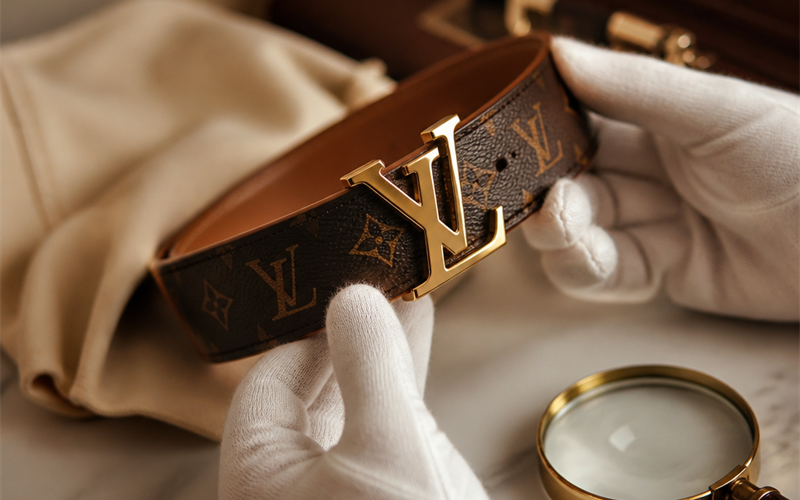
Authenticate a used LV belt by checking the date code, stitching, buckle weight, and monogram alignment. A genuine belt has a stamped date code (two letters plus four digits) inside near the buckle, even matte-thread stitching, a heavy solid buckle with crisp deep engraving, and monogram canvas that's never cut mid-symbol at the buckle end.

Work through the tells methodically:
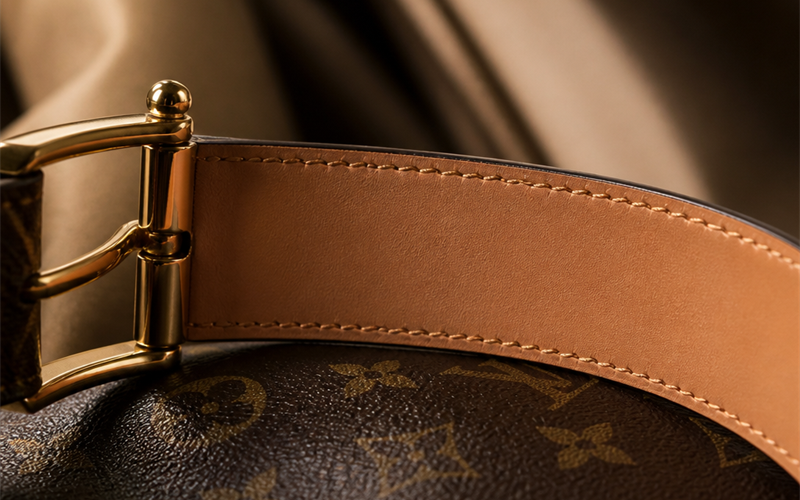
- Date code — a genuine belt has a stamped code (two letters, four digits) inside near the buckle. No code, or a sloppy one, is a red flag.
- Stitching — authentic stitching is even and uses matte thread; on fakes the thread reads as glossy. As one authentication guide puts it, the original's stitching is executed with matte thread while the "thread on the fake belt is glossy."
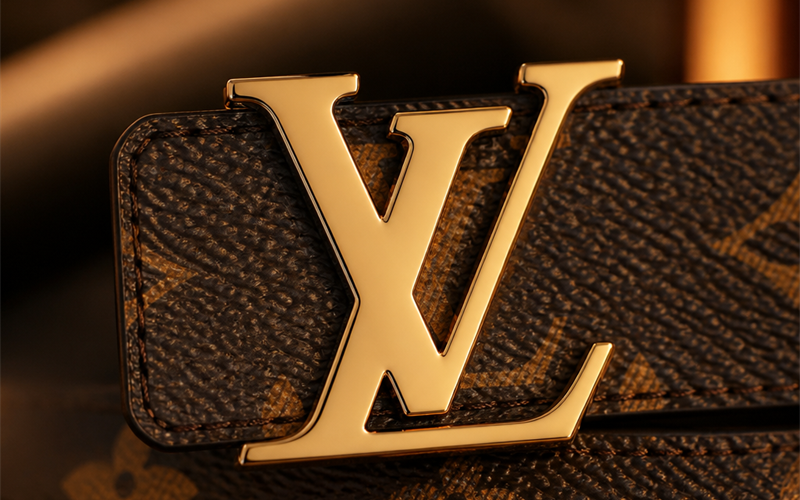
- Buckle — should feel heavy and solid, with sharp, deep engraving. The same guide notes a real Initiales buckle "gleams in a pale silver hue" with sharper carving, while the fake runs darker and softer.
- Monogram alignment — the canvas pattern is placed deliberately and isn't chopped through the middle of an LV or flower at the buckle end.
- Print and corners — crisp, defined print and cleanly rounded corners on authentic; muddy print and squared corners on fakes.
When several of these line up wrong, stop. For a deeper walkthrough, see how can you tell if a Louis Vuitton belt is real and are Louis Vuitton belts real leather or fake.
What condition problems should you check for?
Check for cracked coated canvas, peeling edges, and hot-stamped personalization. Cracked canvas and peeling edges are the two failures Louis Vuitton refuses to repair, so a belt with either is a dead end you'd be paying for. Personalization lowers value and shrinks the future resale pool.

This is where used buying gets people. A belt can look fine in a thumbnail and be unrepairable in hand. Coated-canvas cracking is the classic LV belt failure — and LV won't fix it, as we cover in Louis Vuitton belt repair. Peeling edge paint is the other one, explained in why LV belt edges crack first. And a hot-stamped belt — someone else's initials pressed into the leather — sells cheaper for a reason: personalization makes a piece "more you, but it's often less liquid," as the resale analysis above warns, so you'd inherit that markdown when you resell. More on that trade-off in LV belt hot stamping.
| Condition issue | What it means for you |
|---|---|
| Cracked coated canvas | LV won't repair it — value killer, usually a pass |
| Peeling edge paint | LV can re-glaze, but it returns — price it in |
| Tarnished/scratched buckle | Often refurbishable; minor if leather is sound |
| Hot-stamped initials | Buy cheaper, but it resells for less later |
| Stretched or extra-punched holes | Signals heavy wear and lowers value |
Where should you buy a used LV belt?
Buy from platforms with built-in authentication — services that verify items before resale — rather than unvetted private sellers. Paying a little more through a vetted reseller buys you authentication and return protection, which is the whole point when counterfeits are this common.

Private marketplace listings can be genuine, but you're absorbing all the risk yourself. A reputable reseller that authenticates inventory, or a seller who'll send clear photos of the date code, stitching, and buckle on request, dramatically lowers your odds of buying a fake. If a seller won't show the date code or dodges close-up requests, treat that as your answer. The goal is simple: never let "it looked real in the pictures" be your entire authentication process.
The Bottom Line
Used LV belts are worth buying when the belt is genuine and the condition is sound — you get real leather and hardware below boutique pricing, and LV's slow depreciation means a good one holds its value. The risks are equally real: a saturated counterfeit market, a price that signals fakes when it's too low, and the two condition failures (cracked canvas, peeling edges) LV won't repair. Authenticate by date code, stitching, and buckle, inspect condition in hand, and buy through a vetted platform. And if the hassle of policing fakes and unrepairable canvas is the part you'd rather skip, a brand-new full-grain leather belt with a real warranty gives you guaranteed authenticity and repairable construction from day one — no detective work required. Buy used smart, or buy honest and skip the risk entirely.
Frequently Asked Questions
Q: Are used Louis Vuitton belts worth it?
They can be, because LV holds value and a genuine pre-owned belt is real leather and hardware below retail. But the used market is full of fakes and belts with unrepairable damage, so the savings only pay off if you authenticate the belt and inspect its condition before buying.
Q: How can you tell if a used LV belt is fake?
Check the date code (two letters, four digits inside near the buckle), the stitching (even, matte thread on authentic versus glossy on fakes), the buckle (heavy and crisply engraved), and the monogram alignment. The fastest red flag is price — LV never discounts, so a cheap belt is almost always fake.
Q: Why are used LV belts so cheap sometimes?
A suspiciously low price usually means the belt is counterfeit, since Louis Vuitton doesn't discount and genuine belts hold value. It can also mean hidden damage like cracked canvas or peeling edges, or personalization that lowers resale value. Cheap is a warning, not a deal.
Q: Does a hot-stamped LV belt lose value?
Yes. Personalized initials make a belt harder to resell because the next buyer doesn't share them, so hot-stamped belts sell for less. You may pay less buying one, but you'd inherit that lower value when you go to resell it again.
Q: Where is the safest place to buy a pre-owned LV belt?
Buy from resale platforms that authenticate items before listing them, rather than unvetted private sellers. Paying slightly more for verification and return protection is worth it given how common fakes are. If a private seller won't show the date code and close-up photos, walk away.