LV Belt Hot Stamping: Should You Personalize It?
Quick answer: Hot stamping is Louis Vuitton's free service that heat-presses your initials and stripes onto leather in your choice of foil colors. Should you do it to a belt? Only if you're keeping it forever or gifting it — the personalization is permanent, it can fade, and it sharply lowers resale value. If there's any chance you'll sell it, leave the belt unstamped.
Last updated: June 2026 • By BELTLEY
TL;DR:
- Hot stamping is free at LV and heat-presses initials/stripes in 17–18 foil colors.
- It's mainly offered on small leather goods and luggage — belt eligibility is limited, so confirm first.
- The mark is permanent and can fade over time depending on placement.
- It drops resale value noticeably — one example showed roughly a 27% hit.
- Stamp it if you'll keep or gift it; skip it if you might resell.
Walk into a Louis Vuitton boutique and they'll offer to monogram your purchase for free — initials, a couple of racing stripes, your pick of foil color. It feels like a no-brainer luxury perk. On a belt, though, two things complicate it: most LV belts are coated canvas that won't take a stamp, and personalization quietly torpedoes resale value. The service is genuinely lovely for a keeper or a gift, and a genuinely bad idea for anything you might flip. Before you commit your initials to a $500 belt, here's the full picture — including what LV belts are even made of, which we cover in what Louis Vuitton belts are made of.
Should You Hot-Stamp Your LV Belt?
Match your intention to the smart call.

| Your situation | What to do |
|---|---|
| It's a forever belt you'll never sell | Stamp it — it's free and makes it yours |
| It's a gift or heirloom to pass down | Stamp it — initials add sentiment and meaning |
| You might resell it one day | Don't — personalization cuts resale sharply |
| You want a theft or mix-up deterrent | Stamp it — it clearly marks the belt as yours |
| It's a coated-canvas LV belt | Often can't be stamped — confirm eligibility first |
If resale is even a maybe, weigh it against how well LV belts hold up and hold value before deciding.
What is Louis Vuitton hot stamping?
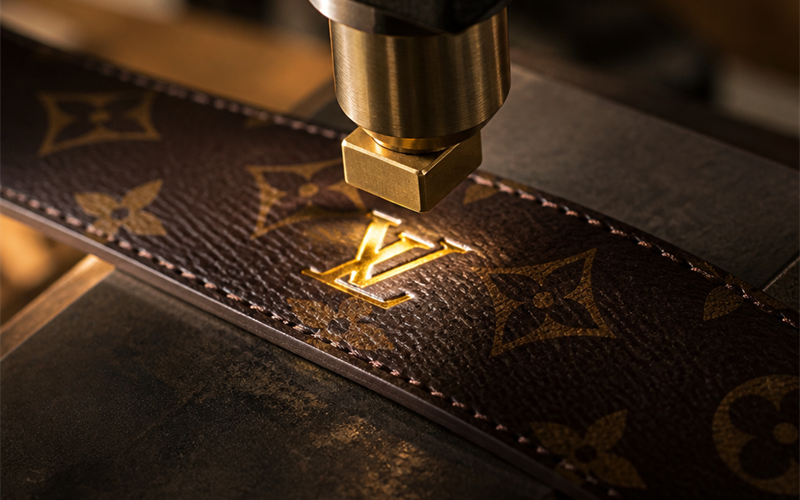
Hot stamping is Louis Vuitton's complimentary personalization service that uses heat and pressure to press metallic foil — your initials, numbers, or stripes — into the leather. You choose from a range of foil colors and styles, and the service is free when you buy the item from LV.

The process itself is standard foil work: as the technical definition of hot stamping puts it, "pressure and heat cause the relevant sections of the foil to become detached from the carrier material and become bonded with the printing surface." LV offers it in 17 to 18 foil colors with millions of combinations, and it's confirmed free at LV boutiques. The catch for belt buyers is eligibility — the service is built around small leather goods, luggage tags, and select luggage, not every product.
Can you even hot-stamp a Louis Vuitton belt?
Not always. Hot stamping is designed for small leather goods and luggage, and many LV belts are coated canvas that doesn't take a foil stamp the way smooth leather does. Eligibility depends on the specific belt and material, so you have to confirm with LV before assuming it's an option.

This trips people up because the iconic Monogram and Damier belts are coated canvas, not a stampable leather surface. A plain leather LV belt may be eligible; a coated-canvas one usually isn't. And the LV Initiales belt is a different thing entirely — its "initials" are part of the buckle design, not a hot stamp. So step one isn't choosing a foil color; it's asking LV whether your exact belt can be personalized at all. If you're still verifying the belt itself is genuine, our guide on how to tell if an LV belt is real helps.
Does hot stamping lower an LV belt's resale value?
Yes, significantly. Personalized initials make an item far harder to resell because the next buyer doesn't share your initials, so the secondary-market value drops. One real example showed a personalized piece losing roughly 27% of its resale price compared with an unstamped equivalent.

This is the single biggest reason to pause. The same foil that makes the belt feel personal makes it feel "used by someone else" to a future buyer. As Petite in Paris concluded after weighing it, hot stamping is best avoided if resale matters — citing its permanent nature, fading risk, and resale depreciation. Luxury resale rewards pristine, unaltered pieces, the same way a hand-punched hole or a trimmed strap lowers value. If you treat designer belts partly as an asset, personalization works against you.
Key stat: LV hot stamping is free and offers 17–18 foil colors with millions of combinations — but personalization can cut resale value by roughly 27%. The service costs nothing up front and a real amount on the back end.
What are the pros and cons of hot stamping a belt?
Hot stamping makes a belt uniquely yours and is free, but it's permanent, can fade, and lowers resale. The decision hinges entirely on whether the belt is a keeper or a future resale. There's no in-between — once it's stamped, it's stamped.

| Hot-stamped belt | |
|---|---|
| Cost | Free with purchase |
| Personal touch | High — initials, stripes, your colors |
| Gift/heirloom value | Strong — sentimental and unique |
| Permanence | Permanent — can't be undone |
| Durability | Foil can fade depending on placement |
| Resale value | Drops noticeably (≈27% in one example) |
The pattern is clear: stamping adds emotional value and subtracts financial value. Choose based on which one you care about for this particular belt. For a piece meant as a gift, the math tilts toward stamping — see our leather gifts for him collection for the same keep-it-forever logic.
The Bottom Line
LV hot stamping is a lovely, free way to make a belt personal — initials in your foil color, pressed right into the leather. But it's permanent, it can fade, and it cuts resale value enough to matter, so it's only the right move on a belt you'll keep forever or give as a gift. Confirm your belt is even eligible first, since coated-canvas LV belts usually can't be stamped. And if your real goal is a personal, lasting belt without the resale penalty or the logo tax, a genuine full-grain leather belt you actually wear and patina yourself becomes personal the honest way — through years, not foil. Stamp for sentiment, skip it for resale.
Frequently Asked Questions
Q: Is Louis Vuitton hot stamping free?
Yes, hot stamping is complimentary when you buy the item from Louis Vuitton, in store or online for eligible products. You choose your initials, stripes, and foil color at no extra charge — the cost shows up later as reduced resale value, not upfront.
Q: Can I hot-stamp a Louis Vuitton belt?
Sometimes. Hot stamping is designed for small leather goods and luggage, and many LV belts are coated canvas that can't be stamped. A smooth-leather belt may qualify, but confirm eligibility with LV first, since not every belt or material is supported.
Q: Does hot stamping reduce resale value?
Yes, noticeably. Personalized initials make an item harder to resell because the next owner doesn't share them, and one example showed roughly a 27% drop. If you might sell the belt, leave it unstamped to protect its value.
Q: Does LV hot stamping fade?
It can. The foil is pressed into the surface, and depending on placement and wear, the initials may fade over time. On a belt, areas that flex or rub against clothing are more prone to fading than protected spots.
Q: Should I personalize my Louis Vuitton belt?
Personalize it if you'll keep it forever or give it as a gift, since it's free and meaningful. Skip it if you might resell, because the permanent mark lowers value. Decide based on whether the belt is sentimental or an asset.