Are Crocodile Handbags Worth Anything? Here's the Honest Answer
TL;DR: Quick Answer
Maybe you inherited one from your grandmother. Maybe you spotted one at an estate sale and you're wondering if it's a hidden gem or just an old purse. Or maybe you're thinking about buying one and want to know if you'd be throwing money away.
The question — are crocodile handbags worth anything? — has a surprisingly complicated answer. Because some crocodile bags sell for $50 at flea markets. And some sell for $380,000 at Sotheby's. Same animal, wildly different outcomes.
Let's sort through the noise so you actually know what you're looking at.

Which Croc-Bag Situation Are You In?
The answer changes completely by scenario:
| Your situation | Go with |
|---|---|
| Inherited a vintage croc bag | Authenticate before assuming either way — maker's marks and scale patterns decide if it's $50 or $5,000. |
| Buying vintage as an investment | Only Hermès croc reliably appreciates; everything else, buy because you love it. |
| Want a new croc bag without auction prices | Made-to-order DTC: BELTLEY's crocodile handbags run $1,699–$2,899, built in ~3 weeks. |
| Spotted a "$200 crocodile bag" online | That's embossed cowhide — real croc hides cost more than that before anyone sews them. |
New, certified, and a fraction of fashion-house pricing: BELTLEY's crocodile accessories.
So, Are Crocodile Handbags Actually Worth Something?
Short answer: yes. But "something" could mean $50 or $50,000 depending on a handful of factors.
A genuine crocodile handbag holds value because of the material itself. Crocodile leather is one of the rarest, most labor-intensive leathers on the planet. The hides are expensive to source, take weeks to tan, and require hand-cutting by skilled artisans who know how to work around the natural imperfections in each skin.
That rarity and craftsmanship translates to real monetary value — but how much value depends on the brand, condition, species of crocodilian, and whether the bag was made by someone who actually knew what they were doing.
Here's what we see at BELTLEY when we work with crocodile leather: two bags can use the exact same grade of hide, and the one with better construction, better hardware, and smarter design will outlast and outvalue the other by a wide margin. Material matters, but execution matters just as much.

The Real Price Range — From Thrift Store Finds to Six Figures
Let's put actual numbers on this, because the range is genuinely wild.
| Category | Typical Price | What You're Getting |
|---|---|---|
| Vintage unbranded (1950s-1970s) | $50 – $150 | Old crocodile purses without a known brand name. Often found at estate sales, flea markets, or eBay. Value is mostly sentimental unless the condition is pristine. |
| Embossed / faux crocodile | $18 – $200 | Not real crocodile at all — cowhide stamped to look like it. Functionally fine, but zero collectible or material value. |
| Contemporary genuine crocodile (DTC) | $300 – $1,500 | Real crocodile leather, well-made, sold direct-to-consumer. You're paying for the material and craftsmanship, not a logo. This is where the best value lives. |
| Designer brands | $1,500 – $5,000 | Genuine crocodile from recognized fashion brands. Good quality, but you're also paying for marketing and retail overhead. |
| Luxury houses (new) | $10,000 – $50,000+ | Hermès, Gabriela Hearst, and similar names. Crocodile Birkins retail around $38,600 — if you can even get on the waitlist. |
| Auction / collector pieces | $30,000 – $380,000+ | Rare, limited-edition pieces. The Hermès Himalaya Birkin has sold for as much as $380,000 at Sotheby's. |
What jumps out? There's a massive gap between what genuine crocodile leather costs to produce and what luxury brands charge for it. A lot of that gap is pure brand premium.
Since 2021 alone, Sotheby's has sold nearly $50 million in Hermès crocodile and alligator bags. That's not people buying purses — that's people buying assets. But you don't need to spend $38,000 to own genuine crocodile. Not even close.

What Makes One Crocodile Bag Worth $150 and Another $150,000
This is really the core question, isn't it? Here's what actually drives the value.
The Brand Name
Let's just get this one out of the way. A Hermès crocodile Birkin and an unbranded crocodile satchel might use comparable leather. But the Birkin commands 50-100x the price because of brand cachet, artificial scarcity (good luck getting one at retail), and the collector market that's built up around it.
Is the Hermès bag better made? Usually, yes. Is it 50 times better? No. It's the brand doing the heavy lifting on price.
The Species
Not all "crocodile" is the same. There are distinct species, and the market treats them differently:
- Porosus crocodile (saltwater): The most prized. Smaller, more symmetrical scales. This is what Hermès uses for their top-tier bags.
- Niloticus crocodile (Nile): Excellent quality, slightly larger scales. Very popular in luxury goods. A Niloticus Birkin 30 is currently valued around $73,500 at auction.
- American alligator: Softer and more supple than crocodile. Tends to cost 20-30% more than equivalent crocodile due to strict U.S. farming regulations.
- Caiman: The budget option. Bonier, stiffer, less supple. If a "crocodile bag" seems suspiciously cheap, it's probably caiman.
The Cut and Part of the Hide
Belly leather is smoother, softer, and more expensive. Back leather (hornback) has those dramatic raised ridges — bold and eye-catching, but generally less costly. The belly of a crocodile is limited real estate, which is why belly-cut bags command higher prices.
Condition
This one's huge, especially for resale. A crocodile bag in near-mint condition can be worth multiples of the same bag with scratches, dryness, or color fading. Exotic leather shows wear more visibly than cowhide, and any blemish can tank the resale value fast.
Construction Quality
Stitching, edge finishing, lining material, hardware quality — all of it matters. A bag with hand-stitching, solid brass or stainless steel hardware, and a full-grain leather lining will hold its value far better than one with machine stitching and cheap zinc-alloy closures.
At BELTLEY, we use stainless steel hardware across our product lines — including our crocodile handbags — because it resists corrosion and keeps looking sharp for years. It's one of those details that doesn't show up in a product photo but absolutely shows up in how the bag ages.

Crocodile Handbags as an Investment — Let's Be Realistic
You've probably seen the headlines. "Birkin bags outperform the S&P 500!" And sure, some data backs that up — the Hermès Birkin 35 in Porosus crocodile jumped 73% in value between 2020 and 2025, going from $37,000 to $64,000.
But let's be honest about what that means for most people.
When Crocodile Bags Do Appreciate
- Ultra-rare designer pieces: Himalaya Birkins, limited colorways, discontinued sizes. These are collectible in the same way rare watches or vintage cars are.
- Pristine condition: Bags stored unworn, with original packaging, receipts, and dust bags. Basically, you can't actually use them if you want maximum return.
- Specific brands: Hermès dominates the resale market. A few other names (Chanel exotic pieces, vintage Gucci croc) hold well too. Most others don't.
When They Don't
Here's the part nobody talks about in those clickbait articles:
- Unbranded crocodile bags — even genuine ones — rarely appreciate. A beautiful handmade crocodile bag without a luxury label might be worth $300-$800 based on materials alone, but it won't triple in value over a decade.
- Exotic skins are fragile. They scratch more easily than cowhide, they dry out if not conditioned regularly, and any damage drops the resale value steeply. FASHIONPHILE has noted that exotic handbags purchased new will almost never hold their value unless stored unworn.
- You need to already be wealthy. The bags that appreciate cost $30,000+. That's not investing — that's speculation with a very expensive entry ticket.
The Smarter Way to Think About It
Buy a crocodile handbag because you love the material and you'll use it for years. The "investment" is in the cost-per-use — a well-made crocodile bag that lasts a decade is cheaper per year than replacing trendy bags every season.
That's a practical investment, not a Wall Street one. And it's available at far more accessible price points than a Birkin.

How to Tell If Your Crocodile Handbag Is the Real Deal
Maybe you've got a crocodile bag and you're trying to figure out if it's genuine. Here's how to check — no gemologist required.
The Scale Test
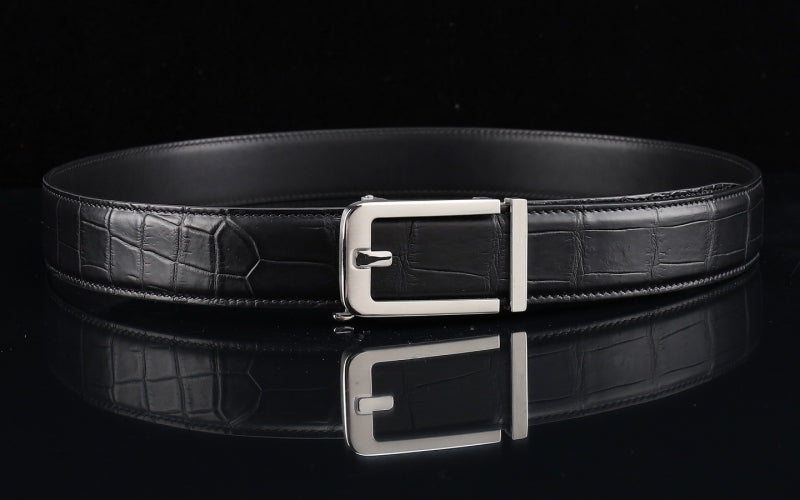
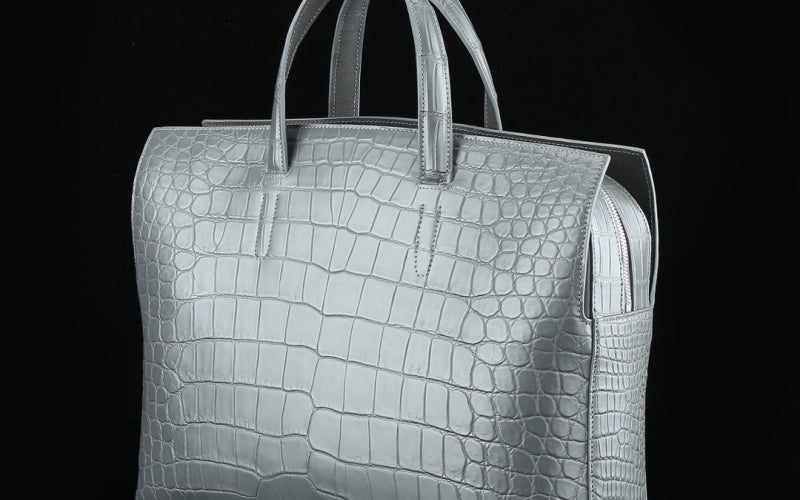
Genuine crocodile has scales that are irregular and asymmetrical. They vary in size — larger on the belly, smaller on the sides — and no two sections of the hide look exactly the same. If the pattern looks perfectly uniform and repeating, it's embossed cowhide, not real croc.
The Pore Check
This one's the easiest tell. Grab a magnifying glass and look at individual scales. Real crocodile leather has a tiny pore — a small dot or follicle mark — in the center of each scale. Embossed leather? Completely smooth inside the stamped "scales." Every time.
The Touch Test
Pick up the bag and flex it gently. Genuine crocodile is surprisingly soft and supple. It bends easily and bounces back without leaving obvious creases. Fake crocodile-embossed leather feels stiffer, more plastic-like, and the creases tend to stay.
The Smell Test
This one's a bit unusual, but it works. Lightly dampen a small area with water and wait a few minutes. Genuine crocodile leather will release a faint, distinctive earthy or slightly musky scent. Synthetic or embossed leather won't.
The CITES Certificate
If you're buying new, ask for the CITES certificate (Convention on International Trade in Endangered Species). This document proves the leather was legally sourced from a regulated farm. Reputable sellers will have this documentation readily available. No certificate? Red flag.
The Price Reality Check
Genuine crocodile leather is expensive to source and process. If someone is selling a "real crocodile handbag" for $40 on a random website, it's not real. The raw hide alone would cost more than that. Trust your instincts here.

How to Buy a Crocodile Handbag Without Getting Ripped Off
Alright, so you've decided a crocodile handbag is worth it. Here's how to buy smart.
Know What Species You're Getting
Always ask. "Crocodile leather" is a broad term. Porosus and Niloticus crocodile are premium. American alligator is luxurious and supple. Caiman is the entry level — fine for what it is, but don't pay premium prices for it.
Consider DTC Brands Seriously
The traditional luxury markup on exotic leather is staggering. A bag that costs $400-$600 to produce might retail for $3,000-$5,000 after wholesale and retail markups. DTC brands skip those layers and pass the savings to you.
BELTLEY operates on exactly this model. Our crocodile handbags are handcrafted by master artisans using the same quality hides that luxury houses use — but priced without the Brand Tax. Every bag comes with our 10-year warranty, free worldwide shipping, and a 30-day hassle-free return policy.
Check the Hardware
Good hardware is a reliable signal of overall quality. Look for solid stainless steel or brass closures, zippers that glide smoothly, and metal parts that feel substantial in your hand. If the hardware feels flimsy or lightweight, the rest of the bag probably cut corners too.
Inspect the Stitching
Even, consistent stitching — especially hand-stitching — is a hallmark of quality. Crooked, uneven, or loose stitching means the bag was rushed through production. On a genuine crocodile bag, the stitching should match the quality of the leather.
Look at the Lining
Flip the bag open and check the interior. Quality crocodile bags use full-grain leather or high-grade fabric linings. Cheap plastic or bonded leather linings are a sign the maker invested in the outside appearance but skimped on everything else.
Ask About Returns and Warranty
Any brand confident in their product will let you return it if you're not happy. A warranty that covers materials and construction is even better. If a seller offers no returns and no warranty on a crocodile bag, ask yourself why.

Taking Care of Your Crocodile Bag So It Holds Its Value
You've spent good money. Don't let poor care ruin it. Crocodile leather is durable, but it does need attention.
Regular Maintenance
- Dust it weekly with a soft, dry microfiber cloth. Gently wipe in circular motions.
- Condition every 6-8 weeks with a conditioner specifically made for exotic leather. This keeps the scales supple and prevents drying and cracking.
- Wipe up spills immediately. Crocodile leather can handle brief contact with water, but prolonged moisture causes damage.
Storage
- Keep your bag in a cool, dry place away from direct sunlight. UV exposure fades the color and can crack the leather over time.
- Stuff the bag with acid-free tissue paper to maintain its shape.
- Store in a breathable dust bag — never plastic, which traps moisture and can promote mold growth.
- Keep it away from heat sources like radiators, halogen lights, or hot car interiors.
What to Avoid
- Perfumes, lotions, and hand sanitizer — these chemicals can strip the natural finish and discolor the leather. Apply your products first, let them dry, then pick up your bag.
- Harsh cleaners — never use alcohol, furniture polish, or household cleaning products on exotic leather. They'll destroy the glazed protein finish that gives crocodile its signature sheen.
- Overstuffing — stretching crocodile leather is harder to reverse than with cowhide.
With proper care, a genuine crocodile handbag can last decades. We're talking 15-20+ years of regular use. Our leather care guide covers the specifics for every type of exotic leather we work with.

The Bottom Line
Are crocodile handbags worth anything? Absolutely — but the "how much" part depends entirely on what you're looking at.
A vintage unbranded crocodile bag from the 1960s? Maybe $50-$150. A well-crafted genuine crocodile handbag from a reputable maker? $300-$1,500 — and you'll use it for years. A Hermès Himalaya Birkin? Potentially hundreds of thousands, if you can get your hands on one.
For most people, the real value of a crocodile handbag isn't in flipping it for profit. It's in owning something genuinely beautiful, made from one of nature's most remarkable materials, that gets better with age and outlasts everything else in your closet.
Key Takeaways:
- Genuine crocodile handbags hold real value — the material alone is one of the rarest leathers in the world
- Prices range from $50 (vintage unbranded) to $380,000+ (collector auction pieces)
- Brand name is the single biggest price driver — the same quality leather costs 5-10x more with a luxury logo on it
- DTC brands offer genuine crocodile craftsmanship at fair prices by cutting out retail middlemen
- Only ultra-rare designer pieces reliably appreciate in value; most bags are best valued as long-term use items
- Proper care (conditioning, storage, avoiding chemicals) is essential to maintaining both beauty and value
If you want a crocodile handbag that's genuinely worth the price tag — one that's handcrafted from premium hides, built with hardware that won't quit, and backed by people who actually stand behind their work — browse BELTLEY's crocodile handbag collection. Every piece comes with a 10-year warranty, free worldwide shipping, and a 30-day return policy. No Brand Tax. Just honest craftsmanship at a fair price.

Frequently Asked Questions
Q: Are crocodile handbags worth the money?
Yes, genuine crocodile handbags are worth the money — if you buy from a reputable source. Crocodile leather is one of the most durable natural materials available, lasting 15-20+ years with proper care. The key is paying for craftsmanship and materials rather than brand markup. DTC brands like BELTLEY offer genuine crocodile at prices that reflect actual production costs, not inflated luxury branding.
Q: How much is a vintage crocodile handbag worth?
Vintage unbranded crocodile handbags from the 1950s-1970s typically sell for $50 to $150 at estate sales and on eBay. Vintage designer crocodile bags (Hermès, Gucci) are worth significantly more — often $5,000 to $50,000+ depending on brand, condition, and rarity. Condition is the single biggest factor in vintage bag valuation.
Q: Do crocodile bags increase in value over time?
Only specific crocodile bags reliably increase in value — primarily Hermès Birkins and Kellys in rare colorways and pristine condition. For example, the Porosus crocodile Birkin 35 increased 73% in value between 2020 and 2025. Most non-designer crocodile bags hold their value well but don't appreciate like investment-grade pieces.
Q: How can I tell if a crocodile handbag is real?
Check three things: scale irregularity (real croc has asymmetrical, varying scales; fakes have uniform, repeating patterns), pores (genuine crocodile has tiny pores in the center of each scale), and flexibility (real crocodile leather is soft and supple, while embossed leather feels stiff). Also ask for a CITES certificate, which proves the leather was legally and sustainably sourced.
Q: What is the most expensive crocodile handbag ever sold?
The most expensive crocodile handbag ever sold is a Hermès Himalaya Birkin, which fetched approximately $380,000 at a Sotheby's auction. These bags are made from Niloticus crocodile leather with a gradient color finish resembling the Himalayan mountains, and they're among the rarest handbags in the world.
Q: How long does a crocodile leather handbag last?
With proper care — regular conditioning, careful storage away from sunlight, and avoiding contact with chemicals — a genuine crocodile handbag can last 15 to 20+ years of regular use. Some well-maintained pieces from the mid-20th century are still in excellent condition today. Check our leather care guide for specific maintenance tips.
Q: Is crocodile leather better than alligator for handbags?
Both are exceptional. Alligator leather is generally softer and more supple, making it slightly more comfortable for handbags. Crocodile leather has more uniform scales and a slightly firmer feel. Alligator tends to cost 20-30% more due to limited supply and strict U.S. farming regulations. For handbags specifically, either is an outstanding choice — it comes down to personal preference for texture and feel.
Q: Where can I buy a genuine crocodile handbag at a fair price?
DTC (direct-to-consumer) brands offer the best value for genuine crocodile handbags by eliminating wholesale and retail markups. BELTLEY's crocodile handbag collection features handcrafted pieces made from premium crocodile leather, backed by a 10-year warranty and free worldwide shipping — at prices that reflect the actual cost of materials and craftsmanship, not a Brand Tax.