Are Canvas Belts Good for Men? Honest Pros, Cons, and Limits
TL;DR: Quick Answer
- Canvas belts are a solid casual option for men — lightweight, affordable, breathable, and comfortable from the first wear.
- They fall short on durability (1–3 years vs. 10+ for leather), formality (casual only), and long-term value.
- Best used as a secondary belt for weekends and outdoor activities — not as your primary, everyday belt.
If you're staring at a rack of belts wondering whether a canvas belt is good for men, the honest answer is: it depends on what you need it to do. Canvas fills a real gap in a man's wardrobe — it handles the laid-back, summer-weight, shorts-and-sneakers moments that a stiff leather belt makes awkward. But it also has clear limits that most belt guides gloss over. This breakdown covers where canvas excels, where it fails, and where a different type of belt is the smarter investment.

Are Canvas Belts Good for Men's Everyday Casual Style?
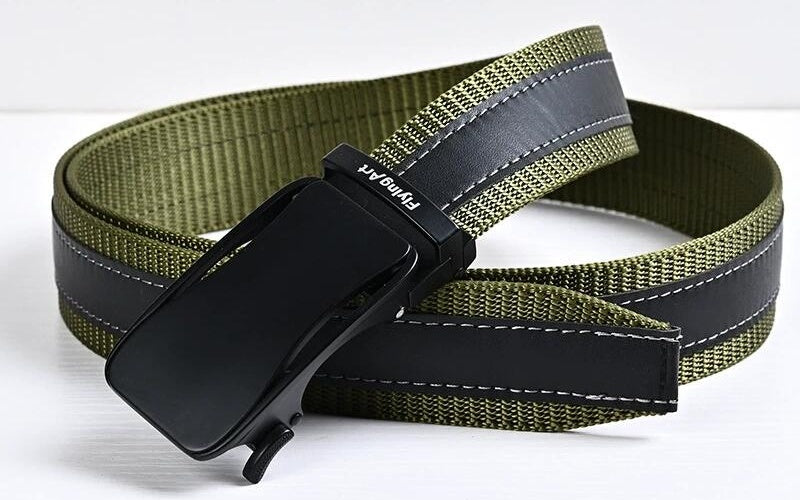
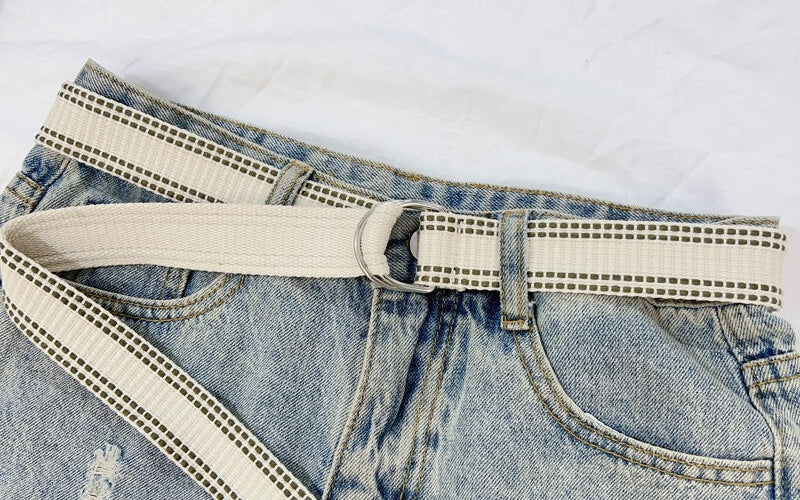
Yes — canvas belts are one of the best casual belt options for men. Their lightweight, flexible construction pairs naturally with jeans, chinos, shorts, cargo pants, and relaxed weekend outfits. The woven cotton or cotton-polyester fabric sits comfortably without a break-in period, and the D-ring or clamp buckle keeps the profile low and functional.
Canvas belts also bring color versatility that leather can't easily match. Olive, navy, khaki, striped, and printed options let you use a belt as an accent piece in otherwise neutral outfits — something style guides for 2026 specifically recommend. According to Real Men Real Style, canvas belts originated as military-issue gear and remain the go-to choice for functional, no-fuss casual wear.
Where canvas belts stumble is anywhere above "casual." A canvas belt with dress pants, a suit, or a business-casual blazer looks out of place — the texture is too rough, and the buckle style too utilitarian. For those situations, you need a proper dress belt or at minimum a clean leather casual belt.

Pros of Canvas Belts for Men
Canvas belts earn their place in a man's wardrobe through several genuine advantages:
Comfort from day one. Unlike leather, which needs 2–3 weeks to break in, canvas belts are soft and pliable immediately. The woven fabric flexes with your body and doesn't create pressure points — a real advantage during long, active days.
Lightweight and breathable. Cotton-based canvas allows air circulation between belt and skin, making it more comfortable in hot weather than leather or synthetic alternatives. If you live in a warm climate, this matters more than most people think.
Affordable entry point. Canvas belts typically cost $15–$50, making them accessible for younger men, college students, or anyone building a wardrobe on a budget. You can own several colors without a significant investment.
Easy maintenance. A damp cloth handles most stains. No conditioning, no polishing, no special storage requirements. Machine-washable in most cases (cold water, gentle cycle).
Color and pattern range. Stripes, solids, camo, nautical prints — canvas belts offer design variety that leather belt colors simply can't replicate at the same price point.

What Are the Downsides of Canvas Belts?
Canvas belts have real weaknesses that disqualify them from several roles in a man's wardrobe. The biggest issue is durability: a standard canvas belt lasts 1–3 years of regular wear before showing significant fraying, color fading, and buckle-attachment weakening. By comparison, a full-grain leather belt lasts 10–15 years with basic care.
Here's the full list of drawbacks:
- Short lifespan. Cotton fibers break down faster than leather under repeated stress. Edges fray, the weave loosens, and colors fade — especially with sun exposure and washing. Buckle My Belt reports that fabric belts show visible wear at roughly one-third the rate of quality leather.
- Stretching. Canvas belts gradually lose tension over time. A belt that fits snugly in month one may feel noticeably loose by month six. Cotton-polyester blends resist this better than pure cotton, but all canvas stretches eventually.
- Zero formality. Canvas is inappropriate for suits, dress pants, client meetings, weddings, or any event above casual. The difference between formal and informal belts is primarily material — and canvas sits firmly on the informal side.
- Poor aging. Leather develops an attractive patina with wear. Canvas just looks worn out. There's no aesthetic upside to an aging canvas belt.
- Weak buckle points. The spot where strap meets buckle hardware is the most common failure point. Stitched or folded-over attachment methods on canvas fray and pull apart faster than riveted leather connections.

When Should a Man Wear a Canvas Belt?
A canvas belt is the right choice for casual, low-stakes situations where comfort, breathability, and a relaxed aesthetic matter more than polish or longevity. Think weekend errands, beach days, barbecues, hiking, travel, music festivals, and summer evenings out with friends.
More specifically, canvas belts work best with:
- Jeans and a t-shirt. The quintessential canvas belt pairing. An olive or navy canvas belt adds structure to a simple combo without overdressing it. For more on matching belts with denim, see BELTLEY's guide on what kind of belt to wear with jeans.
- Shorts and sneakers. A leather belt with shorts can look overly stiff. Canvas keeps the vibe consistent.
- Chinos and a polo. This is the upper limit of canvas belt formality. A solid-color canvas belt with a slide or D-ring buckle works for a smart-casual summer look.
- Outdoor and athletic wear. Hiking pants, cargo shorts, fishing vests — canvas belts belong in active, outdoor-oriented wardrobes.
Skip the canvas belt when: you're wearing dress shoes, a blazer, a suit, or anything you'd wear to a job interview, wedding, or business meeting. Those moments require leather — period.

Canvas Belt vs. Leather Belt for Men: Quick Comparison
| Factor | Canvas Belt | Full-Grain Leather Belt |
|---|---|---|
| Best for | Casual, outdoor, summer | Casual through black-tie |
| Comfort | Soft immediately | Improves over 2–3 weeks break-in |
| Lifespan | 1–3 years | 10–15+ years |
| Formality range | Casual only | Casual to formal |
| Break-in needed? | No | Yes (2–3 weeks) |
| Aging | Fades and frays | Develops patina |
| Typical price | $15–$50 | $60–$300 |
| Cost per year | $10–$25 | $6–$20 |
| Maintenance | Wipe clean; machine-wash | Condition 2–3× per year |
| Weather | Breathable; slow to dry | Moderate; improves with conditioning |
The cost-per-year line tells the real story. A $25 canvas belt replaced every 18 months costs ~$17/year. A $120 full-grain leather belt worn for 12 years costs $10/year — and looks better every year instead of worse. According to Effortless Gent, the price of a good leather belt is always worth it as a long-term investment.

How Long Do Canvas Belts Last?
A standard canvas belt lasts 1–3 years with regular wear. Coated canvas belts — where the fabric receives a protective PVC or polyurethane layer — can extend that to 3–5 years under moderate use. The main failure modes are fraying at buckle attachment points, stretched-out webbing, and faded color from UV exposure and washing.
Compare that to leather: a quality full-grain leather belt lasts 10–15 years, and some well-maintained belts survive 20+ years. The gap is structural — leather's dense collagen fiber network strengthens with conditioning and use, while canvas's plant-based cotton fibers weaken with every wash cycle and sun exposure.
If you're buying canvas belts frequently because they wear out, you're likely spending more over five years than you would on a single leather belt. That math alone is why most style experts recommend investing in one good leather belt rather than cycling through disposable fabric ones.

The Bottom Line
Canvas belts are good for men — in the right context. They're comfortable, affordable, breathable, and perfectly suited for casual summer outfits, outdoor activities, and relaxed weekend wear. If you need a $20 belt to pair with shorts on vacation, canvas does the job well.
But canvas has hard limits. It can't handle formal settings, it wears out in 1–3 years, it stretches, and it fades. As a secondary belt in a rotation, it earns its spot. As your primary, everyday belt? That's where full-grain leather pulls ahead decisively — lasting 5–10× longer, working across every dress code, and actually improving with age. BELTLEY's men's belt collection is handcrafted from full-grain leather by master artisans, backed by a 10-year warranty, and shipped free worldwide — because the belt you reach for most should be the one that lasts.

Frequently Asked Questions
Q: Can you wear a canvas belt to the office?
Only in very casual work environments (tech startups, creative studios). For business-casual or professional offices, a leather belt is expected. Canvas reads as weekend wear, not workwear. For office styling tips, see BELTLEY's guide on matching a belt with your work outfit.
Q: Do canvas belts stretch out?
Yes. Cotton-based canvas naturally relaxes under repeated tension, causing the belt to loosen over time. Cotton-polyester blends stretch less than pure cotton, but all canvas belts lose some of their original snugness within a few months of regular wear.
Q: Are canvas belts machine-washable?
Most canvas belts can be machine-washed on a cold, gentle cycle — but expect some shrinkage (3–5% for pure cotton) and accelerated color fading. Hand-washing with mild soap and air-drying is gentler and extends the belt's usable life.
Q: What is the best belt material for men?
Full-grain leather is widely considered the best overall belt material for men due to its durability (10–15+ years), versatility across dress codes, and ability to develop a rich patina with age. Canvas, nylon, and elastic each fill niche roles but can't match leather's all-around performance.
Q: How many belts should a man own?
Most style experts recommend 3–5 belts: a black leather dress belt, a brown leather everyday belt, a casual or braided belt, and optionally a canvas or fabric belt for weekends and outdoor wear.