Why Does My Belt Leave Marks on My Pants? (3 Causes, All Fixed)
TL;DR:
- Belt marks on pants come from three separate problems: leather dye transfer, buckle hardware pressing into fabric, or a belt that's too tight causing the waistband to bunch
- Dye transfer is most common with new, cheap, or unsealed leather belts against light-colored pants
- Buckle crease marks happen when the hardware presses into fabric during prolonged sitting
- All three have straightforward fixes — and better belt quality prevents most of them from the start
You pull your pants out of the wash and there it is: a faint stripe of brown or black right at the waistband. Or you take off your trousers after a long day and find a neat rectangular impression where the buckle was sitting. Or the fabric around your belt loops is puckered and creased in a way that definitely wasn't there when you bought them.
Belt marks on pants are frustrating partly because they seem mysterious. But they're actually three distinct problems with different causes — and once you know which one you're dealing with, the fix is straightforward. Let's go through all three.
Not All Belt Marks Are the Same
Before jumping to solutions, it helps to identify which type of mark you're actually dealing with. They look different and happen for different reasons:

| Mark Type | What It Looks Like | When It Happens |
|---|---|---|
| Dye transfer | A faint color streak or stain on the fabric, matching the belt color | After wearing, especially with new belts or light pants |
| Buckle impression | A rectangular or oval indentation pressed into the waistband | After long periods of sitting, especially in structured trousers |
| Loop bunching/creasing | Puckered, gathered, or crease-radiating fabric around belt loops | When belt is too tight or the wrong size for the pants |
Each needs a different fix. Here's each one in detail.
Why Does My Belt Transfer Color onto My Pants?
Leather dye transfer — also called "dye bleed" — happens when pigment from the belt surface migrates onto clothing fabric. New belts, dark-colored belts, and poorly finished leather are the most common culprits. Heat, humidity, and sweat accelerate the process significantly.

This is the most common belt-mark complaint, and it's almost entirely a leather quality and finishing issue. According to the Leather Dictionary's research on dye transfer, color migration happens when dye hasn't been fully fixed into the leather or when the surface sealant is thin or low quality. Budget belts often use fast, cheap dyeing processes that leave excess pigment sitting on the surface — one day's wear against your white chinos and you'll see exactly where the belt was.
Full-grain leather that's been properly finished and sealed — the kind used in quality handcrafted belts — has dye absorbed deeply into the hide with a durable topcoat. It doesn't bleed. The difference shows up most clearly against light-colored pants, which act like a litmus test for belt quality.
Our post on full-grain leather vs genuine leather explains why the finishing process matters — genuine and bonded leather belts are often surface-coated with pigment rather than through-dyed, which is exactly what causes transfer.
How Do You Stop a Belt From Leaving Color Stains on Pants?
To prevent belt dye transfer: wipe down a new belt with a dry cloth before first wear to remove loose surface dye. Apply a leather conditioner or sealant to lock down the finish. Avoid wearing dark belts against light pants until the belt has been worn and wiped down a few times. Better yet, buy a properly finished leather belt that won't bleed in the first place.
For brand-new belts especially, loose surface dye is at its highest on day one. A quick wipe with a soft dry cloth — then a pass with a good leather conditioner — removes excess pigment and helps the finish seal down properly. Leather care specialists at Cowmono also recommend applying a waterproof protective spray before first use, particularly if you're wearing the belt in a humid environment or with any chance of sweat contact.
If the stain is already on your pants: blot immediately with a clean white cloth — don't rub, which pushes dye deeper. Cold water to dilute, then an oxygen-based fabric cleaner. Avoid bleach, which can yellow the fabric.
For long-term prevention, our leather care guide covers conditioning and sealing routines that keep the leather surface stable and reduce bleed risk to near zero.
Why Does My Belt Buckle Leave an Impression in My Pants?
Belt buckle impressions form when the hardware presses against fabric under sustained pressure — typically during long periods of sitting. The harder and heavier the buckle, and the more delicate or structured the trouser fabric, the more pronounced the mark. Dress trousers in wool or poly blends are especially vulnerable.

This is a physics problem as much as a belt problem. A heavy plaque or box buckle sitting against the front of your waistband for eight hours in a chair will leave its outline in the fabric. Textile compression research shows that woven fabrics under sustained localized pressure will deform along grain lines — the mark you see is those grain lines being displaced.
The fixes fall into three categories:
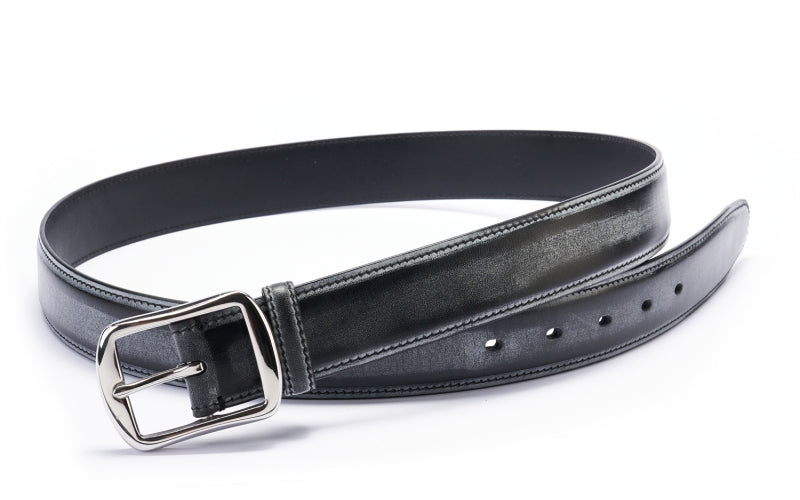
Choose the right buckle style. A slim single-prong buckle or low-profile frame buckle has less contact surface than a wide plaque buckle. Less surface contact means less impression. If you're wearing dress trousers for long stretches, a slim dress belt with a minimal buckle is the right tool.
Adjust your seated posture. Buckle marks are worst when you sit bolt upright with the buckle pressing directly against the waistband. Slight forward lean redistributes pressure. Not always practical, but worth knowing.
Steam the fabric. Most buckle impressions come out with a clothes steamer or a damp pressing cloth and a warm iron. The compressed fibers relax back into position once heat and moisture are applied. For structured wool trousers, a professional press works better.
Why Does My Belt Leave Marks at the Belt Loops?
Loop marks — puckering, creasing, or gathered fabric around belt loops — almost always mean the belt is too tight for the pants. When a belt is cinched tighter than the waistband was cut to accommodate, the loops pull inward and bunch the fabric between them. The marks show up as radiating creases from each loop point.

This is a sizing and fit issue, not a belt quality issue. The belt is doing what belts do — applying tension — but the pants aren't sized to need that tension. Proper trouser fit guidelines from tailoring standards are clear: a well-fitted pair of trousers should sit at the natural waist without a belt actively holding them up. If you're tightening your belt two or three notches past where the pants sit comfortably, the pants don't fit correctly at the waist.
Two fixes: size down in the pants waist, or have a tailor take in the waistband so the belt does less mechanical work. A belt should fasten at the center hole with the pants sitting naturally — if it's cinched to the last hole just to keep the pants up, the pants are too big. Our belt size guide and how to choose the right belt size cover how waist measurement, pants size, and belt size should all align.
Does Belt Quality Actually Affect How Much It Marks?
Yes — significantly. Lower-quality belts cause more of all three mark types: they bleed dye more readily, have heavier or less refined buckles that press deeper, and often have stiffer edges that dig into fabric rather than lying flat.
Full-grain leather with a proper finish is inherently more stable than corrected-grain or bonded leather. The dye is fixed deeply rather than sitting on a surface coat. The edges are burnished smooth rather than cut raw. A quality buckle — solid brass or stainless steel rather than zinc alloy — has cleaner geometry and sits flatter against the fabric.
At BELTLEY, every belt is built from full-grain leather with burnished edges and fully sealed finishes — specifically because a belt that bleeds, creases, or damages your clothes isn't worth wearing regardless of how it looks on the rack. Our leather care page also walks through the conditioning routine that keeps any quality leather belt performing well for the long term.
The Bottom Line
Belt marks on pants have three causes: dye transfer from poorly sealed leather, buckle hardware pressing into fabric under pressure, and a belt that's too tight for the pants it's holding up. Each has a specific fix — wipe-down and conditioning for dye bleed, slim buckles and steaming for hardware impressions, and a proper fit adjustment for loop bunching.

The underlying theme across all three: most belt-mark problems trace back to either low-quality leather (surface dye, rough edges) or a mismatch between belt size and pants size. A well-made belt fitted correctly rarely marks anything. Browse our full-grain leather belt collection for belts built with the kind of finish and construction that keeps your pants clean and your waistband intact.
Frequently Asked Questions
Q: How do I get belt dye out of my pants?
Blot the stain immediately with a clean white cloth — don't rub. Rinse with cold water to dilute the dye, then treat with an oxygen-based fabric cleaner. Avoid bleach. For persistent stains, a professional dry cleaner with experience in dye transfer has the best results.
Q: Why does my new leather belt stain my clothes?
New leather belts are the most likely to transfer dye because excess surface pigment hasn't yet been worn or wiped away. Wipe the belt thoroughly with a dry cloth before first wear, then apply a leather conditioner or sealant. The risk decreases significantly after the first few wears and wipe-downs.
Q: Will a belt buckle impression come out of pants?
Most buckle impressions are temporary compression marks, not permanent damage. Use a clothes steamer or a damp pressing cloth with a warm iron — the heat relaxes the compressed fabric fibers back into position. Structured wool or poly-blend trousers respond best; lighter fabrics usually resolve on their own after hanging.
Q: How do I stop my belt from creasing my pants at the loops?
The most common cause is a belt cinched tighter than the pants were cut to accommodate — meaning the pants are too big at the waist. The fix is pants that fit properly at the waist, so the belt holds position rather than actively gathering fabric. A tailor can take in a waistband for a precise fit.
Q: What type of leather belt doesn't transfer color?
Full-grain leather that has been properly finished and sealed is the least likely to transfer dye. Avoid belts labeled only as "genuine leather" or "bonded leather" — these often have surface-applied pigment coatings that rub off more easily. Look for belts with burnished edges and a satin or matte topcoat finish, which signals proper sealing.