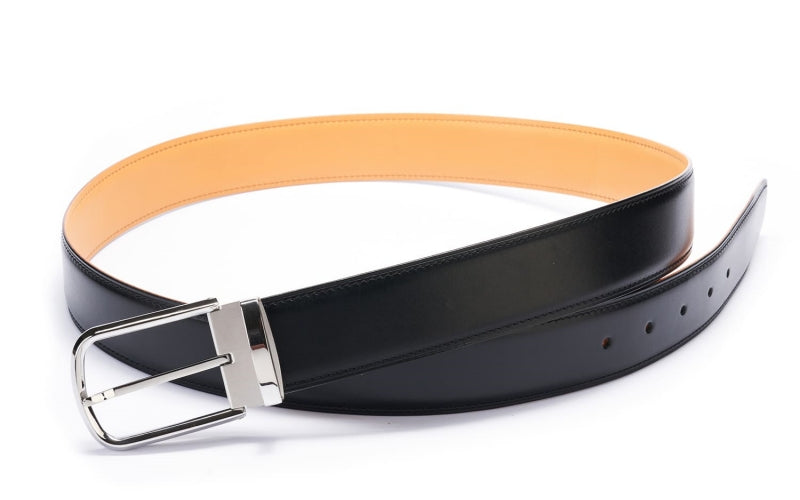
Why Do Leather Belts Curve? Causes, Fixes & Prevention
TL;DR:Quick answer
- Leather belts curve because leather fibers have "memory" — body heat softens them, sweat adds moisture, and daily wear around your curved torso trains the belt into a permanent arc.
- Curving is normal and actually a sign of real leather. Bonded leather doesn't curve gracefully — it cracks and delaminates.
- Full-grain leather curves slowly and evenly. You can fix mild curving with a reverse roll or weighted hang, and prevent excessive warping with proper storage.
You pull your belt out of the drawer and it looks like a boomerang. It used to be straight. Now it curves to one side, bows in the back, or refuses to lay flat on a table. Is it ruined? Is it cheap? Did you do something wrong?
Almost certainly not. Leather belts curve because leather is a natural material that responds to heat, moisture, and pressure — the same properties that make it comfortable and durable are the ones that cause it to reshape over time.
Understanding why it happens helps you prevent extreme warping and fix belts that have already curved. Here's the full breakdown, plus how leather belt quality affects the way a belt bends.

Why Does My Leather Belt Curve to One Side?
Leather is hygroscopic — it absorbs and releases moisture from your skin, air, and environment. When you wear a belt, body heat softens the collagen fibers, sweat introduces moisture, and the curvature of your torso applies sustained directional pressure. As the leather dries, the fibers "set" into the shape they were held in. Repeat this cycle daily for weeks, and the belt develops a permanent curve.
Five specific factors drive the curving:
-
Fiber memory — Full-grain leather fibers align under repeated stress, much like metal fatigue but without the damage. The fibers learn the shape and hold it. Leatherworker.net craftsmen describe this as the single biggest contributor to belt curvature.
-
Body heat and sweat — Your core temperature softens the leather; salt from sweat accelerates the reshaping process. The belt area between your hip bones and lower back receives the most heat and moisture, which is why the back of the belt curves first.
-
Anatomical curvature — Your torso isn't a cylinder. The lumbar spine curves inward (lordosis), hips flare outward, and the belly creates forward pressure. These uneven forces create asymmetric stress that pulls the belt into a complex curve.
-
Stress concentration — The buckle area and the most-used hole absorb the greatest tension. Belt loops on trousers create fixed pressure points. When seated, the back loops pull the belt downward, stretching the leather at those specific spots.
-
Grain direction — Leather has a natural fiber alignment (grain direction). Belts cut against the grain are more prone to curling because the fibers resist being forced against their natural orientation. Leatherstraps.org's grain direction guide explains this in detail.

Does Curving Mean the Belt Is Bad Quality?
No — curving is actually a sign of real leather. Genuine full-grain leather curves gradually and uniformly because its intact fiber structure allows it to flex and conform without breaking. That body-conforming behavior is exactly what makes leather comfortable. The belt is adapting to you.
What you should worry about isn't curving — it's cracking, peeling, or delaminating. Those are signs of cheap construction:
| Leather Type | Curving Behavior | Red Flag |
|---|---|---|
| Full-grain leather | Curves slowly, evenly, gracefully | None — this is normal |
| Top-grain leather | Curves moderately, slightly faster | Minor — acceptable |
| Genuine leather (lower grade) | Curves faster, less evenly | Faster curving + cracking |
| Bonded leather | Doesn't curve — cracks and peels | Structural failure, not curving |
A full-grain leather belt that develops a gentle curve after months of wear is behaving exactly as it should. A bonded leather belt that cracks along the curve after eight weeks is failing. The difference is fiber integrity — full-grain leather has it; bonded leather doesn't. For more on this, see our guide on why leather belts crack.

Does Belt Construction Affect Curving?
Yes — single-layer and double-layer belts behave differently. A single-layer belt (one solid piece of leather) conforms naturally and curves evenly because there's no internal tension between layers. A double-layer belt (two pieces stitched or bonded together) is more rigid and resists curving longer, but cheap double-layer belts can delaminate if the adhesive fails — the layers separate and the belt warps unevenly.
Belt width and thickness also matter. A 1.5" full-grain belt resists extreme curving better than a 1" thin belt simply because there's more material distributing the stress. Thicker leather holds its shape longer under the same body pressure.
At BELTLEY, our double-layer belts are stitched — not just glued — which means the layers move together rather than separating under stress. Stitched construction allows the belt to curve naturally without delamination, combining rigidity with flexibility.

How to Fix a Curved Leather Belt
Four methods work, ranked from safest to most aggressive:
Method 1: Reverse Roll (Safest)
Roll the belt backward — opposite to its curve — around a PVC pipe, wine bottle, or rolled towel. Secure with rubber bands. Leave for 48 hours. The reverse tension counteracts the fiber memory and resets the belt toward flat.
Method 2: Weighted Hang
Hang the belt from its buckle on a sturdy hanger or hook. Clip a weighted object (binder clips + a small bag of coins) to the tail end. Gravity pulls the belt straight over 2–3 days. This is the most passive fix — zero risk of damage.
Method 3: Condition and Flatten
Apply a quality leather conditioner to soften the fibers, then lay the belt flat under heavy books for 12+ hours. The conditioner rehydrates the leather so the fibers can release their set shape, and the weight presses them into a flat position as they dry.
Method 4: Steam and Weight (Use Caution)
Hang the belt in a steamy bathroom (run the shower hot with the door closed) for 10–15 minutes. The steam opens the fibers. Immediately lay the belt flat under weight and let it dry completely — 24+ hours. Warning: Excess moisture can stain or warp the leather if overdone. Never soak the belt or apply direct water.
Never use a hair dryer or iron directly on leather. High heat scorches the surface, dries out the oils, and causes irreversible damage.
How to Store Leather Belts So They Don't Warp
Storage is the #1 preventable cause of excessive belt curving. Laveri Leather's storage guide confirms that how you store a belt between wears determines its shape more than how you wear it. Here are the rules:
- Hang buckle-side up on a wide belt hanger or hook. This distributes weight evenly and keeps the belt straight.
- Never fold — folding creates permanent creases that become crack points.
- Don't leave belts threaded through pants when you're not wearing them. The loops hold the belt in a forced curve.
- Store at 60–70°F and 40–50% humidity. Avoid damp closets, laundry rooms, and direct sunlight.
- Condition every 3–6 months to maintain fiber flexibility and prevent the leather from drying out and locking into a rigid curve.
- Rotate between multiple belts. Wearing the same belt every day gives it no recovery time. Two or three belts in rotation last far longer than one. See our guide on the best way to store leather belts for more detail.

Can You Prevent a Leather Belt from Curving Entirely?
No — and you shouldn't try to. Some degree of curving is inevitable with real leather and is actually a sign that the belt is conforming to your body. A belt that never curves is either brand new, rarely worn, or made from synthetic material. The goal isn't a perfectly straight belt — it's a belt that curves gently and evenly without cracking, warping unevenly, or delaminating.
What you can prevent is extreme warping. Proper storage, regular conditioning, belt rotation, and choosing full-grain leather over bonded leather are the four factors that keep curving under control.
The Bottom Line
Leather belts curve because leather is alive — it responds to your body heat, absorbs your moisture, and reshapes itself around your anatomy over time. That's not a defect. It's the material doing what it's designed to do.
The difference between a belt that curves gracefully and one that falls apart is leather quality and construction. Full-grain leather curves slowly and holds together.
Bonded leather cracks and delaminates. If your belt has developed a gentle arc, it's working correctly. If you need to reset it, a reverse roll or weighted hang fixes mild curving in 48 hours. And if you want to minimize warping from the start, hang your belts, condition them regularly, and rotate between at least two.
Browse BELTLEY's full-grain leather belts — each one is handcrafted from intact hides designed to conform, not crack, backed by a 10-year warranty on materials and construction.
Frequently Asked Questions
Q: Is it normal for a leather belt to curve?
Yes — completely normal. Real leather absorbs body heat and moisture, and the fibers develop a memory of the shape they're held in. A gentle, even curve after weeks or months of wear is a sign of genuine leather, not a defect.
Q: Why does my belt curve in the back?
The back of a belt curves first because the lumbar spine creates an inward arch and the back belt loops on trousers pull the belt downward when you sit. This area receives the most sustained directional pressure.
Q: How do I straighten a curved leather belt?
The safest method is a reverse roll — roll the belt backward around a bottle or pipe, secure with rubber bands, and leave for 48 hours. For mild curves, hanging the belt from its buckle with a weight clipped to the tail for 2–3 days also works.
Q: Does full-grain leather curve less than cheap leather?
Full-grain leather curves more slowly and more evenly than lower grades. Its dense, intact fiber structure distributes stress uniformly. Bonded or genuine leather curves faster, more dramatically, and often cracks along the curve rather than flexing gracefully.
Q: Can I use heat to straighten a leather belt?
Avoid direct heat. A hair dryer or iron applied directly to leather will scorch the surface and dry out the natural oils. Steam from a hot shower (indirect, 10–15 minutes) is the maximum safe heat exposure — and the belt must dry completely under weight afterward.
Q: How often should I condition my leather belt to prevent warping?
Every 3–6 months for regular-wear belts. Conditioning rehydrates the fibers, keeping them flexible enough to release set curves rather than locking into them permanently. See our leather care page for product recommendations.