Why Are Tom Ford Belts So Expensive? The Real Reasons Explained
TL;DR:
- Tom Ford belts are expensive because they combine Italian calfskin construction, galvanized brass T-buckles, small-batch production, and a significant brand premium built around Tom Ford's designer legacy at Gucci (1994–2004) and his own house (2005–present).
- Entry-level Tom Ford leather belts start around $790 at retail; crocodile T-Icon belts reach $1,690; resale listings range from $445 to $1,469 depending on style and condition.
- Roughly 40–55% of the price reflects genuine material and labor value; the remaining 45–60% is brand premium, marketing, and retail distribution costs.
- Hermès sits above Tom Ford on craftsmanship (hand saddle-stitching); Gucci and Ferragamo sit slightly below on positioning but comparable on material.

A Tom Ford belt costs roughly twice what a Gucci GG belt costs and nearly as much as an entry-level Hermès strap. Pick one up in a boutique and the leather feels substantial, the buckle has real weight, and the finishing is noticeably more refined than most $300 designer belts. But is there $800–$1,700 worth of belt in there — or are you paying primarily for the two words stamped on the keeper loop?
This guide breaks down exactly where the money goes: leather sourcing, hardware construction, country-of-origin economics, and the brand premium that Tom Ford commands for reasons that go well beyond the physical object. Our broader explainer on why designer belts are so expensive is useful background reading for understanding the category economics.

Why Are Tom Ford Belts So Expensive?
Tom Ford belts are expensive because of five compounding factors: Italian calfskin or exotic leather sourcing, galvanized brass T-buckles with gold or silver plating, small-batch Italian manufacturing, Tom Ford's personal designer cachet from his Gucci era, and a premium distribution model that sells primarily through high-end retailers like MR PORTER, FARFETCH, and flagship boutiques. Roughly half the price is material and labor; roughly half is brand.
Tom Ford the designer built his reputation at Gucci between 1994 and 2004, where he turned a struggling heritage house into a logo-maximalist powerhouse that defined luxury menswear for a decade. When he launched his own label in 2005, the TOM FORD brand inherited that same positioning: unapologetic luxury, impeccable tailoring, and pricing calibrated to the top of the designer tier rather than the entry luxury tier.
That context matters for belt pricing. A Tom Ford belt isn't priced against Coach or Michael Kors. It's priced against Brioni, Zegna, and Kiton — and against Tom Ford's own reputation as a designer who does not compromise on finish. According to the official Tom Ford belt collection, current retail prices range from $790 to $1,150 for standard leather styles, with 33 different belt models available at launch pricing.

What Are Tom Ford Belts Actually Made Of?
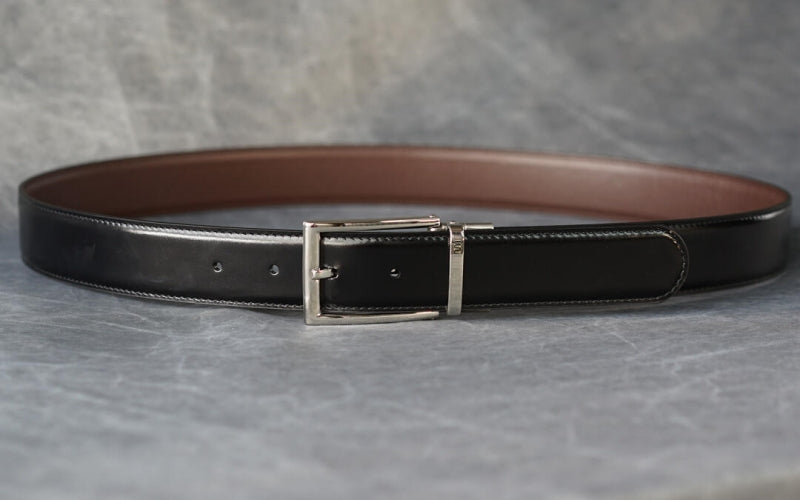
Tom Ford belts are made from supple Italian calfskin leather (smooth grain or grain leather), with calf leather linings and galvanized brass T-buckles finished in gold or silver plating. Premium styles use full crocodile leather, nubuck, or python. All production happens in Italy, and the hardware uses cast brass rather than plated alloy — a real material advantage over entry-tier designer belts.
The leather is the first place your money goes. Italian calfskin — specifically from tanneries in the Tuscany and Veneto regions — commands a significant premium over equivalent Spanish, Portuguese, or Asian-sourced leather because of water quality, vegetable-tanning tradition, and stricter hide selection. Full-grain leather is the industry benchmark, and Tom Ford's core belt lineup uses it consistently.
The buckle is the second. Tom Ford's signature T-buckle is cast galvanized brass — meaning the metal is zinc-coated before plating, which prevents corrosion long-term and produces a heavier, more substantial feel in hand. Lyst lists over 500 Tom Ford belt styles from 50 partner stores, and the consistency of buckle weight across styles is one of the brand's most under-discussed quality signals.
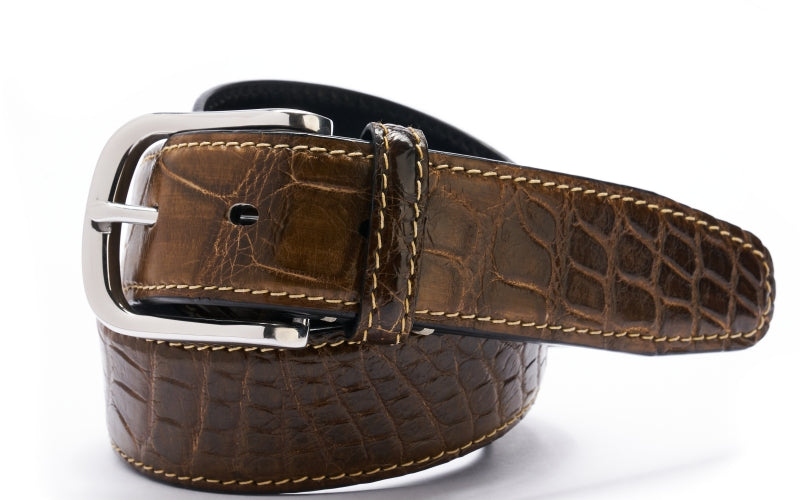
For exotic options, Tom Ford goes further. The official crocodile T-Icon belt page confirms 100% crocodile construction with 100% brass gold-galvanized hardware, 40mm width, Made in Italy — retailing at $1,690. That's genuinely exotic material, not embossed calfskin pretending to be crocodile.

The Tom Ford Brand Premium Explained
Here's where the honest accounting gets harder. A Tom Ford belt has roughly $150–$250 in verifiable material and labor cost. Italian calfskin strap, cast brass buckle, hand-finished edges, machine stitching at Italian atelier labor rates, and inspection. That's what the belt costs to make at Tom Ford's production volume.
The retail price is $790–$1,150. The gap — $550–$900 per belt — goes to:
- Designer-level creative direction: Tom Ford himself reviews collections, which is not a nominal cost at his day rate.
- Marketing: Campaign photography, celebrity endorsements, editorial placement.
- Retail distribution margin: MR PORTER, FARFETCH, Harry Rosen, and TOM FORD boutiques all take significant margin (30–50% is standard in luxury).
- Brand positioning: The pricing itself creates exclusivity. A $300 Tom Ford belt would damage the brand signal.
- Slow-burn inventory: Luxury brands discount less and hold inventory longer, which increases capital cost per unit sold.
None of this is unique to Tom Ford — every designer house operates on similar math. But Tom Ford sits at a particularly steep point on the brand-to-material ratio because of the designer cachet. For comparison, our breakdown of why Gucci belts are so expensive walks through a similar calculation for Tom Ford's former employer.

How Much Does a Tom Ford Belt Really Cost?
A new Tom Ford belt costs $790–$1,150 at official retail for calfskin styles, with crocodile T-Icon belts at $1,690. On the secondary market (StockX, Lyst, The RealReal), prices range from $445 to $1,469 depending on condition, rarity, and current fashion relevance. Sale pricing at authorized retailers can reach 40–56% off, making $400–$500 entry-point Tom Ford belts occasionally available.
Here's the practical breakdown:
| Style | New Retail | Secondary Market |
|---|---|---|
| Soft grain leather T-Icon | $790 | $445–$680 |
| Vacchetta leather T-Loop | $790 | $520–$720 |
| Grain leather oval buckle | $1,150 | $680–$920 |
| Woven leather oval | $1,150 | $690–$950 |
| Crocodile T-Icon (exotic) | $1,690 | $1,100–$1,469 |
The resale retention — roughly 55–75% on classic T-Icon styles — sits above Gucci and Burberry resale numbers but below Hermès. This tracks with overall brand positioning: Tom Ford is more durable in resale than trend-driven logomania belts, but less insulated than true craft-heritage brands.

Are Tom Ford Belts Worth the Price?
Tom Ford belts are worth it if you specifically value Tom Ford's designer signature and minimalist T-buckle aesthetic. The material quality is genuine — Italian calfskin, cast brass hardware, Made in Italy — but the brand premium is steep at roughly 50% of the retail price. Buyers who prioritize pure material value can find equivalent-quality belts at 30–50% of Tom Ford's price from less-marketed brands.
The honest answer depends on two things: what you're actually buying it for, and whether you'd still wear it if the label were removed. If the answer to the second question is yes, Tom Ford is a reasonable purchase — the T-buckle is one of the most restrained designer buckles on the market, and the all-black or all-brown minimalist styles survive trend cycles better than logo-forward pieces.
If the answer is no, you're primarily paying for the brand signal — which is a valid choice, but it's a brand purchase, not a material purchase. Our designer belt brands vs luxury belt brands comparison is useful for calibrating expectations before committing.
Tom Ford vs Gucci, Hermès, and Ferragamo Belts
Quick honest comparison across the key luxury belt brands:
| Brand | Entry Price | Leather | Hardware | Stitching | Brand Tier |
|---|---|---|---|---|---|
| Tom Ford T-Icon | $790 | Italian calfskin | Cast brass, plated | Machine | High designer |
| Gucci GG | $350 | Calfskin / canvas | Alloy or brass | Machine | Designer |
| Gucci Horsebit | $780 | Italian calfskin | Solid brass | Machine | High designer |
| Ferragamo Gancini | $450 | Italian calfskin | Cast brass | Machine | Designer |
| Burberry TB | $580 | Italian calfskin | Palladium-plated brass | Machine | Designer |
| Hermès H | $790 (kit) | Birkin-grade (Box, Clemence, Epsom) | Plated brass | Hand saddle-stitched | Ultra-luxury |
Tom Ford and Gucci Horsebit cost roughly the same and occupy similar positioning — both read as restrained designer luxury without the logo. Hermès sits above all of them on craftsmanship (hand saddle-stitching is the key structural difference), but matches Tom Ford's entry price. For buyers deciding between Tom Ford and Hermès at the same price point, our why Hermès belts are so expensive analysis is the most relevant head-to-head resource.
Tom Ford's strongest value case versus competitors is its aesthetic positioning: the T-buckle is arguably the most minimal designer buckle at this price point, which ages better than louder logos. For a broader view, our ranking of the top 8 luxury belt brands for men places Tom Ford among the strongest mid-to-high designer picks.
Do Tom Ford Belts Hold Their Value?
Tom Ford belts retain 55–75% of retail value on the secondary market after 2–3 years, depending on style and condition. Classic T-Icon belts hold value best because the buckle design is trend-resistant. Exotic crocodile T-Icon belts can retain 65–85% of retail. Logo-heavy or seasonal-color pieces depreciate faster — often 40–55% retention.
That retention rate is solid for the designer tier but lower than Hermès (60–80%) and well below investment-grade vintage Hermès or Chanel pieces. The ceiling is real: Tom Ford's brand equity is meaningful but doesn't generate the same appreciation dynamics as craft-heritage houses whose pricing has kept pace with genuine rarity.
Condition matters more for Tom Ford resale than for most brands. The cast brass buckles are substantial but do scratch visibly under keys or desk wear, and scratched hardware can reduce resale by 25–40%. Leather strap wear on the back (from belt loops) is less visible and less punishing to resale. For classic styles that stay in production (T-Icon, T-Loop), secondary market pricing stays stable across multiple years — a sign of consistent demand.
The Bottom Line
Tom Ford belts are expensive for three genuine reasons — Italian calfskin leather, cast brass T-buckles, and Made-in-Italy production — and one less-concrete reason: Tom Ford's personal designer legacy, which the brand capitalizes on through pricing calibrated to the top of the designer tier. If you want the T-buckle aesthetic and the designer signature, there's no substitute and the $790–$1,150 entry is what that specifically costs.
If your actual priority is material quality per dollar — Italian or exotic leather, solid hardware, craftsmanship that lasts — there are direct alternatives. BELTLEY's exotic leather belt collection delivers genuine crocodile, alligator, elephant, and python belts handcrafted by master artisans, priced between $58 and $299 — a fraction of Tom Ford's $1,690 crocodile T-Icon, using comparable or better-grade exotic hides. Every belt ships free worldwide with a 10-year warranty. Not Tom Ford. Not trying to be. But if the leather is what you actually want, this is where the material economics make sense.
Frequently Asked Questions
Q: Why are Tom Ford belts so expensive compared to other designer belts?
Tom Ford belts are expensive because they combine Italian calfskin leather, cast galvanized brass T-buckles, small-batch Italian manufacturing, and a substantial brand premium built on Tom Ford's designer reputation from his Gucci era and his own label. Roughly half the retail price is material and labor value; the remainder is brand equity, marketing, and premium distribution margins.
Q: How much does a Tom Ford belt cost?
A new Tom Ford belt costs $790–$1,150 at official retail for calfskin styles. Exotic crocodile T-Icon belts retail for $1,690. On the secondary market (Lyst, The RealReal, StockX), Tom Ford belts range from $445 to $1,469 depending on style and condition. Sale pricing at authorized retailers can reach 40–56% off, making occasional $400–$500 entry points possible.
Q: Are Tom Ford belts made in Italy?
Yes. All Tom Ford leather belts are Made in Italy, using Italian calfskin leather from Tuscan and Veneto tanneries and cast brass hardware finished locally. The "Made in Italy" designation on Tom Ford belts is not a marketing label — it reflects genuine Italian production infrastructure, and is confirmed on official product pages.
Q: Are Tom Ford belts better than Gucci belts?
Tom Ford belts and Gucci Horsebit belts are comparable on material quality — both use Italian calfskin with cast brass hardware. Tom Ford's T-buckle is more minimalist than the Horsebit or GG buckle. Tom Ford generally prices $50–$200 higher than comparable Gucci styles. Neither is definitively "better" — the choice is aesthetic and brand preference, not quality.
Q: What makes Tom Ford belts high quality?
Tom Ford belts are high quality due to four factors: Italian calfskin leather with full-grain or top-grain construction, cast galvanized brass T-buckles (heavier and more corrosion-resistant than plated alloy), hand-finished edges, and machine stitching executed at Italian atelier standards. Exotic styles use 100% crocodile or python leather for premium construction.
Q: Do Tom Ford belts hold their value?
Tom Ford belts retain 55–75% of retail value on the secondary market after 2–3 years, with classic T-Icon styles holding value best. Exotic crocodile belts can retain 65–85%. Resale retention sits above Gucci GG and Burberry but below Hermès. Condition matters substantially — scratched buckles can reduce resale value by 25–40%.
Q: Is a Tom Ford belt worth the price?
A Tom Ford belt is worth the price for buyers who specifically want the Tom Ford designer signature and the minimalist T-buckle aesthetic. The material quality is genuinely good, but the brand premium is roughly 50% of the retail cost. Buyers who prioritize pure material value over brand signaling can find equivalent-quality belts at 30–50% of Tom Ford's price from less-marketed leather goods brands.