Nylon Belt vs. Canvas Belt: Material, Durability, and Style Compared
TL;DR: Quick Answer
- Nylon belts are lightweight, water-resistant, and quick-drying — ideal for outdoor activities, travel, and tactical use.
- Canvas belts are softer, more breathable, and have a classic casual look — great for everyday wear and warm-weather styling.
- Both fall short of leather in longevity and formality, but each fills a specific niche in a well-rounded belt collection.
You reach for a casual belt to pair with shorts or hiking pants, and you're stuck choosing between nylon and canvas.
They look similar on a rack, they cost about the same, and both get lumped together as "fabric belts." But the nylon belt vs. canvas belt debate actually comes down to real differences in fiber composition, performance under stress, and where each one belongs in your wardrobe.
This guide breaks it all down — material science, durability data, styling rules, and care instructions — so you can pick the right belt for the right situation. If you're exploring all types of belts and their names, this comparison fills in a gap most guides skip entirely.
What Is a Nylon Belt Made Of?
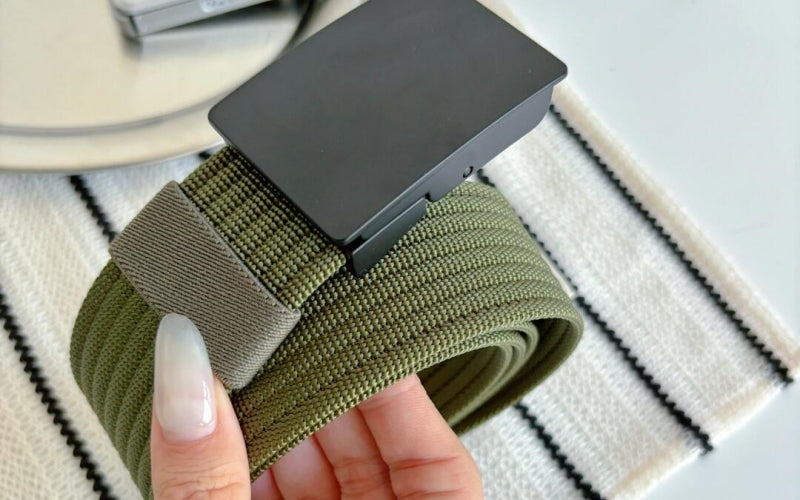
A nylon belt is woven from synthetic polyamide fibers — the same polymer family originally developed by DuPont in 1935. These fibers are extruded, stretched, and then woven into flat webbing, typically 1.25" to 1.5" wide. The result is a smooth, slightly glossy strap that resists moisture absorption and dries rapidly.
Most nylon belts use either ballistic nylon (a dense, basket-weave pattern originally designed for WWII flak jackets) or standard nylon webbing with a tighter, flatter weave. Military and tactical models often layer the webbing or reinforce it with a polymer core for added rigidity. The buckle is usually a simple friction clamp, D-ring, or cobra-style clasp — metal or molded polymer — rather than the prong-and-hole system you find on leather belts.
Key traits of nylon belts: lightweight (often under 3 oz), inherently water-resistant, UV-stable with proper treatment, and available in virtually any color or pattern.

What Is a Canvas Belt Made Of?
A canvas belt is woven from natural cotton fibers — or, more commonly today, a cotton-polyester blend that balances softness with strength. Canvas itself is a plain-weave or twill-weave fabric with centuries of history in sails, tents, and workwear. The weave is typically denser and thicker than nylon webbing, giving canvas belts a slightly stiffer, more textured hand feel.
Pure cotton canvas breathes well and softens with wear, almost like a broken-in pair of jeans. Blended canvas (usually 65% cotton / 35% polyester) adds moisture resistance and reduces shrinkage without sacrificing comfort. Most canvas belts use a D-ring, slide buckle, or military-style open-face buckle. Some higher-end versions feature leather tips and keepers for a more polished finish.
Key traits of canvas belts: breathable, soft against skin, matte texture, available in solids and printed patterns, and slightly heavier than nylon equivalents.

How Do Nylon and Canvas Belt Materials Actually Differ?
Nylon is a fully synthetic polymer; canvas is a woven fabric made primarily from plant-based cotton. This single distinction drives every performance difference between the two belts. Nylon's molecular structure makes it hydrophobic — it absorbs less than 4% of its weight in water, while cotton canvas can soak up 25% or more. That's why nylon dries in minutes and canvas can stay damp for hours.
Beyond moisture, the material gap shows up in three areas:
- Stretch and recovery: Nylon has inherent elasticity and snaps back to shape after tension. Cotton canvas stretches under load and doesn't fully recover, which means canvas belts can loosen over time.
- Abrasion resistance: According to textile testing standards like ASTM D3884, nylon consistently outperforms cotton in Taber abrasion tests, lasting 2–3× longer before fiber breakdown.
- UV degradation: Untreated nylon degrades under prolonged UV exposure, though most belt-grade nylon includes UV stabilizers. Cotton is naturally more UV-resistant but weakens when repeatedly soaked and dried.
The bottom line: nylon is engineered for performance; canvas is built for comfort. Neither is objectively "better" — they serve different purposes.

Nylon vs. Canvas Belt: Side-by-Side Comparison
| Feature | Nylon Belt | Canvas Belt |
|---|---|---|
| Base material | Synthetic polyamide | Cotton or cotton-poly blend |
| Weight | Very light (2–3 oz) | Moderate (3–5 oz) |
| Water resistance | High — quick-drying | Low to moderate — slow-drying |
| Breathability | Low | High |
| Stretch over time | Minimal | Moderate |
| Abrasion resistance | Excellent | Good |
| Comfort against skin | Smooth, can feel slick | Soft, textured, matte |
| UV resistance | Moderate (with stabilizers) | Good (natural fiber) |
| Typical lifespan | 2–5 years | 1–3 years |
| Best for | Hiking, tactical, travel, wet conditions | Casual daily wear, warm weather, relaxed outfits |
| Typical price | $8–$30 | $10–$35 |
| Formality | Very casual / utilitarian | Casual / smart-casual (with leather trim) |
This table gives you the quick reference, but the real decision depends on how and where you wear your belts. Let's look at specific scenarios.

Which Belt Material Is More Durable — Nylon or Canvas?
Nylon wins the durability contest by a clear margin. Its synthetic fibers resist moisture damage, mildew, and abrasion better than cotton-based canvas. A well-made nylon belt can last 3–5 years of heavy daily use, while a canvas belt of similar quality typically shows significant wear — fraying edges, stretched webbing, faded color — within 1–2 years of regular rotation.
The durability gap widens in harsh conditions. Saltwater, mud, and repeated washing all accelerate cotton fiber breakdown. Nylon shrugs off these stresses. That's why military-issue web belts shifted from cotton canvas to nylon decades ago — the U.S. military adopted nylon webbing for belts and gear straps in the 1960s precisely because it outlasted cotton in field conditions.
That said, neither fabric belt comes close to the lifespan of a quality leather belt. A full-grain leather belt — stitched and finished properly — can last a decade or more with basic care. If longevity is your priority, leather remains the benchmark. For a deeper look at what makes a belt last, check out the truth about leather belt durability.

Is a Nylon Belt or Canvas Belt Better for Hiking and Outdoor Use?
For hiking, backpacking, and outdoor activities, a nylon belt is the stronger choice. Its water resistance means you won't spend the rest of a rainy trail day with a soggy, heavy strap around your waist. Nylon dries in 15–20 minutes in open air; canvas can take several hours, and wet cotton pressed against skin invites chafing and bacterial growth that causes odor.
Weight matters on the trail too. A nylon web belt typically weighs 2–3 ounces — barely noticeable in a pack. Canvas belts run 3–5 ounces, and that weight increases substantially when wet. For ultralight hikers and thru-hikers, nylon is the only serious option.
Canvas does have one outdoor advantage: breathability. On hot, dry summer days where sweat is the bigger concern, a cotton canvas belt allows more airflow against your waist. For a casual day hike in warm weather, canvas works fine. For anything involving water crossings, rain exposure, or multi-day wear, go nylon.
If you want a casual belt that handles weekend hikes and weekday errands equally well, a leather option actually bridges both worlds — it handles moisture better than canvas and looks sharper than nylon at dinner afterward.
How Do You Care for and Wash Each Belt Type?
Proper care extends the life of any belt, but nylon and canvas require different approaches.
Nylon Belt Care
- Cleaning: Hand-wash with mild soap and lukewarm water. Use a soft brush to scrub stubborn stains. Rinse thoroughly.
- Machine washing: Possible but not ideal. Place the belt in a mesh laundry bag and use a cold, gentle cycle. Skip the dryer — air-dry only.
- Avoid: Bleach, hot water, and direct heat sources. High temperatures can warp nylon fibers and weaken the weave.
- Storage: Hang or roll loosely. Nylon doesn't crease easily, so storage is forgiving.
Canvas Belt Care
- Cleaning: Spot-clean with a damp cloth and mild detergent. For deeper cleaning, hand-wash in cool water.
- Machine washing: Use with caution. Cotton canvas can shrink 3–5% in warm water. Cold wash only, and remove before the spin cycle damages buckle hardware.
- Avoid: Hot dryers (shrinkage), prolonged soaking (weakens fibers), and wringing (distorts the weave).
- Storage: Lay flat or hang. Canvas can develop permanent creases if stored tightly folded.
For comparison, leather belts require conditioning rather than washing — a different care philosophy entirely. If you own leather belts, BELTLEY's leather care guide covers everything from conditioning schedules to storage best practices.

Are Nylon or Canvas Belts Appropriate for Formal or Business Wear?
Neither nylon nor canvas belts belong in a formal or business-professional wardrobe. Both read as casual, utilitarian accessories — and pairing them with dress pants, a blazer, or a suit undercuts the entire outfit. The difference between formal and informal belts comes down to material and finish, and fabric belts fall squarely on the informal side.
Canvas belts with leather tips and a polished buckle can stretch into smart-casual territory — think chinos and a sport coat on a summer Friday. But that's the ceiling. Nylon tactical-style belts are even more limited, reading as outdoor or athletic gear regardless of what you pair them with.
For dress belt situations — job interviews, weddings, client meetings, formal dinners — leather is the only appropriate material. A sleek full-grain leather dress belt signals intention and quality in ways fabric simply cannot.

How Do Nylon and Canvas Belts Compare to Leather?
Both nylon and canvas belts lose to leather in three critical categories: longevity, formality, and patina development. A quality leather belt ages beautifully — developing character marks and a rich finish that synthetic and cotton fibers can't replicate. Fabric belts degrade; leather belts mature.
Here's the honest breakdown:
| Category | Nylon | Canvas | Full-Grain Leather |
|---|---|---|---|
| Lifespan | 2–5 years | 1–3 years | 10–20+ years |
| Formality range | Very casual only | Casual to smart-casual | Casual to black-tie |
| Ages well? | No — frays and fades | No — stretches and wears | Yes — develops patina |
| Water handling | Excellent | Poor | Good (with conditioning) |
| Comfort | Light but slick | Soft and breathable | Molds to body over time |
| Cost per year of use | $4–$15 | $5–$18 | $6–$30 (but last 5×+ longer) |
The cost-per-year calculation is where leather pulls ahead decisively. A $120 full-grain leather belt that lasts 15 years costs $8/year. A $20 canvas belt replaced every 18 months costs $13/year. Spending more upfront on quality materials — whether that's exotic leather or heavy-duty full-grain cowhide — almost always wins on a per-wear basis. At BELTLEY, every belt ships with a 10-year warranty because handcrafted, full-grain construction is built to outlast the trend cycle.
The Bottom Line
The nylon belt vs. canvas belt decision boils down to environment and intent. Choose nylon for wet conditions, outdoor adventures, and situations where weight and quick-drying matter.
Choose canvas for everyday casual wear, warm-weather comfort, and relaxed weekend outfits where breathability counts more than ruggedness. Both are affordable, functional, and serve their purpose well — but both also have clear limitations in durability and style versatility.
If you're building a belt collection that actually covers every situation in your life — from trail to office to dinner — fabric belts fill the casual slot, but a quality leather belt anchors the wardrobe. BELTLEY's men's and women's belt collections are handcrafted from full-grain leather by master artisans, backed by a 10-year warranty, and shipped free worldwide — because the best belt is the one you reach for every single day.

Frequently Asked Questions
Q: Is a web belt the same as a canvas belt?
Not exactly. "Web belt" is a broader term that refers to any belt made from woven flat webbing — which includes both nylon and canvas versions. A canvas web belt is one type of web belt; a nylon web belt is another. The confusion comes from military surplus stores, where "web belt" traditionally meant cotton canvas, but modern military belts are almost exclusively nylon.
Q: Can you machine-wash a nylon belt?
Yes, but with precautions. Place it in a mesh laundry bag, use cold water on a gentle cycle, and skip the dryer entirely. Air-dry the belt flat or hanging. Hot water and tumble drying can warp and weaken nylon fibers over time.
Q: Do canvas belts stretch out?
Yes. Cotton fibers naturally relax under repeated tension, which means a canvas belt will gradually lose some of its original snugness. Cotton-polyester blends stretch less than pure cotton, but all canvas belts will loosen faster than nylon or leather alternatives.
Q: Are nylon belts allowed through airport security?
Generally, yes. Most nylon belts with polymer or plastic buckles won't trigger metal detectors, making them popular travel belts. Canvas belts with metal D-ring or slide buckles will set off the detector just like a leather belt with a metal buckle would.
Q: Which is better for hot weather — nylon or canvas?
Canvas. Its cotton-based weave is far more breathable than synthetic nylon, allowing air circulation between the belt and your skin. Nylon traps heat and moisture against the body, which can cause discomfort and sweat buildup during hot summer days.
Q: How long does a canvas belt last compared to a leather belt?
A canvas belt typically lasts 1–3 years with regular wear before showing significant fraying and stretching. A full-grain leather belt can last 10–20 years or more. For a detailed look at what drives belt longevity, see BELTLEY's guide on what makes the most durable leather belt.