Are Leather Belts Comfortable for Men?(Quick Tips)
TL;DR: Quick Answer
- Yes. A quality leather belt is one of the most comfortable things you can strap to your body. After the first week, you forget it's there. That's the highest compliment a belt can receive.
- The catch: new leather belts are stiff. Days 1-3 feel like you're wearing a hula hoop made of cardboard. Day 7? Custom-molded perfection. Patience required. Comfort delivered.
- Comfort depends on four variables: leather grade, thickness, width, and fit. Get all four right, and you'll wear the same belt 300+ days a year without a single complaint.
- Cheap belts are "comfortable" on day one and painful by month six (cracking, peeling, digging). Quality belts are slightly stiff on day one and blissful by month six. Choose your discomfort wisely.

Here's something nobody tells you before your first quality leather belt: day one is a lie.
Day one, the belt feels stiff. Rigid. Like you strapped a wooden ruler to your waist. You put it on, you look in the mirror, and you think "I paid how much for this torture device?"
Then day three happens. The leather softens. Day seven, it starts curving where you curve. By month one, the belt fits like it was custom-ordered from a tailor who measured your waist with a laser. By month six, you genuinely forget you're wearing it — which, for a belt, is the ultimate performance review.
Leather belts aren't just comfortable for men. They're the most comfortable belt material on Earth. They just make you earn it first. Our guide on how to choose a good belt for guys covers the full selection process.

Which Comfort Profile Do You Need?
Pick by how you live in your belt:
| Your situation | Go with |
|---|---|
| All-day desk sitting | Soft full-grain, 1.25"–1.38" — flexes at the hinge point when you sit. |
| On your feet, active job | 1.5" width — spreads load, holds position without over-tightening. |
| Hate the break-in week | Calfskin ($100–$148) starts softer than cowhide — day-one comfort at a small premium. |
| Current belt never got comfortable | It's bonded leather wearing a costume. Genuine full-grain (from $58) actually molds; that's the whole difference. |
Every comfort profile above: BELTLEY's men's collection, free returns for 30 days if the fit's wrong.
Why Do Leather Belts Get More Comfortable Over Time?
Leather is a natural material with protein fibers that soften and reshape in response to body heat, moisture, and friction. As you wear a leather belt daily, the warmth from your body loosens the fibers, and the belt gradually molds to your unique waist shape — creating a custom fit that synthetic materials cannot replicate.
According to Surefit Belt's functional guide, "as you wear a leather belt, the warmth from your body softens the leather, and the belt starts to mold to your unique body shape." Main Street Forge's belt guide confirms that "the more you wear a leather belt, the more comfortable it feels — the comfort only improves with age."
This is the opposite of synthetic belts. Faux leather starts soft and degrades. Real leather starts firm and upgrades. Your belt at month six is better than your belt at day one. Your belt at year two is better than month six. It just keeps getting more comfortable.

What's the Break-In Period Like?
Expect 3-7 days of noticeable stiffness for a full-grain leather belt. The belt holds its shape rigidly, the holes feel tight, and bending creates resistance. By week two, the leather has absorbed enough body heat and movement to soften significantly. By month one, the belt moves with you like a second skin.
According to DSBexim's break-in guide, "the best way to soften your belt is through natural wear — wearing it regularly allows the leather to adapt to your body's movements, gradually becoming more flexible and comfortable."
The comfort timeline:
| Day/Week | What It Feels Like |
|---|---|
| Day 1-2 | Stiff. You're aware of it constantly. You question everything. |
| Day 3-5 | Softening. Still firm but no longer fighting you. |
| Week 2 | Noticeably more flexible. Starting to curve naturally. |
| Month 1 | Comfortable. Molding to your shape. You stop adjusting it. |
| Month 3 | Very comfortable. You forget it's there most of the day. |
| Month 6+ | Custom fit. Like it was made specifically for your body. Because it basically was. |
Three tips to speed up break-in:
- Wear it daily — body heat does the work. No shortcuts beat consistent wearing.
- Gently flex it — bend the belt back and forth along its length a few times before wearing.
- Skip the oils — your body's natural oils will condition the leather over time. Heavy products can darken or damage new leather.

Does Leather Type Affect Comfort?
Dramatically. The leather grade and tanning method determine how stiff the belt starts, how quickly it breaks in, and how comfortable it becomes long-term. Not all leather belts feel the same — even on day one.
According to Obscure Belts' leather guide, "soft leather belts offer instant comfort, but full-grain belts reward patience with a longer-lasting, better-molding fit." Hewore's 2026 belt review ranks comfort alongside durability as the two most important factors in their testing.
| Leather Type | Day 1 Comfort | Month 6 Comfort | Long-Term Comfort |
|---|---|---|---|
| Full-grain veg-tan | Stiff (3-7 day break-in) | Excellent — custom molded | Outstanding — improves for years |
| Full-grain chrome-tan | Moderate (1-3 day break-in) | Very good | Very good — stable |
| Top-grain | Comfortable immediately | Good | Good — may stretch |
| Genuine leather (split) | Soft immediately | Declining — stretching | Poor — loses shape |
| Bonded leather | Soft immediately | Bad — cracking | Terrible — falling apart |
| Faux leather | Soft immediately | Bad — peeling | Nonexistent — in the trash |
The pattern is clear: belts that feel best on day one often feel worst by year one. Belts that require patience on day one deliver the best comfort long-term. Our guide on the truth about leather belt durability explains why this trade-off exists.

What Width Is Most Comfortable for Men?
For daily comfort, 1.25-1.5 inches (32-38mm) is the sweet spot for men. This range fits standard belt loops, distributes pressure evenly, and doesn't dig into your waist when sitting. Thinner belts can roll or fold. Wider belts restrict movement.
According to Buckle My Belt's width guide, "wider belts provide better support and comfort, especially for work involving lifting or frequent movement," while narrower belts "suit dress pants with smaller belt loops." Style n Craft's work belt guide confirms that "width directly affects comfort — too narrow creates pressure points, too wide restricts bending."
Width comfort guide:
| Width | Best For | Comfort Level | Loop Fit |
|---|---|---|---|
| 1" (25mm) | Dress pants, slim fit | Good for light duty | Small dress loops |
| 1.25" (32mm) | Dress/casual crossover | Very comfortable | Most dress loops |
| 1.38" (35mm) | Universal daily wear | Excellent all-day | Standard loops |
| 1.5" (38mm) | Casual, jeans, work | Excellent — most popular | Standard/wide loops |
| 1.75"+ (44mm+) | Work belts, tool belts | Supportive but bulky | Wide work loops only |
Our size guide helps you find the exact right width and length.

What Thickness Makes a Leather Belt Comfortable?
For all-day comfort, 3-4mm (8-9 oz) is ideal. Thin enough to flex with your body. Thick enough to hold structure without folding or sagging. Anything thinner feels flimsy. Anything thicker feels like you're wearing armor.
According to Szoneier Leather's thickness guide, "the ideal thickness for most people is 8.5-9.5 ounces — a belt that is too thin will stretch and distort, while a belt that is too thick won't be comfortable for all-day wear." Ox & Pine's leather weight guide adds that "medium-weight leather provides the balance between durability and comfort — pliable enough to move with the body."
Quick thickness decoder:
| Thickness | Oz Weight | Feel | Best For |
|---|---|---|---|
| 2-3mm | 5-7 oz | Thin, flexible | Dress belts, light duty |
| 3-4mm | 7-9 oz | Sturdy yet comfortable | Daily wear (sweet spot) |
| 4-5mm | 9-11 oz | Firm, rigid | Work belts, heavy duty |
| 5mm+ | 11+ oz | Very stiff | Gun belts, tool belts |
Our guide on the ultimate guide to standard belt width in mm covers both width and thickness specifications.

What Makes a Leather Belt Uncomfortable?
Five things. All avoidable.
1. Wrong size. Too tight = digging into your waist. Too loose = constant adjusting. According to Cornford and Cross's belt guide, "a great belt should feel secure without being too tight." The right fit uses the middle hole with room to adjust one hole in either direction.
2. Too thick for the purpose. A 5mm work belt is great on a construction site. It's miserable at a desk job. Match thickness to activity.
3. Low-quality leather. Genuine leather and bonded leather develop hard spots, cracking, and rough edges that irritate skin. Full-grain stays smooth. Our guide on how to keep leather belts from cracking explains why cheap leather fails.
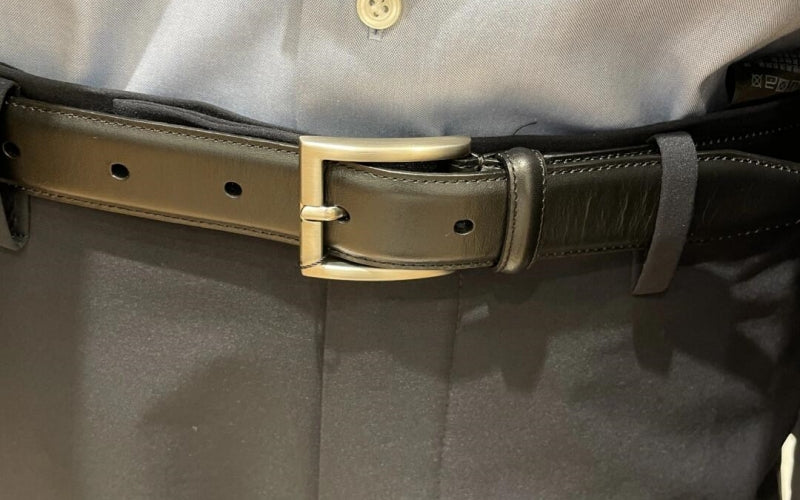
4. Bad hardware. A heavy, oversized buckle creates a pressure point against your stomach when sitting. Quality buckles are proportional to the belt and sit flat.
5. Impatience. You abandoned a full-grain belt on day two because it was stiff. That belt was three days away from becoming the most comfortable thing you own. Patience is the cheapest comfort upgrade.
The Bottom Line
Are leather belts comfortable for men? After the first week, they're the most comfortable belt material available. Leather is the only belt material that actively molds to your body, getting more comfortable every day instead of degrading.
The break-in period (3-7 days for full-grain) is the price of admission for years of custom-fit comfort. The keys: choose full-grain leather, stick with 3-4mm thickness, pick 1.25-1.5 inch width, size it to the middle hole, and give it a week.
That's it. The belt does the rest. Cheap synthetic belts feel good on day one and terrible by month six. Quality leather belts feel stiff on day one and incredible by month six. Choose your discomfort timeline wisely.
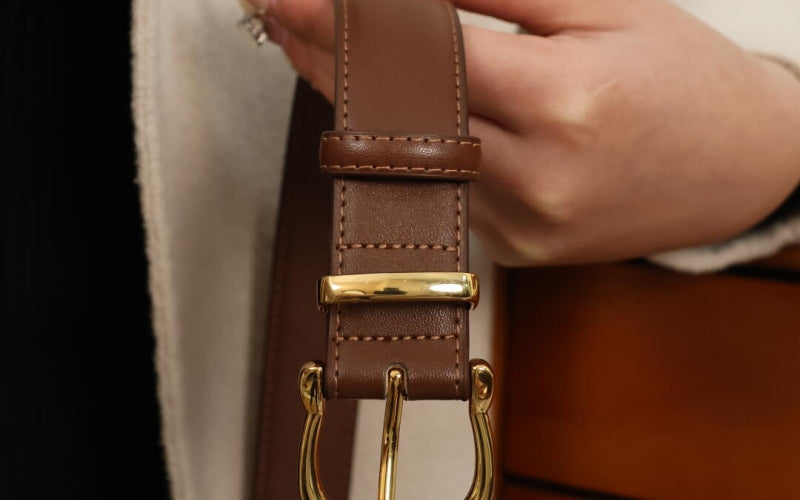
At BELTLEY, our full-grain leather belts are crafted for long-term comfort — premium cowhide with stainless steel hardware that sits flat and wears smooth. 10-year warranty. Free worldwide shipping. Browse the men's collection and pick the belt that earns its comfort.
Frequently Asked Questions
Q: Are leather belts comfortable for men?
Yes — after a short break-in period. Full-grain leather belts need 3-7 days to soften and begin molding to your body. By month one, they're more comfortable than any synthetic alternative. The leather fibers respond to body heat and friction, creating a custom fit that improves with every wear.
Q: How long does it take to break in a leather belt?
3-7 days for full-grain leather, 1-3 days for chrome-tanned leather. Top-grain and softer leathers need little to no break-in. The break-in happens naturally through daily wear — body heat softens the fibers while the belt curves to match your waist shape. Just wear it. Time does the work.
Q: What width leather belt is most comfortable for men?
1.38-1.5 inches (35-38mm) for daily wear. This width distributes pressure evenly, fits standard belt loops, and provides enough structure without restricting movement when sitting or bending. Dress belts can go narrower (1-1.25 inches). Work belts can go wider (1.5-1.75 inches).
Q: Why is my leather belt so stiff and uncomfortable?
It's probably new. Full-grain leather starts stiff because its dense fiber structure hasn't yet softened from body heat and wear. Give it 5-7 days of daily wear. If it's still uncomfortable after two weeks, the belt may be too thick for your intended use or sized too tightly.
Q: Is a thinner leather belt more comfortable?
Not necessarily. Thin belts (under 3mm) are flexible but can fold, roll, or create pressure points. The comfort sweet spot is 3-4mm — thick enough for structure, thin enough for flexibility. Ultra-thick belts (5mm+) are durable but stiff, best reserved for work or heavy-duty use.
Q: Do leather belts get more comfortable with age?
Yes — that's their defining advantage over synthetic materials. Leather belts absorb body oils, respond to heat, and reshape their fiber structure through daily wear. A two-year-old leather belt fits better than a two-day-old one. Synthetic belts degrade with age. Leather belts improve.