What Is The Difference Between Formal And Informal Belts?
TL;DR:Quick answer
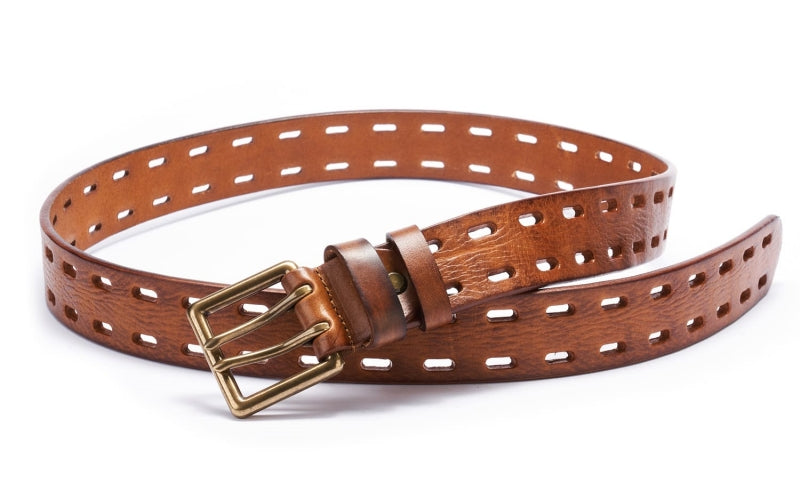
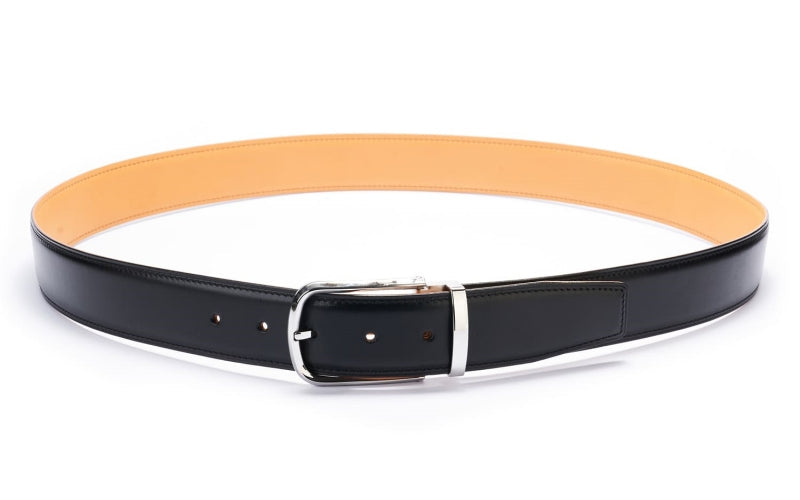
- Formal belts are narrow (1"–1.25"), smooth-finished, polished leather with small, minimalist buckles in silver or gold. Informal belts are wider (1.5"+), textured, and feature larger or decorative buckles.
- The five defining differences are: width, leather finish, buckle style, color, and edge treatment. Get any one of these wrong and the belt reads as the wrong formality level.
- One belt can bridge both categories — a 1.38" full-grain leather belt in dark brown with a clean buckle is the closest thing to a universal option.

The line between a formal belt and a casual belt isn't always obvious — especially when brands market the same belt for "any occasion." But there are clear, consistent differences that stylists, menswear authorities, and fashion editors agree on. Knowing them means you'll never show up to a client meeting with a weekend belt or pair dress leather with jeans when texture would look better.
Here's exactly what separates a formal belt from an informal one, with a side-by-side comparison, the rules for each, and guidance on where different types of belts fall on the formality spectrum. For a broader overview of every belt category, our belt types guide covers the full landscape.

What Makes a Belt Formal vs. Informal?
Five attributes define where a belt sits on the formality spectrum: width, leather finish, buckle style, color, and edge treatment. A formal belt scores "refined" across all five. A casual belt scores "relaxed" across most. Here's the breakdown.
| Attribute | Formal Belt | Informal Belt |
|---|---|---|
| Width | 1"–1.25" (25–32mm) | 1.5"–2" (38–50mm) |
| Leather finish | Smooth, polished, high-sheen | Matte, distressed, textured, suede |
| Buckle | Small frame or box buckle, polished metal | Larger, decorative, statement, matte/antiqued |
| Color | Black, dark brown, oxblood | Tan, cognac, olive, navy, any unconventional color |
| Edge treatment | Stitched or hand-burnished, clean | Raw, contrast-stitched, or unfinished |
The Art of Manliness' men's belt guide and Real Men Real Style's belt infographic both use this same five-attribute framework — it's the standard across menswear authorities. The principle holds for women's belts too, though women have more flexibility with width and color in professional settings.

How Wide Should a Formal Belt Be?
A formal belt should be 1"–1.25" (25–32mm) wide. This width fits standard suit trouser belt loops — which are cut narrower than jeans loops — and sits proportionally on tailored silhouettes without drawing attention to itself.
Casual belts run 1.5" (38mm) and wider. The extra width accommodates the wider loops on jeans, chinos, and workwear pants, and provides enough surface area for texture, stitching, and decorative elements that would look out of place on a dress belt.
The in-between width — 1.38" (35mm) — is where formal and casual overlap. A 1.38" leather belt in a clean finish works with both dress trousers and chinos, making it the most versatile single width you can own. MasterClass's belt guide identifies this as the "sweet spot" for men who need one belt to cover business casual through smart casual.
For the full measurement breakdown, see our standard belt width guide in MM.

What Buckle Style Is Best for Formal Belts?
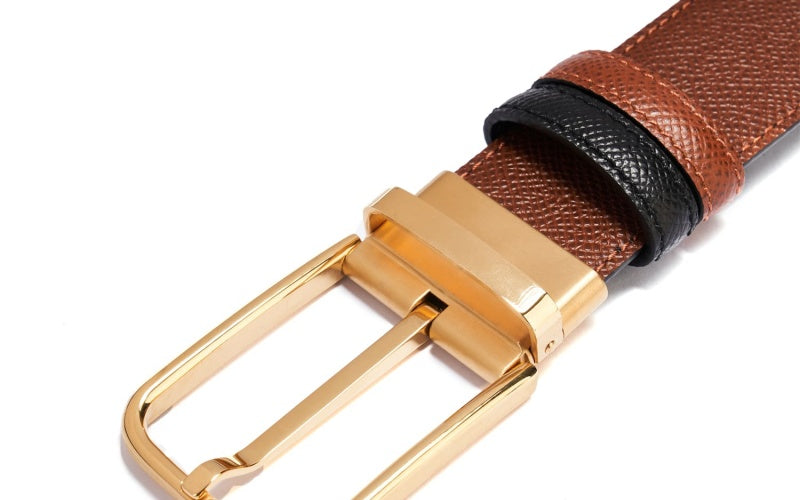
A small, flat frame buckle or single-prong buckle in polished silver or gold is the standard for formal belts. The buckle should be understated — functional hardware, not a focal point. It should lie flat against the waist without protruding and complement (not compete with) the rest of your outfit.
Casual buckles are the opposite — they're allowed to be larger, heavier, decorative, and matte-finished. Western buckles, D-ring closures, roller buckles, and statement hardware all belong in casual territory.
Here's how common buckle types map to formality:
| Buckle Type | Formality Level | Best With |
|---|---|---|
| Small frame/box buckle | Formal | Suits, dress trousers |
| Single-prong (polished) | Formal to business casual | Suits, chinos, blazer combos |
| Ratchet buckle | Business casual | Chinos, smart casual — gaining acceptance |
| Plaque buckle | Casual to dressy casual | Jeans, going out, statement looks |
| Western/oversized buckle | Casual | Jeans, boots, weekend |
| D-ring closure | Casual | Canvas belts, shorts, outdoor |
At BELTLEY, our formal-appropriate buckles are crafted from 316L stainless steel — the same surgical-grade alloy used in fine watches. A polished stainless steel buckle holds its finish for years without tarnishing, which matters when you're matching it to a watch and cufflinks in professional settings.

Does Leather Type Determine Formality?
Yes — the leather's finish and texture is the single biggest visual signal of a belt's formality level. Smooth, polished leather reads as formal. Textured, matte, or distressed leather reads as casual. The grain pattern and surface treatment override almost every other attribute.
Formal leathers:
- Smooth calfskin — the classic dress belt material. Polished, consistent color, minimal grain visible.
- Glazed exotic leather — crocodile and alligator with a high-gloss finish are among the most formal belt leathers available. The natural scale pattern creates subtle texture without the "rough" quality of casual leathers.
- Cordovan — shell cordovan has a deep, mirror-like shine that ages beautifully in formal contexts.
Casual leathers:
- Suede and nubuck — soft, matte surface. Inherently relaxed.
- Distressed or pull-up leather — shows color variation when bent. Rustic, lived-in look.
- Braided/woven leather — the texture itself signals informality. See our guide on braided belts in style for current trends.
- Canvas and webbing — fabric belts are always casual.
Holdform's 2026 leather belt style guide confirms that the smooth-vs-textured distinction is the dominant formality signal in current fashion. Interestingly, matte-finished exotic leather — crocodile with no glaze — bridges both worlds and works in smart-casual settings where smooth calfskin would feel too stuffy.
Can You Wear a Casual Belt with a Suit?
No — not in traditional professional or formal settings. A wide, textured, or heavily buckled belt will undermine the clean lines of a suit and signal that you don't understand dress codes. Mackenzie & George's belt etiquette guide puts it plainly: "The wrong belt with a suit is worse than no belt at all."
The exceptions:
- Unstructured or casual suits (cotton, linen, deconstructed) — a clean 1.38" belt in matte leather is acceptable.
- Creative industries — fashion, media, and design offices often allow wider or statement belts with suiting.
- No-tie dress codes — when the suit is already casual (no tie, open collar), a slightly less formal belt can work if the leather and buckle are still clean.
For a full breakdown on this topic, see our guide on whether belts with suits are out of style.

Do Women Follow the Same Formal Belt Rules?
Women have significantly more flexibility than men in belt formality. Wider belts (1.5"–2"+) are fully appropriate for women in professional settings — corset belts over blazers, statement belts over dresses — in ways that would violate men's dress codes. Who What Wear's 2026 belt styling coverage shows that women's professional belting leans heavily into the statement-accessory space this year.
That said, the core principles still apply:
- Formal women's belts favor smooth leather, smaller or refined buckles, and classic colors (black, brown, metallics).
- Casual women's belts embrace texture, bold colors, woven materials, oversized hardware, and chain constructions.
- Width is more flexible — a 1.5" belt is professional for women where it might be borderline for men in a suit.
For women-specific styling, our guide on what kind of belts are in style for women covers the full 2026 trend landscape.
Can One Belt Work for Both Formal and Casual?
Yes — with the right specifications. A belt that bridges both categories needs to hit the middle ground on every attribute: medium width, clean but not glossy leather, understated but not invisible buckle, and a neutral dark color.
The formula for a dual-purpose belt:
- Width: 1.38" (35mm)
- Leather: Full-grain with a satin (not high-gloss) finish
- Buckle: Simple prong or box buckle in brushed silver
- Color: Dark brown (cognac or espresso)
- Edge: Cleanly finished, no contrast stitching
This combination works with dress trousers and a blazer on Tuesday, then with dark jeans and a sweater on Saturday. It won't be the most formal belt in your closet or the most casual — but it will cover 80% of your wardrobe. Browse BELTLEY's full-grain leather belts for options that hit this versatile sweet spot.

The Bottom Line
The difference between formal and informal belts comes down to five attributes: width, leather finish, buckle style, color, and edge treatment. Formal belts are narrow, smooth, polished, and understated. Casual belts are wider, textured, and free to make a statement.
Getting this right is one of the easiest ways to look intentional — and getting it wrong is one of the fastest ways to undermine an otherwise solid outfit.
If you're building a belt collection from scratch, start with one clean dress belt and one casual belt, then add a versatile 1.38" option that bridges both worlds. Three belts, every occasion covered.

Frequently Asked Questions
Q: What is the difference between a casual belt and a dress belt?
A dress belt is narrow (1"–1.25"), smooth leather, with a small polished buckle — designed for suits and formal trousers. A casual belt is wider (1.5"+), often textured or distressed, with a larger or decorative buckle — designed for jeans, chinos, and relaxed outfits.
Q: How can you tell if a belt is formal or casual?
Check five things: width (narrow = formal), leather finish (smooth = formal, textured = casual), buckle size (small = formal), color (black/dark brown = formal), and edge treatment (clean/stitched = formal, raw = casual). If three or more attributes lean one direction, that's the belt's formality level.
Q: Should your belt match your shoes?
For formal settings, yes — match color and shine level. A polished black belt pairs with polished black shoes. For casual outfits, the rule relaxes — you can contrast or approximate rather than match exactly. See our guide on how to match belts and shoes for detailed pairings.
Q: Are crocodile belts formal or casual?
It depends on the finish. Glazed crocodile leather with a high-gloss surface is among the most formal belt materials available — appropriate for suits and evening wear. Matte-finished crocodile reads as smart-casual and works with blazers and tailored chinos.
Q: Is a ratchet belt considered formal?
Ratchet belts are gaining acceptance in business-casual and smart-casual settings thanks to their clean, hole-free profile. They're not yet standard for business-formal or black-tie occasions, where a traditional single-prong buckle remains the convention.
Q: What is the most versatile belt for both formal and casual wear?
A 1.38" (35mm) full-grain leather belt in dark brown with a brushed silver prong buckle. This width fits both suit trouser and jeans loops, the satin leather finish avoids being too glossy or too matte, and dark brown pairs with virtually every outfit from Monday through Sunday.
,%20smooth-finished,%20polished%20leather%20with%20small,%20minimalist%20buckles%20in%20silver%20or%20gold.%20Informal%20belts%20are%20wider%20(1.5%22+),%20textured,%20and%20featu...)