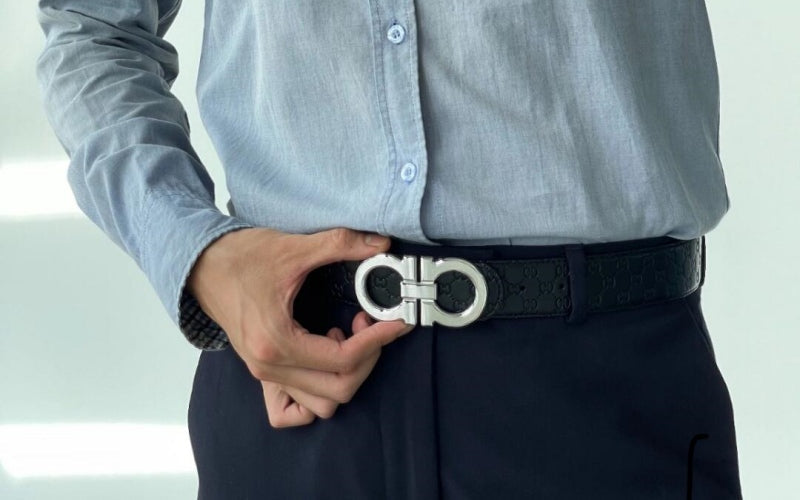
Best Belt Width for Suits: The Complete Sizing Guide
TL;DR: Quick Answer
- The best belt width for suits is 1.25"–1.38" (32–35mm) — slim enough for dress trouser loops, substantial enough to look intentional
- For peak formality (black-tie-adjacent, courtrooms, executive boardrooms), go with 1.25" (32mm)
- For business professional and smart-casual suits, 1.38" (35mm) hits the sweet spot between refined and versatile
A suit is only as polished as its details, and belt width is one of the details people get wrong most often. Grab a 1.5-inch casual belt and thread it through your suit trousers and you'll notice the problem immediately — it bunches in the loops, the buckle looks oversized, and the whole waistline feels clunky.
The right width creates a seamless, clean line.
The wrong one announces itself. This guide covers exactly what width works for every type of suit, from boardroom to business casual. For a broader overview, our dress belt vs. casual belt comparison breaks down all the key differences.

Your Suit, Your Width: The Quick Match
Different suits call for slightly different widths. Find your row:
| Your situation | Go with |
|---|---|
| Boardroom, courtroom, or near-black-tie | 1.25" (32mm) — peak formality lives at the narrow end |
| Business professional, worn daily | 1.38" (35mm) — the sweet spot between refined and versatile |
| Smart-casual suit (no tie, loafers) | 1.38" — same width, just relax the leather finish |
| Women's suit | Go narrower — see the women's section below for the proportions |
| Buckle looks oversized | Scale the buckle down with the width — a chunky buckle on 1.25" leather reads costume |
If you need one suit belt to cover all of it, a 1.38" full-grain in black from the men's collection is the no-regret pick. Now, why loop size dictates everything:
What Width Belt Should You Wear with a Suit?
The ideal belt width for suits is between 1.25 inches (32mm) and 1.38 inches (35mm). This range fits cleanly through the narrower belt loops found on dress trousers, maintains a sleek profile that doesn't compete with your suit's tailoring, and provides enough visual weight to look polished rather than flimsy.
This isn't just opinion — it's mechanical. Suit trousers are designed with narrower belt loops than jeans or chinos. According to Elliot Rhodes's belt width guide, dress trouser loops typically accommodate belts up to about 35mm, while jeans loops are built for 38mm and wider. Push past the loop's intended width and you get bunching, tugging, and visible stress on the fabric. Stay too far below it and the belt slides sideways inside the loop, looking sloppy from any angle.
At BELTLEY, our dress belts are built at 1.38" (35mm) because it's the most versatile formal width — it handles everything from a navy business suit to charcoal dress trousers without looking either too casual or too fragile.

Belt Width by Suit Formality Level
Not all suits carry the same dress code. A three-piece charcoal suit at a board meeting demands a different belt than a linen blazer at a summer wedding. Here's how width maps to formality:
| Formality Level | Setting | Best Belt Width | Why |
|---|---|---|---|
| Black-tie-adjacent | Galas, awards ceremonies | 1"–1.25" (25–32mm) | Ultra-slim; minimal visual interruption |
| Business formal | Boardrooms, courtrooms, interviews | 1.25" (32mm) | Classic dress width; fits fine loops precisely |
| Business professional | Office daily wear, client meetings | 1.25"–1.38" (32–35mm) | The sweet spot — polished but not stiff |
| Smart-casual suit | Dinners, social events, creative offices | 1.38" (35mm) | Slightly more presence; pairs with textured suits |
| Unstructured / summer suit | Outdoor events, resort settings | 1.38"–1.5" (35–38mm) | Relaxed silhouette allows a touch more width |
The pattern is consistent: the more formal the occasion, the slimmer the belt. This principle comes from traditional tailoring — formal suits are designed with minimal visual disruption at the waistline. The Art of Manliness's belt guide calls this the "inverse formality rule": as dress code goes up, belt width goes down.
For anything above business professional, consider whether you even need a belt. Many formal trousers come with side adjusters or suspender buttons specifically so you can skip the belt altogether. Our post on whether belts with suits are out of style covers when going beltless is the right call.

Why Trouser Loop Size Dictates Everything
Your suit's belt loops are the physical constraint that overrides personal preference. A belt that doesn't fit the loop cleanly — either too wide to thread through or too narrow to stay centered — will never look right, regardless of the leather quality or buckle design.
According to Suits Expert's men's belt guide, standard dress trouser loops are built to accommodate belts between 30mm and 35mm. Here's how loop sizes compare across trouser types:
- Formal suit trousers (wool, worsted): loops accept 30–35mm belts
- Business chinos (cotton twill, stretch): loops accept 32–38mm belts
- Casual trousers (linen, khaki): loops accept 35–40mm belts
- Jeans (denim): loops accept 38–45mm belts
This is why a 1.5-inch (38mm) belt — perfectly normal for jeans — feels wrong with a suit. The loop is too tight, the belt edges press against the loop fabric, and you get visible warping. 72 Smalldive's belt width guide describes this as the most common belt-fit mistake in menswear: defaulting to a single all-purpose width instead of matching the belt to the trouser's construction.
If you're not sure about your trouser's loop width, measure the loop opening with a ruler. Subtract 2–3mm from that measurement, and you have your maximum belt width for a clean fit.
What About Belt Width for Women's Suits?
Women's suiting offers more flexibility. While the 1.25"–1.38" rule applies to traditional women's pantsuits with standard loops, women also have the option of wearing belts as statement pieces — cinched over a blazer, layered at the natural waist, or worn with high-waisted trousers where the belt is fully visible.
According to Corporette's workplace belt guide, women's dress pants with belt loops typically accommodate 1"–1.5" widths, with narrower loops on tailored trousers and wider loops on relaxed-fit styles.
For a traditional professional look, stick to the same 1.25"–1.38" range as men's suiting. A slim 32mm belt in black or dark brown keeps the look sharp and authoritative.
For a fashion-forward professional look, a wider belt (1.5"–2") cinched over a blazer at the natural waist creates shape and visual interest. This works especially well with oversized or relaxed-fit blazers. Our guide on whether a woman should wear a belt with a suit explores both approaches.

How Buckle Size Should Scale with Belt Width
A belt buckle that's too large for the strap — or too small — creates an awkward visual imbalance. With suits, this matters more than with casual wear because there are fewer competing elements to distract the eye.
Real Men Real Style's belt guide recommends keeping dress belt buckles proportional and understated: a small, flat buckle in polished or brushed metal. Here's how buckle size should scale:
- 1" (25mm) belt: Buckle no wider than 1.75", no taller than 1.25"
- 1.25" (32mm) belt: Buckle no wider than 2", no taller than 1.5"
- 1.38" (35mm) belt: Buckle no wider than 2.25", no taller than 1.75"
Buckle style matters too. For suits, choose a clean plaque buckle or a simple prong buckle — no ornate designs, no oversized logos, no novelty shapes. At BELTLEY, our dress belts use stainless steel buckles specifically sized to match each belt width. The Luminous Black 1.38" Plate Buckle Belt is a good example of how a properly proportioned buckle should sit against a suit trouser waistband — flush, flat, and barely visible under a jacket.
Match your buckle metal to your other hardware (watch case, cufflinks, tie bar) for a cohesive look. Our guide on formal belts for men covers hardware coordination in detail.

Common Suit Belt Width Mistakes
Even well-dressed people make these errors:
-
Using a jeans belt with a suit. A 1.5" full-grain belt with a heavy brass buckle looks great with denim. With a wool suit, it looks like you forgot to change accessories. Keep a dedicated dress belt for formal trousers.
-
Going too narrow for your frame. A 1" belt on a broad-shouldered 6'2" man looks like a ribbon. Scale width to your body proportions — broader frames can handle the wider end of the dress range (35mm), while slimmer frames suit the narrower end (30–32mm).
-
Ignoring leather finish. Suits need a smooth, polished or semi-gloss leather surface. Distressed, matte, nubuck, or heavily textured belts belong in casual territory. Full-grain leather with a refined finish is the standard — it reflects light subtly and ages with a developing sheen rather than cracking.
-
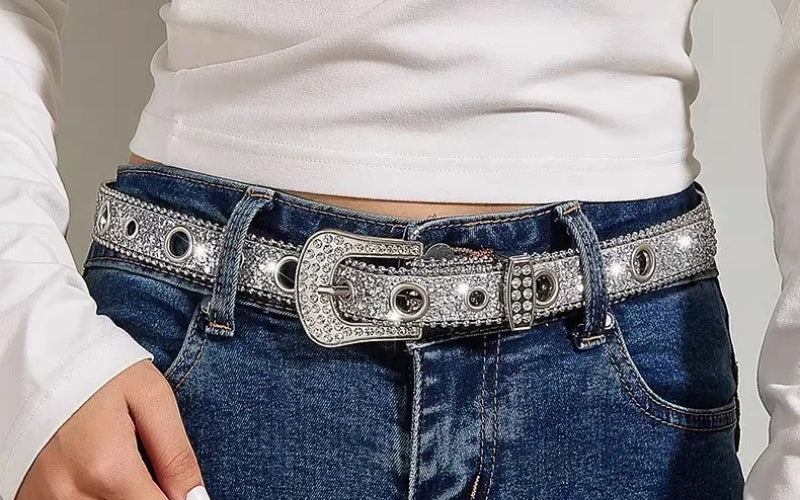
Mixing formality within the outfit. A chunky Western buckle with a slim-fit Italian suit creates a visual identity crisis. Every element of your belt — width, buckle, leather finish, color — should match the formality of the suit it's paired with.
For a full breakdown of what separates a formal belt from an informal one, read our guide on the difference between formal and informal belts.

The Bottom Line
The best belt width for suits is 1.25"–1.38" (32–35mm). That's the range that fits dress trouser loops cleanly, sits proportionally against tailored fabric, and signals that you've thought about the details.
Go with 32mm for the most formal settings and 35mm for everyday business wear — either way, pair it with a clean buckle, smooth full-grain leather, and a color that matches your shoes.
At BELTLEY, every dress belt is handcrafted to these specifications, with stainless steel hardware and a 10-year warranty on materials and construction. Browse our 1.38" (35mm) belt collection or our 1.25" (32mm) belt collection to find the right width for your suits — with free worldwide shipping and 30-day hassle-free returns.
Frequently Asked Questions
Q: Can you wear a 1.5-inch belt with a suit?
Only with unstructured or summer suits that have wider belt loops. For standard wool or worsted suits, 1.5 inches is too wide — it won't thread smoothly through the loops and creates visible bunching. Stick to 1.25"–1.38" for traditional suiting.
Q: Is 30mm too narrow for a suit belt?
No — 30mm (just under 1.2") is perfectly appropriate for formal suits, especially slim-fit or European-cut styles with narrower loops. It's actually the preferred width for black-tie-adjacent settings where minimal visual interruption is the goal. Just make sure it matches your body proportions.
Q: What belt width do luxury brands use for dress belts?
Most luxury brands design their dress belts at 32mm or 35mm. Hermès H-buckle belts come in 32mm, Gucci dress belts run 34mm, and Ferragamo reversible dress belts are typically 35mm. The 32–35mm range is the universal industry standard for formal belts.
Q: Should my suit belt width match my tie width?
Not directly, but both should be proportional to your suit's lapels and your body frame. A slim suit with narrow lapels and a skinny tie pairs naturally with a 32mm belt. A wider-lapel suit with a standard tie works with 35mm. The underlying principle is visual consistency across all elements.
Q: What's the best belt width for both suits and jeans?
A 1.38" (35mm) belt is the best crossover width. It's slim enough to fit through most dress trouser loops and substantial enough to hold jeans. If you want one belt for both wardrobes, 35mm is your answer — though owning separate dress and casual belts will always look more polished.
Q: Does belt width affect how a suit jacket drapes?
Slightly, yes. A wider belt creates more bulk at the waistline, which can disrupt the clean line of a fitted jacket — especially with single-button or slim-cut styles. A 32–35mm belt sits flat and invisible under a closed jacket, which is exactly what you want.
%C2%A0%E2%80%94%20slim%20enough%20for%20dress%20trouser%20loops,%20substantial%20enough%20to%20look%20intentional%0AFor%20peak%20formality%20(black-tie-adjacent,%20co...)