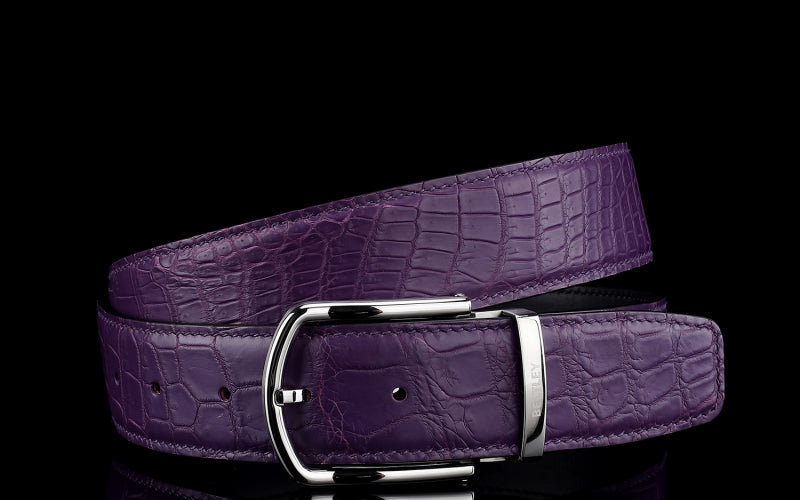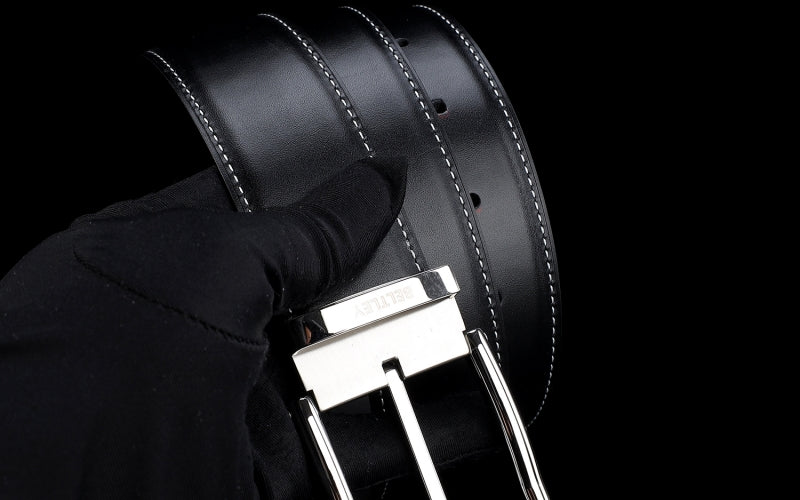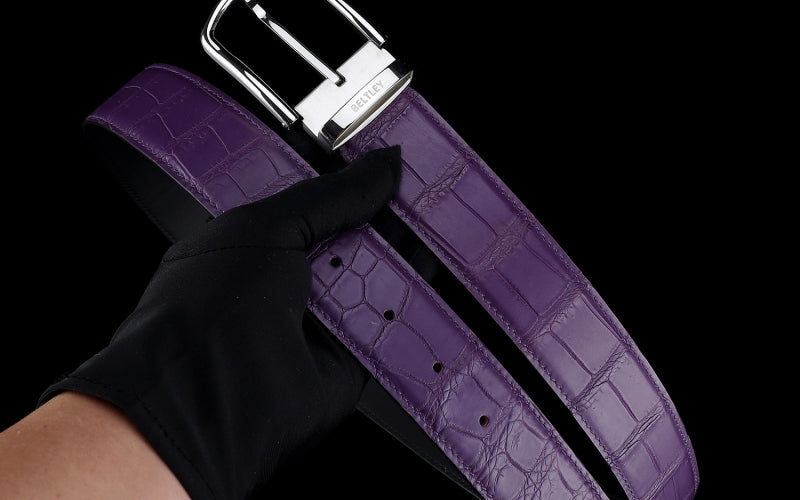
What Is Skiving and How Does It Affect Belt Quality?
TL;DR:
- Skiving is shaving leather thinner at specific points — like peeling a carrot at the tip so it tapers smoothly instead of ending bluntly
- On belts, it's done at the buckle-fold end and anywhere two layers of leather join, to prevent bulky, rigid lumps that interfere with stitching and appearance
- Bad skiving (or no skiving) produces a thick, stiff buckle end that bulges visibly and strains the stitching. Good skiving is invisible — you'd never know it was done
This one might be new to you. Most people who've worn leather goods their whole lives have never heard the word "skiving." But once you understand what it is, you start noticing its absence everywhere cheap belts are sold.
Let's use a simple example to make it click.
The Carrot Analogy (Bear With Me)
Take a thick carrot. If you want to taper the end to fit into a small hole, you have two options: cut it off bluntly (fast, creates a thick flat end) or peel it down at an angle so it tapers gradually from full thickness to almost nothing.

The tapered approach requires more skill and a sharp knife. But the result fits where it needs to go, transitions smoothly, and looks finished. The blunt cut might fit, but it creates a sudden thickness change that causes problems.
That's skiving. The "carrot" is the leather strap. The "hole" is the buckle assembly. And the "problems" from not skiving are visible to anyone who knows to look.
What Is Skiving, Technically?
Skiving is the controlled removal of leather thickness from a specific area — typically using a skiving knife, a round knife, or a dedicated skiving machine — to produce a gradual taper from full thickness to a reduced thickness at the edge.

According to Popov Leather's leatherworking terminology guide, skiving allows leather edges to fold cleanly, layers to overlap without creating uncomfortable ridges, and stitching to pass through consistent material thickness without needle deflection.
On a leather belt, skiving is most critical at two points:
1. The buckle-fold end: The leather strap folds back over the buckle bar and the two layers are stitched or riveted together. Without skiving, this fold area is double the strap thickness — stiff, bulky, and hard to stitch cleanly. With correct skiving, both layers are thinned where they overlap, so the combined thickness at the fold matches the rest of the belt.
2. Layer joins in multi-layer construction: Where two pieces of leather are glued together (as in lined belts), the edges of each layer are skived so they meet gradually rather than creating a visible step. The sandwich construction feels consistent from one end to the other, with no ridge where layers begin or end.
Why Does Bad Skiving (or No Skiving) Create Problems?
Three visible problems emerge when skiving is skipped:

1. The buckle end bulges. The fold-over area becomes a rigid, thick lump. The belt doesn't flex cleanly at the buckle. The keeper loop slides poorly. The whole assembly looks and feels amateurish.
2. Stitching becomes inconsistent. Needle and thread need consistent material thickness to produce even stitching. When the needle hits an area that suddenly jumps from 2mm to 4mm thick (because the fold wasn't skived), the thread tension changes, the stitch line wanders, and you get visible irregularity in the stitching pattern. According to leather precision manufacturing documentation, engineers measure skived edges to a 0.1mm tolerance specifically because stitch quality depends on that consistency.
3. The belt doesn't sit flat. An unskived belt fold creates a stiff ridge that pushes the buckle forward and prevents the belt from lying flat against the trousers. It's subtle, but visible in profile.
What Does Correct Skiving Look Like?
When skiving is done correctly, you can't see it. The buckle fold looks and feels like a single, continuous piece of leather. The stitching runs straight and even. The belt lies flat.

The tests to check for it:
- Run your thumb along the edge of the fold-over section at the buckle end. If it feels like a gradual taper to a thin edge, it was skived. If it feels like a sudden step from thin to thick, it wasn't.
- Look at the stitching along the fold area. Consistent, even stitching indicates consistent material thickness (good skiving). Puckered or wandering stitching in this area is a sign of inconsistent thickness.
- Fold the buckle end back manually and hold it to a light source. A skived fold shows even leather thickness through the fold. An unskived one shows a thick ridge.
Why Don't Factory Belts Bother?
Because skiving is skilled, time-consuming work. A competent leather artisan spends 15–20 minutes skiving a single belt. Factory production eliminates this step and uses thinner leather at the buckle end (which introduces its own problems) or powers through with machines that crimp rather than fold cleanly.

The result is why factory belts so often have that slightly thick, rigid buckle end that never quite lies flat. It's not a design choice — it's a process shortcut. It also explains why most factory belts use top-grain or genuine leather rather than full-grain leather — the material grade and the production shortcut typically go together.
BELTLEY's handcrafted belts are individually skived by our artisans. It's not glamorous work but it's part of why handmade leather belts behave differently from factory alternatives — and why they stay behaving that way for a decade, backed by a 10-year warranty on materials and construction.
The Bottom Line
Skiving is one of those invisible steps that separates a finished belt from an assembled one. You won't find it on a spec sheet or a product listing. But you'll feel it in the first week — or notice its absence. A properly skived belt folds cleanly at the buckle, stitches evenly, and lies flat against your waist. An unskived belt has that slightly thick, stiff buckle assembly that never quite resolves.
Now you know what to feel for. For a full breakdown of every artisan step — including the 15–20 minutes spent on skiving alone — see how long it takes to make a handcrafted belt.
Frequently Asked Question
Q: What is skiving in leathercraft?
Skiving is the process of shaving leather thinner at specific points using a sharp blade — typically at fold areas and layer joins. On belts, it's most important at the buckle-fold end, where two layers of leather overlap. Skiving ensures the fold is clean, the stitching is even, and the belt lies flat.
Q: Why does skiving matter for belt quality?
Without skiving, the buckle-fold area of a belt is double thickness — stiff, bulgy, and difficult to stitch cleanly. Proper skiving tapers both layers to half their thickness at the fold point, so the combined fold matches the rest of the belt. The result is a clean, flat, properly stitched buckle assembly.
Q: How can I tell if a belt was properly skived?
Run your thumb along the edge of the buckle-fold section. A properly skived belt tapers gradually toward the fold edge. An unskived belt has a sudden step in thickness. Also check the stitching in the fold area — even, consistent stitches indicate even material thickness (correct skiving); puckered or wandering stitches indicate inconsistent thickness.